
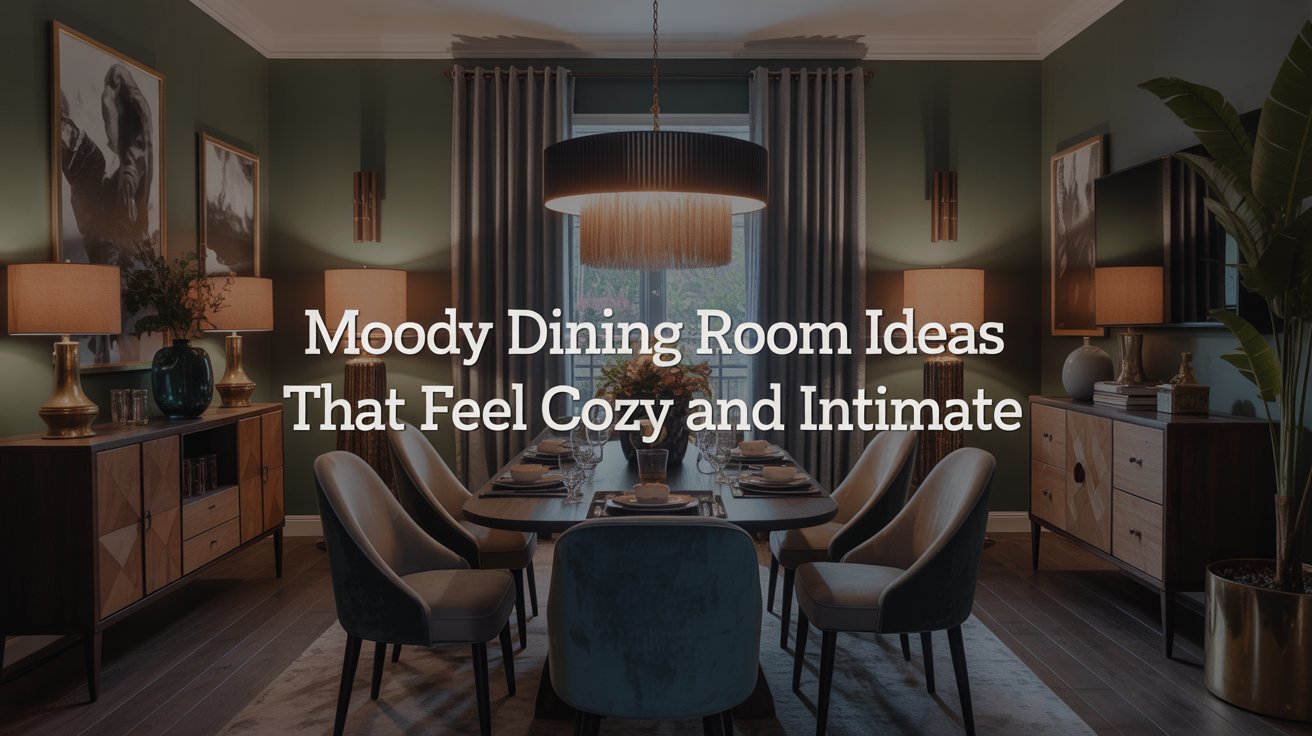
Dark and dramatic dining spaces are having a moment. These rooms feel cozy, intimate, and perfect for hosting dinner parties that guests will remember.
A moody dining room uses deep colors, rich textures, and low lighting to create atmosphere. Think navy walls, velvet chairs, and warm candlelight instead of bright whites and overhead fluorescents.
In this guide, you’ll learn what makes a dining room moody, see seven specific design approaches you can copy, and get practical tips for creating this look in your own home. These moody dining room ideas work with any style, from modern to traditional to something in between.
What Makes a Dining Room Moody?
The foundation of any moody space starts with color. Deep shades like navy blue, forest green, charcoal gray, burgundy, and black create the right feeling. These colors make walls feel closer, which sounds bad but actually makes the room feel more intimate and comfortable.
Lighting plays a huge role, too. Instead of one bright overhead light, use multiple sources at different levels. A chandelier over the table, wall sconces, and candles work together to create shadows and depth. Dimmer switches let you control the mood for different occasions.
Texture keeps the space from feeling flat or boring. Mix velvet chairs with a wood table, add brass light fixtures, and hang thick curtains.
The contrast between these materials makes the room interesting to look at and comfortable to be in. Bold pieces like oversized mirrors or dramatic artwork complete the look.
Moody Dining Room Ideas to Try
Ready to get specific? Here are seven approaches that work well in real homes.
Dark Green Walls with Brass Accents

Emerald or forest green walls create an instant mood without feeling as heavy as black. This color has depth but still feels rich and warm.
Pair green walls with a dark wood or black dining table. Add brass or gold accents to your chandelier, picture frames, and candle holders. The warm metal tones complement the green and catch the light beautifully. This combination feels both classic and current.
Navy Blue with Rustic Elements

Deep navy blue works as a backdrop for mixing old and new. This shade feels formal enough for special dinners but relaxed enough for everyday meals.
Choose a reclaimed wood table and mix different chair styles for an eclectic feel. Industrial pendant lights or vintage fixtures add character without competing with the walls. The combination of smooth painted surfaces and rough wood textures creates balance.
All Black Maximalist Approach

Black walls might seem extreme, but they create the most dramatic effect. This approach works especially well in rooms with good natural light during the day.
Your furniture can vary here. A marble top table, dark wood pieces, or mixed finishes all work. The key is adding an oversized chandelier and lots of textured textiles like throw pillows and table runners. Layer different decor items instead of keeping things minimal. Black becomes a canvas for showing off your favorite pieces.
Burgundy and Plum Tones

Deep reds and purples bring warmth to a moody space. These colors feel inviting and make everyone look good in the lighting.
Dark wood furniture works best with these wall colors. Add velvet dining chairs or a velvet table runner to play up the luxurious feel. This color family makes the room feel like a cozy wine cellar or intimate restaurant booth.
Charcoal Gray with Mixed Metals

Charcoal gray offers a modern take on moody design. This softer approach to dark walls feels current and works well in contemporary homes.
Pick a sleek table and upholstered chairs in neutral tones. Mix your metals by combining brass candlesticks with copper accents and black fixtures. This variety keeps the room from feeling too matchy or boring. Gray provides a neutral backdrop that makes the mixed metals shine.
Dark Blue with Vintage Details

Midnight blue walls create the perfect background for antique and vintage pieces. This shade has more personality than black but still reads as very dark.
Hunt for vintage-inspired furniture at flea markets or antique shops. Create a gallery wall with old paintings or prints in ornate frames. An antique chandelier and decorative mirror add character. This style tells a story and makes the room feel collected over time.
Moody Neutrals with Texture

You don’t need bold color to achieve a moody feel. Deep taupe, chocolate brown, or charcoal create atmosphere through tone rather than hue.
Focus on layering different textures since you’re not using bright colors. Add wood beams, stone elements, thick rugs, and linen curtains. Natural materials in darker finishes keep the space grounded and comfortable. This approach works well if you want the moody vibe but aren’t ready for colored walls.
Deep Teal with Copper Details

Rich teal walls bring depth without the heaviness of pure black. This blue-green shade creates a calm yet dramatic backdrop that works year-round.
Add copper light fixtures and hardware to warm up the cool tones. A wooden table in a medium to dark finish grounds the space. The combination feels fresh and modern while maintaining that intimate mood.
Chocolate Brown with Cream Accents

Chocolate brown walls offer warmth and comfort. This shade wraps the room in a cozy embrace that feels like a sophisticated cabin retreat.
Pair with cream-colored chairs and table linens to brighten things up. Add leather seating or wood elements to complete the look. This approach works particularly well in spaces with lots of natural light.
Slate Blue with Industrial Fixtures

Slate blue provides a softer take on a moody design. This color has gray undertones that feel modern and approachable while still creating atmosphere.
Metal industrial fixtures in black or aged bronze complement the walls perfectly. Choose simple furniture shapes to let the color shine. This style bridges contemporary and industrial design seamlessly.
Deep Purple Accent Wall

A single wall in deep purple makes a bold statement without overwhelming the space. This jewel tone adds richness and creates a focal point behind your dining table.
Keep the other walls neutral to balance the intensity. Add purple throw pillows or artwork to tie the look together. This option works well if you want drama but aren’t ready to commit to dark walls throughout.
Olive Green with Natural Wood

Olive green brings an earthy, organic feel to a moody design. This muted green shade feels grounded and connects to nature without being too bright.
Combine with light or medium wood furniture to highlight the natural materials. Woven textures and simple pottery complete the look. This approach creates a space that feels both modern and timeless.
Midnight Blue Ceiling

Keep walls neutral, but paint the ceiling a deep midnight blue. This unexpected choice creates drama overhead while maintaining brighter walls for balance.
A brass or bronze chandelier stands out beautifully against the dark ceiling. This technique works especially well in rooms with white or light gray walls. The contrast creates visual interest without making the space feel enclosed.
Dusty Rose with Gold Trim

Dusty rose in a deep, muted shade brings warmth and softness to a moody design. This color feels intimate without reading as too feminine or bright.
Gold or brass trim on moldings, frames, and fixtures adds polish. Dark wood or marble surfaces provide contrast. This combination creates a space that feels both luxurious and comfortable.
Black Wainscoting with Upper Walls

Install black wainscoting halfway up the walls and keep the upper walls in a lighter shade. This two-tone approach adds architectural interest and defines the space.
The darker lower section grounds the room, while the lighter upper walls prevent it from feeling too heavy. This works particularly well in rooms with lower ceilings. Add chair rail molding to separate the two colors cleanly.
Smoky Gray with Blue Undertones

Smoky gray with cool undertones creates a sophisticated backdrop. This shade reads almost blue in certain light but maintains the versatility of gray.
Pair with both warm and cool metals for an interesting mix. Glass elements and mirrors help reflect light around the room. This neutral approach works with any furniture style you prefer.
Deep Taupe All-Over

Deep taupe covers walls, ceiling, and trim for a full cocoon effect. This warm neutral creates intimacy without the starkness of black or the boldness of color.
Layer different shades of brown and cream in your furniture and textiles. Natural fiber rugs and linen curtains add texture. This monochromatic approach feels calm and grounded.
Forest Green Lower Cabinets

If you have built-in storage or a buffet area, paint lower cabinets in forest green. This brings moody color to functional furniture while leaving walls more neutral.
Keep upper walls and ceiling lighter to maintain balance. Open shelving above in brass or wood adds contrast. This approach works well in dining areas that connect to kitchens.
Terracotta and Black Combo

Deep terracotta walls paired with black furniture create a warm yet dramatic space. This combination feels both modern and rooted in traditional design.
The orange undertones in terracotta make the room feel inviting despite dark furniture. Add plants in black pots to connect the two colors. This palette works especially well in homes with a southwestern or Mediterranean style.
Dark Teal Wainscoting

Install wainscoting painted in dark teal for a classic look with moody flair. This architectural detail adds dimension while the color brings drama.
White or cream walls above the wainscoting keep things from feeling too closed in. A wooden dining table in any finish works with this combination. Traditional spaces benefit most from this approach.
Burgundy Ceiling

Paint just the ceiling in deep burgundy for an unexpected pop of color. This draws the eye up and creates warmth overhead without committing to dark walls.
Keep walls neutral in cream, beige, or light gray. The burgundy ceiling makes the room feel more intimate while maintaining brightness on vertical surfaces. Gold or brass fixtures shine against the rich ceiling color.
Pewter Gray with Silver Accents

Pewter gray offers metallic undertones that add interest to the walls. This shade changes throughout the day as natural light shifts, creating a dynamic space.
Silver and chrome fixtures complement the gray beautifully. Add a glass dining table or acrylic chairs to keep things light. This modern approach works well in contemporary homes.
Deep Sage with White Trim

Deep sage walls with crisp white trim create a fresh take on moody green. The contrast between wall color and trim defines the space and adds architectural detail.
This combination works in both traditional and modern settings. Wood furniture in any finish pairs well with sage. The white trim keeps things from feeling too dark or heavy.
Aubergine Accent Details

Use deep aubergine in small doses through curtains, chair upholstery, or a table runner. This rich purple shade adds moodiness without permanent commitment to paint.
Keep walls neutral, but choose this bold color for changeable elements. Mix with gray or charcoal furniture for balance. This approach lets you test the moody aesthetic before fully committing.
Charcoal Stripe Feature Wall

Create a feature wall with charcoal and black stripes for added dimension. This pattern brings visual interest while maintaining a dark, dramatic feel.
Keep stripes vertical to make ceilings appear higher. Pair with solid-colored furniture to avoid visual overwhelm. This modern twist on moody design works well in eclectic spaces.
Walnut Walls

Install walnut wood paneling for a natural dark color with built-in texture. Real wood brings warmth that painted walls can’t match while creating the moody atmosphere you want.
This works especially well in mid-century modern or contemporary spaces. Keep furniture simple to let the wood walls shine. The investment pays off in the rich, organic feel it creates.
Matte Black Doors and Trim

Paint all doors and trim matte black while keeping walls in a lighter charcoal or gray. This frames the space and creates definition without fully dark walls.
The black accents make artwork and furniture stand out. This approach works in any style home and adds drama through contrast. It’s also easier to live with than an all-over dark color.
Tips for Creating Your Moody Dining Room
Creating your own dark and dramatic space takes some planning. Start by thinking through these key elements.
- Balance Darkness with Light: Multiple light sources keep the room from feeling like a cave. Use a combination of overhead fixtures, wall lights, and lamps. Mirrors and metallic accents reflect light around the room. If your walls are dark, lighter furniture helps brighten things up. Glass table tops and shiny surfaces bounce light effectively.
- Layer Your Textures: Mixing materials prevents the space from feeling flat. Combine velvet chairs with a wood table and metal fixtures. Add soft elements like rugs and curtains to absorb sound and make the room feel finished. Different textures catch light in different ways, which adds visual interest.
- Don’t Forget the Ceiling: Many people stop at the walls, but painting the ceiling a dark shade completes the cocoon effect. Add beams or coffered details if your budget allows. A statement light fixture becomes even more important when the ceiling is dark. This creates a true immersive experience.
- Incorporate Natural Elements: Plants in dark planters add life without fighting the color scheme. Wood furniture and accents warm up the space. Stone elements like a fireplace surround or accent wall add texture. Natural materials prevent a moody dining room from feeling artificial or staged.
- Start Small If Unsure: Not ready to paint all four walls black? Try one accent wall first. Swap in dark curtains or add a dark colored rug. Change your light fixtures to something with more drama. Test these smaller changes before committing to a full room makeover. You can always add more later.
Conclusion
Moody dining room ideas offer a fresh alternative to bright, neutral spaces. These dramatic rooms create intimate settings that make every meal feel special.
Start with one element that appeals to you most. Maybe that’s painting an accent wall in navy, or maybe it’s switching to a brass chandelier. Build from there as you get comfortable with darker tones.
The secret to success is balancing dark colors with enough light sources and varied textures. Don’t be afraid to test ideas and adjust as you go.
Your dining room should reflect your personal taste. Use these ideas as a starting point, then make the space your own. The goal is to create a room you love spending time in.
Frequently Asked Questions
Can Small Dining Rooms Handle Dark Colors?
Yes, small rooms can absolutely work with dark walls. Use several light sources and add mirrors to reflect light. This prevents the space from feeling cramped. Lighter furniture also helps balance the dark walls.
What Flooring Works Best with Moody Dining Rooms?
Dark hardwood floors complement the look naturally. Slate or dark tile also works well. If you have lighter floors, add a richly colored area rug under the table to tie the room together.
How Do I Keep a Moody Dining Room from Feeling Too Dark?
Strategic lighting is your best tool. Install dimmer switches so you can adjust brightness. Add multiple light sources at different heights. Incorporate mirrors and metallic accents to bounce light around. Lighter furniture or decor provides visual breaks.
What Window Treatments Suit This Style?
Heavy curtains in deep colors work perfectly. Choose textured fabrics like velvet or thick linen. These materials block light when you want a darker mood, but can be opened fully during the day.
Is Moody Design Suitable for Open Concept Spaces?
Yes, you can create a moody dining area in an open floor plan. Use color changes to define the dining zone separately from other areas. An area rug under the table helps establish boundaries. Different lighting for each zone also helps separate the spaces visually.