
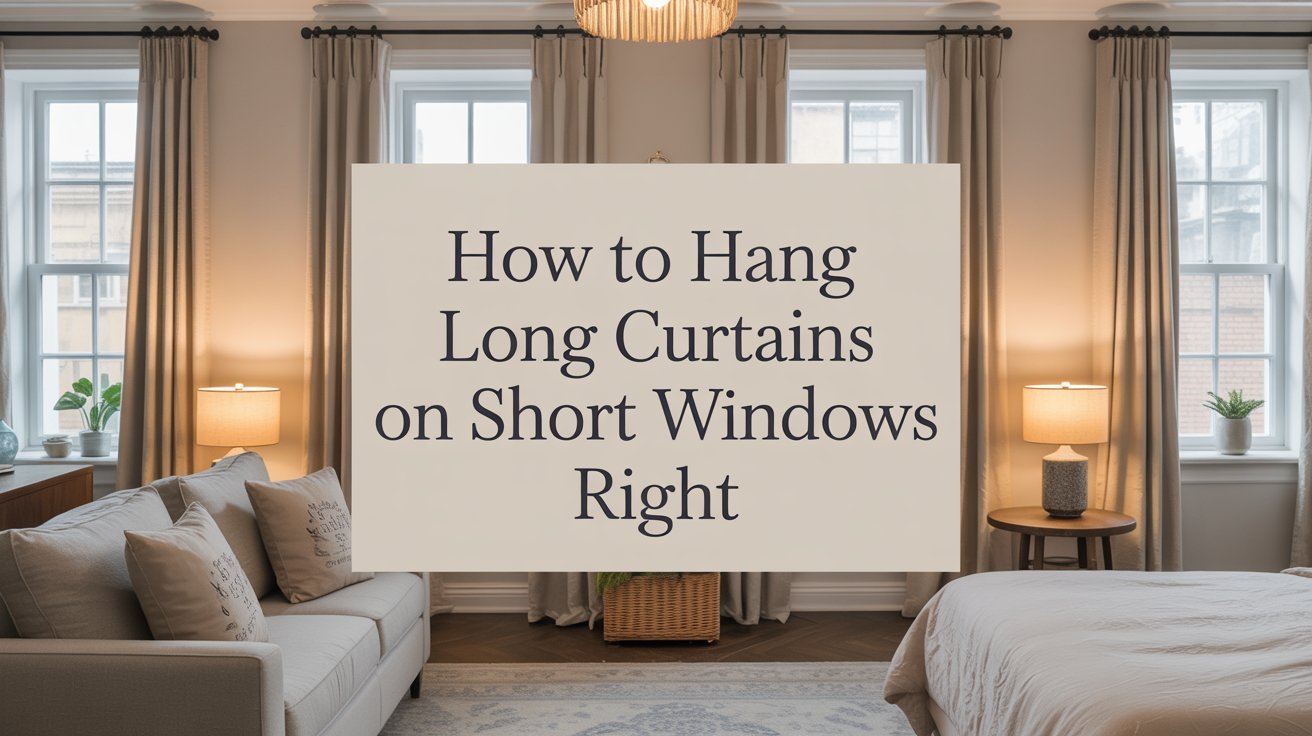
Do you have short windows that make your room feel smaller? You’re not alone. Many homeowners worry that using floor-length curtains will look odd or out of place. But here’s the truth: long curtains on short windows are actually one of the best design choices you can make.
This simple trick creates a visual effect that makes your windows appear taller and your room feel bigger. The secret lies in drawing the eye upward with unbroken vertical lines from ceiling to floor.
In this guide, you’ll learn exactly how to hang long curtains on short windows for the best results. We’ll cover the right mounting height, curtain length, fabric choices, and common mistakes to avoid. By the end, you’ll see why this easy update can completely change how your room looks and feels.
Why Long Curtains Make Short Windows Look Better
When you use floor-length curtains, you’re creating a visual trick that works with how our eyes naturally move around a room.
The Illusion of Height

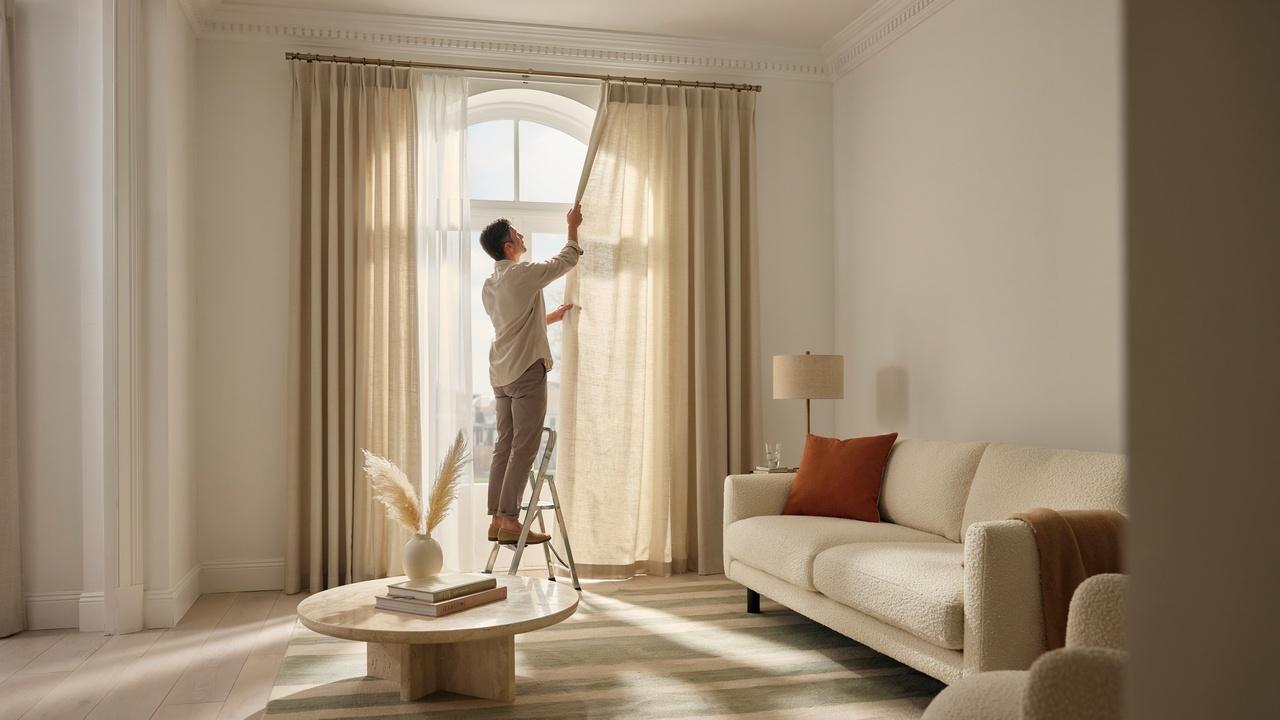
Floor-length curtains create unbroken vertical lines that run from the top of your wall all the way down to the floor. Your eye naturally follows these lines from ceiling to floor, which makes the window appear much taller than it actually is. When you use short curtains that end at or just below the window sill, they cut off this visual flow and actually draw attention to how small the window really is.
The continuous line created by long curtains on short windows tricks your brain into seeing more height. This works because our eyes are drawn to follow lines, and vertical lines make us look up and down rather than side to side.
Balanced Proportions

Long curtains add weight and presence to a small window, creating a better balance in your room. A tiny window with short curtains can look out of place on a large wall, but floor-length panels give it the visual importance it needs. This creates harmony between the window and the rest of your space.
When curtains end mid-wall, they create an awkward stopping point that feels unfinished. Floor-length curtains provide a natural endpoint at the floor, making the whole setup look intentional and complete.
More Polished and Put Together

Floor-length curtains feel more intentional and finished than short ones. They create a cohesive, designer-quality look that makes your whole room feel more pulled together. This works for all types of windows, including bedroom windows, bathroom windows, and even very narrow windows.
Short curtains can make a space feel casual or unfinished, while long curtains on short windows give any room a more refined appearance. The key is that they show you’ve thought about the design rather than just covering the window as an afterthought.
How to Hang Long Curtains on Short Windows for Maximum Impact
The way you install your curtains matters just as much as the curtains themselves. These steps will help you get the best results.
Mount Curtain Rods as High as Possible

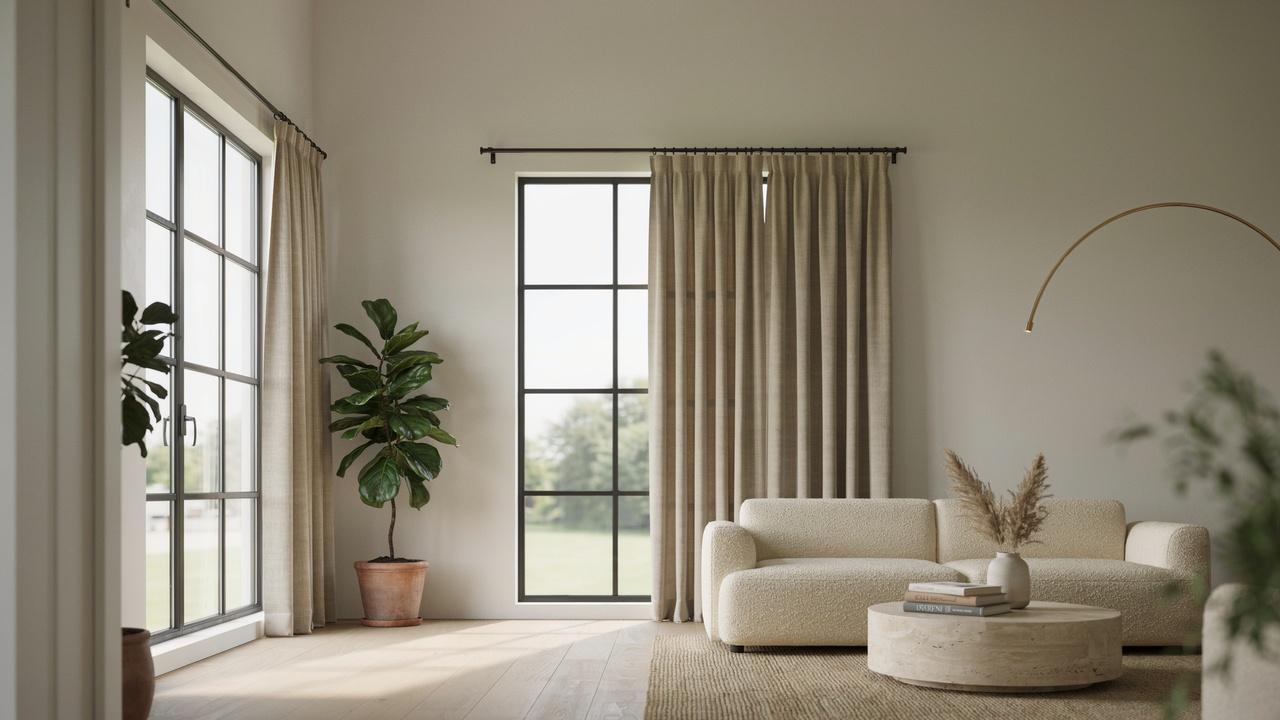
Install your curtain rod 1 to 3 inches below the ceiling, or right at the ceiling if you’re using ceiling mount hardware. If you have higher ceilings around 9 to 10 feet, you can mount the rod 8 to 12 inches above the window frame instead. Either way, mounting high is the most important step.
This high positioning draws the eye upward and creates the illusion of much taller windows. The higher you mount the rod, the more dramatic the height effect becomes. This is where the real magic of using long curtains on short windows happens.
Extend the Curtain Rod Beyond the Window Frame

Position your curtain rod 8 to 12 inches beyond each side of the window frame. This gives your curtains room to stack on either side of the window when they’re open, rather than covering the glass. The extra width also makes your window appear wider than it actually is.
This setup has multiple benefits: it lets in maximum natural light when the curtains are open, makes the window look larger, and creates a nice symmetry on the wall. The curtains frame the window rather than hiding it.
Choose the Right Curtain Length

For a standard floor length look, your curtains should just barely touch the floor or have a tiny 1/2 inch break where they meet it. If you want something more dramatic, you can let them puddle 1 to 2 inches on the floor, though this doesn’t work well in high-traffic areas where people will step on them.
What you want to avoid at all costs are curtains that hover above the floor. This creates a choppy, unfinished look and defeats the purpose of using long curtains on short windows. The curtain should always reach the floor to create that important vertical line.
Select Proper Fullness

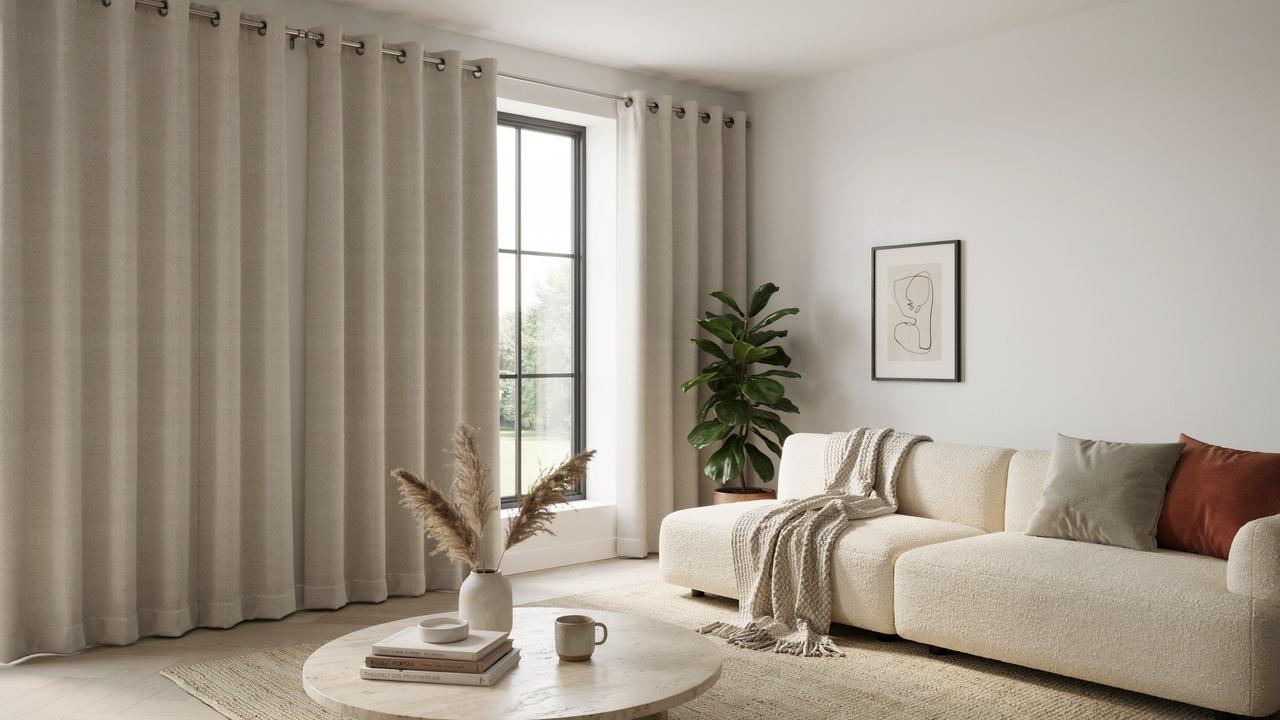
Use curtain panels that measure 1.5 to 2.5 times the width of your window for proper gathering and folding. This fullness prevents your curtains from looking flat and cheap when they hang. Instead, you get beautiful, rich folds when the panels are drawn closed.
Skimping on fullness is one of the biggest mistakes people make. Even expensive fabric will look bad if there’s not enough of it to create those graceful folds and waves. Proper fullness makes any curtain look more luxurious.
Best Curtain Styles and Fabrics for Short Windows
The right fabric and pattern choices can boost the height-creating effect of long curtains on short windows.
Vertical Patterns and Stripes

Vertical stripes make the height illusion even stronger because they add more vertical lines for your eye to follow. Geometric patterns with vertical emphasis work well, too. They guide your eye up and down rather than side to side.
You’ll want to avoid horizontal patterns, which do the opposite by making things look wider and shorter. Stick with designs that have vertical movement or no pattern at all for the best effect on short windows.
Light and Airy Fabrics

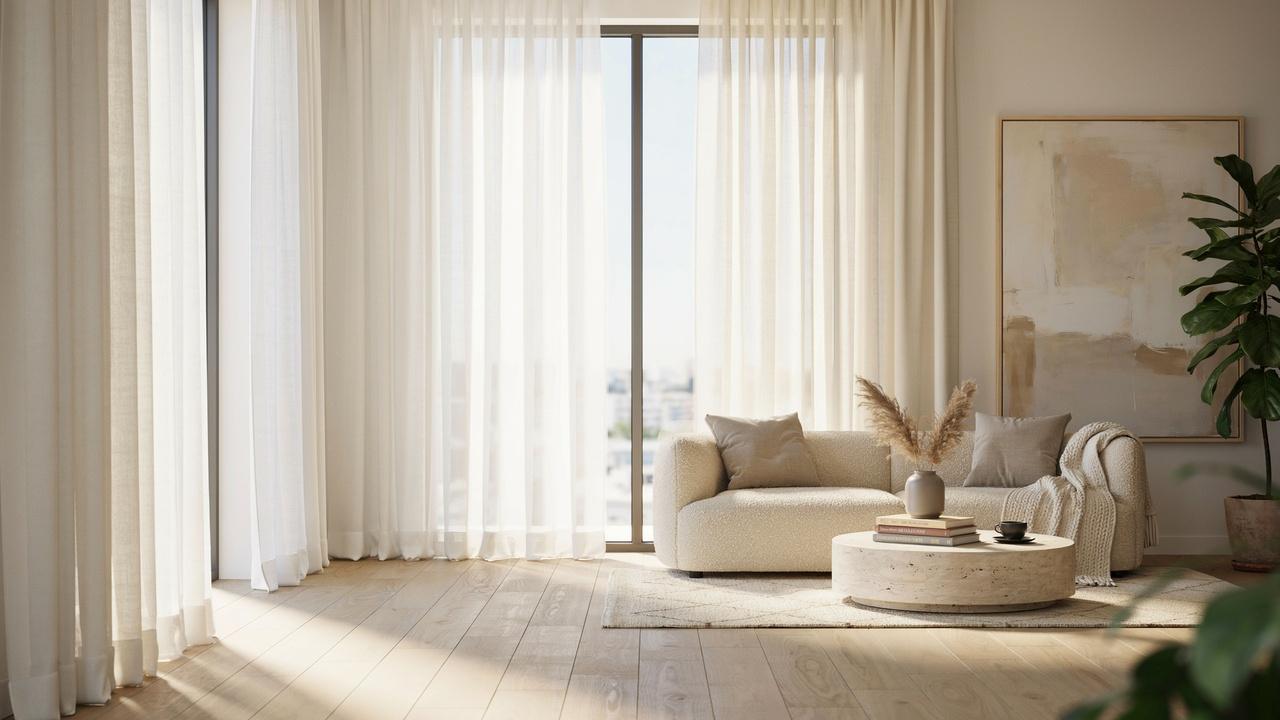
Sheer curtains, voiles, and linen work beautifully for small or short windows because they don’t feel heavy or overwhelming. These fabrics allow natural light to filter through without making your space feel dark or cramped. They add softness without adding weight.
You can also layer sheer curtains with heavier drapes if you want more versatility. The sheers stay closed for privacy during the day while still letting light in, and you can close the heavier panels at night or when you need total darkness.
Solid Colors That Match Your Walls

When you choose curtains in a color that matches or closely matches your walls, you create visual continuity. This seamless flow reduces visual interruptions and makes your room feel more spacious and unified. Your eye doesn’t stop at the curtains because they blend with the wall.
On the other hand, bold contrasting colors can work too if you want to make the curtains a focal point. This draws attention to the beautiful draping and away from the actual size of the window itself.
Common Mistakes to Avoid
Knowing what not to do is just as important as knowing the right way to hang long curtains on short windows.
- Curtains that are too short: When curtains end at or just below the window sill, they emphasize how small the window is rather than making it look bigger. This is the opposite of what you want.
- Heavy, bulky fabrics: Thick, heavy materials can overwhelm a short window and make your space feel cramped instead of open and airy.
- Mounting rod at window frame height: This misses the whole opportunity to add visual height. Always mount higher than the frame.
- Insufficient rod width: If your rod is too narrow, the curtains cover part of the glass even when open, making the window look even smaller.
- Over-patterned or busy designs: Too much going on in the pattern can make small windows feel cluttered rather than calm.
These mistakes are easy to avoid once you know about them. Keep things simple, mount high and wide, and let the curtains flow to the floor.
Additional Tips to Enhance the Look
Once you’ve got the basics down, these extra touches can take your window treatment to the next level.
- Consider Minimalist Hardware: Sleek, thin curtain rods don’t compete with the window for attention. Ceiling-mounted tracks create an ultra-clean look that disappears into the ceiling line.
- Use Ripple Fold or Pinch Pleat Headers: These heading styles create vertical folds that emphasize height and add a custom, high-end appearance.
- Layer Window Treatments: Combine roller shades or roman shades inside the window frame with your floor-length curtains. This gives you functionality and style at the same time.
- Keep Hardware Consistent: Match your curtain rod finish to other hardware in the room, like door knobs and light fixtures, for a cohesive look throughout the space.
- Let Light In: Ustie-backs or hold-backs to keep curtains open during the day. This maximizes natural light and your view while still getting the height benefit of the long panels.
These details might seem small, but they add up to create a professional, well-thought-out look in your room.
Conclusion
Long curtains on short windows are the perfect solution when you want to make a small window look bigger and more impressive. The key takeaways are simple: mount your rod as high as possible, extend it wide beyond the frame, and let your curtains flow all the way to the floor.
This simple design choice can completely change how your room looks and feels. The vertical lines create height, the proper proportions add balance, and the finished appearance makes everything feel more polished. Best of all, this is an accessible, budget-friendly way to improve any space.
Don’t be afraid to experiment with different fabrics and styles until you find what works best for your home. Try sheers for an airy feel or heavier materials for more drama. Play with colors that blend in or stand out.
Frequently Asked Questions
Can You Put Floor-Length Curtains on a Small Bedroom Window?
Yes, absolutely. Floor-length curtains work beautifully in bedrooms because they add a sense of coziness and privacy while making the window look larger. They also provide better light control for sleeping.
Should Curtains Touch the Floor or Hover Above It?
Curtains should touch the floor or have a slight 1/2 inch break for a clean look. A 1 to 2-inch puddle works for formal spaces with low traffic. Avoid hovering above the floor as it looks unfinished.
What Color Curtains Make a Room Look Bigger?
Light colors and curtains that match your wall color make a room feel larger because they create visual continuity. The eye moves smoothly without stopping, which makes the space feel more open and less divided.
Do Curtains Make a Room Look Smaller or Larger?
It depends on how you install them and what style you choose. Curtains hung high and wide with proper length actually make rooms feel larger. Short, poorly hung curtains can make spaces feel smaller and choppy.
Can You Mix Blinds and Curtains on Short Windows?
Yes, layering blinds inside the window frame with floor-length curtains works very well. The blinds provide light control and privacy, while the curtains add softness and height. This combination offers the best of both worlds.