
Corner windows stumped me for years. I’d stand there with my tape measure, wondering how to make two windows meeting at an angle look intentional instead of awkward. You’re probably feeling the same frustration right now.
This guide gives you real solutions that work in actual homes. I’ve spent fifteen years in interior design, figuring out what holds up and what’s just for show. You’ll find out curtain options, blind styles, and rod systems for every room and budget. Everything here comes from hands-on experience, not guesswork.
I’m breaking down corner window treatments room by room. Living rooms, bedrooms, and kitchens each need something different. You’ll learn which mistakes to avoid and which shortcuts actually save time. No confusing terminology. No impossible installations. Just practical ideas you can start using this weekend to finally solve your corner window problem.
Understanding the Unique Challenges of Corner Windows

Standard curtain rods don’t work here. The angles are too sharp. You need special hardware like curved rods or bendable tracks. Wall space? Almost nonexistent. Those few inches between windows won’t fit regular mounting brackets.
Light pours in from multiple angles. Morning sun hits one side. Afternoon sun blasts the other. Great for brightness. Terrible for privacy. Bedrooms and bathrooms? You need treatments that give you both light and coverage when you want it.
Two windows meeting at a corner are tricky. One treatment ends. Another begins. Your décor needs to flow smoothly across that angle. Too matchy looks forced. Too different looks messy. Getting it right takes planning.
Factors to Consider Before Choosing Corner Window Treatments

You can’t just pick any treatment and hope it works. Corner windows need careful planning. I always tell people to measure twice and think three times. Let me walk you through what actually matters.
- Window Size and Depth: Large corner windows need layered treatments for better control. Shallow frames won’t fit inside mounts; you’ll need outside brackets instead. Deep frames give you more options, so measure your frame depth before you shop.
- Functionality Needs: Figure out what you actually need: privacy, insulation, or light control. Motorized options and top-down, bottom-up designs make daily use much easier. I recommend automation for hard-to-reach corners because your future self will thank you.
- Visual Preferences: Your treatments need to match your room’s vibe and existing décor. Fabric texture matters as much as color, and patterns should complement your walls and furniture. Don’t fight your style; work with it so everything blends seamlessly.
The best corner treatments solve real problems while looking great. That’s the balance you’re after.
Popular Corner Window Treatment Options
I’ve helped hundreds of homeowners dress their corner windows. You have more choices than you think. Let me walk you through the options that actually work.
1. Curtains and Drapes

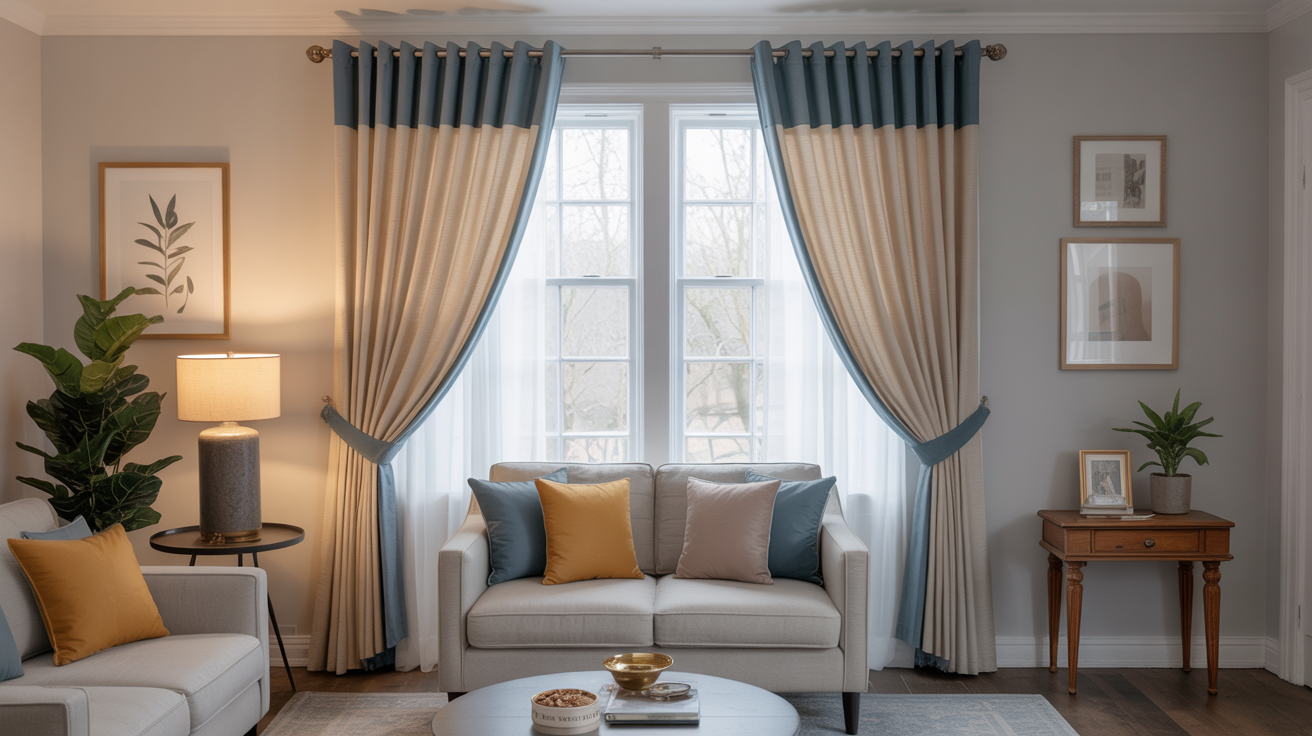
Curtains create that soft, polished look everyone loves. You can use double rods that meet at the corner. Or try a curved rod for seamless flow.
- Coastal look: Light blue and white drapery brings the beach inside
- Luxury look: Thick herringbone or chenille drapes make bedrooms feel expensive
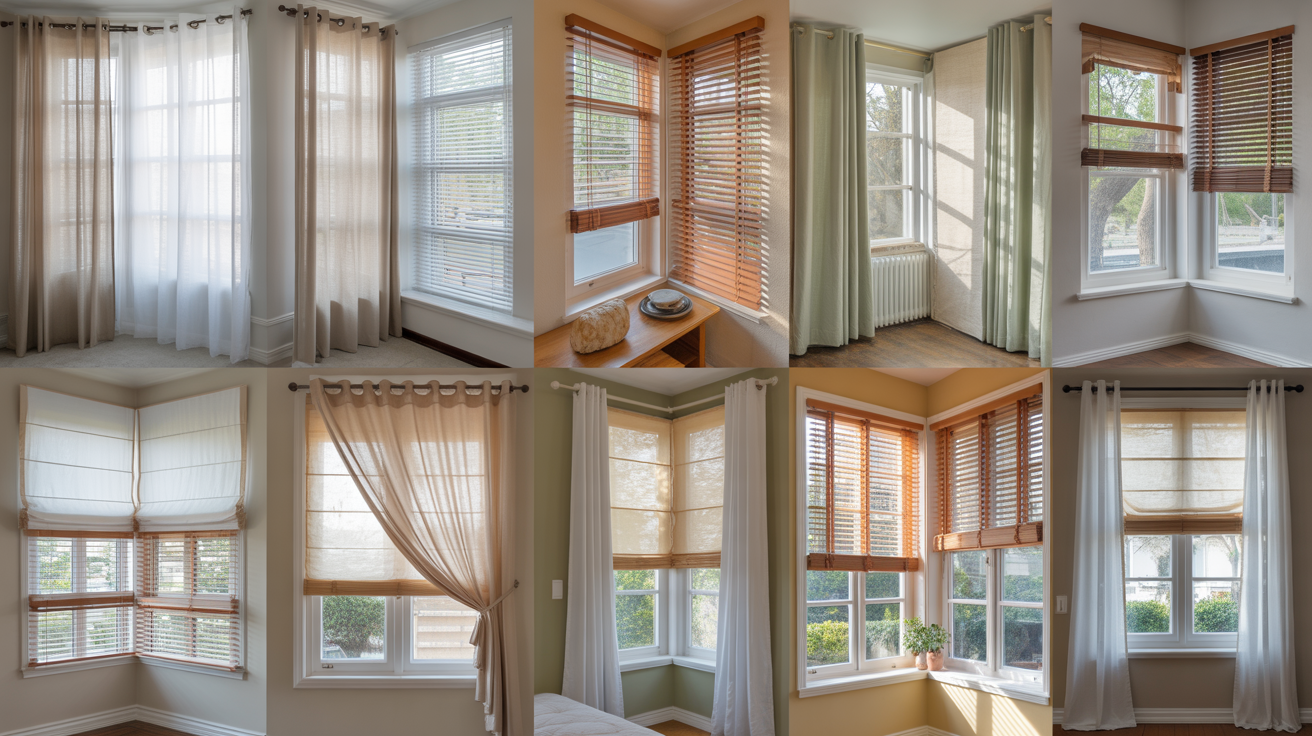
- Minimalist look: Linen or neutral sheers keep things clean and simple
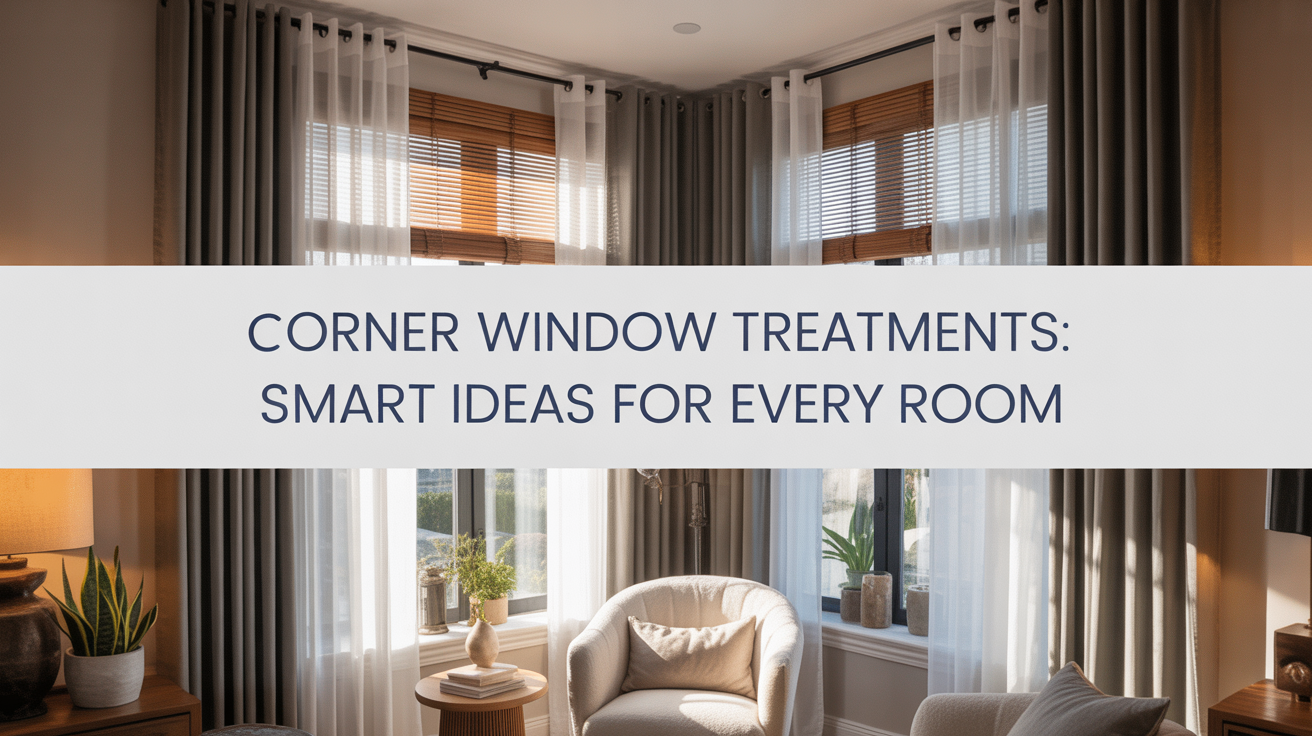
Layer both sheer and blackout options together. You get full control over light and privacy throughout the day.
2. Blinds

Blinds give you precise control over privacy and light. They’re practical. They last forever.
- Vertical Blinds: Perfect for tall or wide windows
- Venetian Blinds: Adjust light angle with a simple twist
- Roller Blinds: Modern and space-efficient for smaller rooms
Pick based on your window size and style. Vertical works best for corners with lots of glass.
3. Shades

Shades blend style with practicality better than anything else. I recommend them for busy families.
- Sheer Shades: Soft glow with privacy built in
- Cellular (Honeycomb) Shades: Cut your energy bills and insulate
- Zebra Shades: Moisture-resistant for bathrooms and kitchens
- Dual Roller Shades: Switch between sheer and blackout layers instantly
Each type solves a different problem. Think about what matters most in your space.
4. Motorized Treatments

Smart systems make life easier. You control everything with a remote. No more climbing ladders to reach corner windows.
- Remote-controlled for hard-to-reach corner windows
- Synchronized movement keeps multiple windows uniform
- Set schedules for automatic opening and closing
The key is synchronized movement. Multiple blinds or shades move together for a professional look.
5. Alternative Solutions Beyond Curtains

Sometimes you need something different. Something unexpected. These options deliver character without the bulk.
- Panel Track Blinds: Sleek and modern for large glass areas
- Roman Shades: Add texture and warmth to any interior
- Woven Wood Shades: Bring organic charm while diffusing light beautifully
These treatments create visual interest. They add style without overwhelming your corner window space.
Creative Styling Tips for Corner Window Treatments

Corner windows are tricky. But I’ve learned they’re also a huge opportunity for style. You can update them from awkward to amazing with the right approach.
- Combine layers: Start with roller shades for privacy. Then add drapes or sheers on top. This gives you complete control over light throughout the day.
- Mix textures: Pair linen with velvet. Or cotton with silk. The contrast creates visual interest. Your corner suddenly feels intentional, not accidental.
- Light-filtering fabrics: These let sunshine in while cutting glare. Your room stays bright without the harsh spots. I use them in every corner window now.
- Position rods strategically: Mount them high and wide. This makes your ceilings look taller. It’s a simple trick. But the difference? Dramatic.
- Match your décor: Pull colors or textures from your furniture. Maybe your curtains echo your throw pillows. Or they complement your rug. This ties everything together.
Installation and Measurement Best Practices
Getting measurements wrong is costly. I’ve seen people buy treatments twice because they didn’t measure right. Let me save you that headache.
Measuring Corner Windows

Corner windows need precision. You can’t just eyeball it. Each window is different, even when they look the same.
- Measure separately: Take the width and height for each window. Don’t assume they match. Houses settle. Frames shift over time.
- Account for obstacles: Check your moldings. Note the trims. Those corners? They eat up space you might not expect.
- Use templates: Non-standard angles are common in corners. A cardboard template helps. It shows exactly what you’re working with.
Get it right the first time. Double-check everything before ordering.
Mounting Options

You have two main choices. Inside mount or outside mount. Sometimes you’ll use both.
- Inside Mount: This sits within the window frame. It looks clean and built-in. But your frame needs enough depth. Measure that depth first.
- Outside Mount: This covers the frame completely. Perfect for shallow frames. Or uneven ones. It also makes windows look taller and wider.
- Combine methods: I do this often with corners. One window gets inside the mount. The other gets outside. It solves tricky depth issues.
Hardware and Rod Choices

Standard straight rods don’t work here. You need specialty hardware for corners. Trust me on this.
- L-shaped rods: These create smooth curtain flow around corners. No awkward gaps. No bunching. Your drapes glide naturally.
- Flexible tracks: These bend to follow your corner’s exact angle. They’re incredibly versatile. Works for any corner configuration.
- Sturdy brackets: Wide treatments are heavy. Layered ones? Even heavier. Don’t skimp on bracket quality. Your curtains will thank you.
Room-by-Room Corner Window Ideas

Different rooms need different solutions. What works in your bedroom won’t work in your bathroom. I’ve tested treatments in every room. Here’s what actually works.
- Living Room: Layer sheer curtains with drapes for flexible light control. Sheers highlight your corner views during the day. Close the drapes for evening privacy.
- Bedroom: Blackout drapes or cellular shades block light completely. Add motorized options for convenience. You’ll sleep better with total darkness.
- Bathroom: Moisture-resistant shades like zebra or vinyl hold up to humidity. Frosted rollers give you privacy while letting light in. Regular fabric gets moldy fast here.
- Kitchen/Dining: Roller or woven wood shades offer a clean, practical look. They’re easy to wipe down after cooking. Avoid heavy drapes that collect grease and smells.
- General Tip: Match your treatment style to how you use each room. Privacy matters more in bedrooms and bathrooms. Kitchens need function over fashion, keep it simple and cleanable.
Conclusion
Corner windows can be tricky. They look beautiful, but leave most homeowners scratching their heads. You want them to look good without blocking natural light or making the space feel awkward. I get it.
I’ve helped dozens of clients tackle this exact challenge over the years. This guide walks you through practical corner window treatment ideas that actually work in real homes. You’ll find options for living rooms, bedrooms, kitchens, and more. Each solution is tested and proven, not just pretty pictures that fall apart in practice.
By the end of this article, you’ll know exactly how to dress your corner windows. We’ll cover curtain rods, blinds, shutters, and creative combinations that fit your style and budget. No fancy jargon. No overwhelming choices. Just straightforward ideas you can use today to update those challenging corners into your home’s best feature.
Frequently asked questions
What are the best corner window treatments?
The best corner window treatments include L-shaped curtain rods, individual panels for each window, corner curtain rods, coordinating blinds, or shutters. Layering sheer and blackout curtains offers versatility. Choose treatments that complement both windows while allowing proper light control and maintaining the room’s visual flow.
How do you hang curtains on corner windows?
Use a corner curtain rod connector or an L-shaped rod that bends at a 90-degree angle. Alternatively, install separate rods on each window meeting at the corner. Ensure brackets are securely mounted and panels can slide smoothly. This creates a seamless, cohesive look across both windows.
Should corner windows have the same treatments?
Yes, corner windows typically look best with matching or coordinating treatments to create visual harmony. Use identical fabrics, colors, and styles on both windows. This unified approach makes the corner feel intentional and polished rather than disjointed, enhancing your room’s overall design cohesiveness.
Do corner windows need special curtain rods?
Corner windows benefit from specialized L-shaped or corner connector rods that smoothly transition around the corner. However, you can also use two standard rods meeting at the corner. Special corner hardware ensures curtains hang properly and slide easily without bunching at the corner junction.
How do you measure corner windows for treatments?
Measure each window separately, recording width and height. Measure from the outer edges of the window frames. For curtains, add extra width for fullness and length for your desired drop. Note the corner angle and wall space available for mounting hardware on both sides.