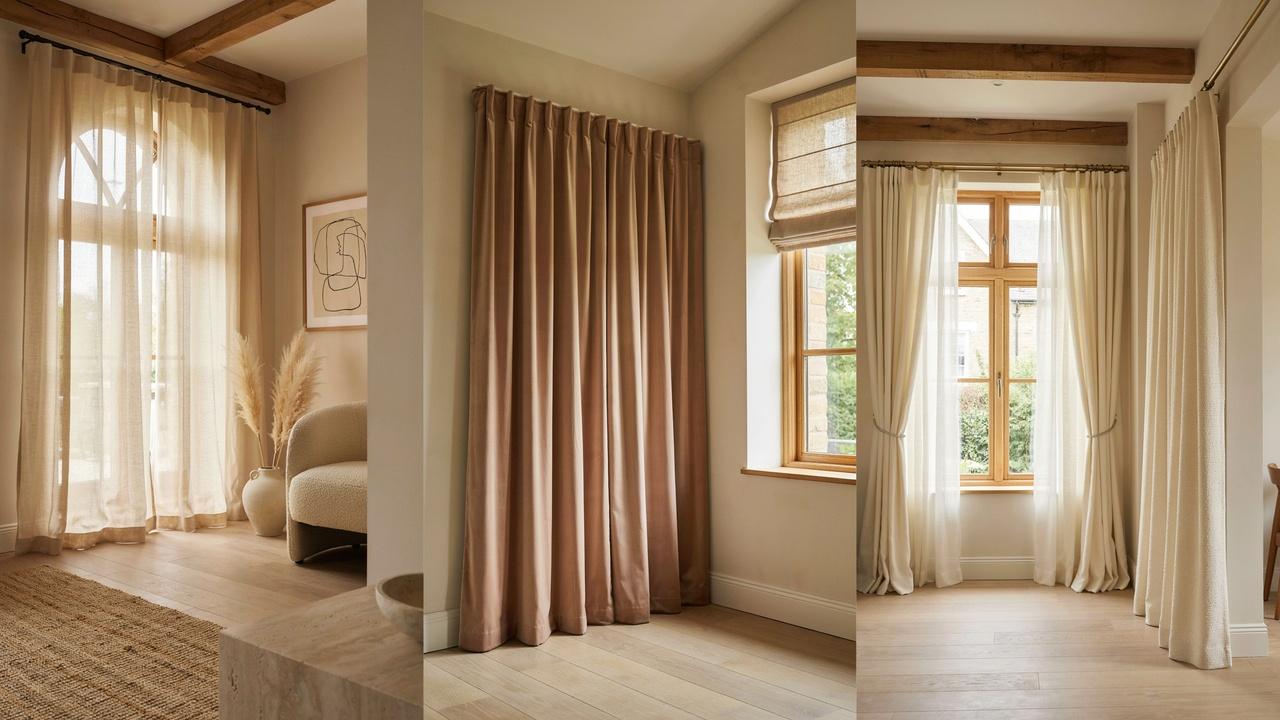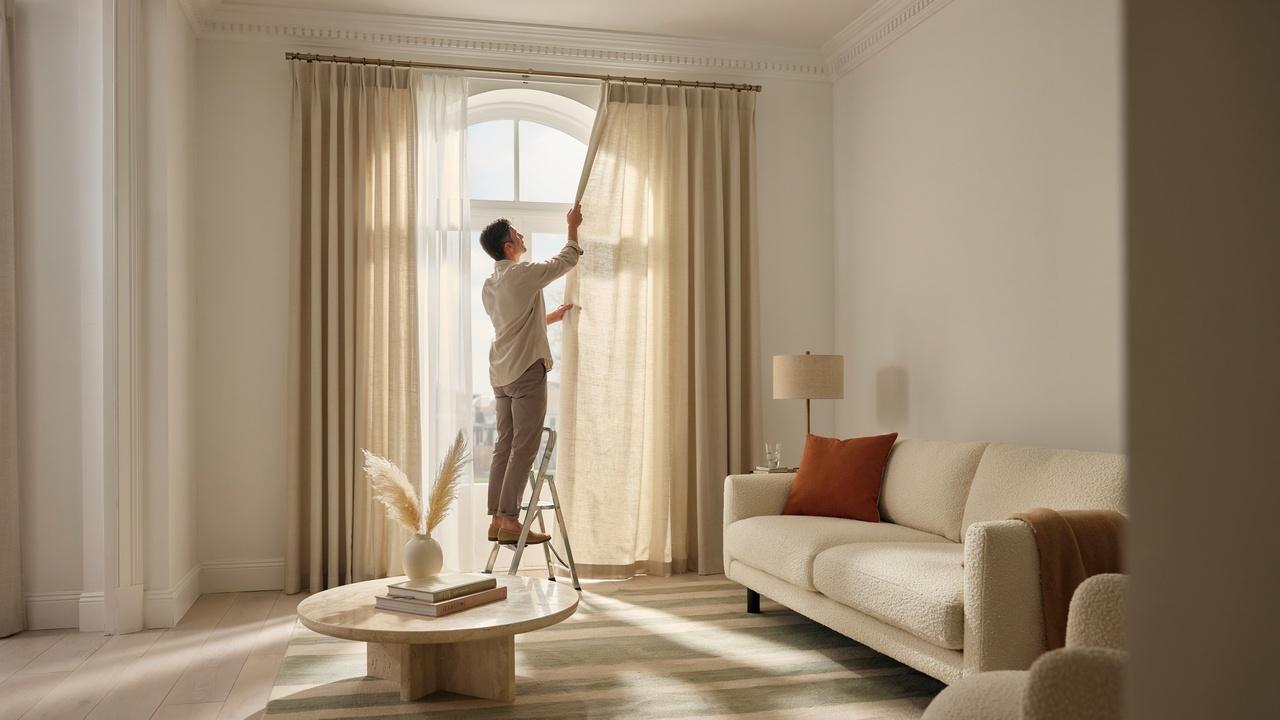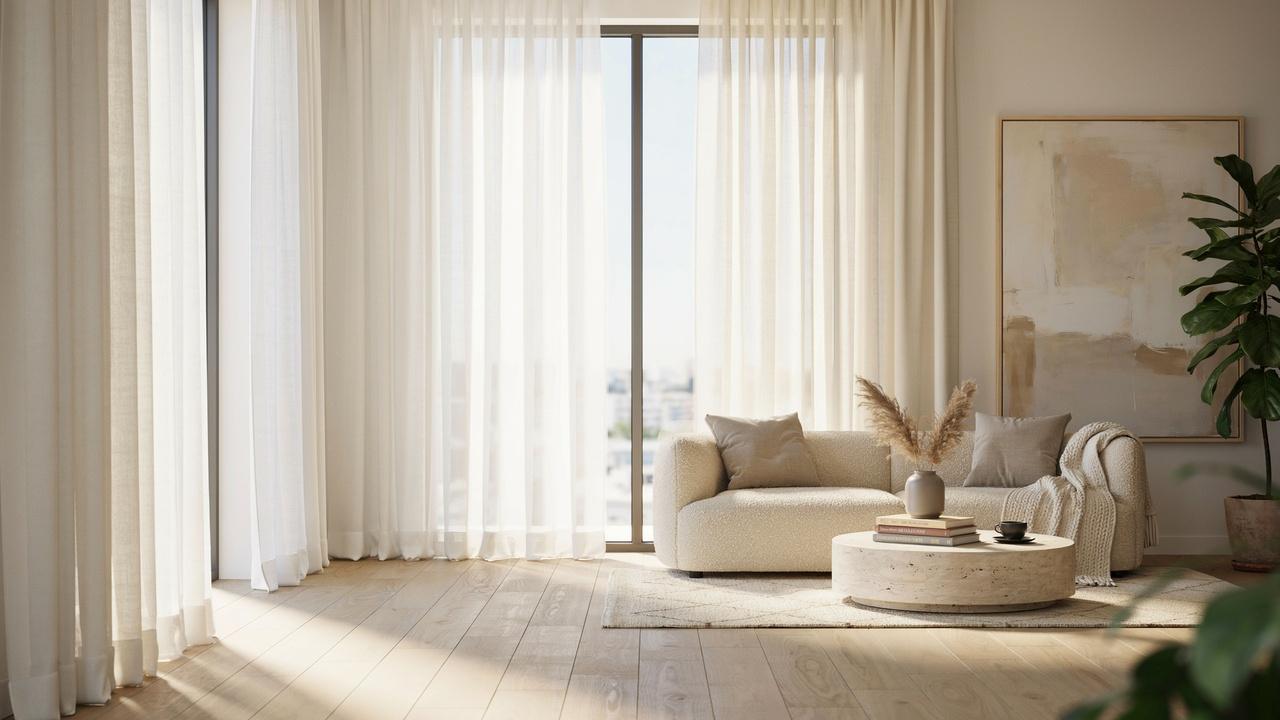

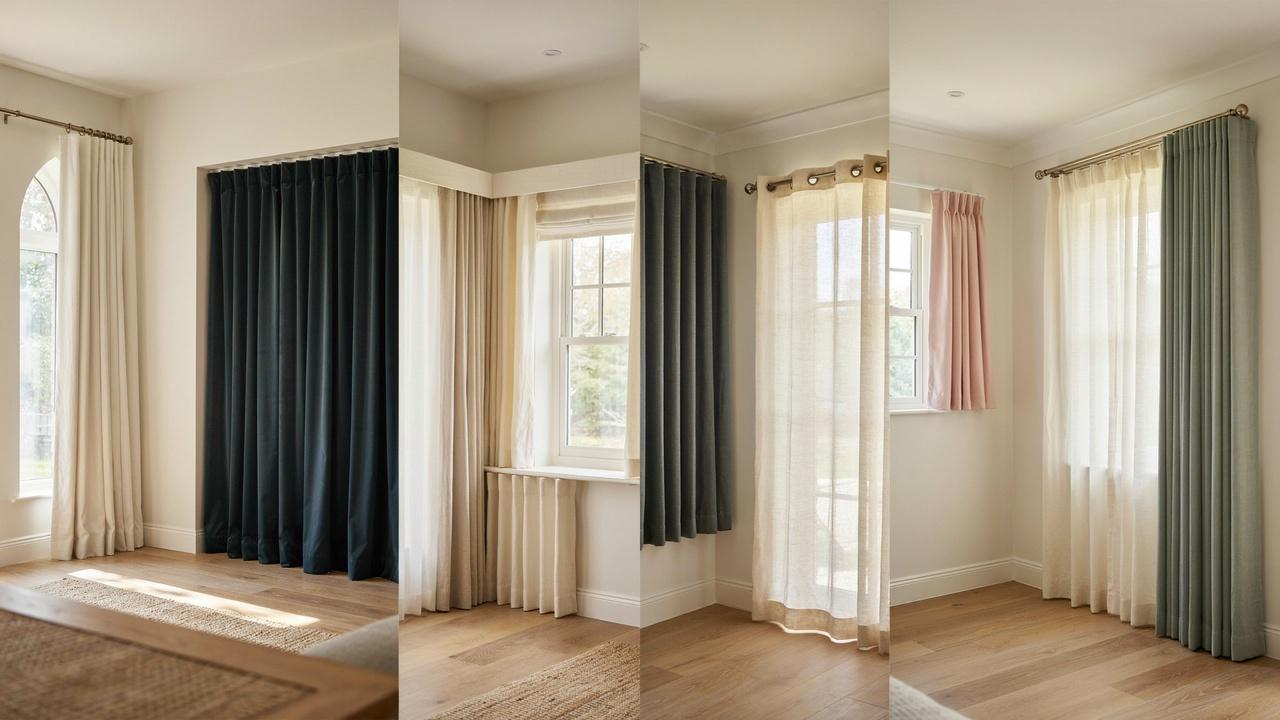
Picking the right window curtains sounds simple until you are standing in a store staring at 40 different options with no idea where to start.
Too short, too thin, too formal it is easy to get it wrong. I have been there, and after helping style multiple rooms, I know how much the right curtain can change a space.
This guide covers 23 types of window curtains, from sheer panels to blackout drapes, along with fabrics, sizing, hanging tips, and common mistakes to skip.
By the end, you will know exactly what to look for and why.
What Are the Main Types of Window Curtains?
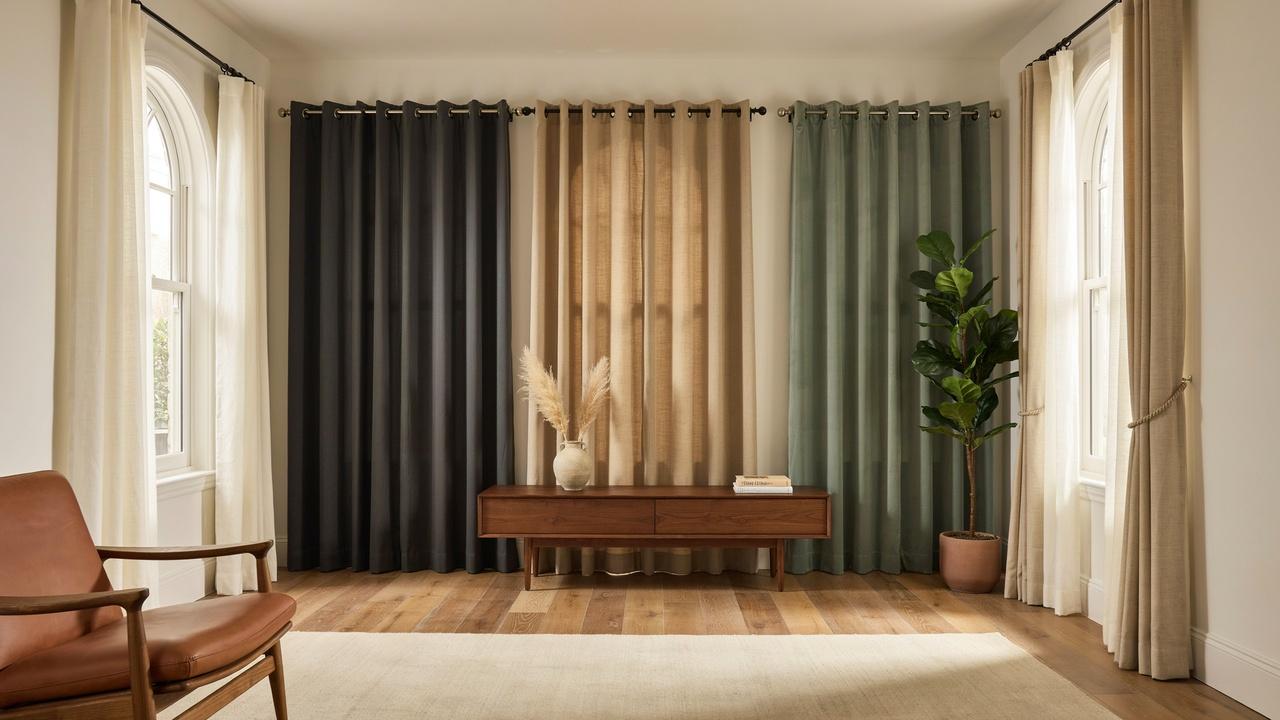
Window curtains fall into a few broad groups based on how they work and what they look like.
Some curtains are sorted by fabric, like linen, cotton, or velvet. Others are grouped by heading style, which is the way the curtain attaches to the rod.
Think grommet tops, rod pockets, or pinch pleats. A third group is sorted by function, covering options like blackout, thermal, or sheer curtains.
Most curtains fit into more than one category. A linen curtain can also be a grommet curtain. A blackout curtain can use a pinch pleat heading.
There is also a fourth consideration many people overlook: length.
Whether a curtain hits the sill, falls to an apron length, or runs all the way to the floor is a choice that shapes the whole look of the room.
Understanding these overlapping groups makes it easier to shop with a clear idea of what you need.
23 Types of Window Curtains: Stylish Designs and Ideas
Here is a look at 23 popular curtain types, what makes each one different, and where each one works best.
1. Sheer Curtains

Sheer curtains are made from lightweight, see-through fabric. Common sheer materials include voile, chiffon, and lace, each of which creates a slightly different texture and drape.
They let in a good amount of natural light while still giving you a layer of daytime privacy.
They are a popular choice for living rooms and dining spaces where you want the room to feel bright and open.
On their own, they do not block much light or provide full privacy at night. Most people layer them with a heavier panel for better coverage.
2. Blackout Curtains
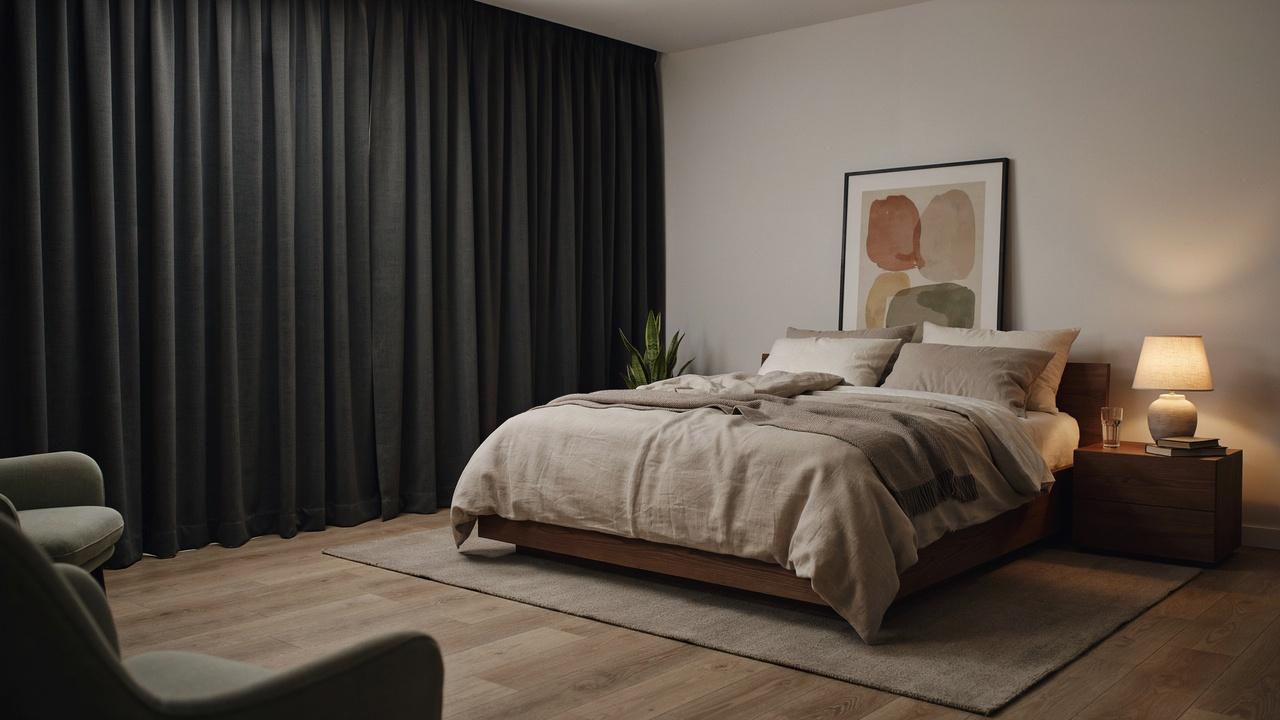
Blackout curtains are lined with a thick, opaque fabric that blocks nearly all outside light. They are a go-to for bedrooms, nurseries, and home theaters.
Beyond light blocking, they also reduce outside noise and help keep a room warmer in winter and cooler in summer.
They are one of the most functional curtain types available and come in a wide range of colors and heading styles.
3. Room-Darkening Curtains
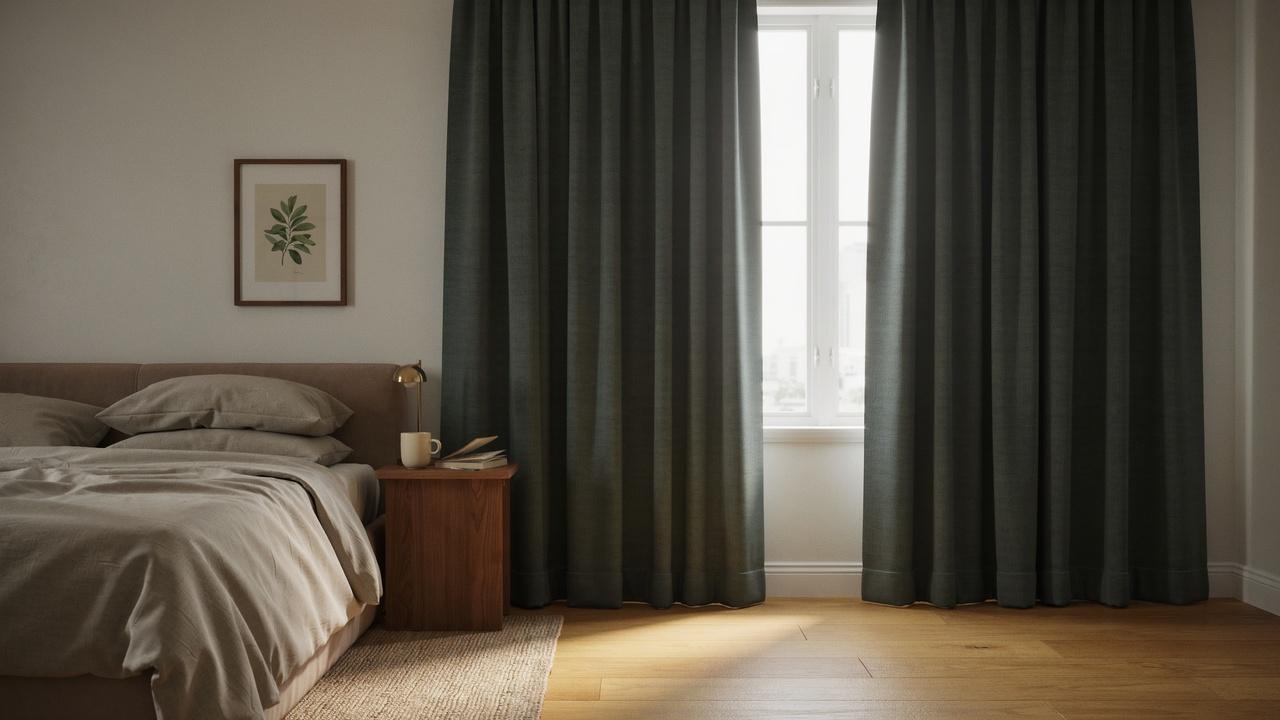
Room-darkening curtains are not quite blackout, but they come close. They block most light without creating a fully dark room.
This makes them a good middle ground for people who want to sleep in but still want some soft light in the morning.
They work well in bedrooms and living rooms where full blackout feels too intense.
If you fall somewhere between wanting a sheer and a blackout, a semi-opaque curtain is another option worth considering.
Semi-opaque panels filter light while still giving you partial privacy throughout the day.
4. Thermal Curtains
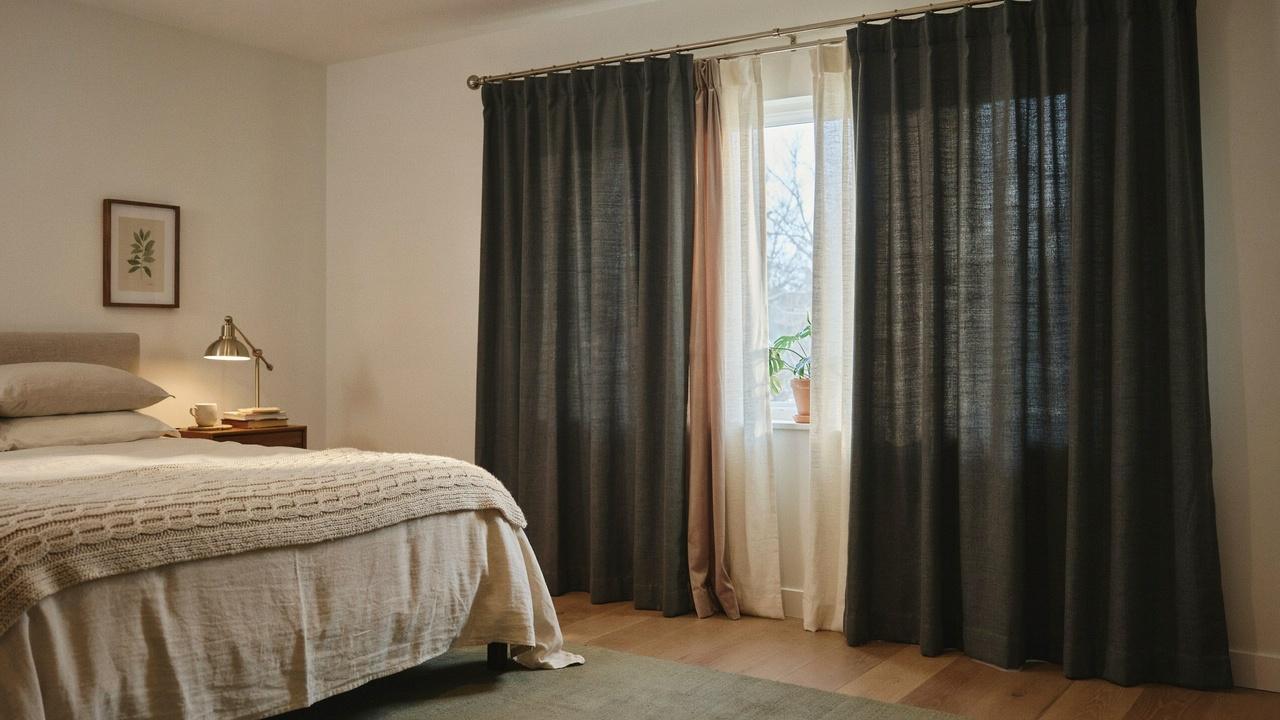
Thermal curtains have an insulating layer built into the lining. This layer traps air between the curtain and the window, which helps regulate room temperature.
They are a practical pick for rooms with drafty windows or homes in very hot or cold climates. They can noticeably reduce heating and cooling costs over time.
5. Linen Curtains
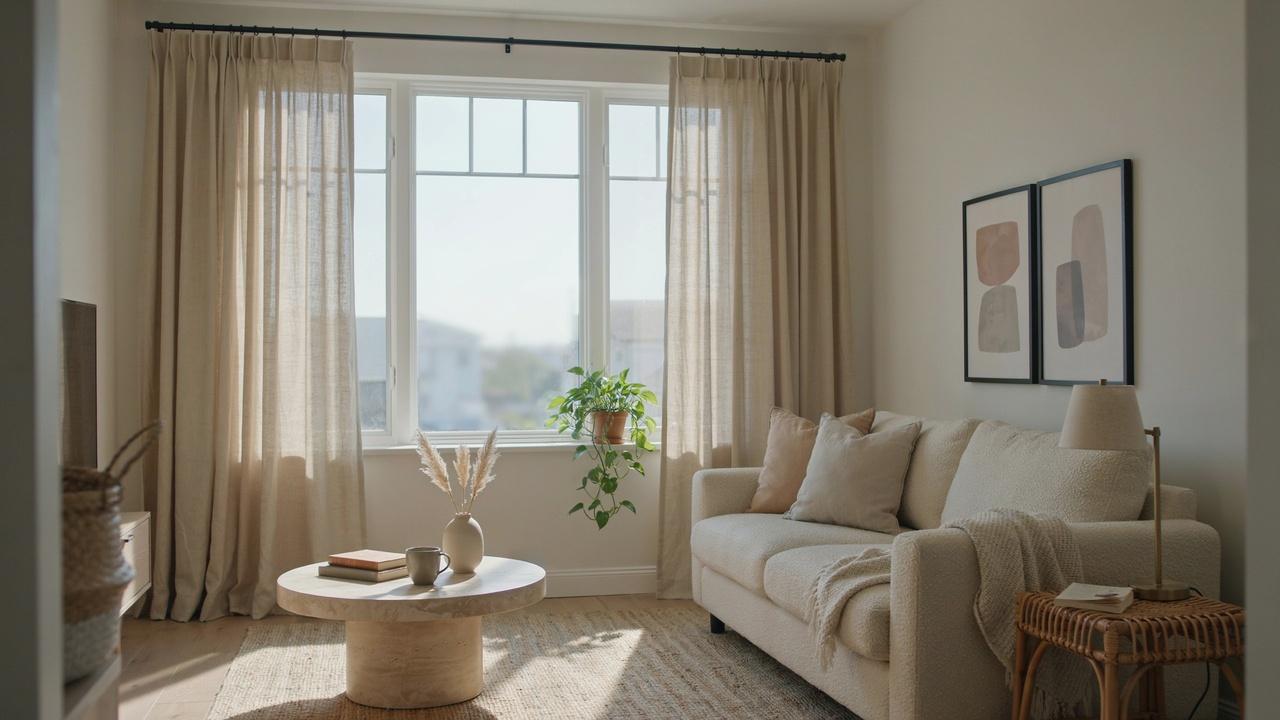
Linen curtains have a relaxed, natural look that fits well in casual and coastal-inspired rooms.
The fabric is breathable and gets softer with each wash. Linen does wrinkle easily, which some people find charming and others find annoying.
It works well in living rooms, dining rooms, and bedrooms where a light, airy feel is the goal.
6. Cotton Curtains
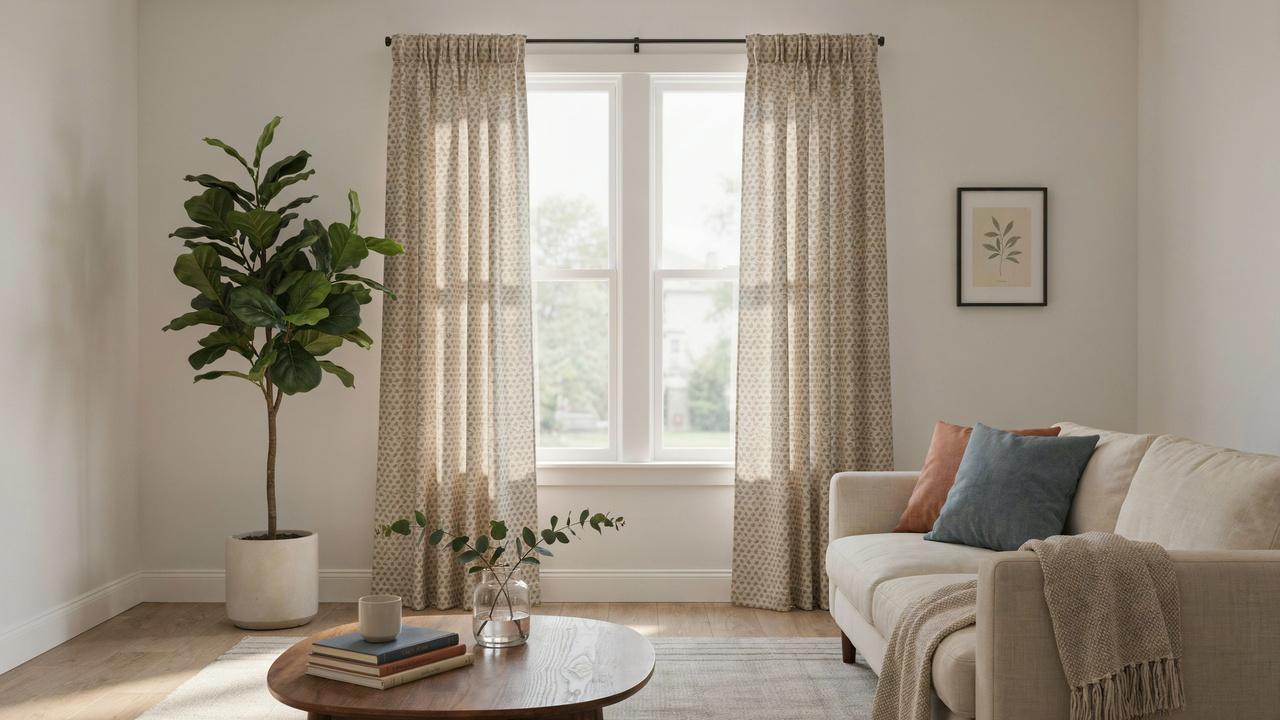
Cotton is one of the most versatile curtain fabrics. It is easy to wash, holds color well, and works in almost any room.
Cotton curtains can look casual or more formal depending on how they are made and hung.
They are a reliable option for kitchens, kids rooms, and family spaces that need something durable and low-maintenance.
7. Velvet Curtains

Velvet curtains have a rich, heavy look that adds warmth and depth to a room. The thick fabric naturally blocks some light and absorbs sound.
They are popular in formal living rooms, dining rooms, and bedrooms. Velvet can feel heavy in small or warm spaces, so they work best in larger rooms with high ceilings.
8. Grommet Curtains
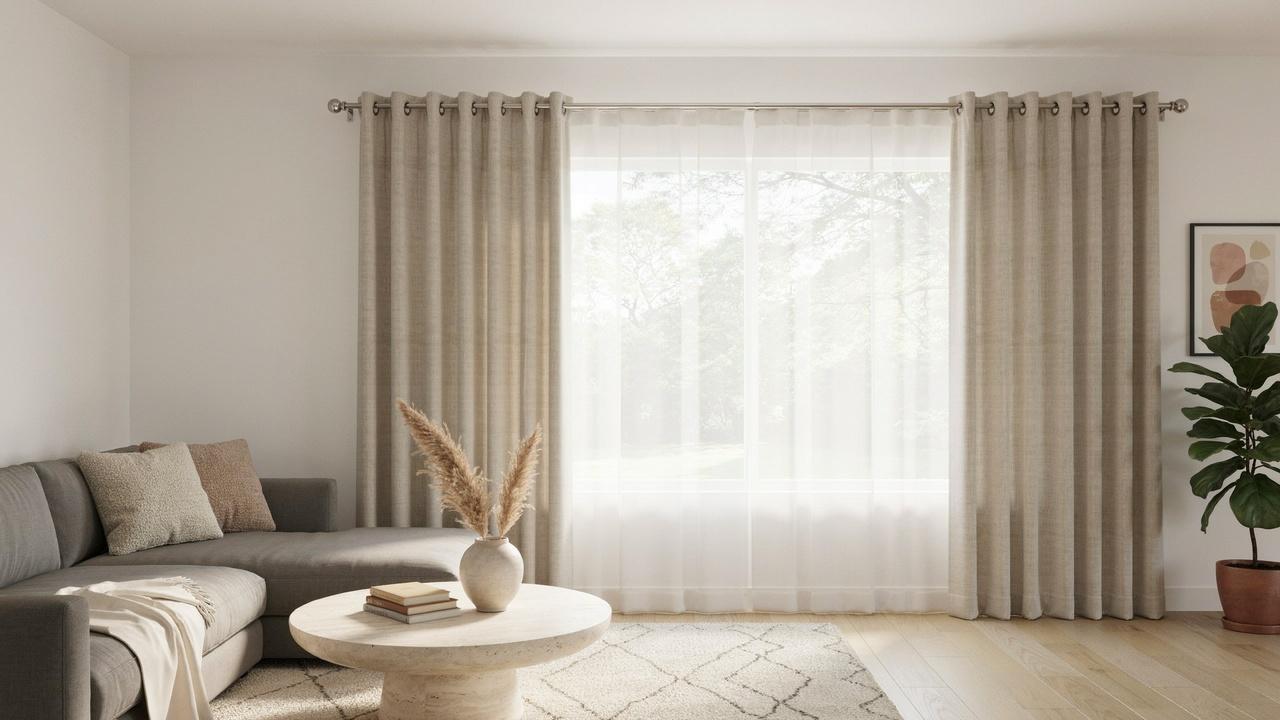
Grommet curtains have metal rings sewn along the top that slide directly onto a curtain rod. They are easy to open and close, hang evenly, and have a clean, modern look.
They are a good fit for contemporary spaces and casual rooms. One thing to note is that grommet curtains need a rod that fits through the rings, so rod size matters.
9. Rod Pocket Curtains
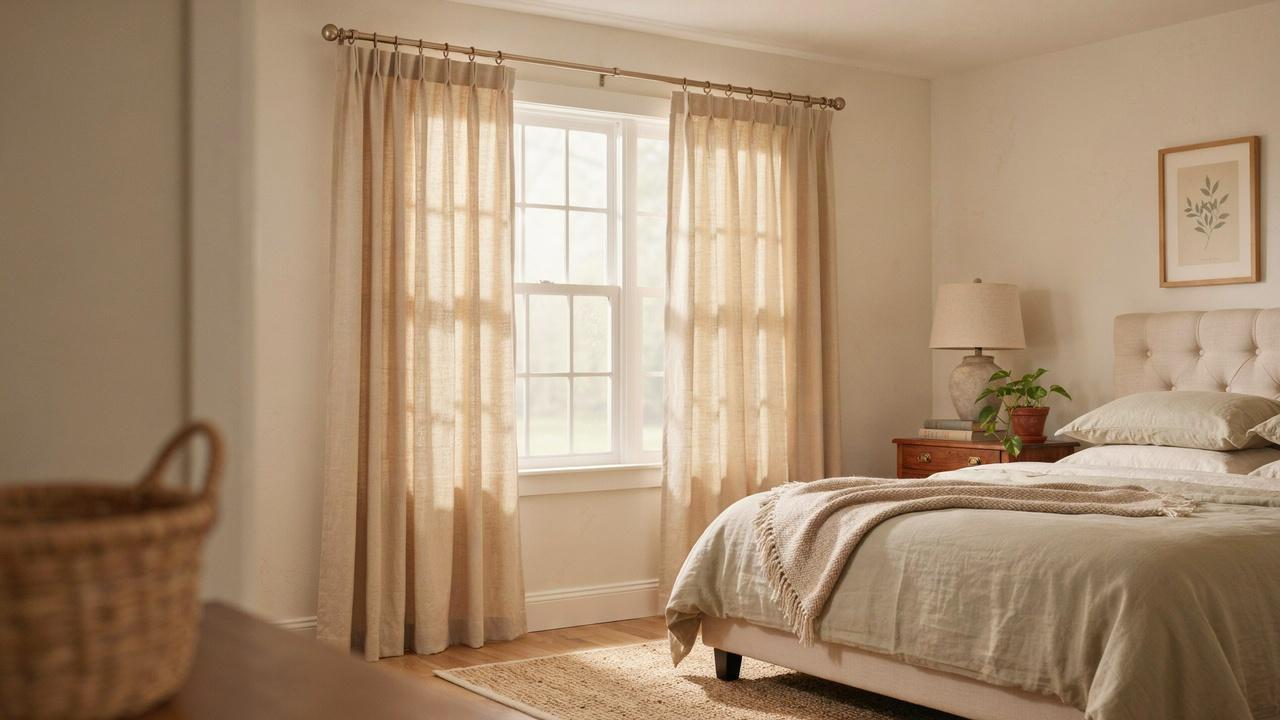
Rod pocket curtains have a sewn channel along the top that the curtain rod slides through. They create a gathered, casual look and are one of the most common curtain styles.
The downside is that they can be harder to open and close since the fabric grips the rod tightly. They work best in spaces where curtains stay in one position most of the time.
10. Tab Top Curtains
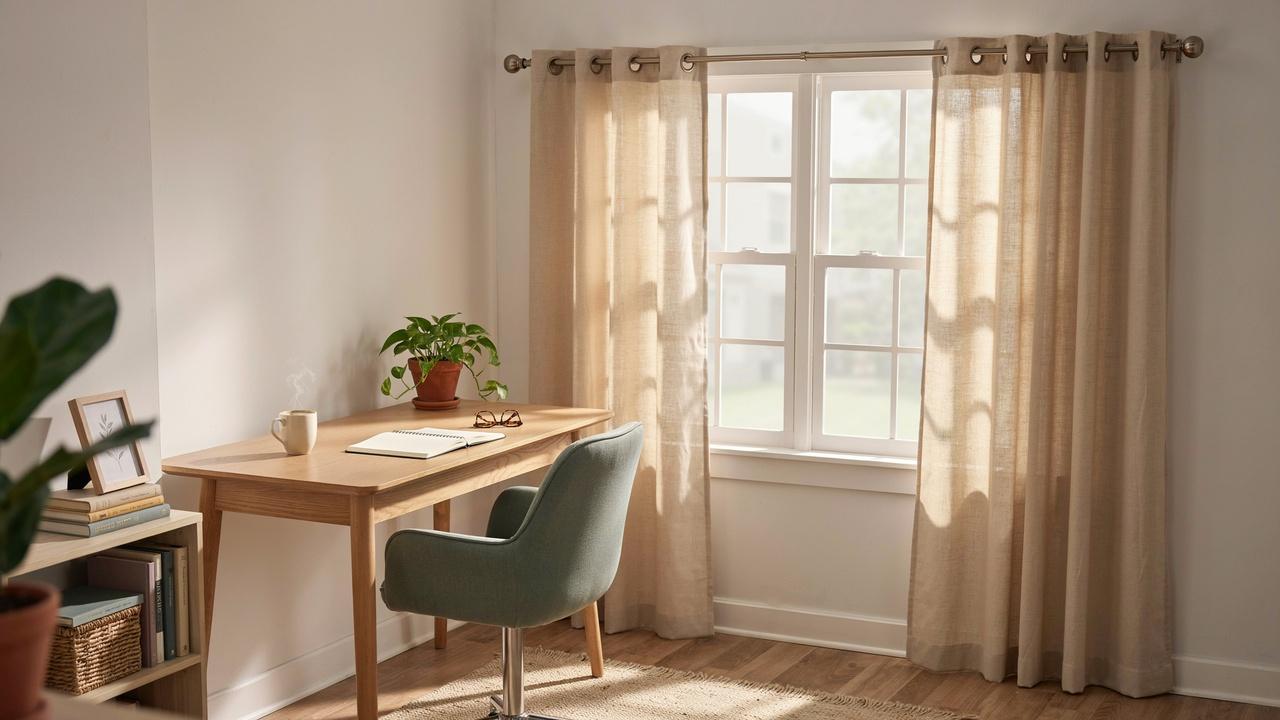
Tab top curtains have fabric loops sewn along the top that hang directly from the rod.
They have a relaxed, informal look and are easy to hang. Like rod pocket curtains, they are not the easiest to slide open and closed.
They work well in casual rooms like home offices or kids spaces where curtains are mostly decorative.
11. Pinch Pleat Curtains
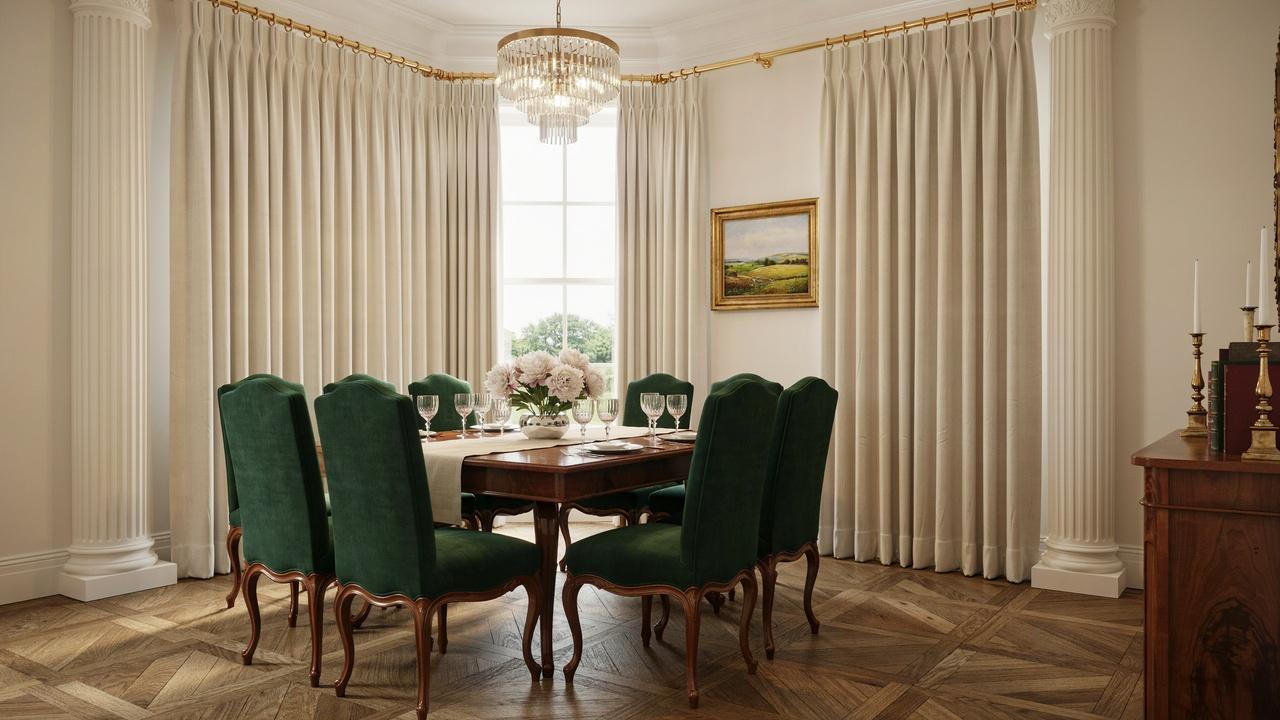
Pinch pleat curtains are sewn with groups of fabric pinched together at the top, creating structured, evenly spaced folds.
They come in single, double, and triple pinch variations, with triple pinch giving the fullest, most formal appearance.
They have a classic look and hang very neatly. They are often used in living rooms and dining rooms where a polished appearance matters.
They typically require hooks and a compatible rod or track to hang properly.
12. Pencil Pleat Curtains
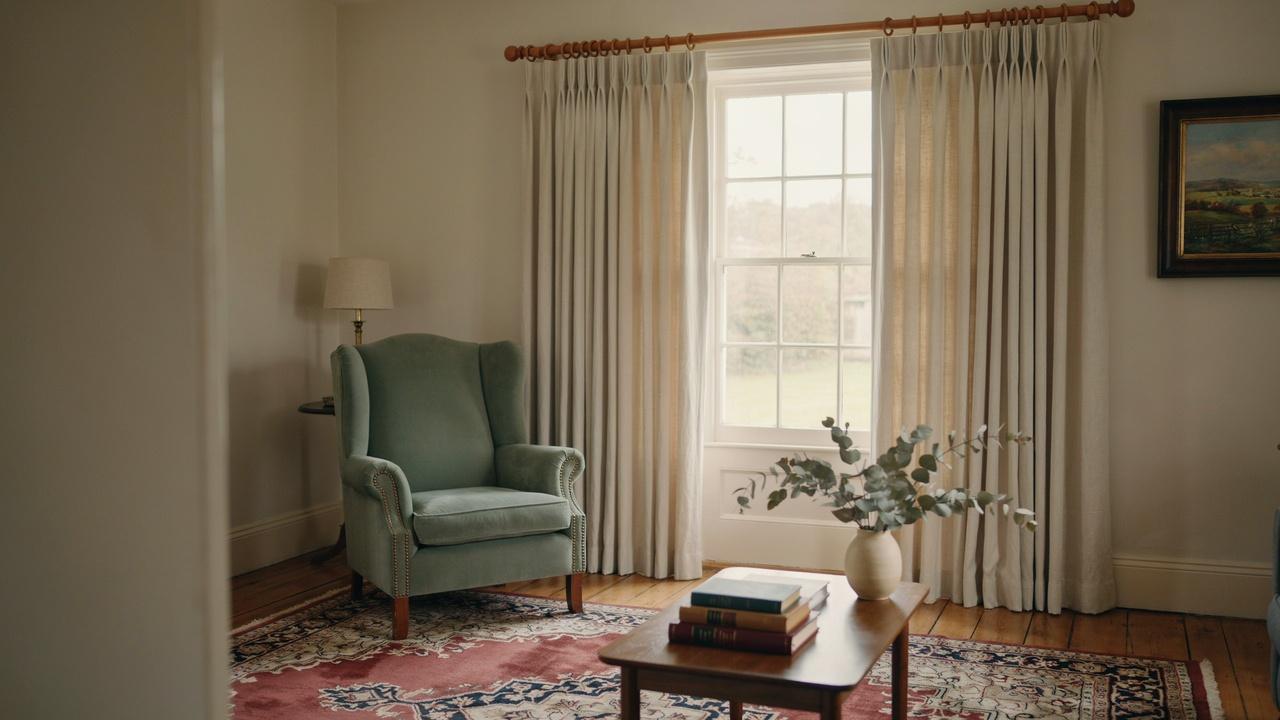
Pencil pleat curtains have tight, narrow pleats gathered across the top, similar to a row of pencils lined up side by side.
They have a neat, traditional look and work well on standard curtain rods or tracks.
They offer a bit more flexibility than pinch pleats since they can be adjusted to different widths. They suit both formal and casual spaces depending on the fabric.
13. French Pleat Curtains
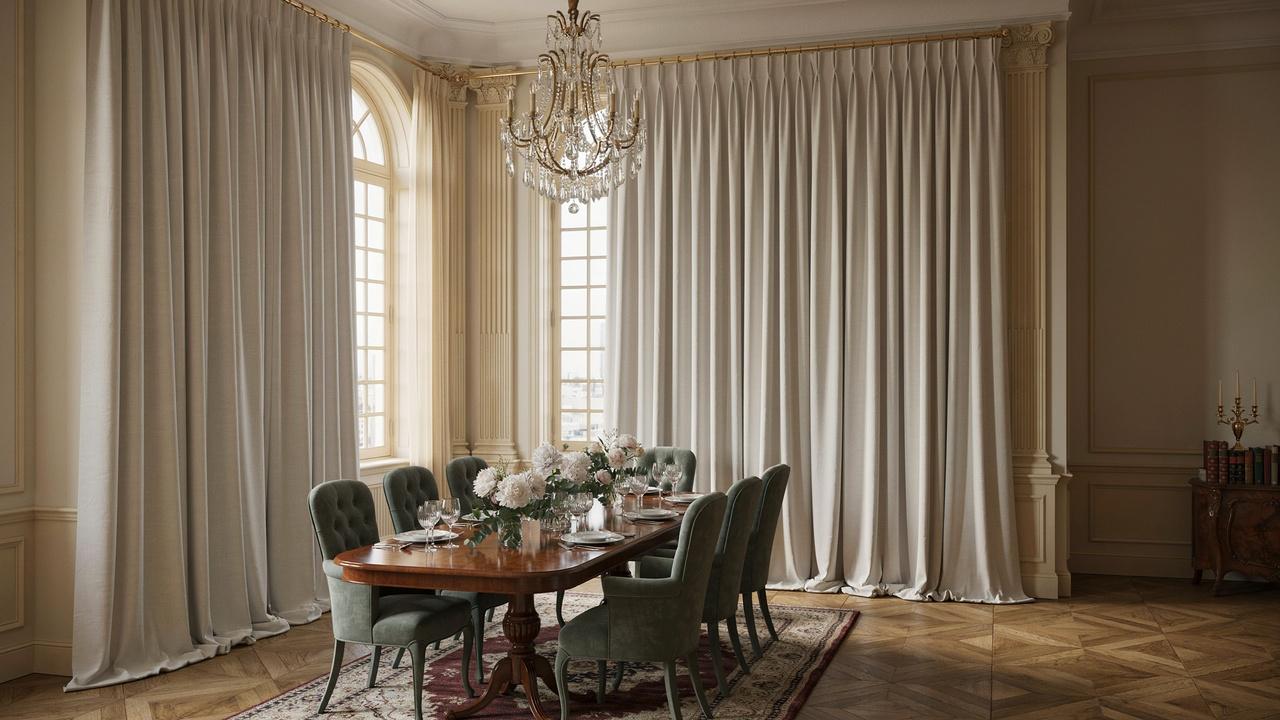
French pleat curtains are a type of pinch pleat where three layers of fabric are pinched together at the top to form a triple-fold.
They hang with deep, structured folds and have a classic, formal look. They are common in formal living rooms and dining rooms and pair well with heavier fabrics like velvet or silk blends.
14. Goblet Pleat Curtains
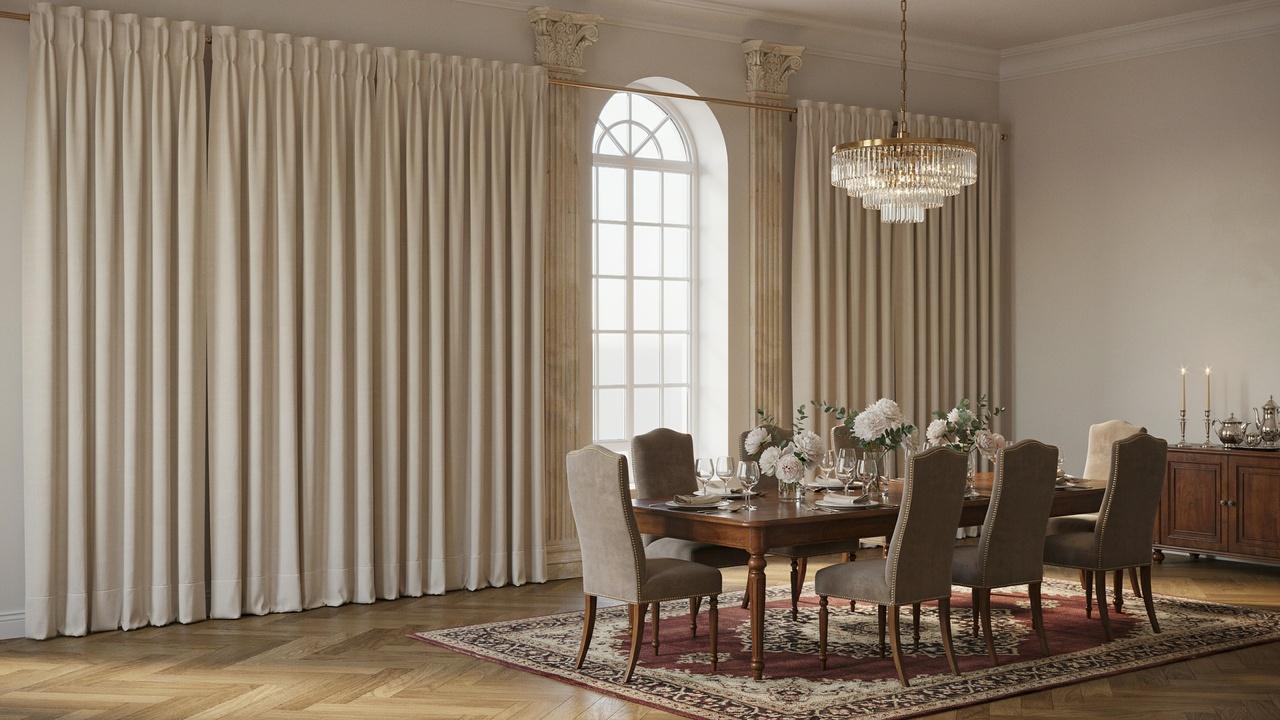
Goblet pleat curtains are similar to pinch pleats, but the top of each pleat is shaped like an open cup or goblet.
This creates a very dramatic, formal look that stands out as a design detail on its own. They are typically used in formal spaces and are often seen in hotels and upscale dining rooms.
Because the goblet shape needs to stay intact, these curtains should not be opened and closed frequently. They are best in rooms where the curtains stay mostly stationary.
15. Ripple Fold Curtains

Ripple fold curtains hang in soft, even S-shaped waves across the entire width.
They are attached to a special curtain track system rather than a standard rod, and the waves are created by evenly spaced carriers in the track.
The result is a clean, modern look that is popular in contemporary and minimalist interiors. They glide open and closed very smoothly, making them a functional choice as well.
16. Eyelet Curtains
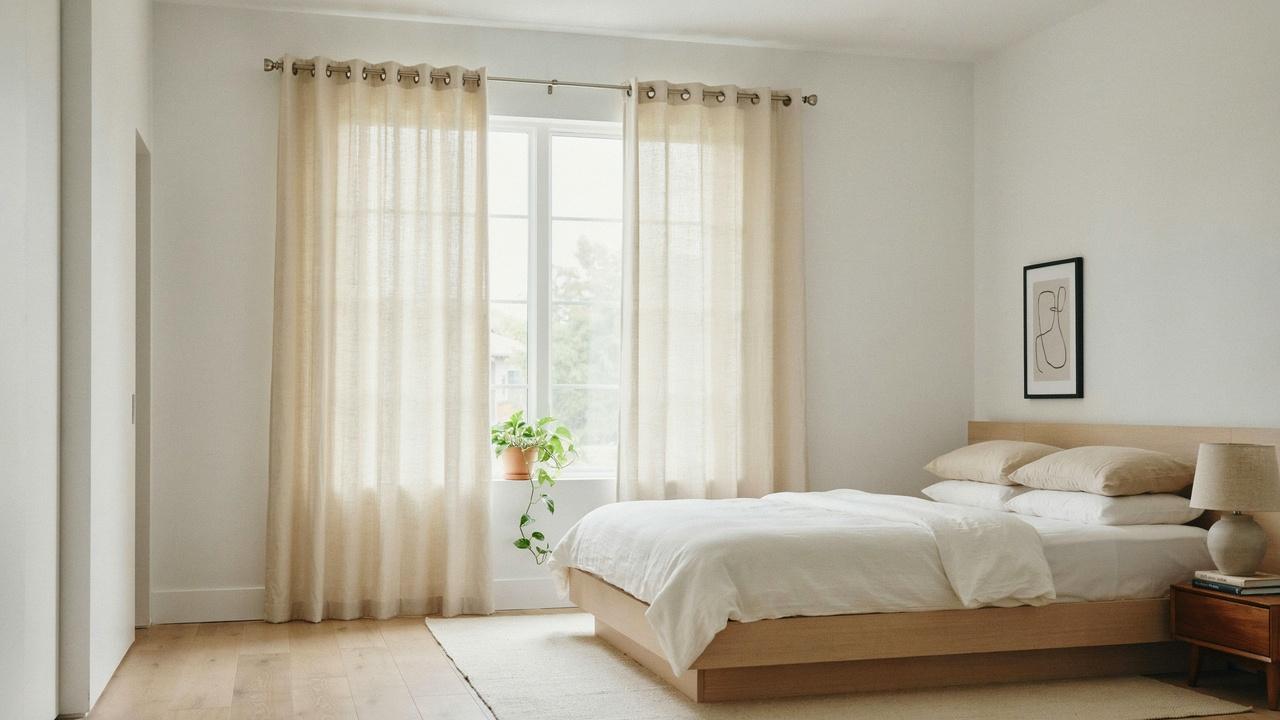
Eyelet curtains are very similar to grommet curtains. Both have rings along the top that slide onto a rod.
The main difference is size. Eyelets tend to be slightly smaller than grommets, and the term is more commonly used in the United Kingdom and Australia.
In the United States, the same style is usually called a grommet curtain. The look, function, and hanging method are nearly identical.
17. Cafe Curtains

Cafe curtains cover only the bottom half of a window. They are hung on a short rod positioned in the middle of the window frame.
This style lets in light from the top of the window while keeping the lower portion private.
They are a classic choice for kitchens and bathrooms, and the style is named after the curtains seen in European cafes and bistros.
A valance hung at the top of the window pairs well with cafe curtains for a more complete, layered look.
18. Tier Curtains

Tier curtains come in two or three separate panels that hang at different levels on the window.
The top tier and bottom tier each have their own rod, which allows you to open and adjust each section separately.
They are a popular option for kitchens, dining rooms, and bathrooms where you want layered light control without a full-length curtain.
19. Panel Curtains
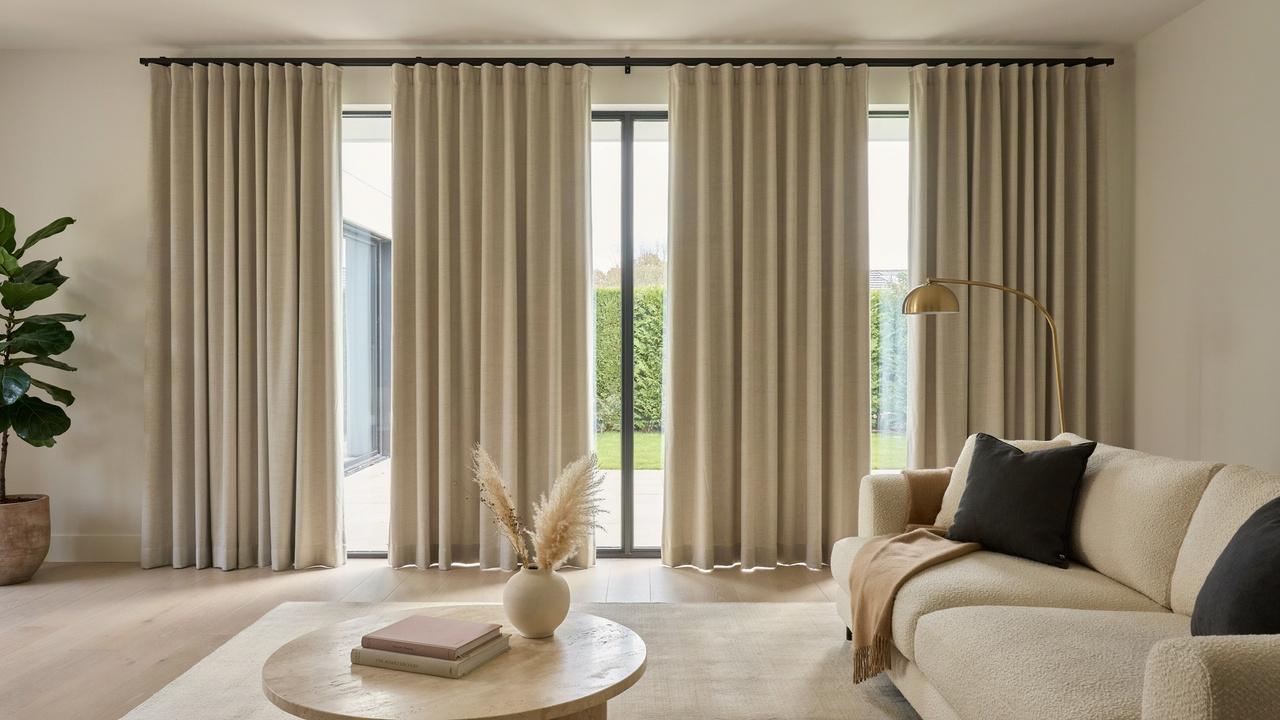
Panel curtains are large, flat fabric panels that hang from a track and slide left or right to cover or uncover a window or doorway.
They are commonly used on sliding glass doors and large window walls. Each panel moves independently, which makes them easy to adjust.
They work well in modern and contemporary spaces and are often used as room dividers too.
20. Layered Curtains
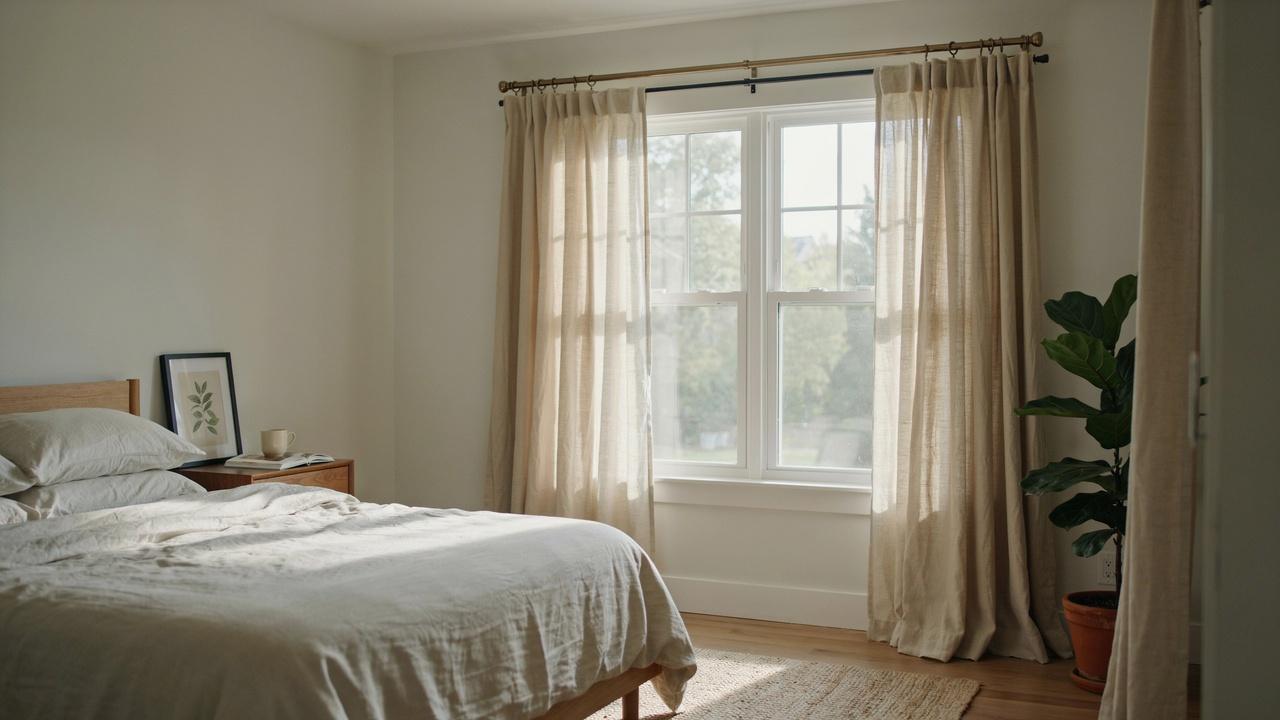
Layered curtains combine two or more panels hung on the same window, usually a sheer inner layer and a heavier outer layer.
This approach gives you full control over light and privacy at different times of day. You can pull back the outer layer during the day for filtered light and close both layers at night for full privacy.
Layering also adds visual depth and texture to a room. For added polish, pair the outer panel with decorative tiebacks or holdbacks to keep the curtains neatly framed when open.
21. Box Pleat Curtains

Box pleat curtains have wide, flat pleats folded at evenly spaced intervals along the top.
Each pleat is folded so that the extra fabric is tucked behind and creates a clean, structured look from the front.
They have a polished appearance that works well in formal rooms or spaces with a more structured decor style. They hang very neatly and hold their shape well over time.
22. Tie-Top Curtains
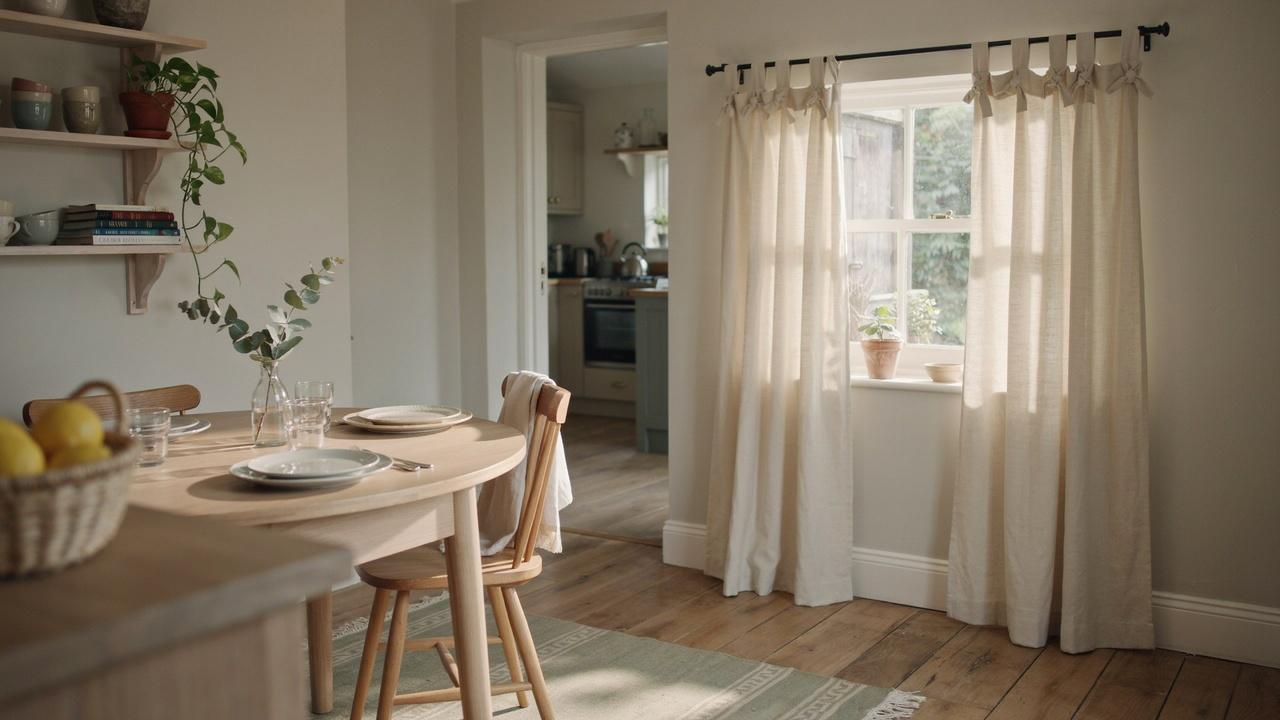
Tie-top curtains have fabric ties along the top that are literally tied around the curtain rod in a bow or knot.
They have a very casual, cottage-like look and are simple to hang. The downside is that they are time-consuming to adjust or remove.
They work best in spaces where the curtains are mostly decorative, such as a craft room, mudroom, or casual dining nook.
23. Floor-Length Curtains
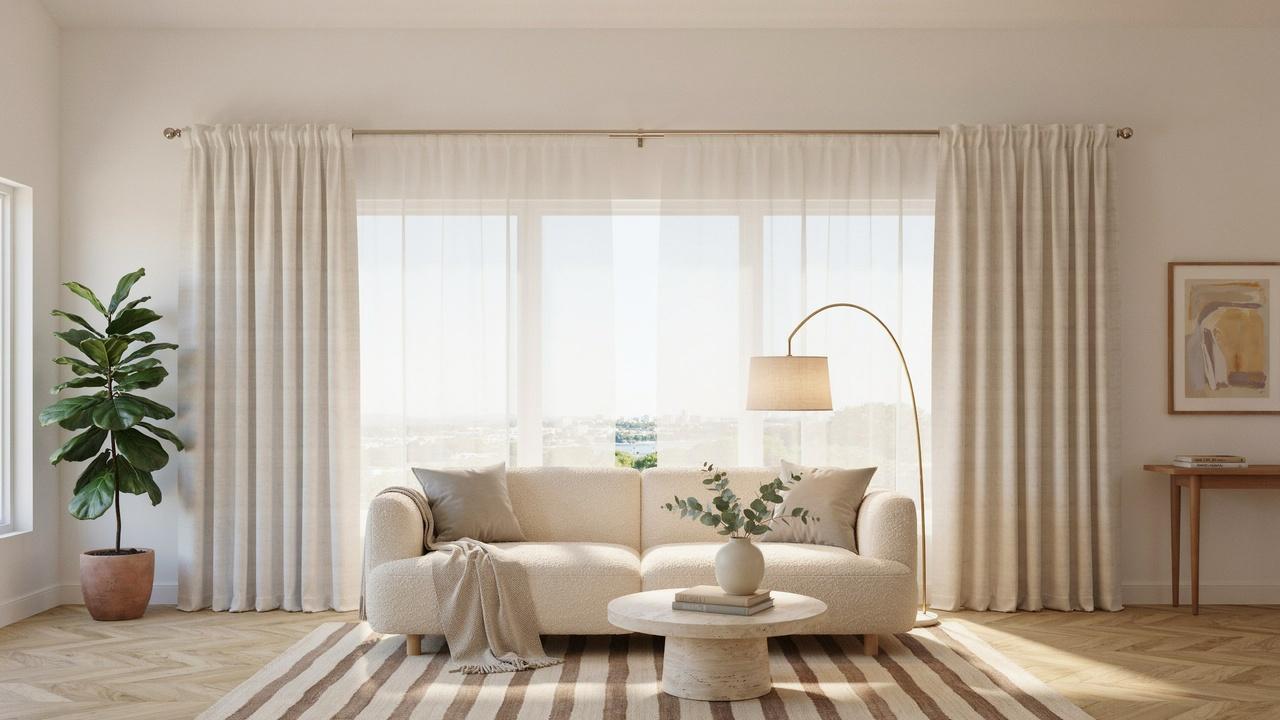
Floor-length curtains run from the rod all the way down to the floor, sometimes even pooling slightly at the base.
They are one of the most common curtain lengths and work in almost any room. They make ceilings look taller and rooms feel more finished.
In rooms with low ceilings, floor-length curtains hung close to the ceiling can create the impression of extra height.
They suit both casual and formal spaces depending on the fabric and heading style used.
If you want something shorter, an apron-length curtain, which falls just below the window sill, is a practical alternative for kitchens, bathrooms, and small windows.
How Do You Choose the Right Type of Window Curtains?
The right curtain comes down to a few key factors that affect how it works and looks in your space.
- Sheer curtains let in the most light, room-darkening curtains block most of it, and blackout curtains eliminate nearly all of it. Match the curtain to what the room actually needs.
- A street-facing bedroom needs more privacy than a backyard-facing living room. Use lined or opaque curtains in rooms where privacy matters at all hours, not just during the day.
- Heavy fabrics like velvet suit formal, larger rooms. Lighter fabrics like cotton and linen work better in casual or smaller spaces. Also think about how often you will need to wash the curtains.
- The heading style affects the overall feel. Pinch pleats and goblet pleats look more formal. Grommet and tab top curtains lean casual. The rod pocket sits somewhere in the middle.
- If your windows let in drafts or the room runs hot in summer, thermal curtains are worth it. Blackout curtains also offer some insulation value thanks to their thick lining.
- Tall, narrow windows work well with floor-length curtains hung high. For short, wide windows, use multiple panels or a style like ripple fold that spans the full width without cutting the window in half visually.
Which Curtain Fabric Is Best for Your Windows?
The fabric you choose affects light, privacy, durability, and how easy the curtain is to maintain.
Linen Curtains
Linen is a natural fiber that feels casual and breathable. It works well in rooms where you want soft, filtered light.
It wrinkles easily, which can look intentional in relaxed settings but out of place in formal rooms. Linen is not the easiest fabric to wash and may shrink slightly, so look for pre-washed options.
Cotton Curtains
Cotton is an easy, practical fabric that works almost anywhere. It is machine washable, holds up well to sunlight, and comes in a wide range of colors and prints.
It does not have the same visual weight as velvet or linen, but it is reliable and versatile. It is one of the best fabric options for everyday rooms.
Velvet Curtains
Velvet has a heavy, rich appearance and a soft texture. It naturally blocks some light and dampens sound, which makes it a functional as well as decorative choice.
It requires more care than cotton or linen and does not do well in humid rooms. It suits large rooms with strong natural light where the heaviness of the fabric feels appropriate.
Polyester and Synthetic Curtains
Polyester curtains are affordable, durable, and easy to maintain. They resist wrinkling and hold color well.
They do not breathe as well as natural fibers, but they are a practical pick for high-traffic rooms, kids rooms, or any space where durability and low maintenance matter more than premium feel.
Sheer and Lightweight Fabrics
Sheer fabrics like voile, chiffon, and lace are designed to filter light rather than block it. They add softness and depth to a window without making the room feel closed in.
They are best used in combination with a heavier curtain panel for full flexibility. The lining behind a curtain also plays a role here.
A lightly lined curtain hangs better and blocks slightly more light than an unlined one, without feeling as heavy as a fully blackout-lined panel.
What Is the Difference Between Curtains and Drapes?
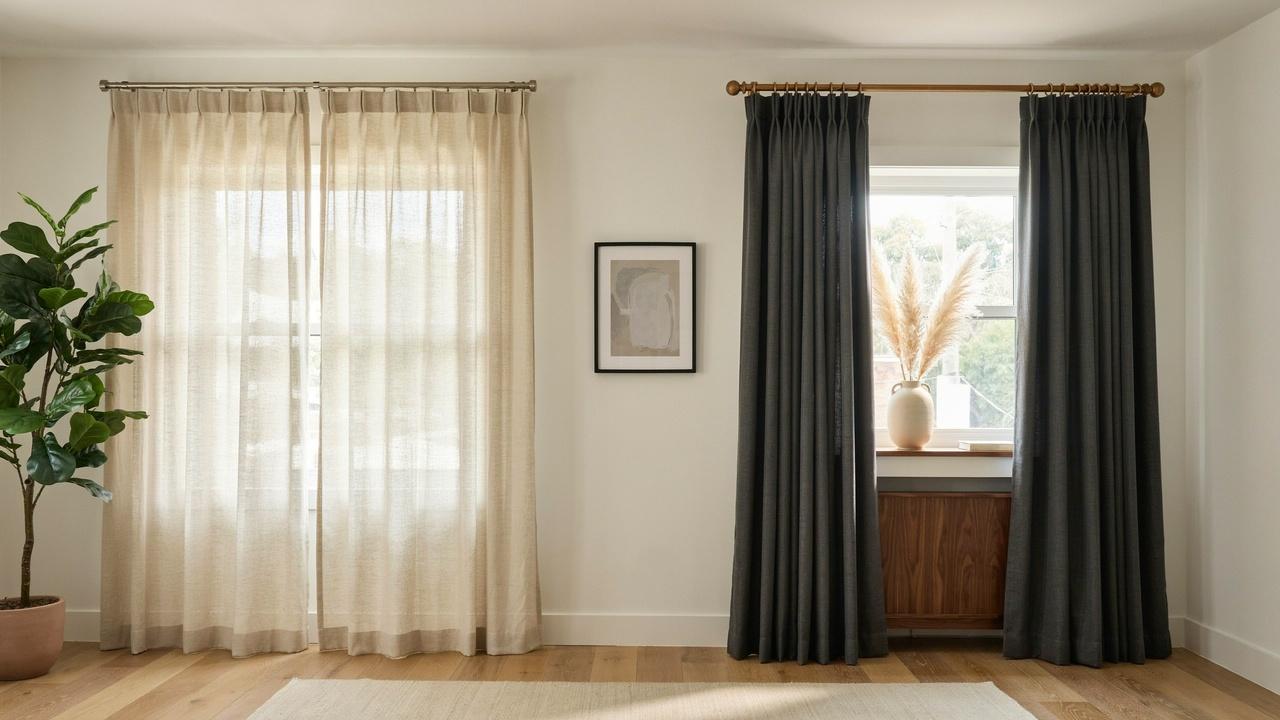
The terms curtain and drape are often used interchangeably, but there is a real difference between the two.
Curtains are typically unlined or lightly lined fabric panels. They are often lighter in weight and hang from a rod with a simple heading like a grommet or rod pocket.
They are more casual in feel and are used in a wide range of rooms.
Drapes are lined fabric panels with a more structured heading, such as a pinch pleat or French pleat. They tend to be heavier, hang to the floor, and have a more formal appearance.
Drapes are more common in formal living rooms and dining rooms where the window treatment is meant to be a focal point.
In practical terms, most people use both words to mean the same thing. But if you are working with an interior designer or purchasing custom window treatments, the distinction matters.
Sheer vs. Blackout Curtains: Which Is Better?
Neither is better overall. The right choice depends entirely on the room and what you need from the curtain.
Sheer curtains are better when you want natural light, an open feel, or a soft visual layer without blocking the view. They work well in living rooms, dining rooms, and any space where daylight is a priority.
Blackout curtains are better when you need full darkness, better sleep, or temperature control. They are the right pick for bedrooms, nurseries, and media rooms.
Many people use both in the same room. A sheer layer during the day gives you light and a view. A blackout layer at night gives you privacy and darkness. This layered approach gives you the most flexibility.
Grommet vs. Rod Pocket Curtains: Which Should You Choose?
Both are popular heading styles, and each has its strengths.
Grommet curtains slide on and off the rod easily and glide open and closed smoothly. They hang in even, casual folds and have a modern look. They are a good pick for busy rooms where you open and close curtains frequently.
Rod pocket curtains have a more gathered, casual look. They are slightly more difficult to slide open since the fabric grips the rod.
They work best in rooms where curtains stay mostly in one position, such as a bedroom or a decorative panel in a hallway.
If ease of use matters, go with grommets. If you want a softer, more traditional look and rarely open the curtains, a rod pocket is a fine choice.
Pinch Pleat vs. Pencil Pleat Curtains: What Is the Difference?
Both styles create pleated folds along the top of the curtain, but they look and hang differently.
Pinch pleat curtains have groups of fabric pinched together at specific points, creating structured clusters of folds.
They hang with defined spacing between each cluster and have a classic, formal appearance.
Pencil pleat curtains have a continuous row of tight, narrow gathers across the full width of the curtain top.
The gathers are more even and less structured than pinch pleats. Pencil pleats can be used on rods or tracks and work in both formal and casual rooms.
Pinch pleats are the better pick for a more formal or traditional space. Pencil pleats offer more flexibility and a slightly softer look.
How Do You Choose the Right Curtain Size?
Getting the size right is one of the most common points where people go wrong with curtains.
How Wide Should Curtains Be?
Curtains should be wider than the window itself. As a general rule, each curtain panel should be one to one and a half times the width of the window.
This creates the fullness that makes curtains look properly draped rather than flat and stretched.
For a 48-inch wide window, each panel should be at least 48 inches wide, with two panels totaling 96 inches or more.
How Long Should Curtains Be?
Standard curtain lengths are 63, 84, 96, and 108 inches. Floor-length curtains should end just at the floor or with a slight break of one to two inches.
A short curtain that hits mid-window or at the sill only works for cafe curtains or window sill curtains placed above countertops or furniture.
Anything else tends to look like a mistake rather than a design choice.
How High Should You Hang Curtain Rods?
Hang the rod higher than the window frame, not just above it. A rod placed four to six inches above the window frame gives the room a taller, more open feel.
In rooms with high ceilings, you can go even higher, placing the rod close to the ceiling line for a dramatic effect.
How Much Curtain Fullness Do You Need?
Fullness refers to how much extra fabric the curtain has relative to the width of the rod. A ratio of one and a half to two times the rod width creates good fullness for most curtain styles.
Sheer curtains often look best with even more fullness, around two to two and a half times the rod width, since the fabric is light and needs more of it to look full.
How Should Curtains Hang on a Window?
How you hang a curtain affects how the room looks as much as the curtain itself.
Inside-Mount vs. Outside-Mount Curtains
An inside-mount curtain is hung within the window frame. This gives a clean, built-in look and works well when you want to show off the window trim or frame.
An outside-mount curtain is hung outside the frame on a rod that extends beyond it.
This is the more common approach and allows for larger panels that cover more of the wall, making the window look bigger.
How Far Should Curtain Rods Extend Past the Window?
A good rule is to extend the rod three to six inches past each side of the window frame.
This allows the curtain panels to stack off the glass when open, which means the full window stays uncovered and lets in maximum light.
A rod that ends at the frame forces the curtains to cover part of the glass even when open.
Should Curtains Touch the Floor?
For most rooms, yes. Floor-length curtains that just touch the floor or have a slight half-inch to one-inch break at the bottom look the most polished.
Curtains that stop several inches above the floor tend to look too short.
A slight puddle of two to four inches can work in formal rooms for a more dramatic effect, but it collects dust and can be impractical in high-traffic spaces.
What Curtain Mistakes Should You Avoid?
A few simple errors can make even good curtains look wrong in a room.
- Always measure before buying and go longer when unsure. Short curtains that hover above the floor make the room feel smaller and look unfinished.
- Buy panels wide enough to create proper fullness. Narrow panels look flat and stretched when closed and barely cover the window when drawn.
- Hang the rod close to the ceiling, not just above the window frame. A low rod shrinks the apparent height of the room.
- Match opacity to the function of the room. A blackout curtain in a casual living room feels heavy, and a sheer curtain in a shift-work bedroom is not practical.
- Scale your curtains to the window and the room. A dramatic panel on a tiny window looks off, and a small panel on a large window looks like an afterthought.
How Can You Style Window Curtains for a More Polished Look?
A few simple choices in how you hang and combine curtains can make a big difference in the final result.
Layer Sheer and Blackout Curtains
Use a double rod to hang a sheer panel close to the window and a blackout or heavier panel in front.
During the day, pull back the outer panel to let in filtered light. At night, close both for full privacy and darkness. This is one of the most practical and visually appealing curtain combinations.
Use Floor-Length Curtains to Add Height
Hanging floor-length curtains high on the wall, close to the ceiling, draws the eye upward and makes the ceiling feel taller.
Even in rooms with standard eight-foot ceilings, this approach creates a more open and finished look.
Match Curtain Colors to the Room
Curtains do not need to match the wall color exactly, but they should work with it. A curtain that is one or two shades deeper than the wall creates a layered, intentional look.
Neutral curtains in cream, white, or grey work in most rooms and are easy to update as the rest of the room changes.
Mix Patterns With Solid Curtains
If the room already has patterned furniture or rugs, go with solid curtains to avoid visual clutter. If the room is mostly neutral and solid, a patterned curtain adds interest.
The key is balance, and one strong pattern in the room is usually enough.
Pair Curtains With Blinds or Shades
Curtains and blinds work well together. Roller shades or cellular shades handle the functional side of light blocking and privacy.
Curtains add the decorative layer. This combination gives you full control without relying on one treatment to do everything.
Choose Curtain Hardware That Complements the Style
The rod, finials, and rings are part of the overall window look. A sleek black matte rod works well in modern and industrial spaces.
A brass or gold rod suits warmer, more traditional rooms. Brushed nickel is a versatile middle ground that suits most spaces.
Adding a pelmet, an upholstered board that runs across the top of the window and hides the rod, is another way to give the window a grander, more finished look, especially in formal rooms.
Do not just grab whatever rod is on sale. It shows.
Conclusion
Choosing the right types of window curtains does not have to be overwhelming. Start with function, light control and privacy, then move into fabric, heading style, and sizing.
Get those basics right and the rest falls into place. If you are updating one room or rethinking every window in your home, the right curtain makes a real difference.
If this guide helped you figure out what you need, drop a comment and let us know which curtain style you are going with.
Share this article with a friend who is redecorating, and check out our other home decor guides for more practical ideas.
Frequently Asked Questions
Can you use outdoor curtains inside?
Yes, outdoor curtains work indoors. They are durable and water-resistant, which makes them a practical option for high-humidity rooms like bathrooms or sunrooms.
How often should you wash curtains?
Most curtains should be washed every three to six months. Rooms with pets, smokers, or heavy cooking may need more frequent cleaning to prevent odor buildup.
Do curtains help with noise reduction?
Thick, lined curtains absorb some sound and can reduce noise from outside. Velvet and blackout curtains offer the most sound-dampening effect among common curtain types.
What is the best curtain color for a small room?
Light colors like white, cream, or soft grey work best in small rooms. They reflect light and keep the space feeling open rather than closed in.
Can you hang curtains without a rod?
Yes. Tension rods, curtain wire, adhesive hooks, and ceiling tracks are all rod-free options. Tension rods and wire systems are the most common alternatives for renters or temporary setups.