

Hanging curtains sounds simple until crown molding gets in the way.
I have been there, standing on a ladder, unsure where to place the rod without ruining the trim or making the room look off.
This guide on how to hang curtains with crown molding walks you through every step.
You will learn where to place the rod, how high to hang curtains, and how to avoid the most common mistakes.
I have helped readers get window treatments right for years, and this guide covers everything you need for a clean, polished result.
From measuring and marking to final styling, I have got you covered from start to finish.
How to Hang Curtains with Crown Molding

Hanging curtains with crown molding is not as complicated as it looks.
The key is knowing where to place the rod, how high to go, and how to work around the molding without damaging it.
Crown molding adds a finished look to any room, and your curtains should work with it, not against it.
This means mounting brackets on the wall, keeping the molding visible, and choosing the right rod height for your ceiling.
Get these basics right and the rest of the installation falls into place quickly and cleanly.
Step-by-Step Guide on How to Hang Curtains with Crown Molding
Follow these clear steps to get your curtain placement right the first time, no guesswork needed.
Step 1: Measure Window, Ceiling Height, and Crown Molding Position

Start by identifying where your crown molding sits. Is it running along the ceiling line, or does it frame the window trim? This changes everything about how you plan your installation.
Measure the window width and height. Also measure the wall space between the top of the window and the crown molding. Write these numbers down before touching a drill.
Plan for a curtain height that makes the room feel taller. The higher the rod, the more vertical pull the room gets.
Step 2: Choose the Best Curtain Rod Placement for Crown Molding
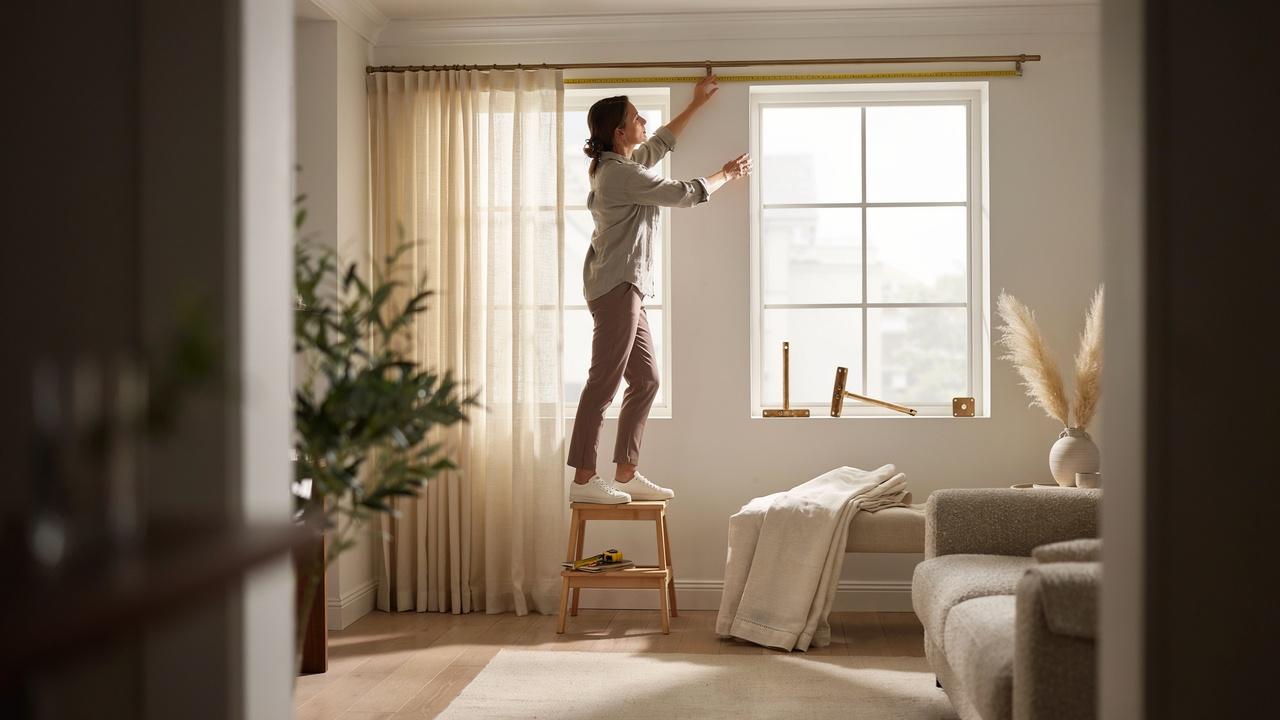
When crown molding runs along the ceiling, place your rod just below it. This gives the illusion of a taller ceiling without covering the molding.
For window trim molding, use a high and wide placement. Extend the rod 8 to 12 inches beyond the window frame on each side.
This lets in more light when curtains are open and makes the window look wider.
Keep the crown molding visible. Covering it defeats the purpose of having it.
Step 3: Mark Correct Bracket Positions for Perfect Alignment

Use a pencil to mark equal height points on both sides of the window. This step is easy to rush and costly to get wrong.
Use a tape measure and a level together. Mark both bracket spots before drilling anything. Symmetry here means a professional-looking finish.
Never drill into the crown molding itself. It is decorative, not structural, and drilling through it causes damage that is hard to repair.
Step 4: Install Curtain Rods or Ceiling Curtain Tracks
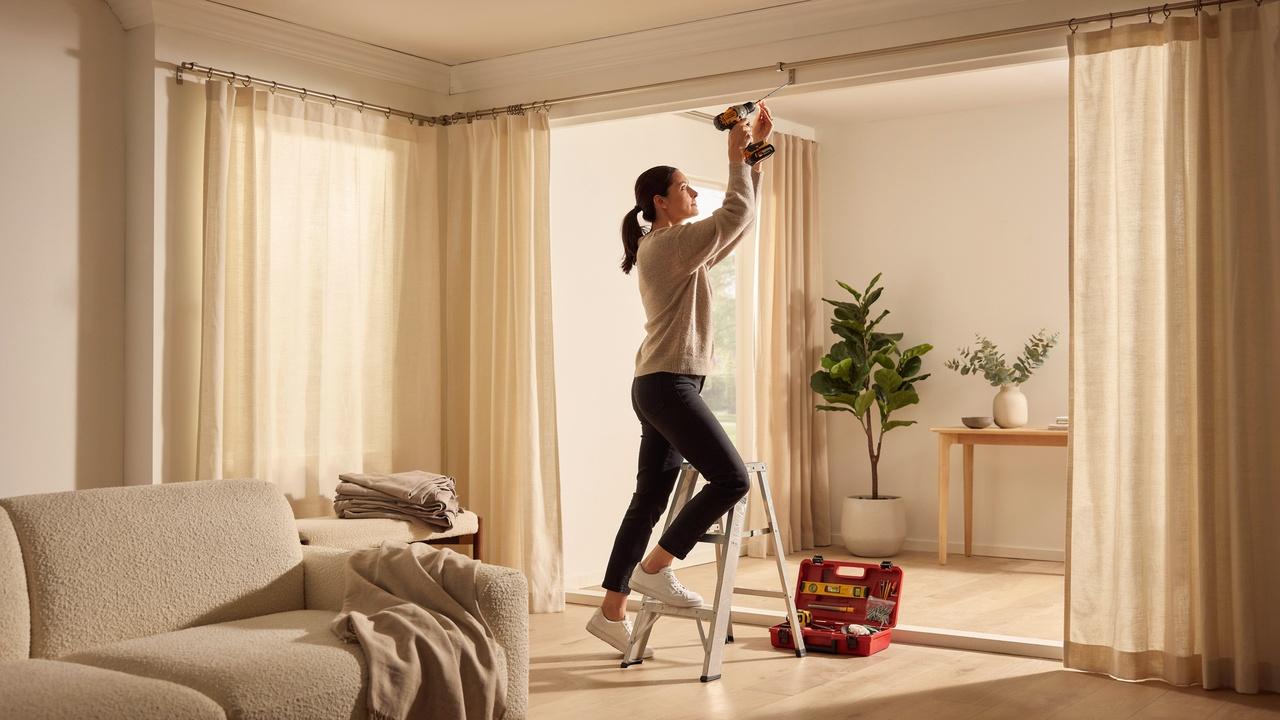
Secure brackets into wall studs whenever possible. If studs are not in the right spot, use drywall anchors rated for the curtain weight.
Hold a level against the rod after placing it in the brackets. Even a slight tilt shows once the curtains are hanging.
Choose a rod or a ceiling track based on your curtain style. Ceiling tracks work well for modern interiors and rooms with very little wall space above the window.
Step 5: Hang Curtains and Adjust for Smooth Functionality

Slide the curtains onto the rod or thread them into the track system. Open and close them a few times to check the movement.
Adjust the pleats so the fabric spreads evenly across the panel. Look for even fullness when the curtains are closed and a clean stack when they are open.
Step back and check that both panels cover the window equally on each side.
Step 6: Adjust Curtain Length and Final Styling

Choose your preferred length style. A float sits just above the floor. A break rests lightly on it. A puddle pools on the floor for a dramatic effect.
Make sure the crown molding stays visible above the curtain rod. This keeps the room looking intentional and well-planned.
Check both panels from across the room. Small adjustments at this stage make a big difference in the finished look.
Best Curtain Placement Rules for Crown Molding

Getting the placement right from the start saves you time and makes the room feel pulled together.
Ideal Height Placement for Ceiling and Window Trim Molding
For ceiling crown molding, hang the rod 1 to 2 inches below the molding. This keeps the trim visible and the curtains high.
For window trim molding, aim for 4 to 6 inches above the window frame, or go higher if wall space allows.
How Far Curtain Rod Should Extend Beyond Windows
Extend the rod 8 to 12 inches past the window frame on each side.
This allows the curtain panels to stack off the glass when open, letting in full light without blocking the view.
High and Wide Hanging for a Larger Room Effect
Hanging curtains high and wide is one of the most effective ways to make a small room feel bigger.
The vertical line draws the eye up, and the extended width makes the window appear larger than it is.
When to Use Ceiling Mount Vs Wall Mount Curtains
Use ceiling mount tracks in rooms with very little wall space above the window or in modern interiors where a seamless look is the goal.
Wall mount rods work in most standard setups and are easier to install.
Common Mistakes to Avoid When Hanging Curtains with Crown Molding
Avoid these errors to get a result that looks intentional and holds up over time.
- Hanging curtains too low is the most common mistake. It cuts the visual height of the room and makes ceilings feel closer than they are.
- Using a rod that is too short leaves curtains bunched over the glass. Extend well beyond the frame.
- Covering the crown molding with curtain fabric removes the architectural detail you are trying to show off.
- Skipping the level during bracket installation leads to a rod that tilts, which shows immediately once curtains are hung.
- Mounting brackets without checking for studs or using the wrong anchors causes brackets to pull out under weight.
Curtain Rod Installation for Crown Molding Walls
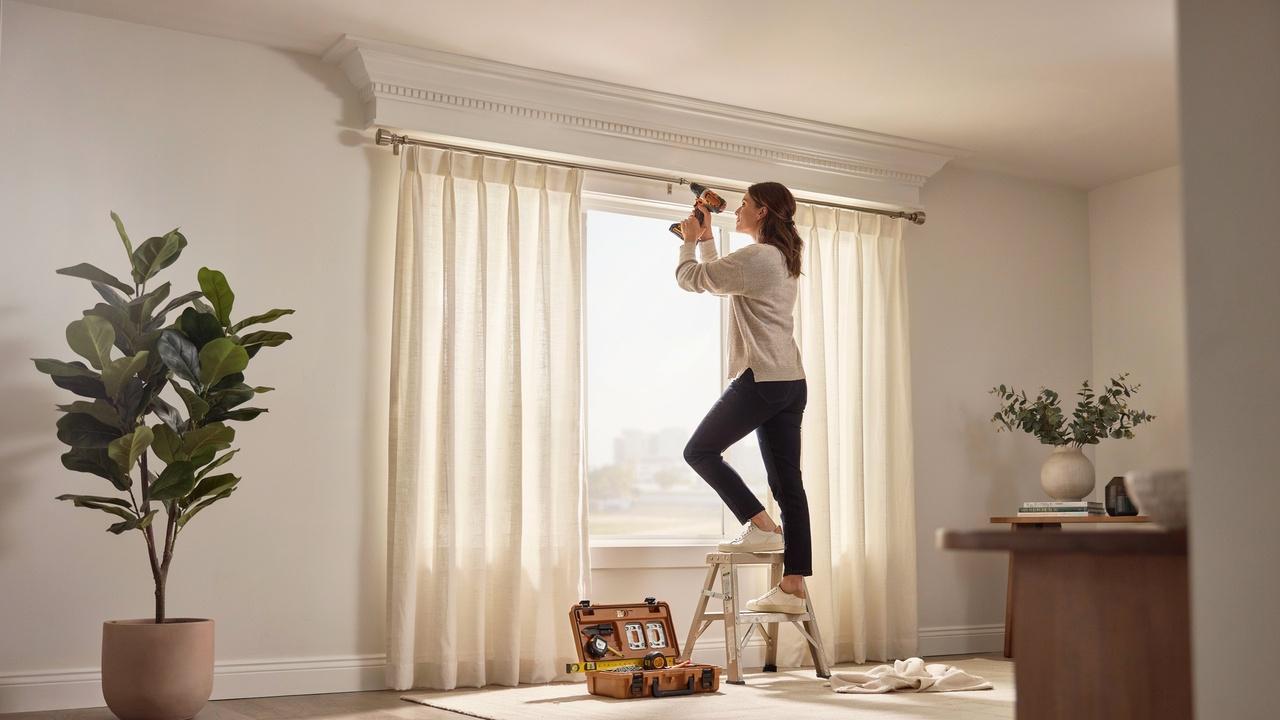
Solid installation starts with the right approach, the right tools, and knowing what to avoid.
Why You Should Never Drill into Crown Molding
Crown molding is not built to hold weight. Drilling into it can crack the wood or plaster and leave visible damage.
Always mount brackets on the wall or ceiling, not on the molding itself.
Best Tools for Accurate and Secure Installation
A stud finder, a level, a pencil, a tape measure, and a drill with the right bit are all you need. Do not skip the level.
It is the single tool that separates a clean install from a crooked one.
How to Ensure Strong Bracket Support on Walls
Find wall studs and mount brackets into them. If that is not possible, use toggle bolts or heavy-duty drywall anchors.
Check the weight rating on your hardware and make sure it matches or exceeds your curtain weight.
Using Ceiling Curtain Tracks for Modern Interiors
Ceiling tracks give a clean, hotel-style look. They work especially well when crown molding runs very close to the ceiling, leaving no room for a standard rod.
Most tracks are cut to size and mount directly into the ceiling with screws.
Pro Tips for a Designer Look with Crown Molding Curtains
Small finishing details make the difference between a room that looks finished and one that just looks fine.
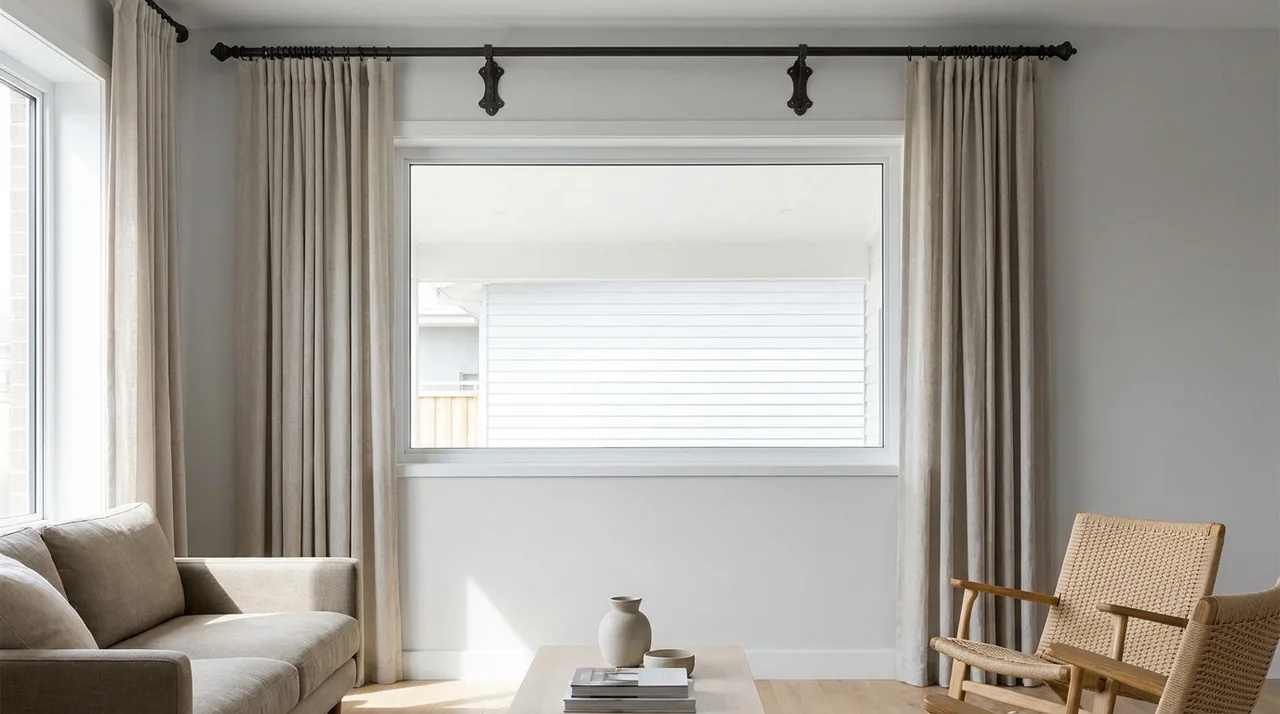
- Mount the rod as high and close to the crown molding as possible without touching it. The vertical drop of the curtain will do the rest.
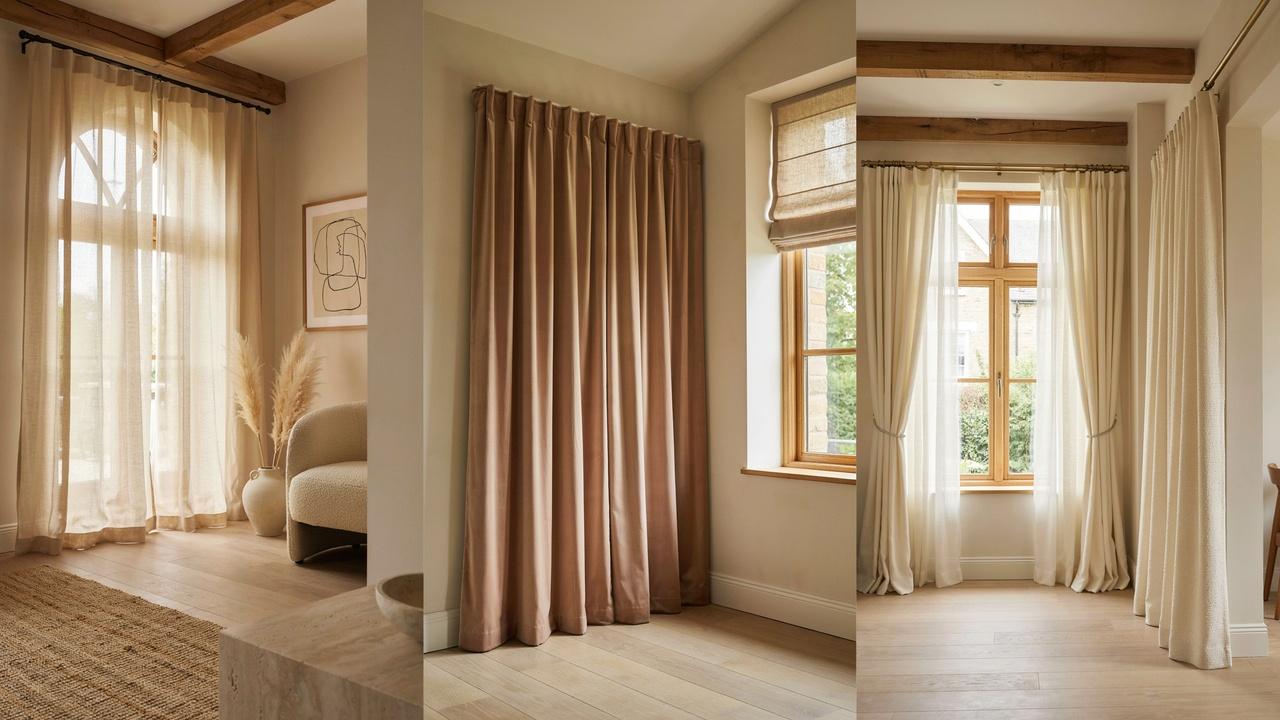
- Choose heavier fabrics like linen or velvet for a fuller, more structured look. Sheer fabrics work well layered under them.
- Match curtain rod finishes to other metal hardware in the room. Brushed brass, matte black, and brushed nickel are popular choices that work across many styles.
- Step back and view the window from the doorway after hanging. This gives you the most honest view of whether the balance is right.
Conclusion
Hanging curtains with crown molding takes a little extra planning, but it is completely manageable once you know the steps.
Hang high, extend wide, and never drill into the crown molding. These three rules will carry you through most setups without a problem.
The right curtain placement does not just cover a window. It changes how a room feels from the moment you walk in.
I used to dread this kind of project, and now it is one of my favorite finishing touches in a room. If this guide helped you, drop a comment below and share what worked in your space.
Frequently Asked Questions
Can I Hang a Curtain Rod Directly Below Crown Molding?
Yes, you can hang a rod 1 to 2 inches below the crown molding. This keeps the trim visible and gives the curtains a high, polished placement without touching the molding itself.
How High Should Curtains Be with Crown Molding?
Place the rod as close to the crown molding as possible without touching it. For most rooms, this means the rod sits 1 to 3 inches below the molding line, depending on wall space.
What Happens If I Drill into Crown Molding?
Drilling into crown molding can crack the wood or plaster and leave damage that is hard to repair. Always mount your brackets on the solid wall or ceiling surface next to the molding instead.
Should I Use a Ceiling Track or Wall Rod with Crown Molding?
If the crown molding leaves very little wall space, a ceiling track is a practical solution. For standard rooms with enough wall clearance, a wall-mounted rod works well and is simpler to install.
How Far Should the Curtain Rod Extend Past the Window?
Extend the rod 8 to 12 inches beyond the window frame on each side. This lets the curtain panels stack off the glass when open, allowing full light into the room.