
Shopping for a shower curtain can feel confusing when you see terms like PEVA, PVC, and EVA on product labels.
Most people just want something that works, stays dry, and does not smell like a factory.
A PEVA shower curtain checks all those boxes, and once you understand what it is, choosing one becomes much easier.
This guide covers what PEVA is made of, how it compares to other materials, and how to pick, use, and clean one properly.
I have helped dozens of readers sort through bathroom material questions, and PEVA comes up more than almost anything else.
By the end, you will know exactly what this material offers and whether it fits your bathroom.
PEVA Shower Curtains Explained
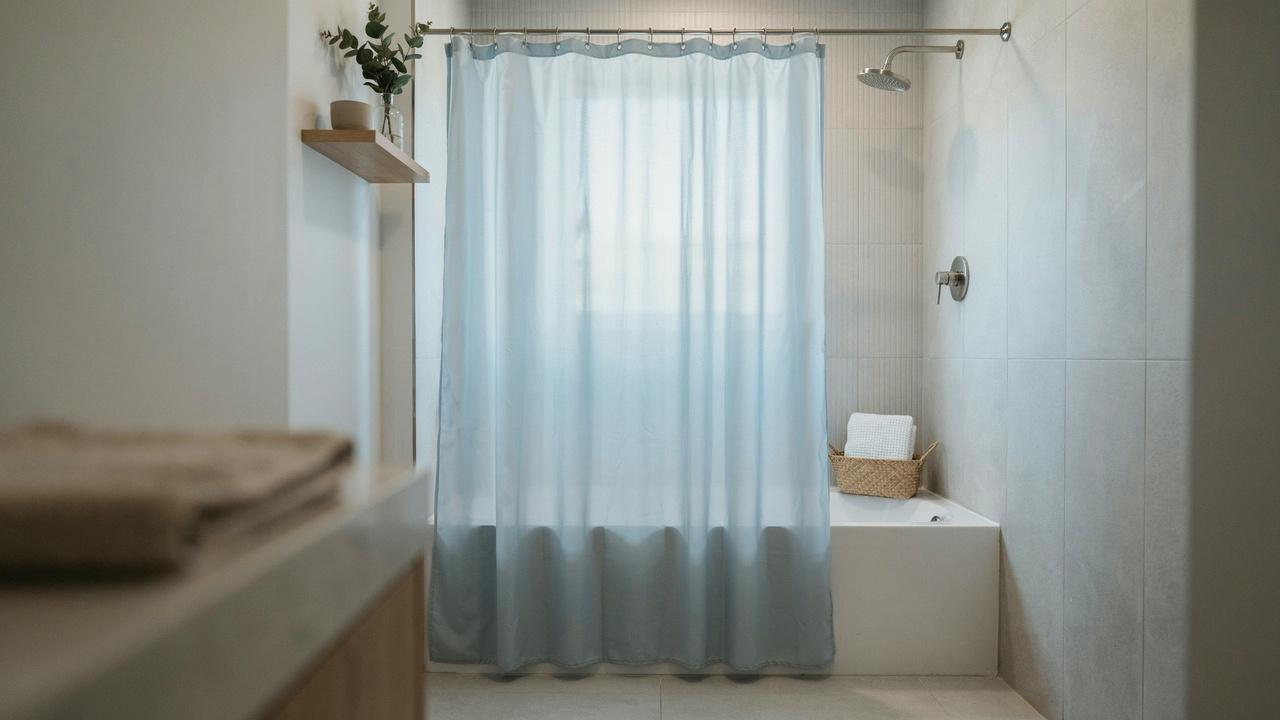
PEVA shower curtains are one of the most popular plastic curtain options on the market today.
PEVA stands for polyethylene vinyl acetate. It is a soft, flexible plastic material used in many household products, including shower curtains, tablecloths, and reusable bags.
PEVA curtains hang from a rod, create a water barrier around your shower or tub, and keep your bathroom floor dry without any complicated setup.
They are designed to be affordable, functional, and low maintenance.
Most PEVA curtains come in a wide range of colors, patterns, and sizes, making them easy to match with any bathroom setup.
Whether you are outfitting a simple guest bathroom or a family bathroom that sees heavy daily use, PEVA curtains fit into almost any situation without stretching your budget or adding to your cleaning routine.
What Is PEVA Made Of?
The material behind PEVA is simpler than most people expect, and understanding it helps you make a smarter buying decision.
PEVA is made from polyethylene, a common plastic used in packaging and containers, combined with vinyl acetate, which gives the material its softness and flexibility.
The result is a lightweight, waterproof sheet that holds its shape without cracking or stiffening over time.
This combination also makes PEVA resistant to tearing under normal bathroom conditions, which is why it holds up well around grommets and along the hem.
Unlike some plastics, PEVA does not require the addition of chlorine during manufacturing.
This makes it a cleaner option compared to materials like PVC, both in terms of what goes into it and what it releases into your home environment.
The absence of chlorine also means the production process is less chemically intensive, which is part of why PEVA has grown in popularity as a household material over the past two decades.
What Does PEVA Stand For?
PEVA stands for polyethylene vinyl acetate. The name refers to the two main compounds that are blended together to create the material.
Polyethylene gives it durability and structure, while vinyl acetate makes it soft, pliable, and resistant to cracking.
The ratio of these two components can vary slightly between manufacturers, which is why some PEVA curtains feel slightly stiffer or softer than others.
Higher polyethylene content generally means a firmer curtain, while more vinyl acetate produces a softer, more drape-friendly feel.
Knowing this can help you identify what to look for on product listings when comparing options.
What Are the Benefits of PEVA Shower Curtains?
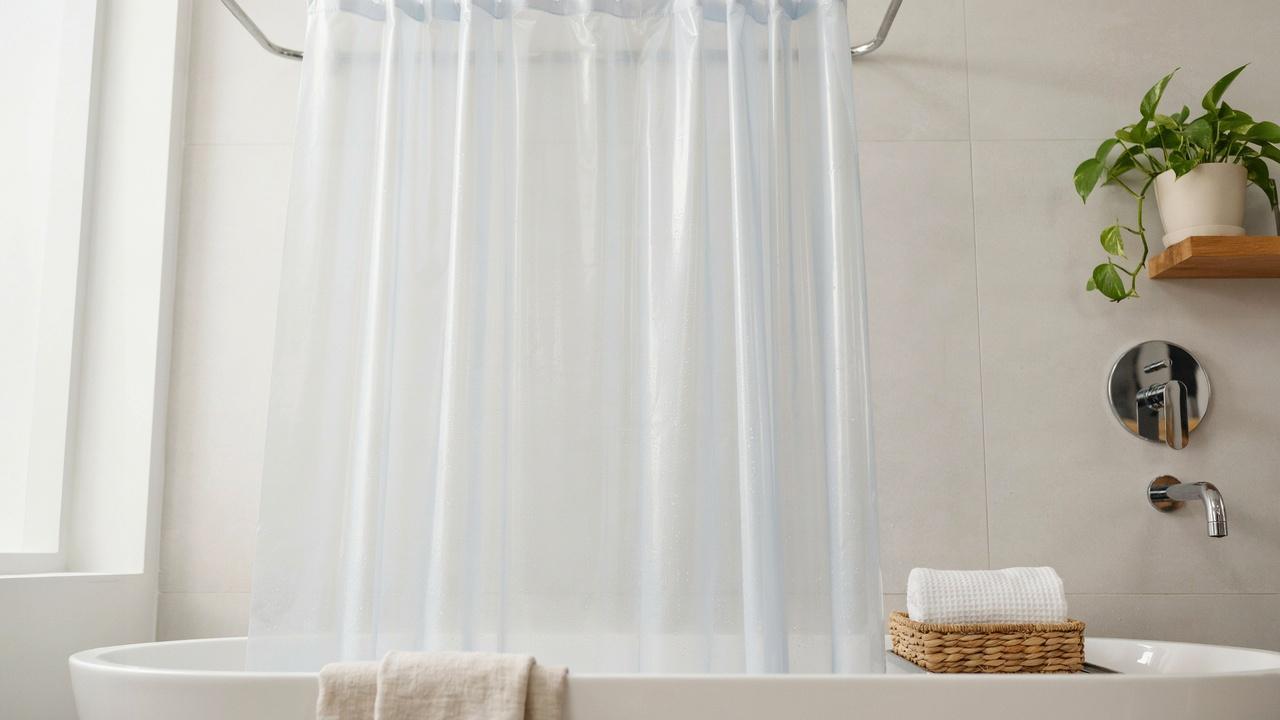
PEVA offers a solid combination of protection and practicality that makes it a reliable everyday bathroom material.
Waterproof Protection
PEVA is fully waterproof from the moment you hang it, with no preparation or treatment required.
Water beads off the surface and drips back into the tub or shower floor instead of soaking through.
This keeps your bathroom walls and floors dry without requiring any liner behind it. The waterproofing is built into the material itself rather than applied as a coating, which means it does not wear off with regular use or washing.
Even after months of daily showers, a good-quality PEVA curtain will continue to repel water just as effectively as it did on day one.
This makes it a dependable choice for bathrooms that see heavy use throughout the week.
Easy Cleaning and Maintenance
Cleaning a PEVA curtain takes almost no effort compared to fabric alternatives. A damp cloth or sponge with mild soap removes most soap scum and buildup in seconds.
Unlike fabric curtains, you do not need to run a wash cycle every few weeks to keep it looking fresh.
The smooth, non-porous surface of PEVA does not trap dirt, soap residue, or bacteria the way fabric fibers can.
This means buildup stays on the surface where it is easy to wipe away rather than working its way into the material.
For busy households where bathroom cleaning needs to be quick and manageable, PEVA makes the job noticeably easier.
Lightweight and Flexible Material
PEVA is noticeably lighter than vinyl or PVC curtains of the same size. This makes it easy to hang, reposition, and take down for cleaning without wrestling with the material.
The lightweight nature also means less stress on your curtain rod and hooks over time.
The material also folds without cracking, so storing it when not in use or transporting it for travel or camping is simple.
Even thicker, higher-gauge PEVA curtains remain manageable to handle.
If you frequently redecorate or switch out bathroom accessories with the seasons, PEVA is much easier to swap in and out than heavier plastic alternatives.
Low-Odor Alternative to PVC
One of the most common complaints about plastic shower curtains is the strong chemical smell that comes from a new one fresh out of the packaging.
This off-gassing comes from the plasticizers and chlorine compounds in PVC. PEVA produces significantly less of that odor because it does not contain those same chemicals.
Most people notice little to no smell after airing out a new PEVA curtain for a few hours, and some report no odor at all.
This is particularly valuable in bathrooms with limited ventilation, where a strong chemical smell from a PVC curtain can linger for days or even weeks before it fades.
Resistance to Mold and Mildew
Because water does not soak into PEVA the way it does with fabric, the surface dries faster after each shower.
This faster drying time significantly reduces the chance of mold and mildew developing on the curtain.
Mold needs moisture to grow, and a surface that dries within minutes of each use gives mold very little opportunity to take hold.
Keeping the curtain spread fully open after each use speeds up the drying process even further by allowing air to circulate across the entire surface.
In bathrooms with good ventilation, a well-maintained PEVA curtain can go months without any visible mold growth, which is not always the case with fabric options.
Affordable Bathroom Protection
PEVA shower curtains are available at almost every price point, making them one of the most accessible bathroom accessories on the market.
You can find a basic curtain for under ten dollars and a thicker, more durable option for around twenty to thirty.
For a material that delivers reliable waterproofing without a high price tag, PEVA is hard to beat.
The affordability also makes replacing a worn-out curtain feel less like a significant expense.
Instead of holding onto a curtain that is past its best because you paid a lot for it, you can replace a PEVA curtain without hesitation when it starts to show its age.
Are PEVA Shower Curtains Safe?
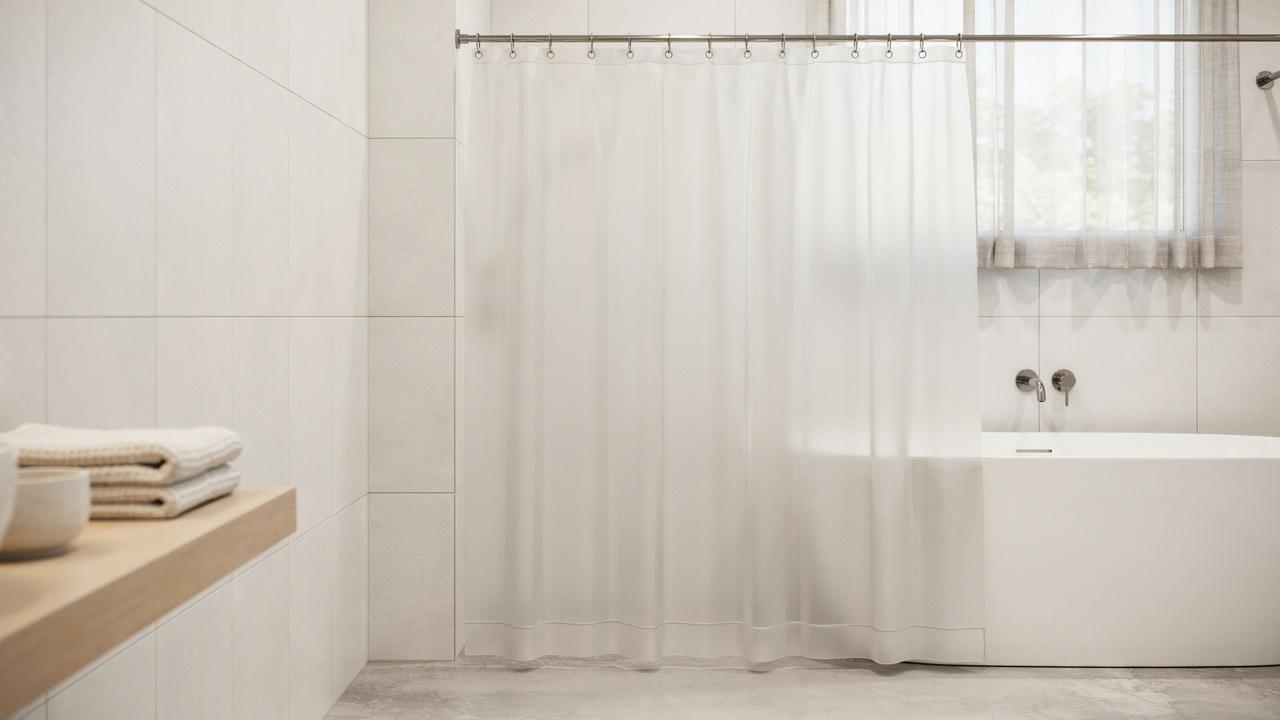
Safety is one of the most common questions people have before buying a PEVA curtain, and the answer is reassuring for most households.
PEVA does not contain chlorine, PVC, or phthalate plasticizers that have raised health concerns in studies, and regulatory agencies in the United States and Europe consider it acceptable for household use.
It appears in everything from food storage bags to children's rain gear, which reflects how broadly it is trusted for everyday contact.
On the environmental side, PEVA is not biodegradable and has limited recycling options, so organic cotton or linen curtains are worth considering if eco-impact is your main concern.
For indoor air quality and general home safety, PEVA is a widely accepted and reasonable choice for most bathrooms.
PEVA vs. Vinyl vs. EVA vs. Fabric Shower Curtains
Each shower curtain material has its own strengths, and the right pick depends on what matters most to you.
| Feature | PEVA | Vinyl (PVC) | EVA | Fabric |
| Waterproof | Yes | Yes | Yes | Needs a liner |
| Chemical odor | Low | High | Very low | None |
| Contains chlorine | No | Yes | No | No |
| Mold resistance | Good | Good | Good | Fair |
| Machine washable | No | No | No | Yes |
| Flexibility | High | Moderate | Very high | High |
| Price | Low | Low | Low to mid | Mid to high |
| Eco-friendly | Moderate | Low | Moderate | High |
| Decorative options | Moderate | Moderate | Limited | High |
How Do You Choose a PEVA Shower Curtain?
A few key details separate a curtain that lasts from one that frustrates you within a month, so it pays to look past the price tag before buying.
Choose the Right Size
Standard shower curtains measure 72 by 72 inches, which fits most standard tubs and shower stalls.
If you have a taller ceiling or a walk-in shower with extra height, look for curtains labeled as extra-long, which typically measure 72 by 84 inches or longer.
Getting the size right is more important than most people realize.
A curtain that is too short leaves a gap at the bottom that allows water to escape onto the bathroom floor, which defeats the purpose of having a waterproof curtain in the first place.
Measure your shower or tub opening before buying, and always account for the height of your rod above the floor when calculating how much length you need.
Check the Material Thickness
PEVA curtains come in different gauges, usually described in terms like 3G, 6G, or 8G, where a higher number indicates a thicker material.
Some listings use millimeter measurements instead. A heavier gauge means thicker, more durable material that holds its shape better and resists tearing.
Thicker curtains also hang more smoothly because the added weight pulls them straight without bunching or billowing as much.
For a guest bathroom that sees light use, a mid-range gauge is usually fine.
For a family bathroom where the curtain gets opened and closed dozens of times a week, investing in a thicker option will pay off in a longer lifespan and fewer replacements over time.
Look for Reinforced Grommets
The grommets are the holes at the top of the curtain where your rings or hooks slide through.
This area takes a lot of stress every time the curtain is pulled open or closed, and it is usually the first part to fail on a lower-quality curtain.
Reinforced grommets distribute that stress more evenly across the material, making them far less likely to tear over time, especially if the curtain is heavy or pulled quickly and frequently.
Metal grommets hold up significantly better than plastic ones and are worth looking for specifically if you are buying a thicker, heavier curtain that puts more downward pressure on each attachment point.
Consider Magnets or a Weighted Hem
A curtain with magnetic strips along the bottom edge or a weighted hem clings to the tub wall and prevents the curtain from blowing inward while the water is running.
Anyone who has had a light plastic curtain wrap around their legs mid-shower knows how annoying this can be.
This small feature makes a noticeable difference in keeping water contained and the shower experience more comfortable.
Magnetic closures are especially effective on freestanding tubs where the gap between the curtain and the tub wall is larger.
If your current curtain has a habit of floating inward, this is the first feature to look for in your next one.
Choose Clear, Frosted, or Opaque PEVA
Clear PEVA lets in more natural light and makes a small bathroom feel more open and less enclosed.
It is a popular choice for compact bathrooms where keeping things visually light helps the space feel larger.
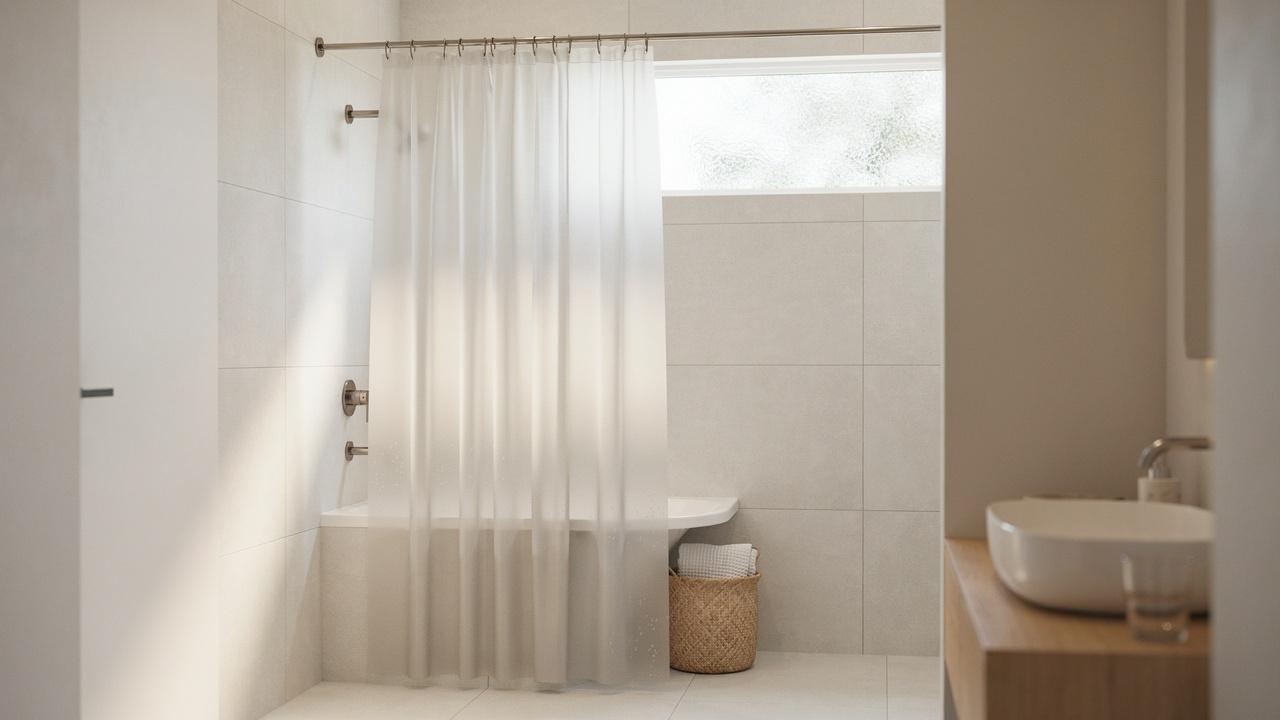
Frosted options diffuse the light while still allowing some brightness through, offering a middle ground between openness and privacy.
Opaque curtains block the view completely and are available in solid colors and printed patterns, giving you the most control over the look of your bathroom.
The choice comes down to how much privacy you want, how much light you want in your shower space, and how the curtain fits into the overall look of your bathroom.
How Do You Clean a PEVA Shower Curtain?
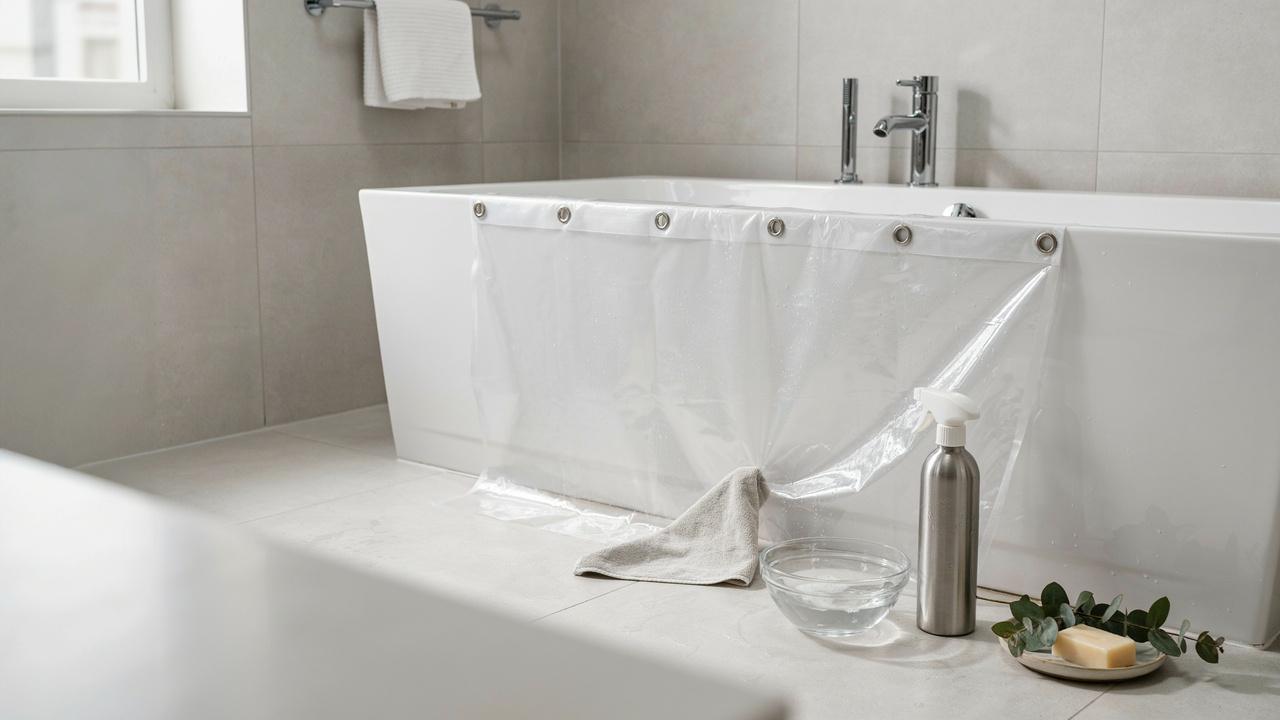
Keeping a PEVA curtain clean is one of the easiest maintenance tasks in the bathroom, and staying on top of it regularly prevents bigger problems later.
To clean it, take the curtain down or leave it hanging and wipe it down with a damp cloth and a small amount of mild dish soap or bathroom cleaner.
Work from top to bottom, paying attention to the bottom hem and any areas with visible soap scum or staining.
The bottom third of the curtain tends to collect the most buildup because it sits closest to the water and often contacts the tub floor.
Rinse with clean water once you have worked through the entire surface, then let it air dry fully before pushing it back against the wall or into the corner.
Letting it hang fully extended during drying rather than bunching it to one side will help it dry faster and more evenly.
How Often Should You Clean a PEVA Curtain?
A light wipe-down every two to three weeks keeps most PEVA curtains in good shape under normal bathroom conditions.
If your bathroom gets a lot of steam, has poor ventilation, or you notice soap scum building up faster than usual, bumping that schedule up to weekly will prevent heavy buildup from setting in.
A quick rinse with the showerhead after each use, while the curtain is still wet, goes a long way toward reducing how often you need to do a full clean.
This simple habit takes about thirty seconds and removes fresh soap residue before it has a chance to dry and harden on the surface.
How Do You Remove Mold and Mildew?
Mix equal parts white vinegar and water in a spray bottle, apply it to the affected areas, and let it sit for ten to fifteen minutes before scrubbing with a soft brush or cloth.
Vinegar works well on mild to moderate mold and is safe on PEVA.
For tougher spots, use a diluted bleach solution of one part bleach to ten parts water, rinse thoroughly afterward, and keep the bathroom well ventilated.
Avoid abrasive pads, as rough scrubbing can damage the surface and make it more likely to collect grime over time.
Can You Machine Wash a PEVA Shower Curtain?

Most manufacturers do not recommend machine washing PEVA curtains because heat and agitation can warp or crack the material, and the dryer should be avoided entirely.
Hand wiping is the safer and more effective option for regular cleaning.
If the curtain is very dirty and you want to use the washing machine, run it on cold water with the gentlest cycle available, remove it immediately when done, and hang it to air dry completely before putting it back up.
How Long Does a PEVA Shower Curtain Last?
The lifespan of a PEVA curtain depends on its thickness, how often it is used, and how well it is maintained.
A basic thin curtain typically lasts six months to a year, while a thicker, higher-gauge option that is cleaned and dried regularly can last two to three years or more.
Replace your curtain when you notice yellowing, cracking, persistent mold stains, torn grommets, or a permanent musty smell that will not go away with cleaning.
Replacing a PEVA curtain costs very little compared to most bathroom accessories, and even if it does not outlast a fabric option, the low price makes it easy to swap out without much expense.
Is PEVA a Good Choice for Your Bathroom?
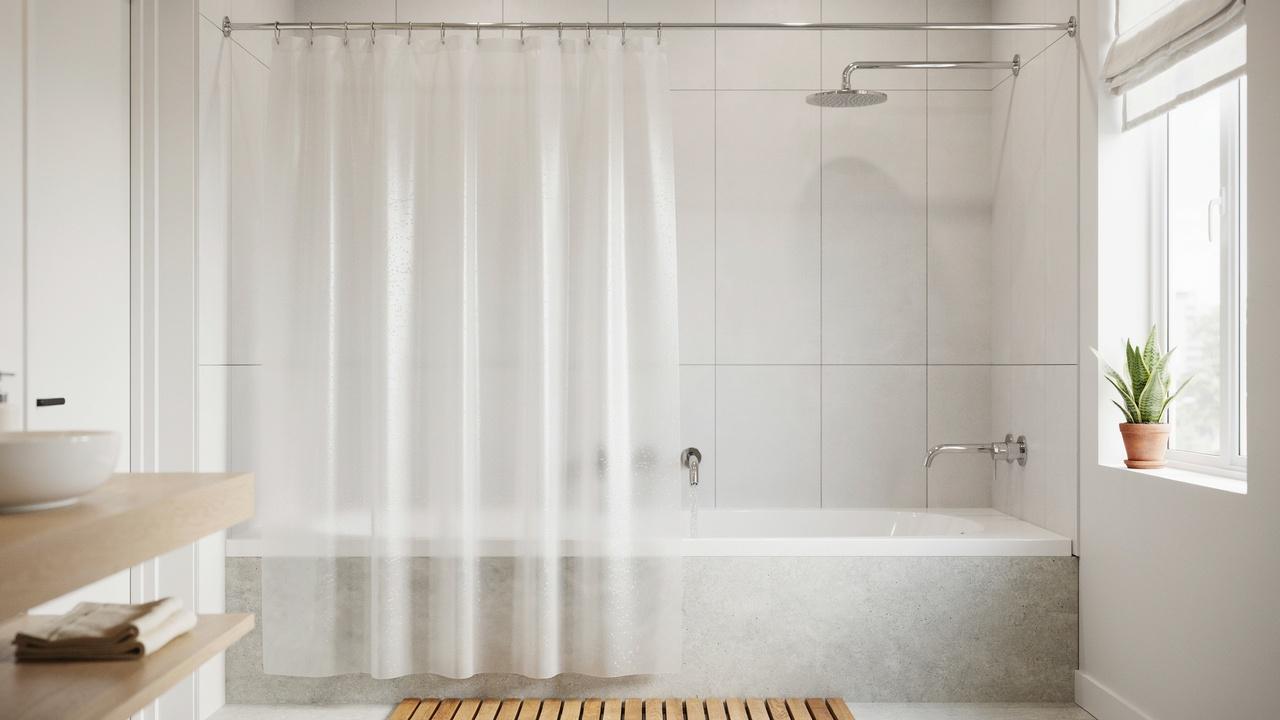
The right shower curtain material depends on what you actually need from it every day.
PEVA is the go-to pick if you want something ready to hang, easy to wipe clean, and kind to your budget, making it a solid fit for guest bathrooms, rental spaces, and kids' bathrooms where function comes first.
Fabric works better if you want a curtain that coordinates with your bathroom decor, goes in the washing machine, and looks more finished over time, though you will need a separate waterproof liner behind it.
EVA suits those who prefer a softer, more flexible plastic curtain with very little chemical odor, though it may lose its shape faster than PEVA in high-humidity bathrooms.
Conclusion
A PEVA shower curtain is a practical, low-maintenance option that keeps your bathroom dry without the strong chemical smell of traditional plastic curtains.
It is affordable, waterproof, and easy to clean, making it a sensible pick for most households.
Now that you know how PEVA compares to other materials and what to look for when buying one, you are ready to make a confident choice for your bathroom.
If this guide helped you, share it with someone who is also sorting through shower curtain options, or drop a comment below with any questions.
Frequently Asked Questions
Can I use a PEVA shower curtain without a liner?
Yes, PEVA is waterproof on its own and does not need a separate liner to keep water inside the shower.
Does PEVA shrink or warp over time?
PEVA can warp if exposed to high heat, but it stays stable at normal bathroom temperatures with proper care.
Is PEVA curtain safe for children's bathrooms?
Yes, PEVA is considered a lower-risk plastic option and is commonly used in kids' bathrooms because of its low chemical odor.
Can PEVA shower curtains be recycled?
Recycling options for PEVA are limited and not widely available. Check with your local recycling facility for guidance.
What is the difference between 3G and 8G PEVA curtains?
The G rating refers to material thickness. Higher numbers mean thicker, more durable curtains that resist tearing and last longer.