
Struggling to figure out how to close blinds with strings without pulling the wrong cord or jamming the mechanism? You are not alone.
Many people find corded blinds confusing, especially when there are multiple strings and no clear labels.
It gets even trickier when one cord lowers the blind and another tilts the slats, and nothing is marked.
This article walks you through exactly how each cord works, how to close different types of corded blinds, and what to do when something goes wrong.
If your blinds lower unevenly or the slats won't tilt shut, you will find a clear fix here. With a little guidance, operating corded blinds becomes second nature fast.
Understanding How Blinds With Strings Work
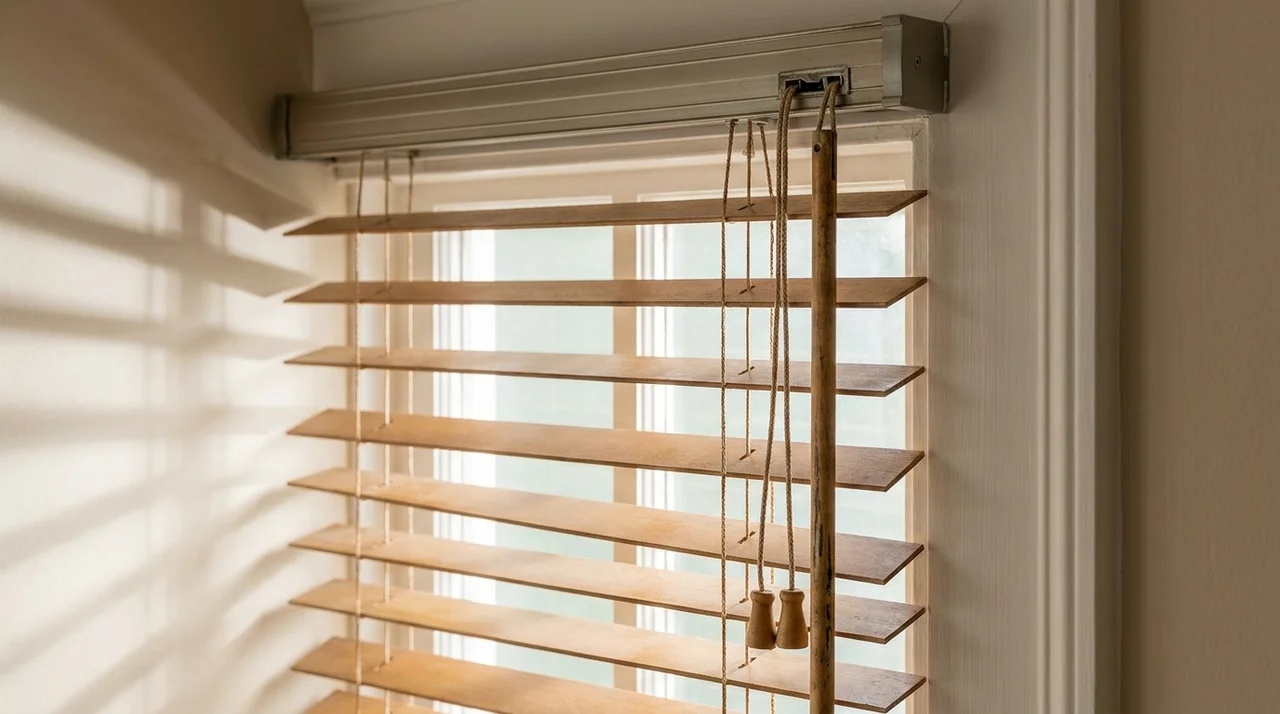
Corded blinds use a simple pulley system where each cord has a specific job. Pull the wrong one and you risk tangling the cords or unbalancing the blind.
Most homes have one of four types: horizontal blinds, mini blinds, Venetian blinds, or vertical blinds. Horizontal, mini, and Venetian blinds use lift cords and a tilt rod or control cord, while vertical blinds use a chain or wand to rotate and draw the slats across the window.
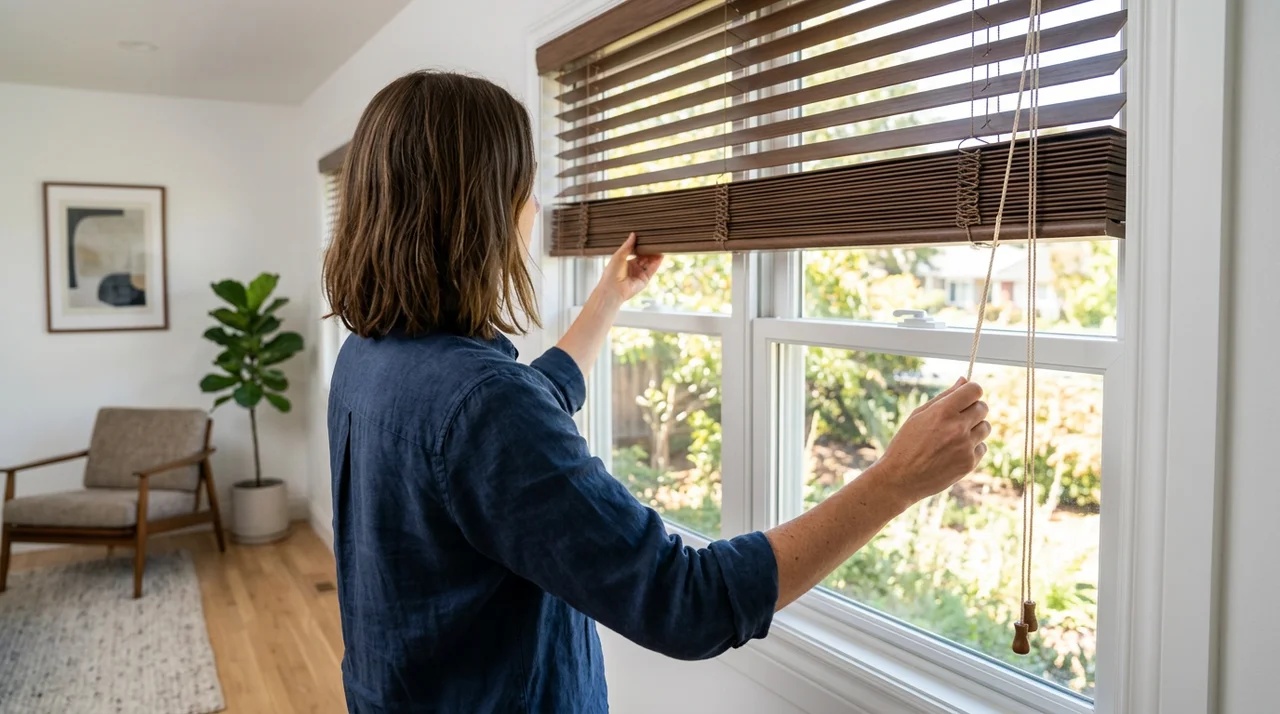
On most corded blinds, you will see two or three cords hanging from one side. The lift cord raises and lowers the blind, while the tilt cord rotates the slats open or closed.
Some blinds combine these into one cord system with a lock mechanism.
It is also important to know that lowering and tilting are two separate actions. You lower the blind first to cover the window, then tilt the slats to control light and get privacy.
Taking a moment to trace each cord before operating it saves you from causing damage before you even get started.
Closed blinds also block UV rays that fade furniture and flooring over time, so getting this right protects your home as well as your privacy.
How to Close Blinds With Strings Step by Step
This process works for most standard corded horizontal or Venetian blinds. Follow each step in order for the best result.
Step 1: Find the Correct Lift Cord

Look for the cord that hangs freely on the side of the blind. This is your lift cord, and it is the one you need to operate before anything else.
It usually threads through all the slats and connects to a cord lock near the headrail at the top.
Do not confuse it with the tilt cord, which is often thinner or attached to a small wand or rod on the side.
Taking a few seconds to identify the right cord before pulling anything saves you from tangling the system or accidentally tilting the slats instead of lowering the blind.
Step 2: Pull the Cord Toward the Center
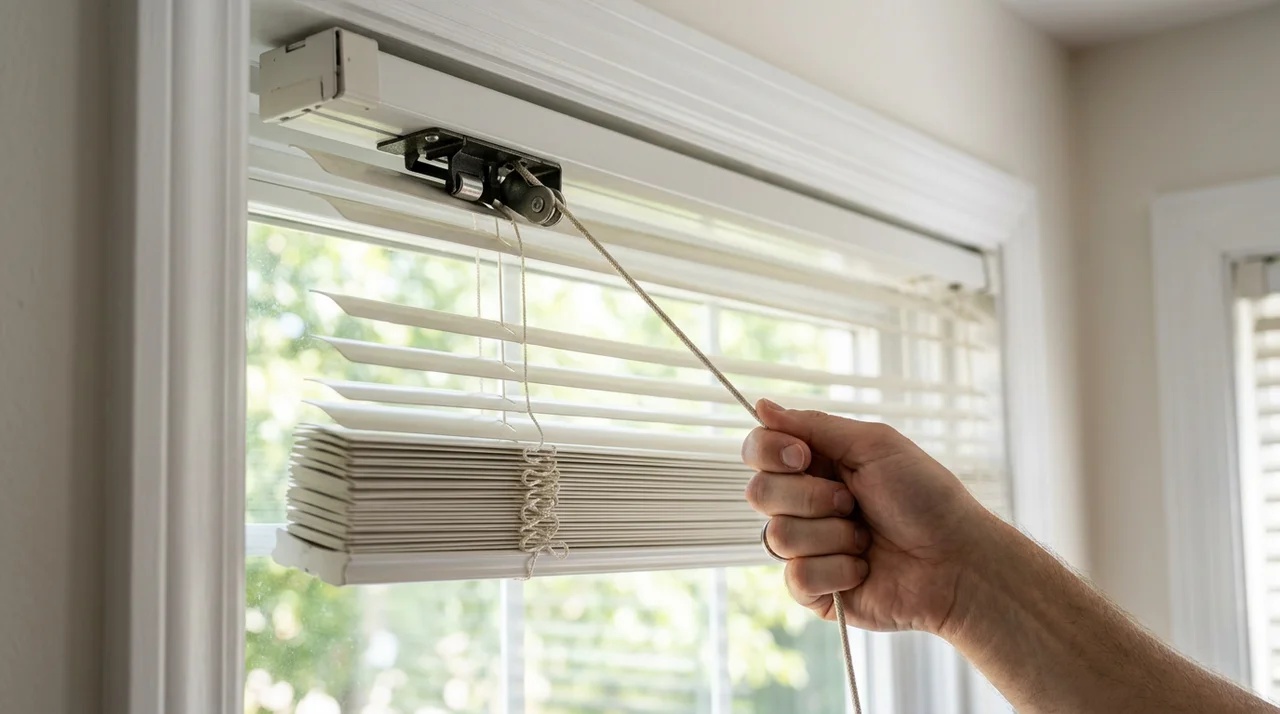
Grip the lift cord firmly and pull it slightly toward the center of the window at roughly a 45-degree angle. This motion releases the cord lock that sits inside the headrail and holds the blind in place.
You will feel a small click or a slight loosening when the lock disengages, which means the blind is ready to move.
If you pull straight down instead of at an angle, the lock will not release and the blind will stay stuck. Keep a steady grip and make sure the angle is consistent before you move to the next step.
Step 3: Lower the Blinds to Your Desired Height
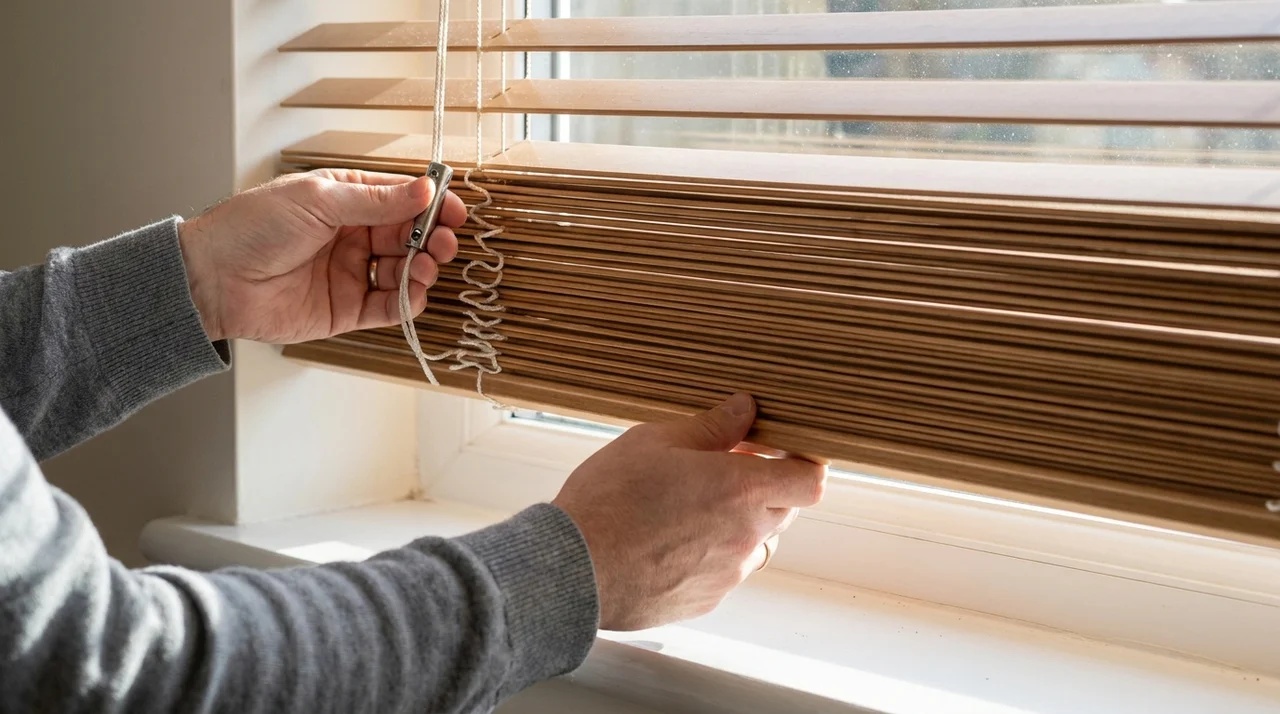
While holding the cord at that angle, let it slide slowly through your fingers and the blind will begin to lower toward the windowsill.
Control the speed by adjusting how tightly you grip the cord as it moves through your hand. Letting it drop too fast causes the slats to bang together, which can bend or damage them over time.
Lower the blind gradually until it reaches the height you want, whether that is halfway down, fully covering the window, or anywhere in between.
Patience here protects both the cord and the slats from unnecessary wear.
Step 4: Release the Cord to Lock the Blinds
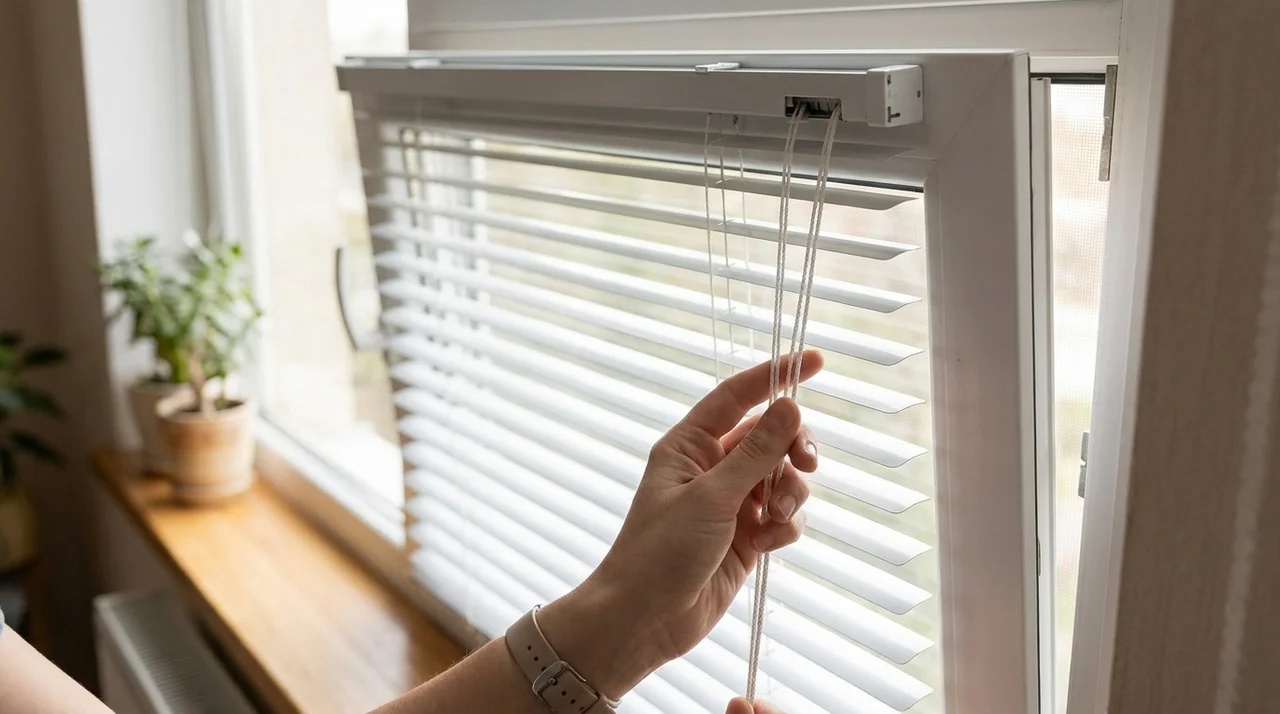
Once the blind reaches the height you want, move the cord back toward the side of the window so it runs parallel to the frame.
This re-engages the cord lock inside the headrail and holds the blind firmly in position. Let go of the cord and the blind should stay exactly where you left it without sliding up or down.
If the blind slips after you release it, the cord lock may be worn and may need adjustment or replacement.
Always make sure the cord is fully returned to the side position before letting go to get a secure lock every time.
Step 5: Tilt the Slats Closed With the Control Cord
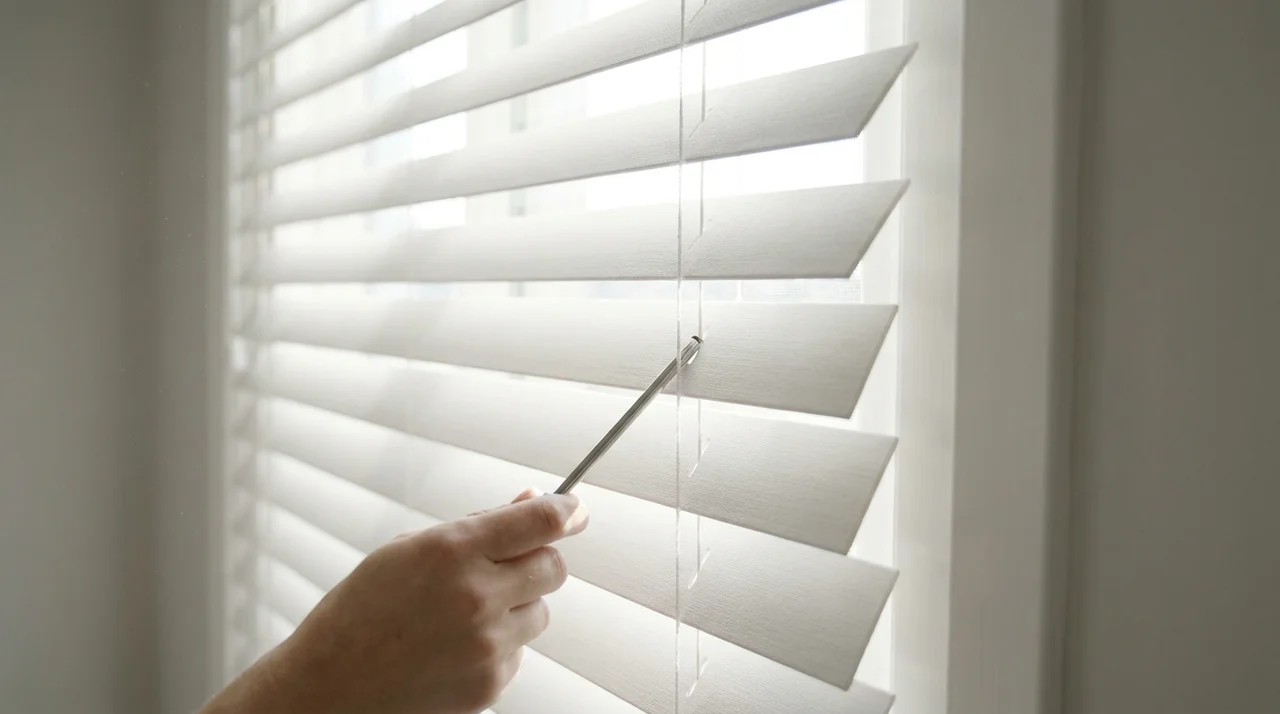
Now grab the tilt cord or rotate the tilt rod, depending on which type of blind you have. Pull or turn it slowly in one direction to begin angling the slats downward toward the closed position.
Keep going until the slats overlap each other completely and block out the light coming through the window.
For privacy, rotate the slats until they overlap and block the desired amount of light and visibility.
If you go too far in one direction and the slats start to lift on the opposite edge, reverse slightly until they lay flat and even.
That is how you fully close the blind and get the privacy and light control you need.
How to Close Different Types of Corded Blinds

Not every blind works the same way. Here is how to handle the most common types found in homes.
Close Horizontal Blinds With a Lift Cord
Horizontal blinds are the most common type. Pull the lift cord at an angle, lower to your chosen height, then lock it by pulling the cord straight down.
Use the tilt rod or second cord to rotate the slats shut. Simple and straightforward once you know the steps.
Close Mini Blinds With Strings
Mini blinds have narrower slats but work on the same principle. The cords are thinner and can tangle more easily, so always keep them straight before pulling.
Lower the blind using the lift cord, then use the small tilt rod (usually a flat stick on the side) to close the slats. Avoid pulling mini blind cords sharply since they snap or fray more easily than standard blinds.
Close Venetian Blinds With Cords
Venetian blinds have wider slats and often feel heavier. The process is the same as horizontal blinds, but you may need a firmer grip on the lift cord.
Some Venetian blinds use a continuous cord loop instead of separate cords. With those, pulling one side of the loop lowers the blind while the other side raises it.
After lowering, tilt the slats using the control cord until they are fully closed. Make sure all slats are aligned before locking the cord or the blind will sit unevenly.
Close Vertical Blinds With a Chain
Vertical blinds use a chain loop instead of a lift cord. Pull the chain in one direction to draw the slats along the track system and across the window.
Then use the wand or a second chain to rotate the slats closed. The slats should all face the same direction.
If one or two slats are turned differently, rotate the wand back and try again. Check the track for dust or debris if the slats catch or feel rough while sliding.
How to Close Blinds Without Damaging Them
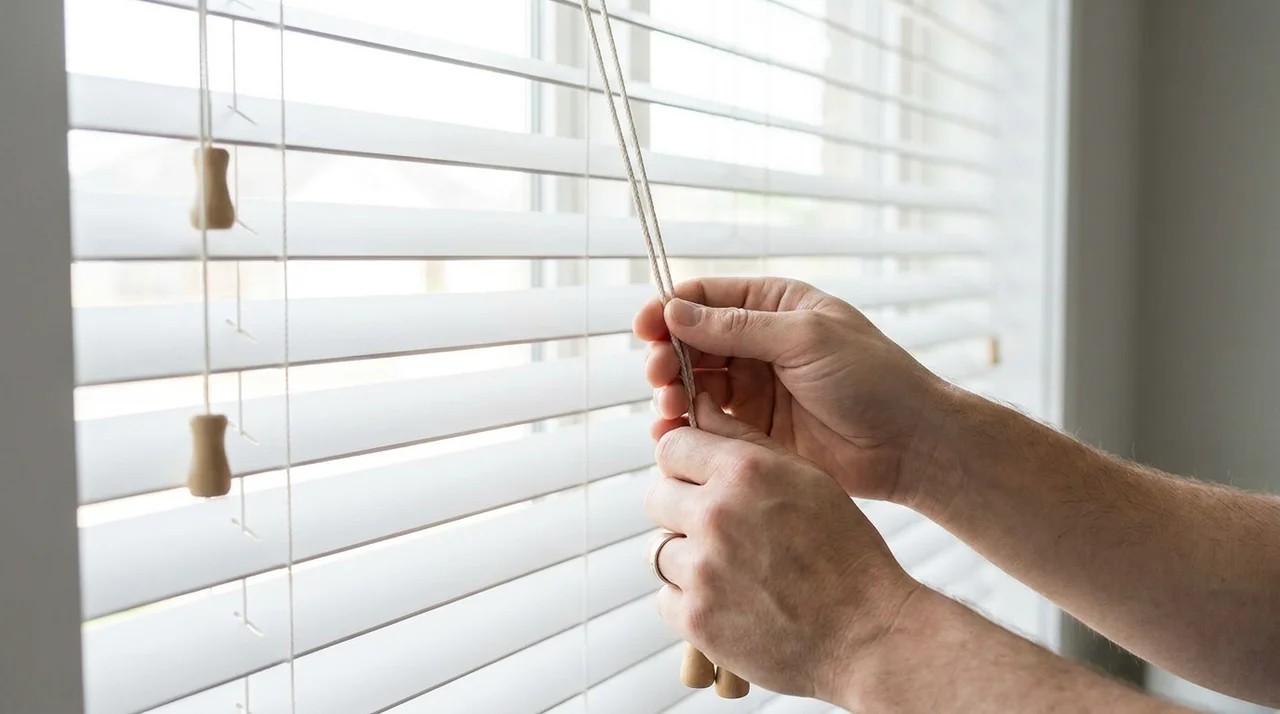
Good habits protect your blinds and keep them working longer. Follow the operating direction recommended for your blind. Pulling the cord incorrectly can prevent the lock from releasing or cause unnecessary wear.
If the cord resists, stop and check for a tangle or a stuck slat before continuing, since forcing it can snap the cord or pull it free from the headrail. A slow, steady pull works better than a sharp tug every time.
Keep the blind level while lowering it, and if one side drops faster than the other, pause and let the slats re-align before moving forward.
A slat that has slipped off the ladder tape is a common reason one side hangs lower, so check those fabric rungs if the problem keeps happening.
If the cord lock or tilt mechanism feels stiff, check the manufacturer's instructions before applying any lubricant, as some products may damage components.
If the cord gets stuck, look inside the headrail for a tangle or a slat out of position, fix the problem first, and then try the cord again.
What to Do If Your Blinds Won't Close
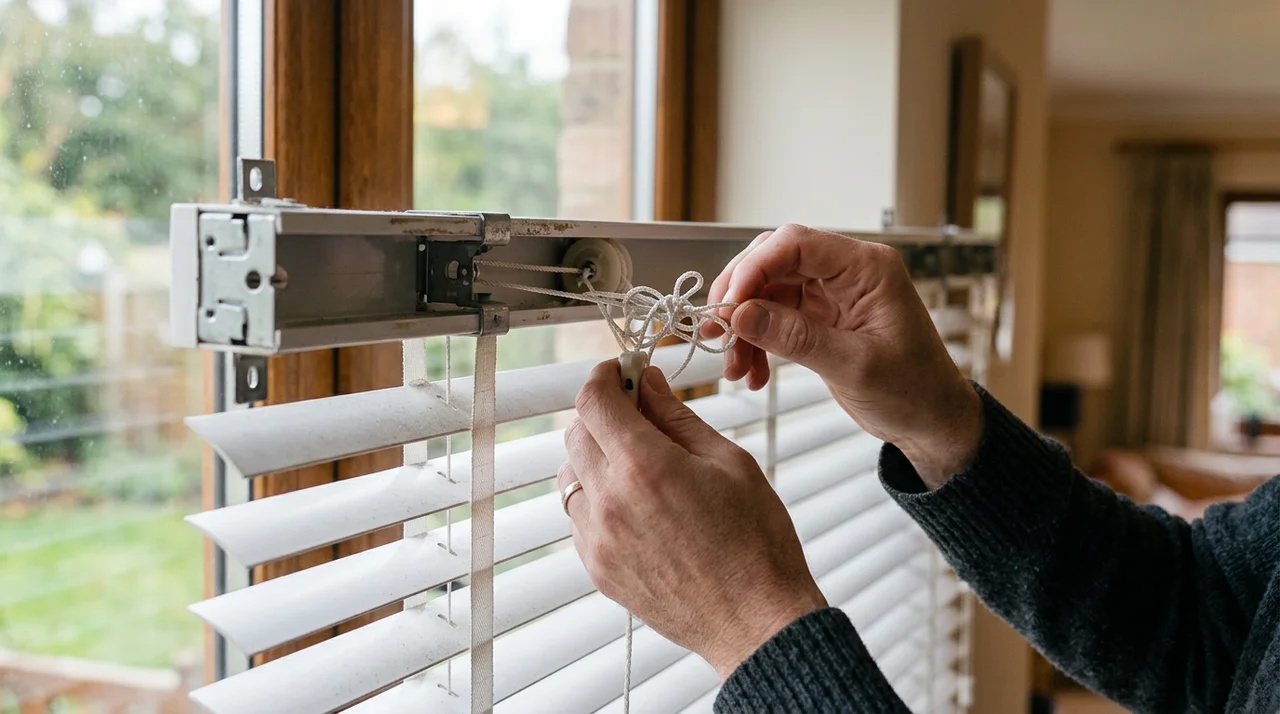
Problems happen. Here is how to diagnose and fix the most common issues with corded blinds.
Cord Pulls but Blinds Do Not Lower
The cord lock is likely stuck or broken. Open the headrail cover if possible and look at the locking mechanism.
Sometimes a small piece of debris jams the lock. Clear it out and test again. If the lock is broken, replacement locks are inexpensive and easy to swap out.
Cord Gets Stuck During Operation
A stuck cord usually means there is a tangle inside the headrail or the cord has slipped off a pulley. Pull the blind all the way up first to reset the cord path.
Then try lowering it again slowly. If it keeps sticking, the cord may need to be restrung.
Blinds Lower Unevenly
This happens when one lift cord is longer than the other or when a slat has slipped off the ladder tape. Pull the blind all the way up, then lower it again slowly and evenly.
If one side still drops faster, check that all slats are sitting correctly on the rungs.
Slats Will Not Tilt Closed
The tilt mechanism may be disconnected from the tilt rod. Check if the rod spins freely without turning the slats. If it does, the tilt drum inside the headrail has likely come loose or worn out.
This is usually a quick fix and just needs the rod to be re-inserted into the tilt drum. If the drum is cracked or stripped, replacement drums are sold separately at most hardware stores.
When to Repair or Replace the Cord
Replace the cord if it is frayed, knotted in a way that cannot be undone, or has snapped. Replacement cords are sold by the foot at most hardware stores.
If the cord has broken and taken the pulley or lock with it, consider replacing the entire blind since individual parts can cost nearly as much as a new blind.
Tips for Using Blinds With Strings
Small habits make a big difference in how long your blinds last and how well they work day to day.
- Keep cords straight and untangled after every use. If they cross or loop around each other, straighten them before the next use to avoid uneven pressure on the lock.
- Stop pulling once the blind reaches your desired height. Pulling past that point strains the cord and lock, which is one of the most common reasons cord locks wear out early.
- Check the cord lock if the blind slides down on its own. Pull the cord to the locked position and give the blind a light tug. If it slips, replace the lock before it gets worse.
- Keep blind cords and loops out of children's reach. Use appropriate cord-safety devices according to the manufacturer's instructions, and consider cordless blinds where possible.
- Use cord wind-ups or retrofit kits for a safer setup. They shorten the cord without cutting it permanently, making them a smart option for homes with children or pets.
Conclusion
Learning how to close blinds with strings is easier than it looks once you know which cord does what. Lower the blind with the lift cord, lock it at your chosen height, and then tilt the slats with the control cord.
Handle each step gently and you will avoid most common problems. If something does go wrong, the fixes are usually simple.
Try these steps the next time you sit down to adjust your blinds. Got a question or a tip of your own? Drop it in the comments below and help others out.
Frequently Asked Questions
Can corded blinds be converted to cordless?
Yes, retrofit kits are available for many standard blind models. They replace the cord system with a spring mechanism that lets you raise or lower by hand.
How long do blind cords typically last?
There is no fixed lifespan for blind cords. Replace the cord when it becomes frayed, damaged, stiff, or difficult to operate.
Is it safe to cut a blind cord that is too long?
Avoid modifying or shortening a blind cord unless the manufacturer's instructions specifically allow it. For damaged or excessively long cords, use an approved safety solution or contact the manufacturer.
Why does my blind tilt one way but not the other?
The tilt drum inside the headrail may be worn on one side. Replacing just the tilt drum usually fixes this without needing a full blind replacement.
Do all corded blinds use the same type of cord?
No. Cord thickness and material vary by blind type and brand. Always match the replacement cord to the original specifications listed in your blind's manual.