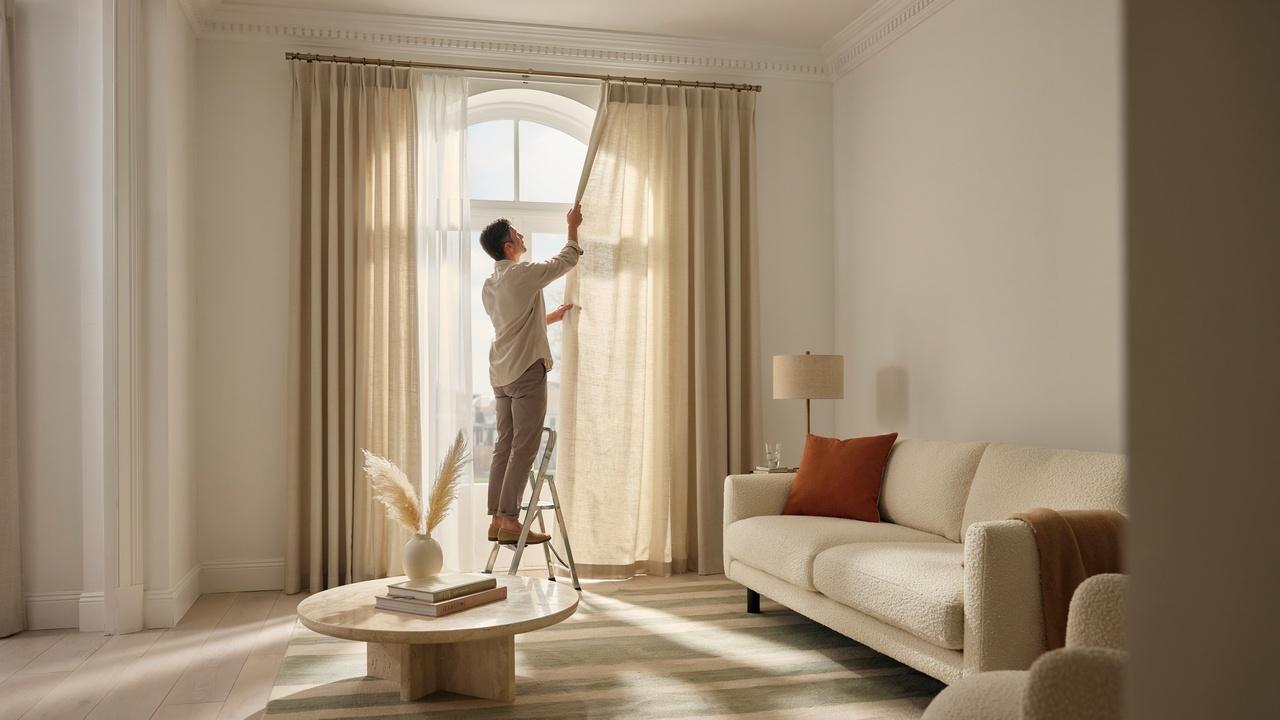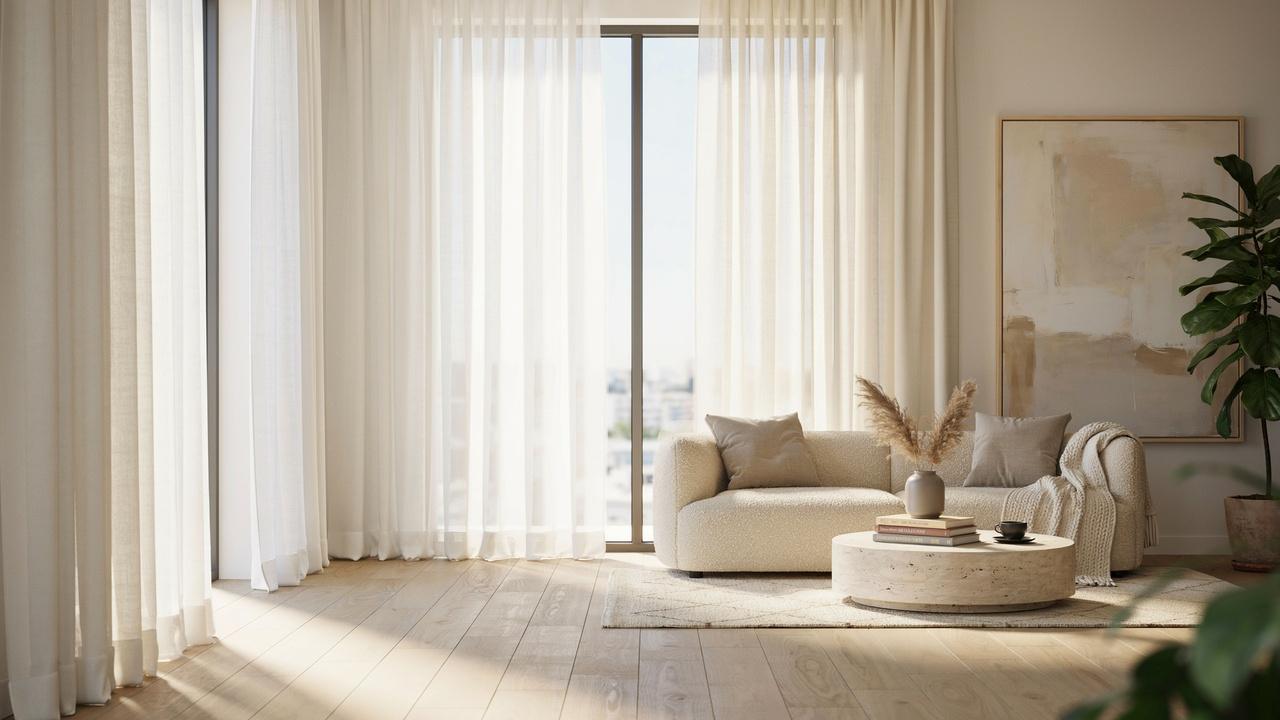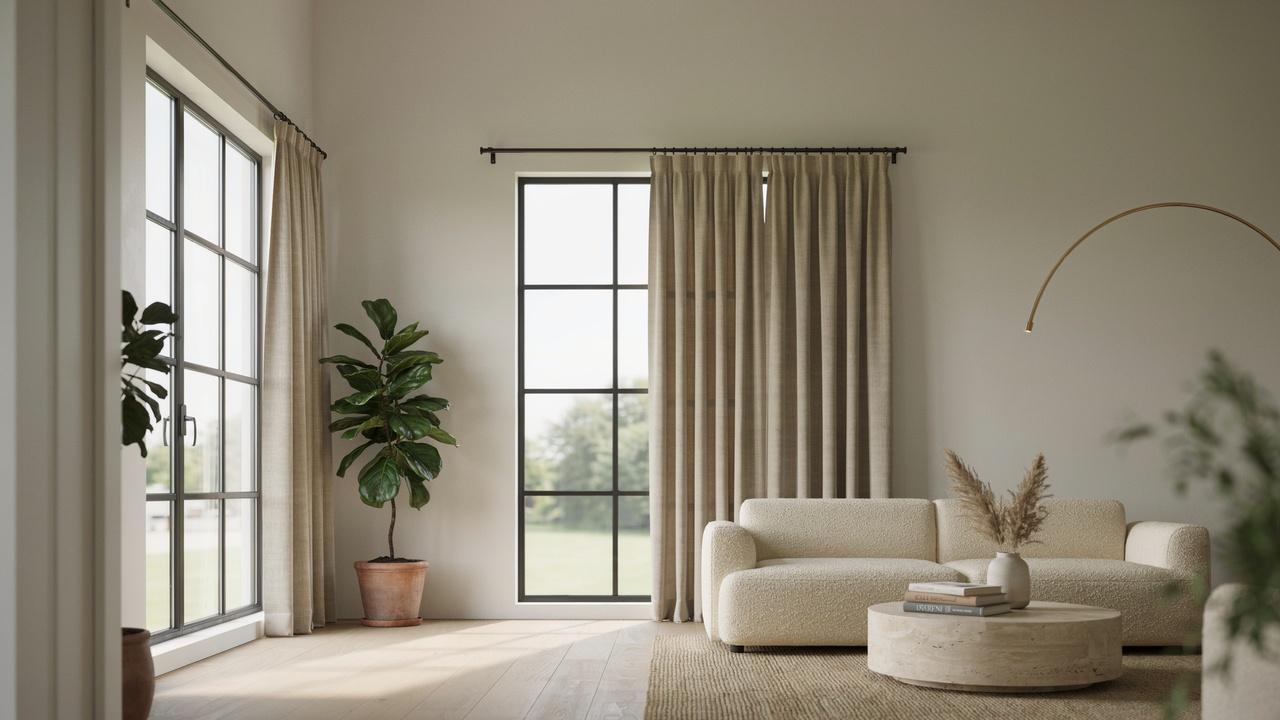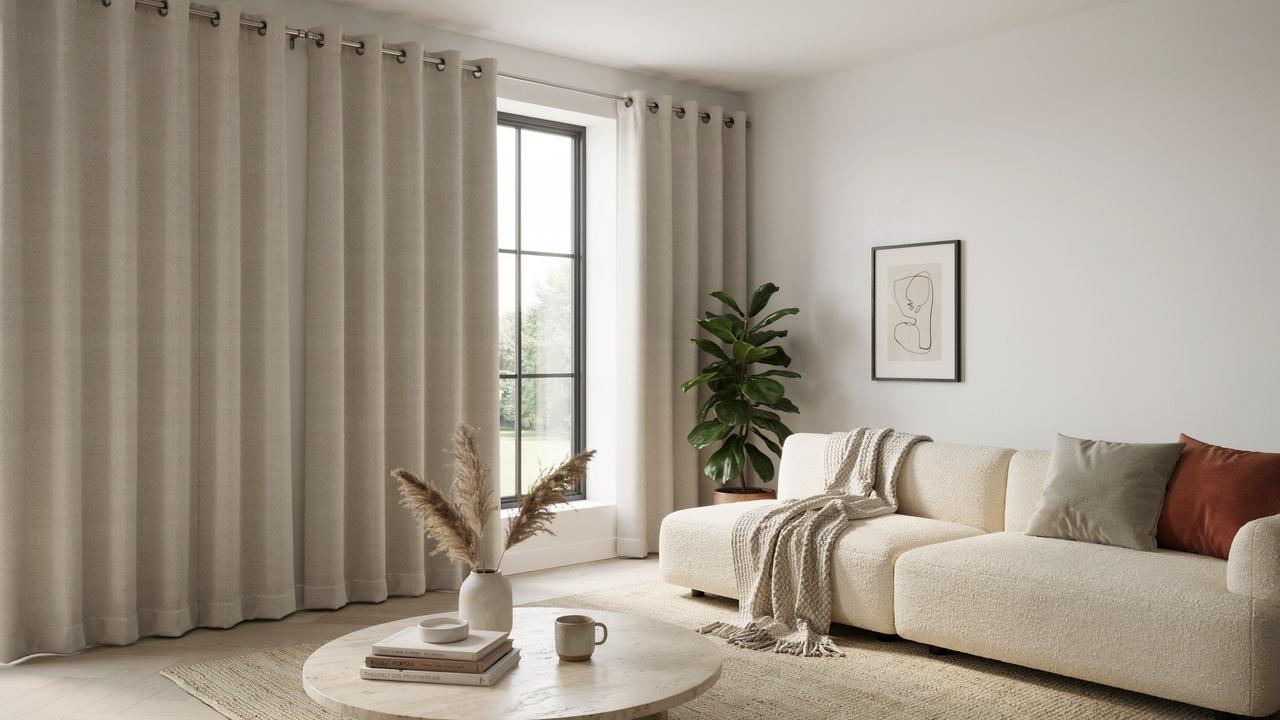

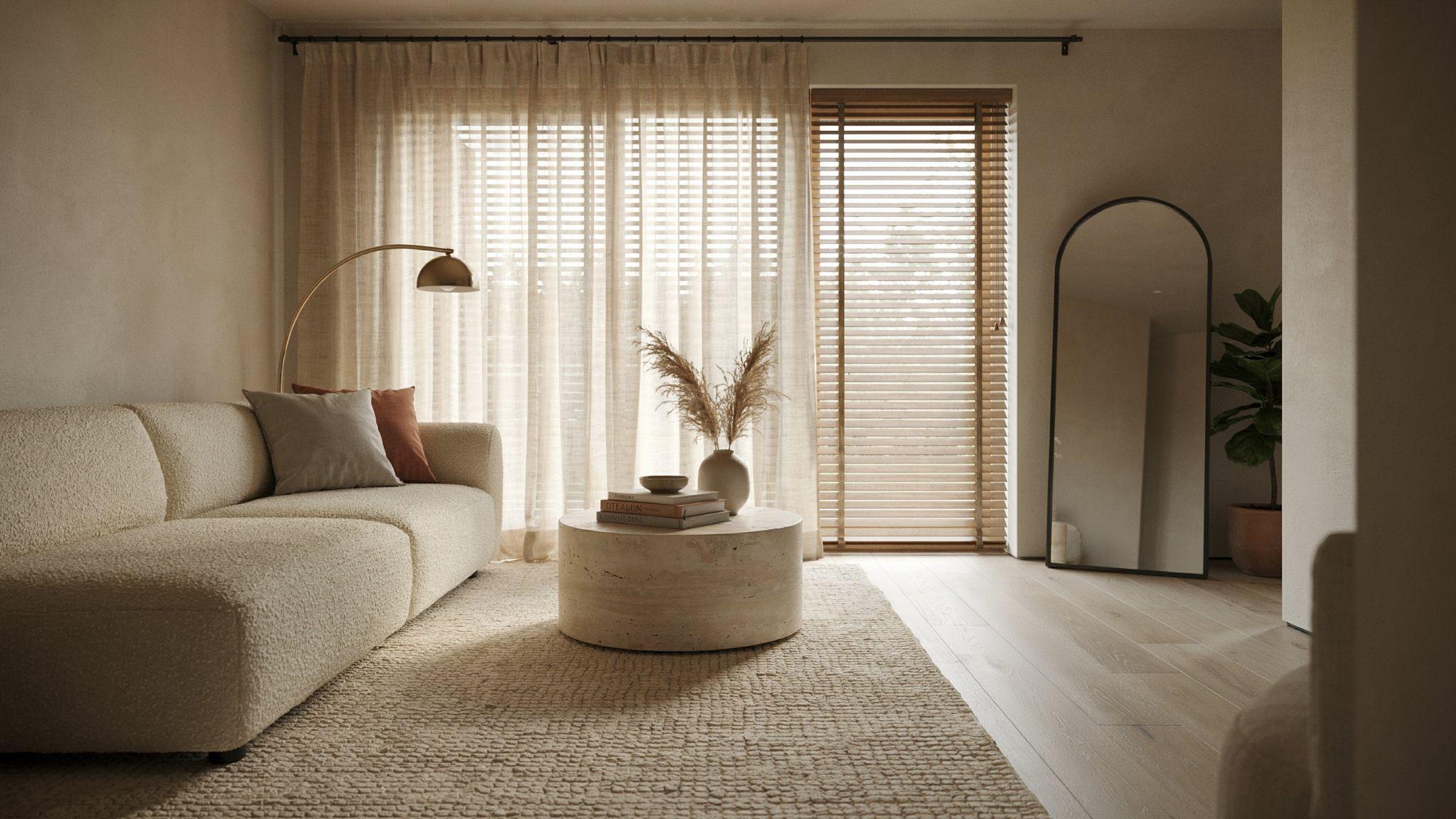
Curtains over blinds ideas can fix a window that feels plain or unfinished.
In my 12×14 living room, I swapped out plain mini blinds for floor-length linen curtains, and the change was instant. The windows looked taller, and the room felt warmer right away.
In this post, I will walk you through 21 curtain and blind combinations that add warmth, color, and texture to any room.
You will also learn how to pick the right curtain style for your existing blinds, plus tips on color pairing, common mistakes, and budget upgrades.
By the end, you will know exactly how to layer curtains and blinds for a finished, designer look.
Let's get started.
Why Put Curtains Over Blinds?
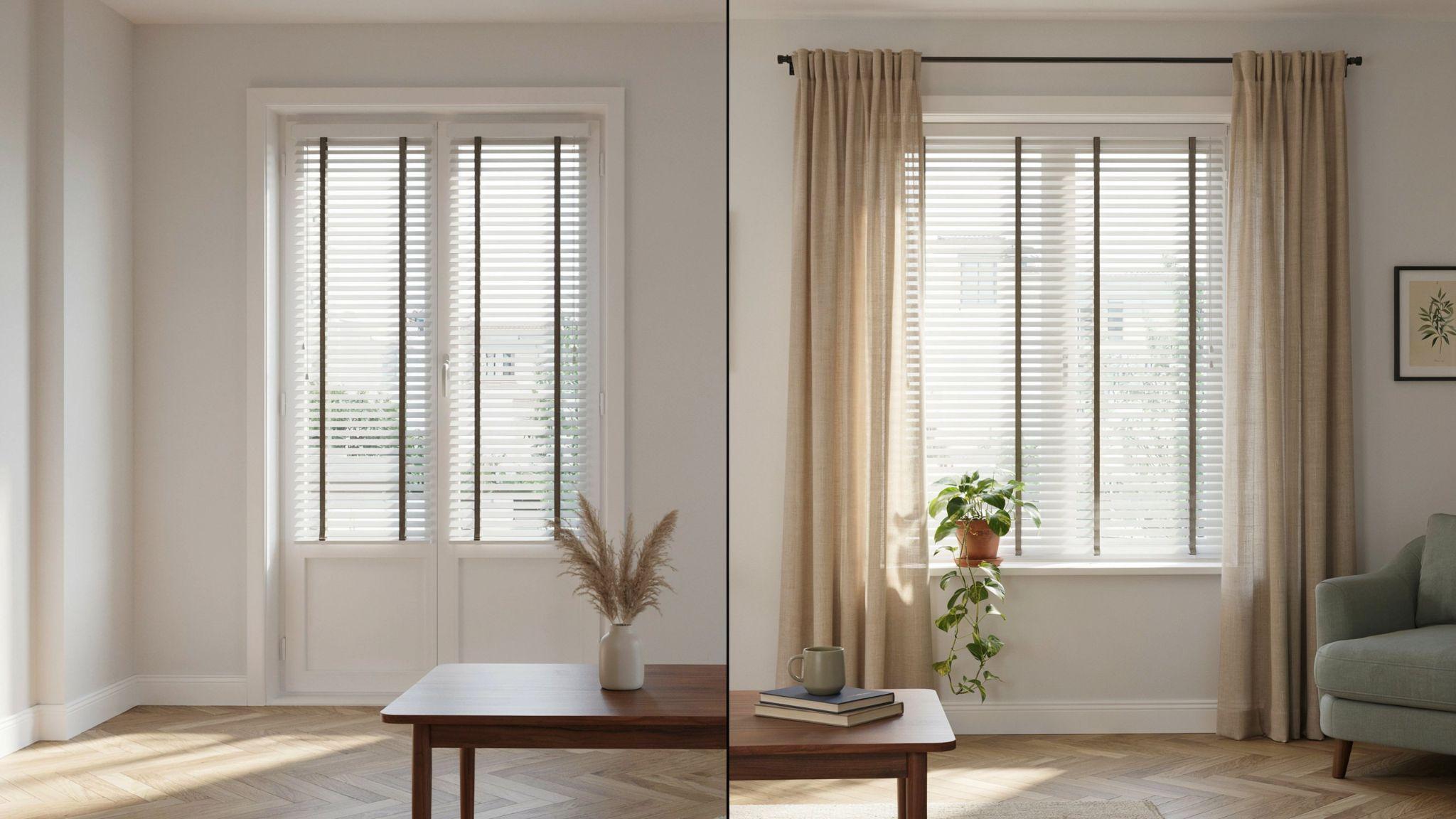
Blinds alone can feel cold. They do the job, but they don't add much warmth to a room. Curtains change that.
When you add curtains over blinds, you get the best of both worlds. Blinds control light and privacy. Curtains add softness, color, and a finished look.
This kind of layered window treatment also has practical perks. Fabric panels add an extra layer of insulation, which can help keep a room warmer in winter and cooler in summer.
I started layering curtains over my blinds a few years back. In my living room, I had plain white mini blinds that looked fine but felt bare.
Adding floor-length linen curtains in a soft oatmeal shade made the whole wall feel finished. The blinds still worked the same way. They just looked a lot better with fabric framing them.
Curtains also help hide worn-out blinds. If your blinds have seen better days, curtains can cover the imperfections without you needing to replace them right away.
How to Choose Curtains for Existing Blinds
Picking curtains for your blinds isn't hard once you know what to look for.
First, check your curtain rod placement. Mount it a few inches above your window frame and a bit wider than the blinds.
Next, think about fabric weight. Light fabrics like linen or cotton work well with most blinds. Heavy fabrics like velvet pair nicely with simple white or wood blinds.
Color matters too. If your blinds are white or neutral, you have more freedom with curtain colors. If your blinds have a strong tone, like dark wood, try to match or complement that shade with your curtains.
Lastly, measure twice. Curtains that are too short look off. Aim for curtains that touch the floor or break slightly at the bottom for a clean finish.
Popular Design Styles for Curtains and Blinds
Before you pick a specific combo, it helps to know which design style you're going for. Here are some of the most popular ones for layered window treatments.
- Modern style uses clean lines, solid colors, and simple blinds paired with minimal curtain panels.
- Farmhouse style leans on cotton or linen curtains with small prints, paired with faux wood blinds.
- Coastal style uses light, breezy fabrics in blues and whites over light wood or woven blinds.
- Scandinavian style keeps things simple with neutral curtains and white or light wood blinds.
- Traditional style often pairs heavier fabrics like velvet with wood blinds for a formal look.
- Boho style mixes textures, like woven blinds with patterned or layered curtains, for a relaxed feel.
Knowing your style first makes it easier to pick the right combo from the list below.
21 Curtains Over Blinds Ideas for Every Home
These curtains over blinds ideas work for bedrooms, living rooms, kitchens, and home offices. Here are 21 ways to pair curtains with blinds, along with tips on style, room, and color.
1. Floor-to-Ceiling White Curtains Over White Blinds
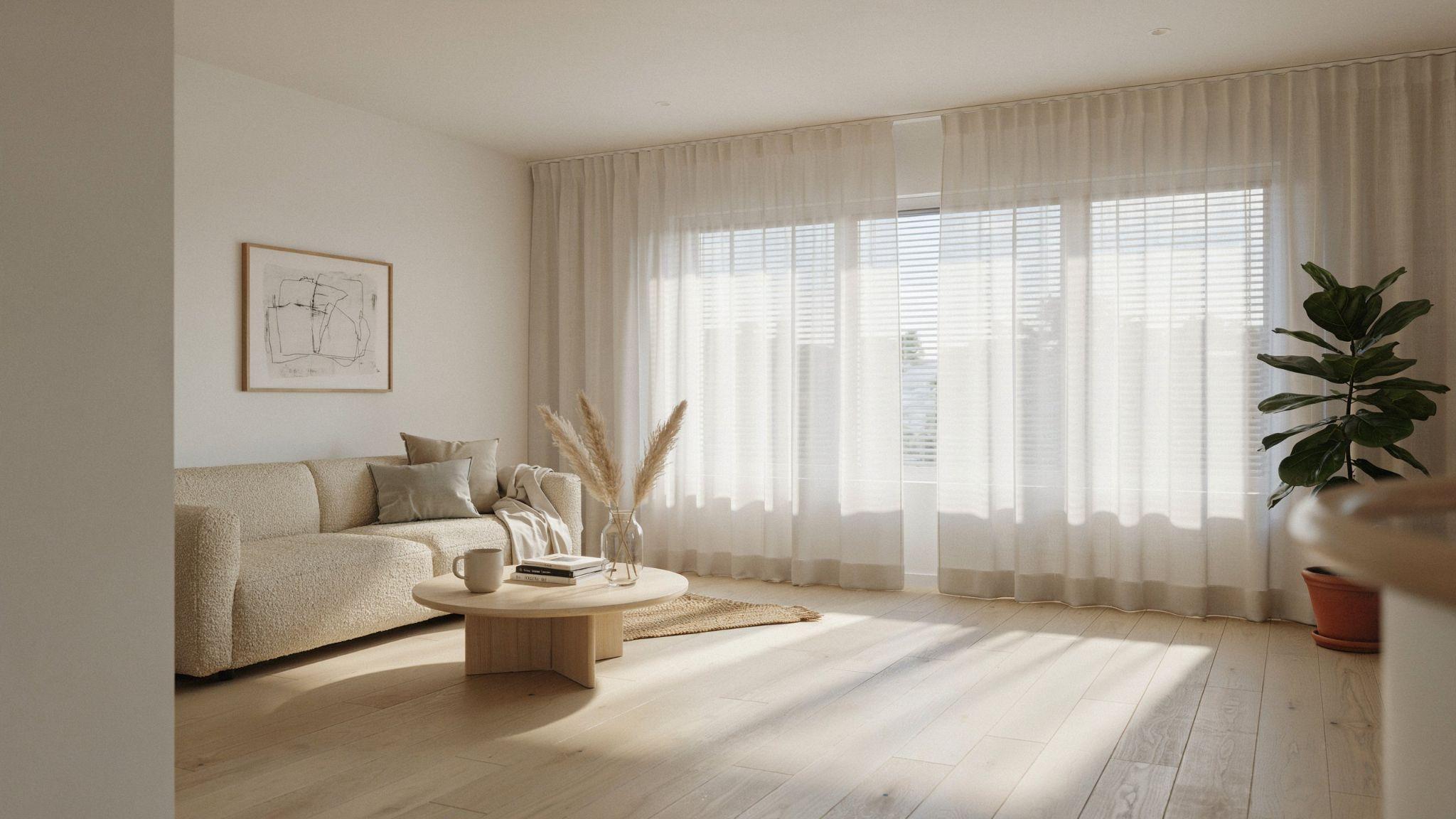
This combo feels fresh and bright. White curtains over white blinds make any room look bigger and airier.
It works well in living rooms, bedrooms, and home offices, especially in modern or Scandinavian spaces.
Pair with light wood floors or brass hardware for contrast. One downside is that white fabric can show dirt or yellowing over time, so look for washable cotton blends.
2. Sheer Curtains Layered Over Faux Wood Blinds
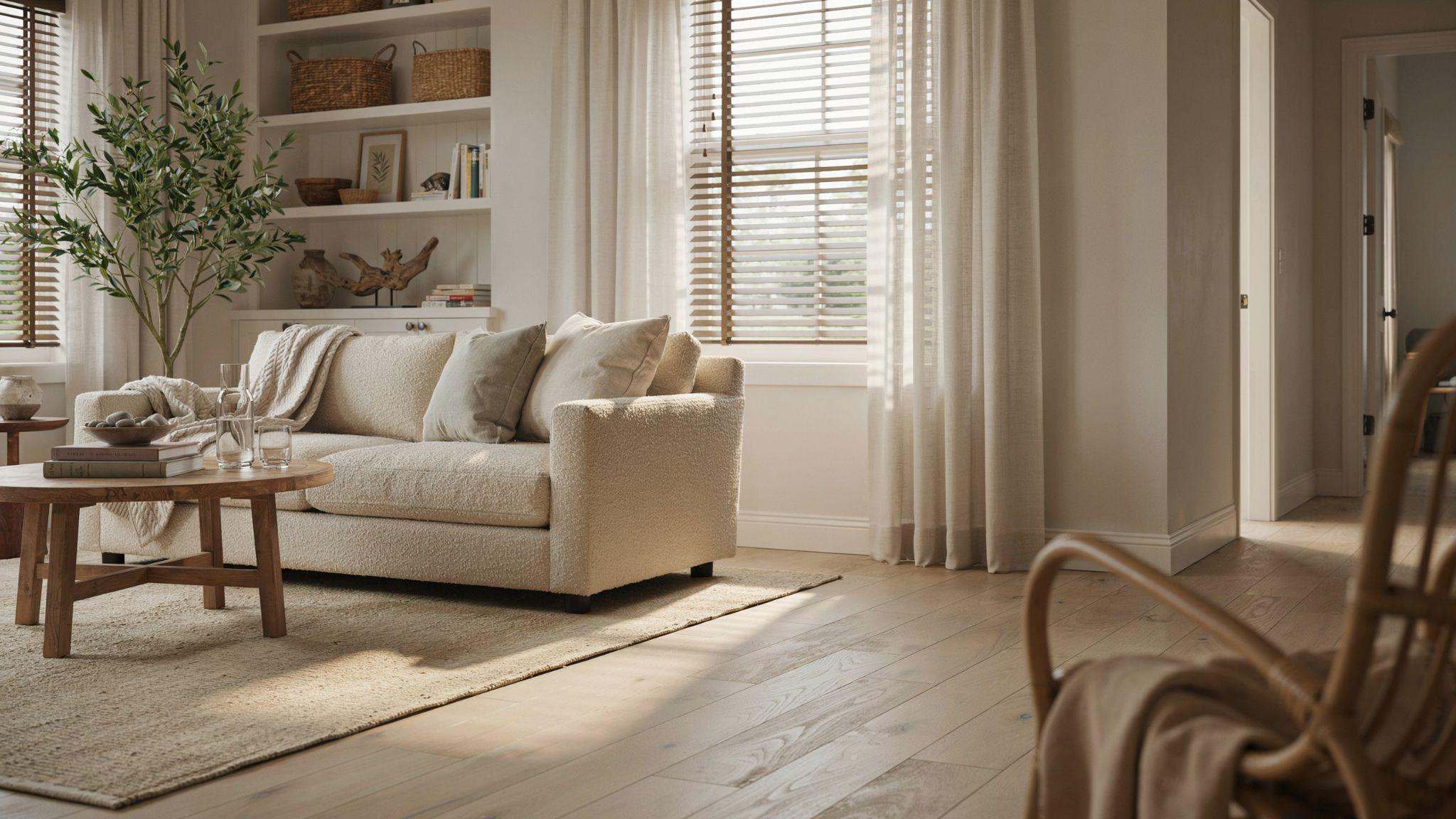
Sheer curtains soften the look of faux wood blinds. You get privacy from the blinds and a gentle glow from the sheers during the day.
This pairing works in almost any room, but it shines in living rooms and dining areas. It suits modern, coastal, or transitional styles. Stick to light colors like white, cream, or pale gray.
A quick lighting tip:sheers filter harsh afternoon sun without making the room feel dark, so they're great for west-facing windows.
3. Linen Drapes Over Roller Blinds
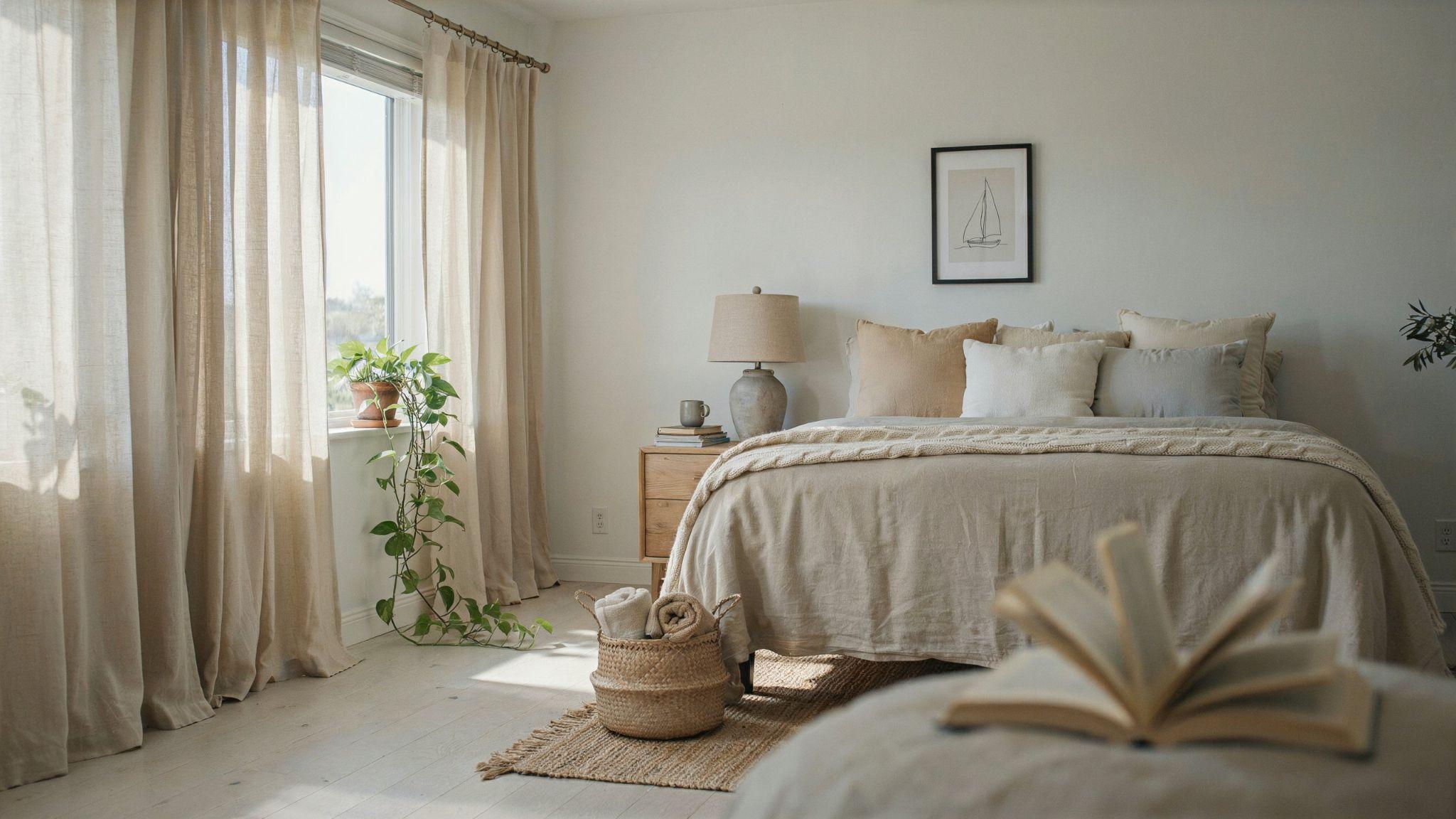
Linen has a relaxed, lived-in feel. Pair it with roller blinds for a simple, calm window setup that suits almost any room.
This combo works especially well in bedrooms and living rooms with a farmhouse or coastal look. Stick to neutral tones like oatmeal, white, or soft gray for the most versatile pairing.
Linen is also one of the more budget-friendly fabric choices, so this combo is easy on your wallet.
4. Navy Curtains Paired With White Blinds
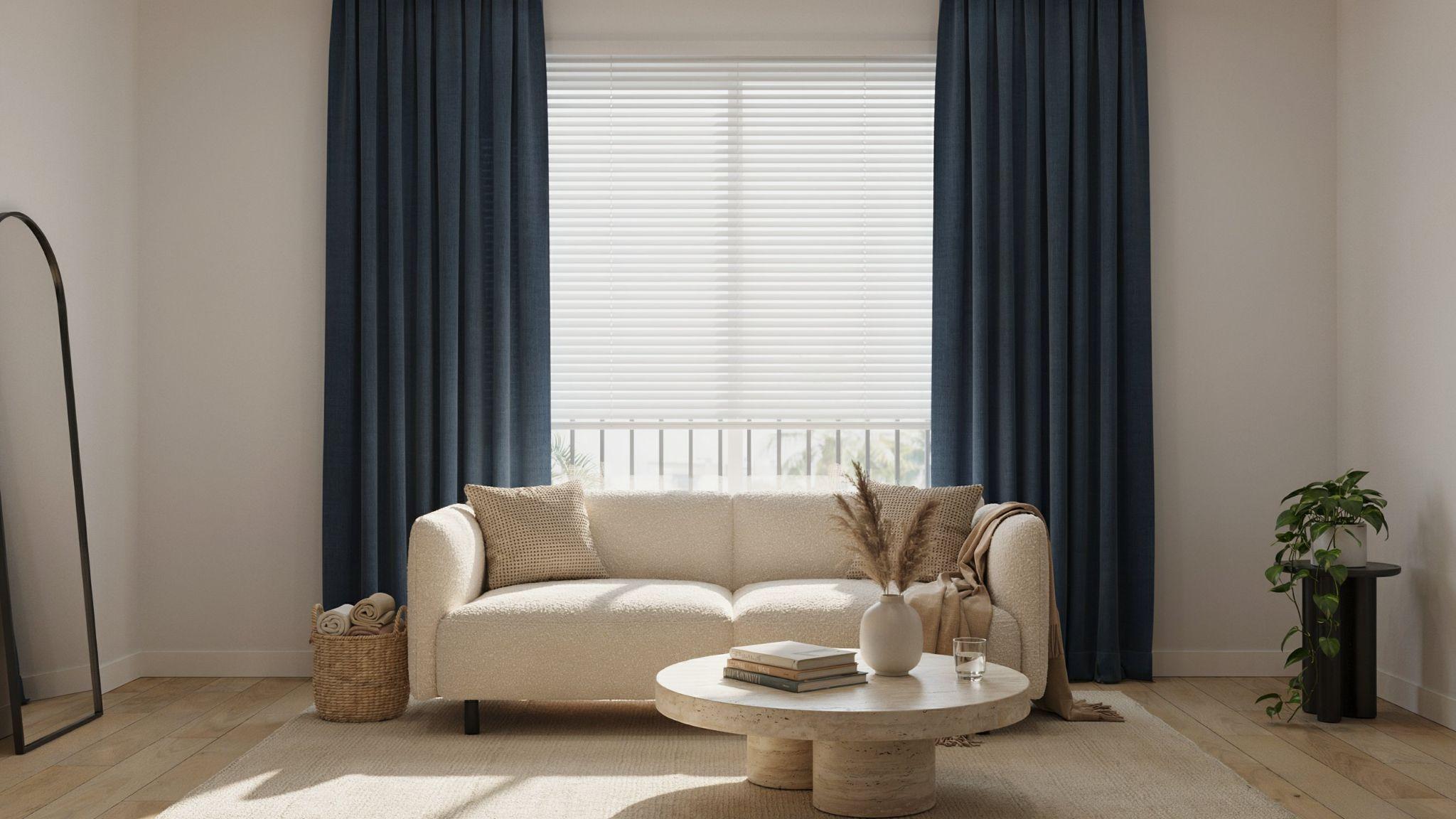
Navy curtains paired with white blinds create strong contrast without overwhelming the room. This combination works especially well in coastal, transitional, and modern interiors.
Choose matte navy fabric for a softer appearance, or velvet navy panels for a more formal look in living rooms and bedrooms.
The downside is that dark colors can make a small room feel tighter, so this works best in medium to large spaces with good natural light.
5. Neutral Beige Curtains Over Wood Blinds
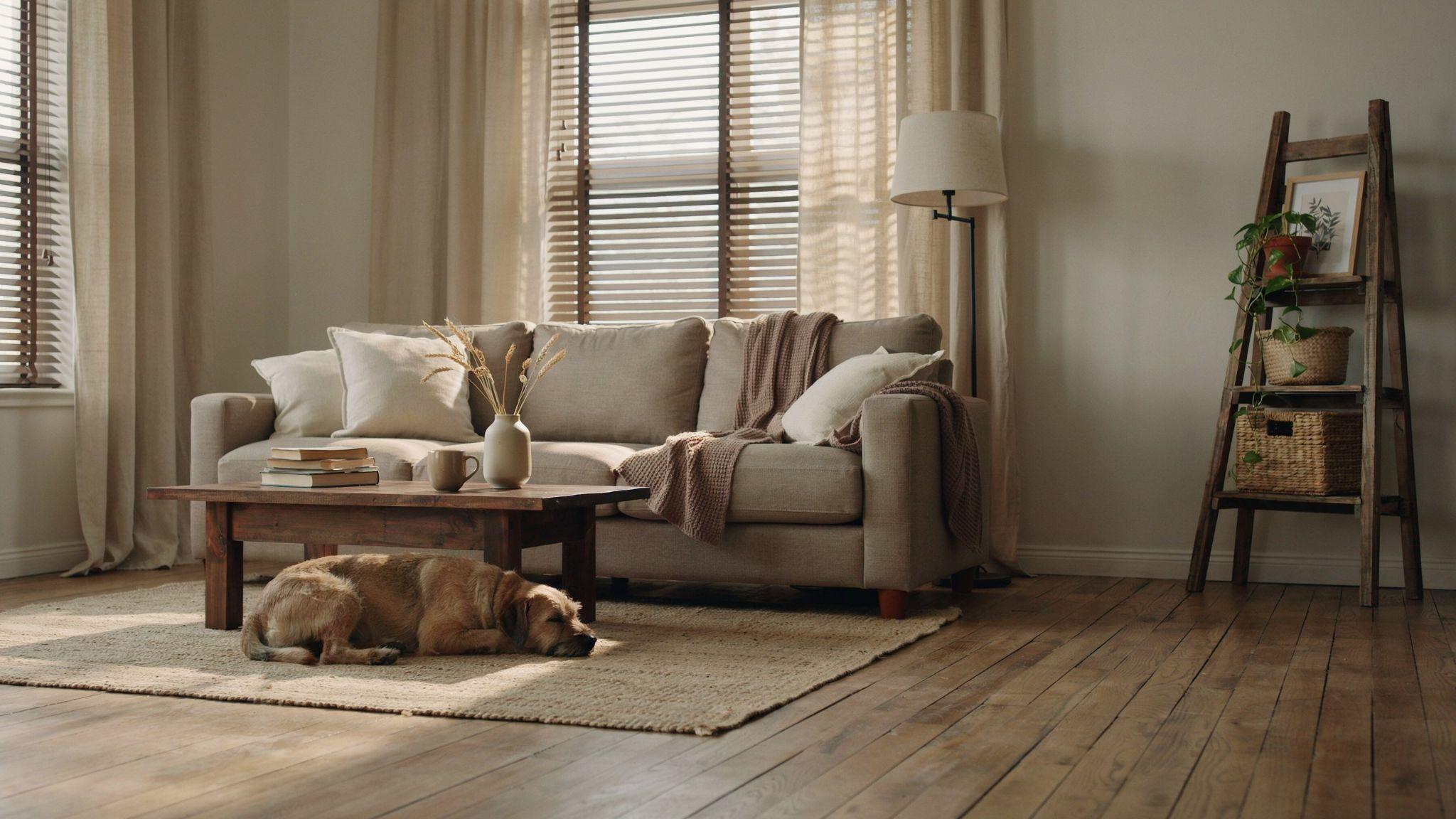
Beige curtains and wood blinds create a warm, earthy combo. This pairing works great in living rooms and dens, especially in traditional or farmhouse styles.
Stick to warm beige or tan tones that pick up the undertones in the wood for a cohesive look.
Installation tip: hang the curtains a bit wider than the blinds so the wood grain stays visible at the edges when the curtains are open.
6. Blackout Curtains Over Cellular Shades
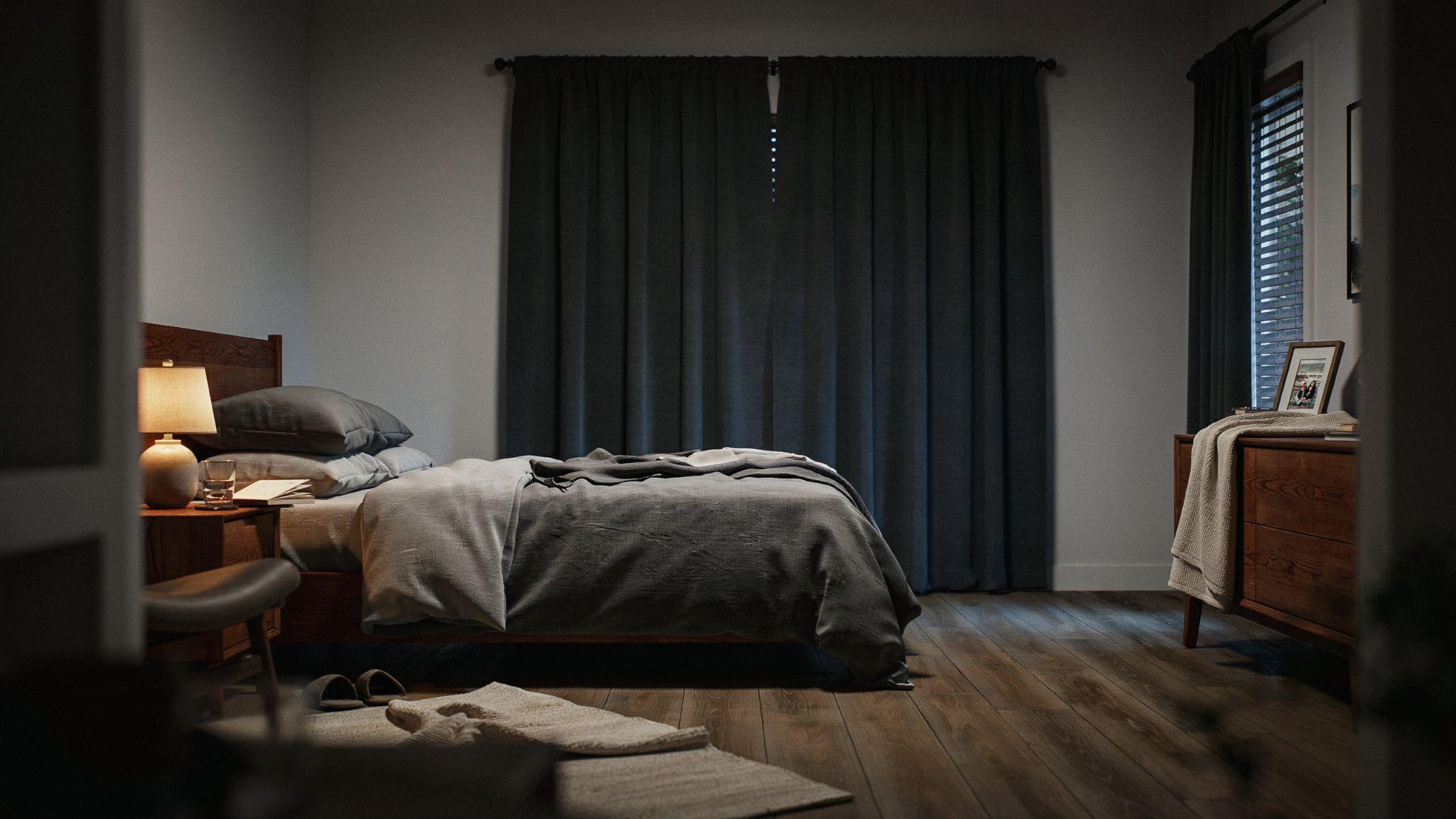
Need better sleep? Blackout curtains over cellular shades block out almost all light. I use this setup in my own bedroom, and it makes a real difference, especially during summer mornings.
This combo is ideal for bedrooms and media rooms in any design style. Darker colors like charcoal or navy work well for blackout panels.
The main downside is that blackout fabric can feel heavy or formal, so it may not suit a light, airy room.
7. Velvet Curtains Over Horizontal Blinds
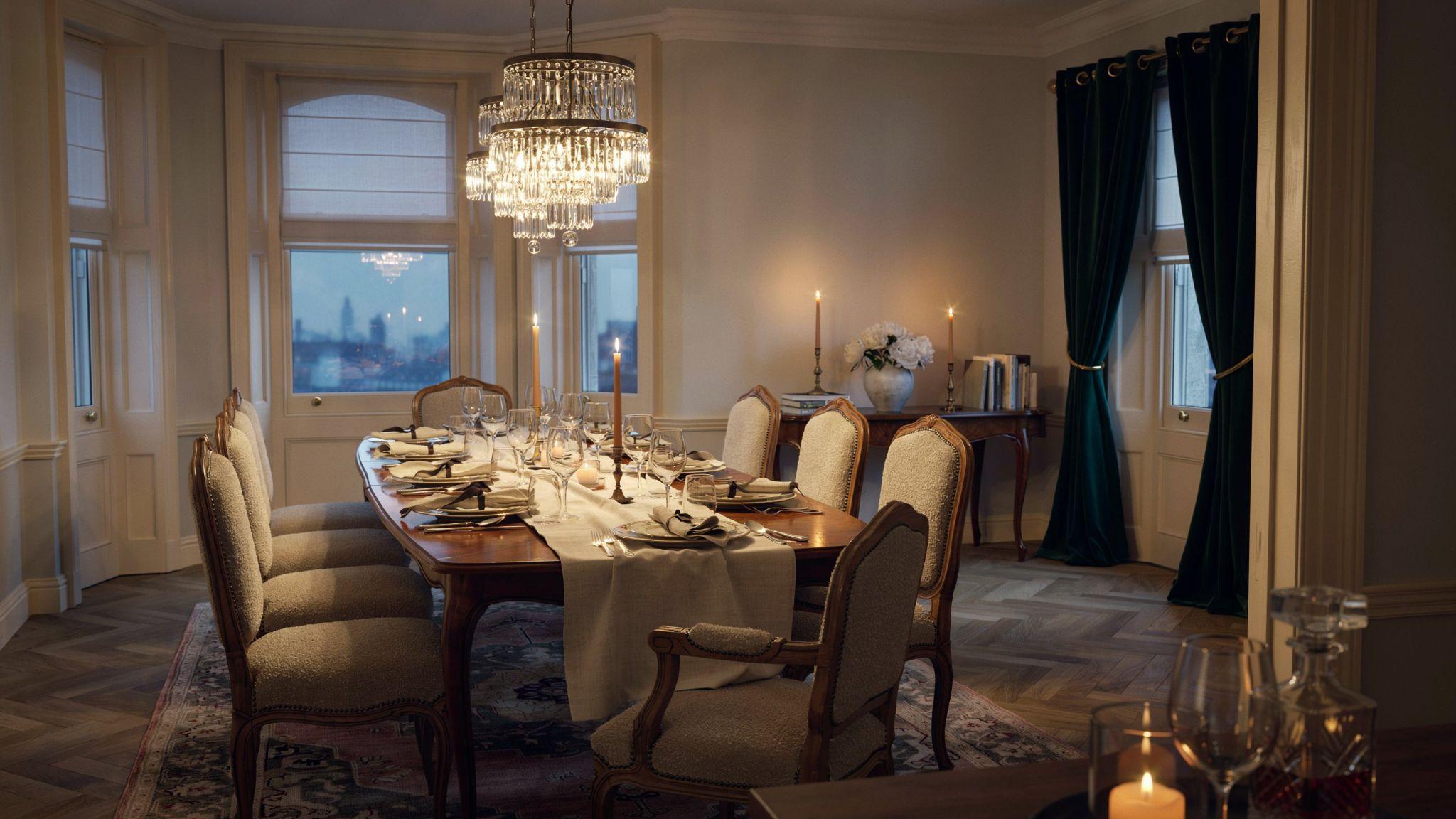
Velvet curtains bring a rich, cozy feel. Pair them with horizontal blinds for a look that feels put together without trying too hard.
This combo works best in living rooms, dining rooms, and bedrooms with traditional or modern luxe styles.
One thing I noticed in my own dining room is that velvet also helps dampen sound a bit, which is a nice bonus in rooms with hard floors.
8. Patterned Curtains With Simple White Blinds
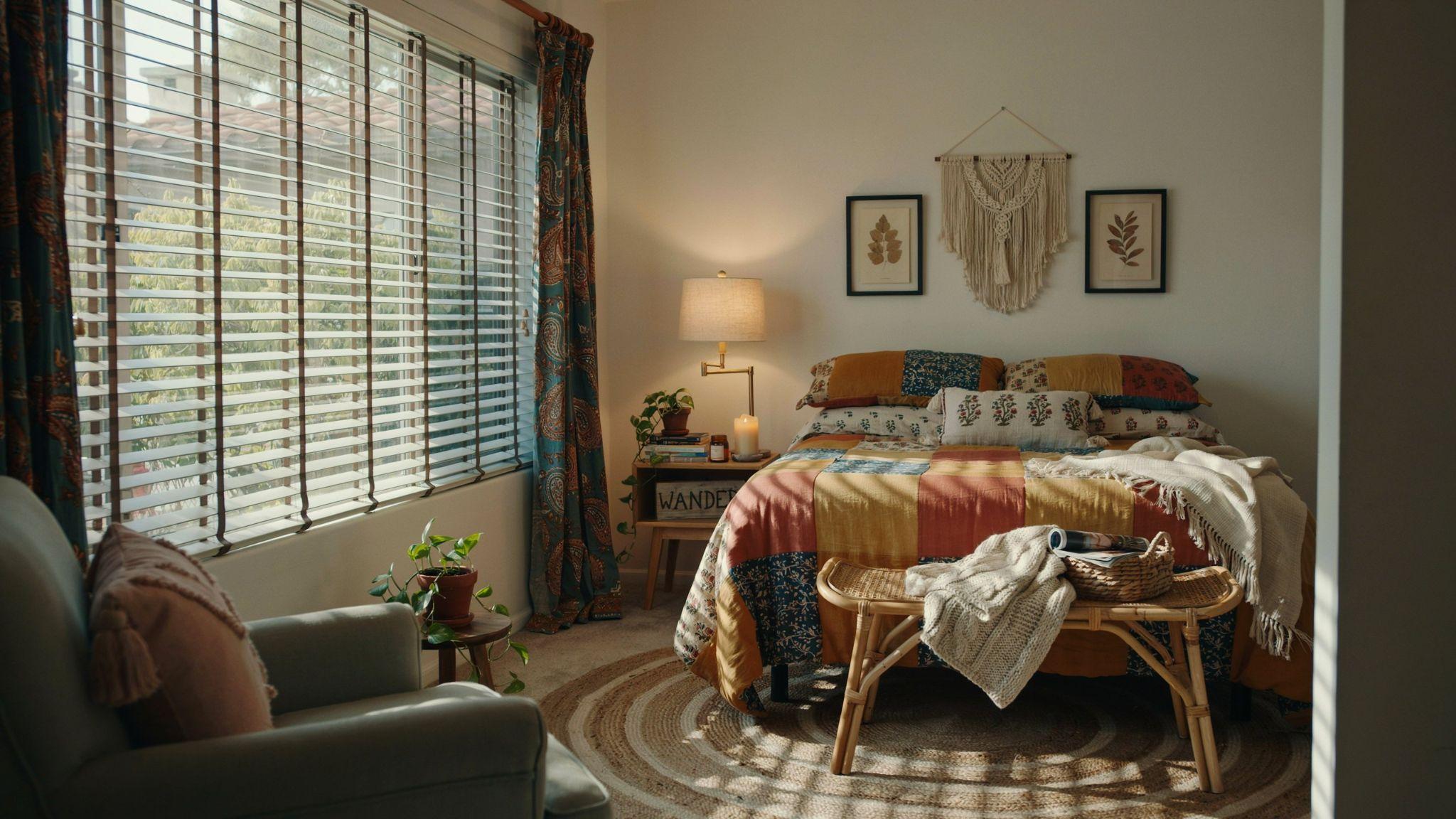
Want some personality? Patterned curtains over white blinds let the pattern shine while the blinds stay simple and functional.
This works well in bedrooms, kids' rooms, and living rooms with boho or eclectic styles. Choose a pattern with colors that already exist in your room, like a rug or throw pillow, to tie things together.
One downside is that bold patterns can feel overwhelming in small rooms, so balance them with plenty of plain wall space.
9. Layered Double Curtains Over Blinds
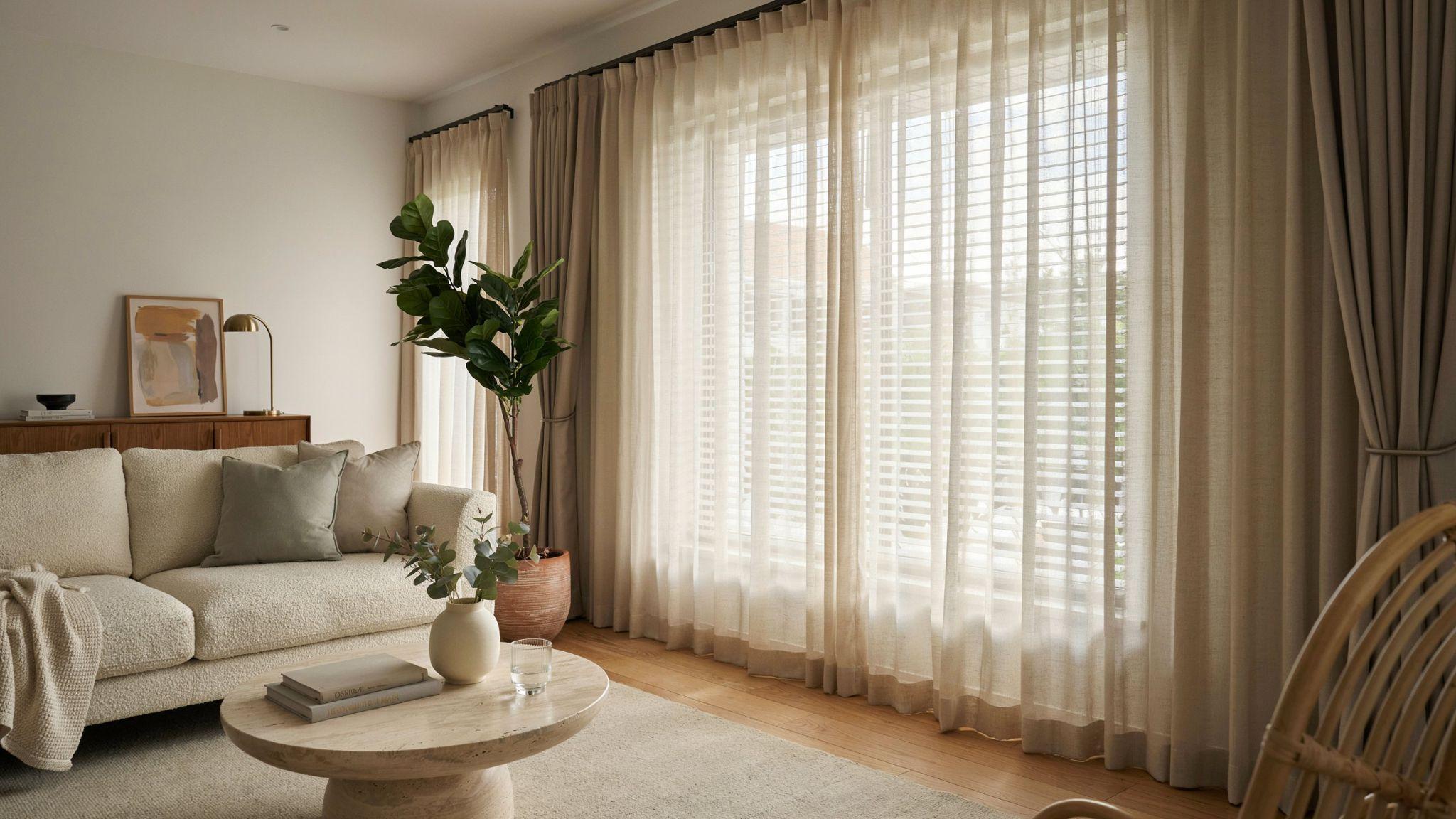
Double curtains, like a sheer layer plus a heavier panel, give you more control over light and style. You can adjust based on time of day or mood.
This setup works in almost any room and suits modern, traditional, or transitional styles. Pair a white or cream sheer with a solid color panel in navy, gray, or green.
Budget note:double rod sets cost more upfront, but they let you skip buying separate blackout shades later, so it can balance out.
10. Coastal Blue Curtains Over Light Wood Blinds
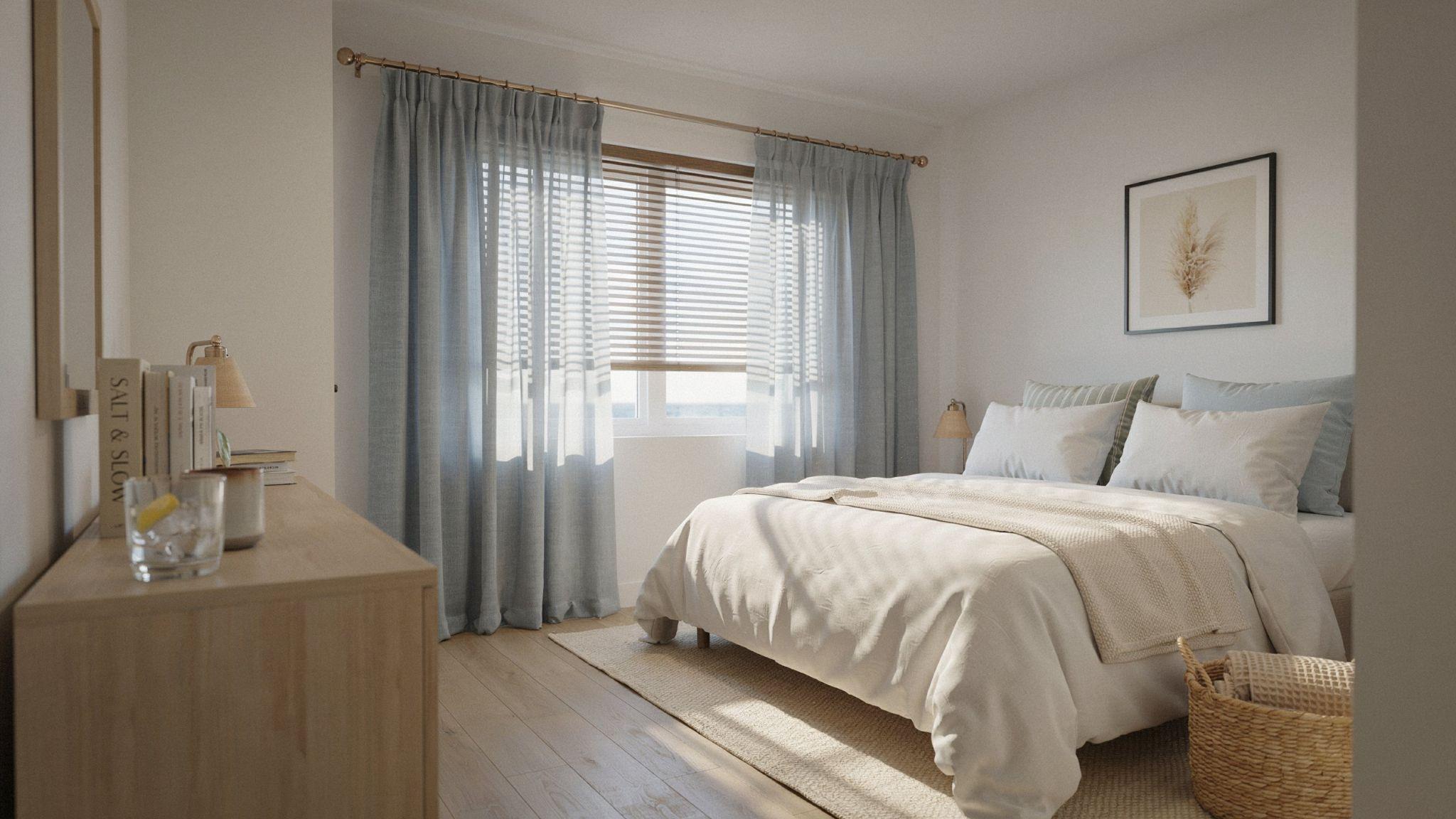
This combo feels breezy and calm. Blue curtains with light wood blinds bring a beach house vibe to any space, especially living rooms and bedrooms.
It fits coastal and Scandinavian styles best. Stick to soft blues like sky, seafoam, or muted teal for a relaxed look.
One downside is that very light blue fabric can show stains more easily, so consider a blend that's easy to wash.
11. Farmhouse Curtains Over Faux Wood Blinds
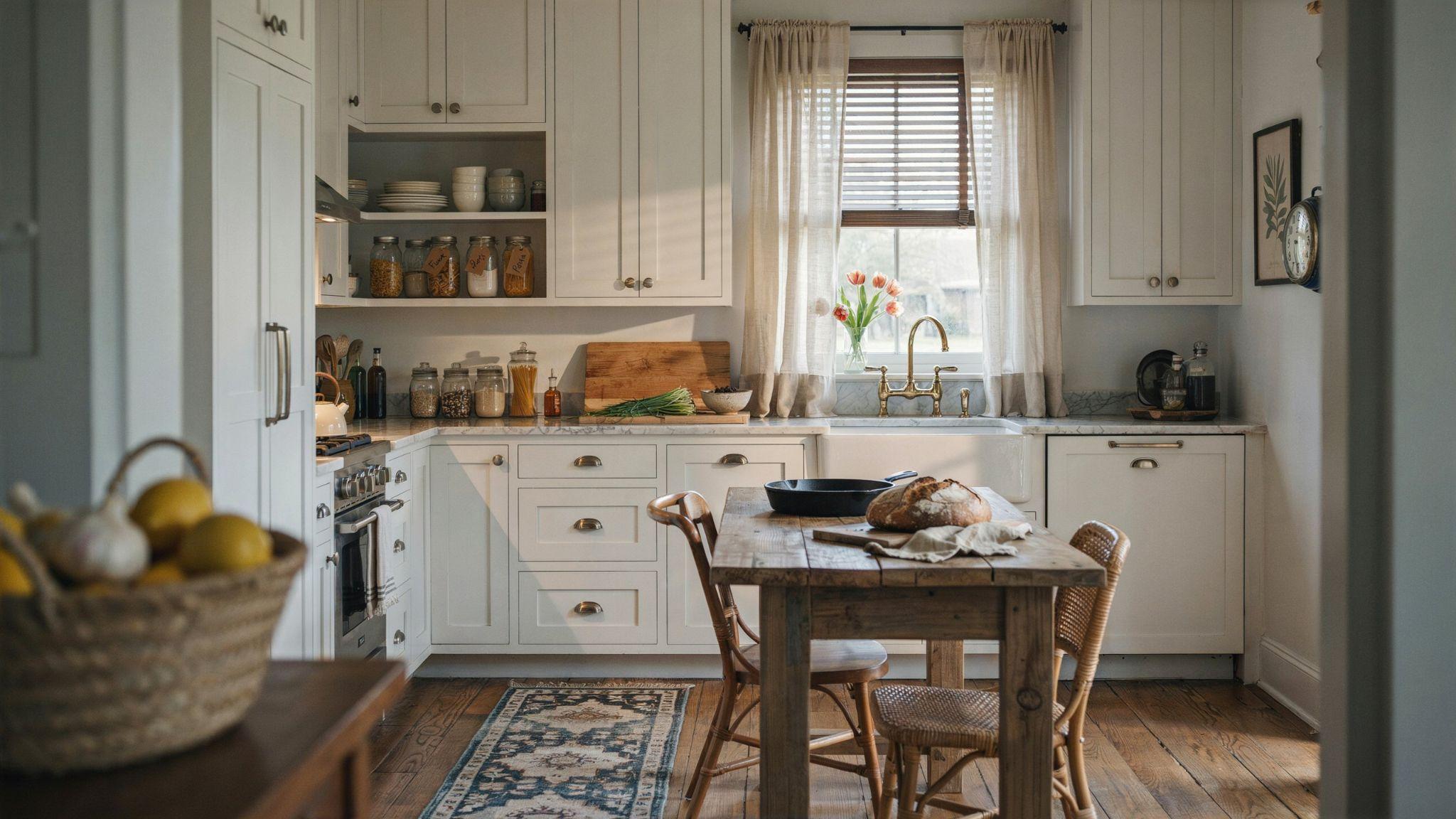
Think simple cotton or linen curtains with small prints or solid neutrals. Paired with faux wood blinds, this combo feels warm and welcoming.
It works well in kitchens, dining rooms, and living rooms with a farmhouse or country style. Stick to creams, soft blues, or muted reds for classic farmhouse colors.
The downside is that busy prints can clash if your room already has a lot of patterns, so keep other textiles simple.
12. Gray Curtains Over White Mini Blinds

Gray is a safe, modern choice. Over white mini blinds, it adds depth without clashing with other colors in the room.
This combo works in almost any room and fits modern, Scandinavian, or transitional styles. Light gray pairs well with white blinds for a soft look, while charcoal gray adds more contrast.
In my own experience, this pairing also hides smudges and fingerprints near light switches better than plain white panels.
13. Botanical Print Curtains Over Neutral Blinds
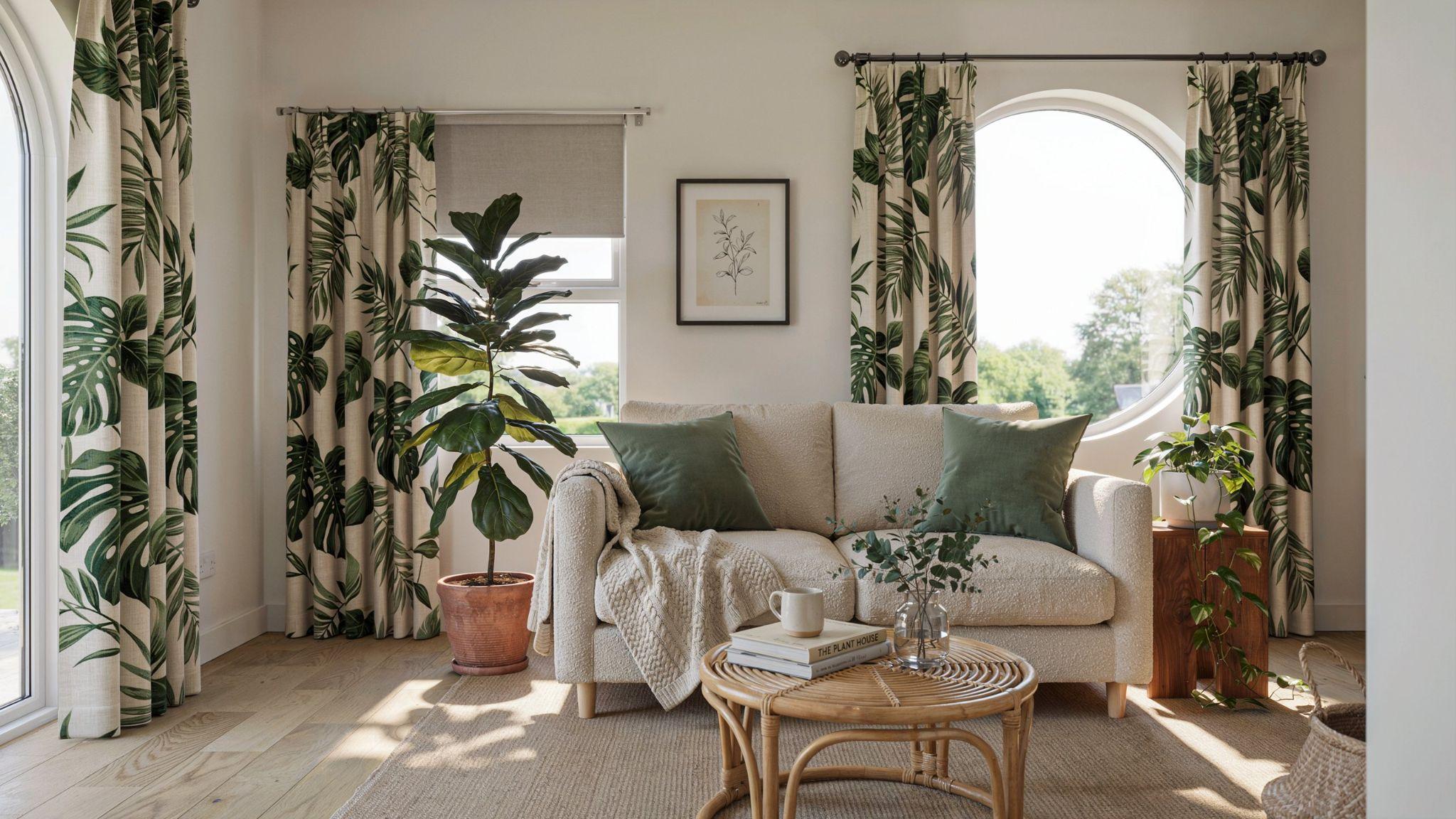
If you love plants or nature themes, botanical print curtains can bring that energy in. Neutral blinds keep the focus on the print.
This combo works well in living rooms, sunrooms, and bedrooms with boho or traditional styles. Pair green and white prints with white or cream blinds for the cleanest look.
One downside is that busy botanical prints can feel dated if not balanced with simple furniture and neutral walls.
14. Ceiling-Mounted Curtains Over Window Blinds
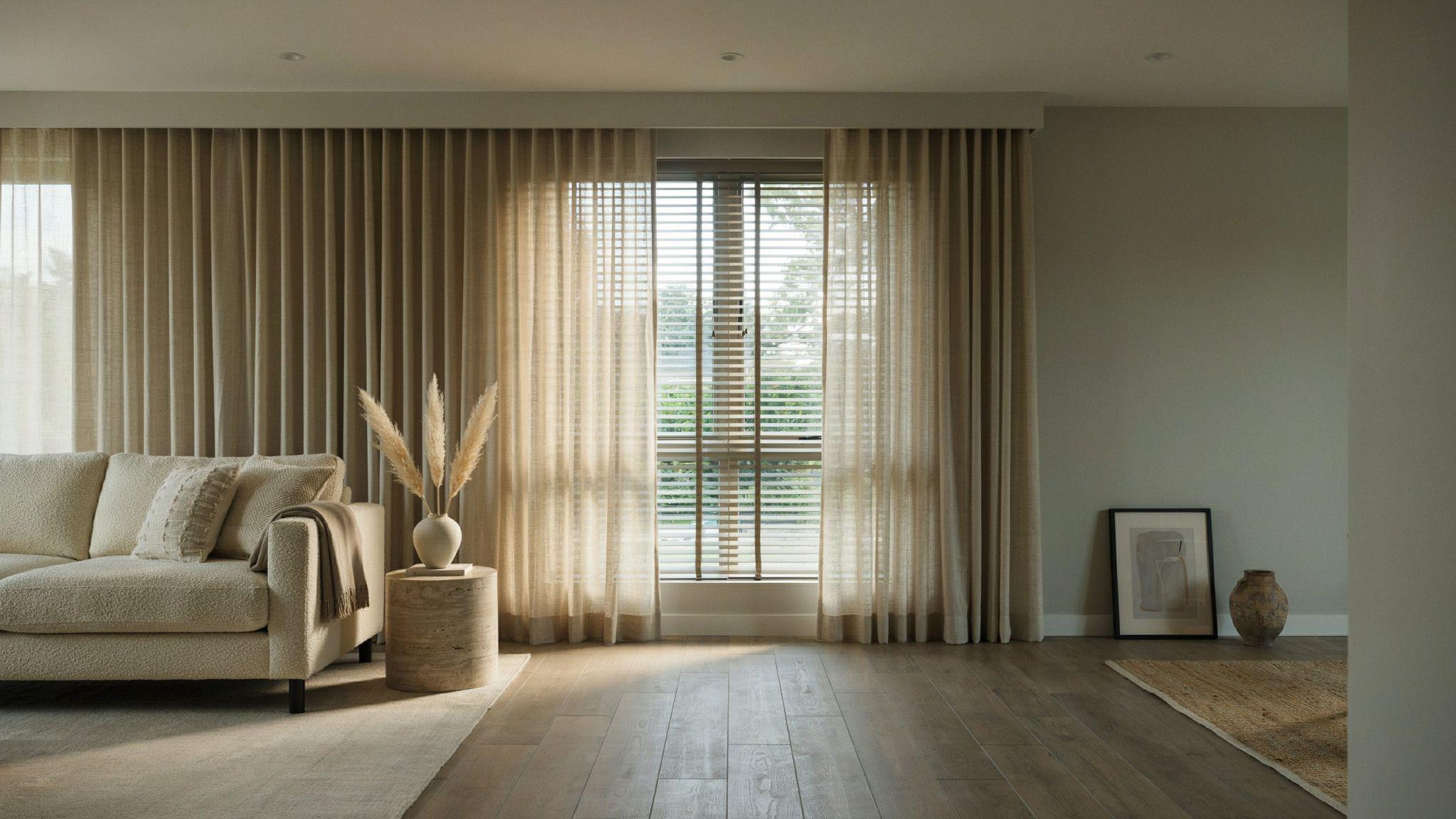
Mounting curtains close to the ceiling makes your walls look taller. This trick works in rooms with low ceilings or small windows, and it suits any design style.
Pair with simple white or wood blinds so the focus stays on the height of the curtains.
Installation tip:use anchors rated for your wall type, since ceiling-mounted rods carry more weight and need a sturdier hold than standard wall brackets.
15. Two-Tone Curtains Over Roller Shades
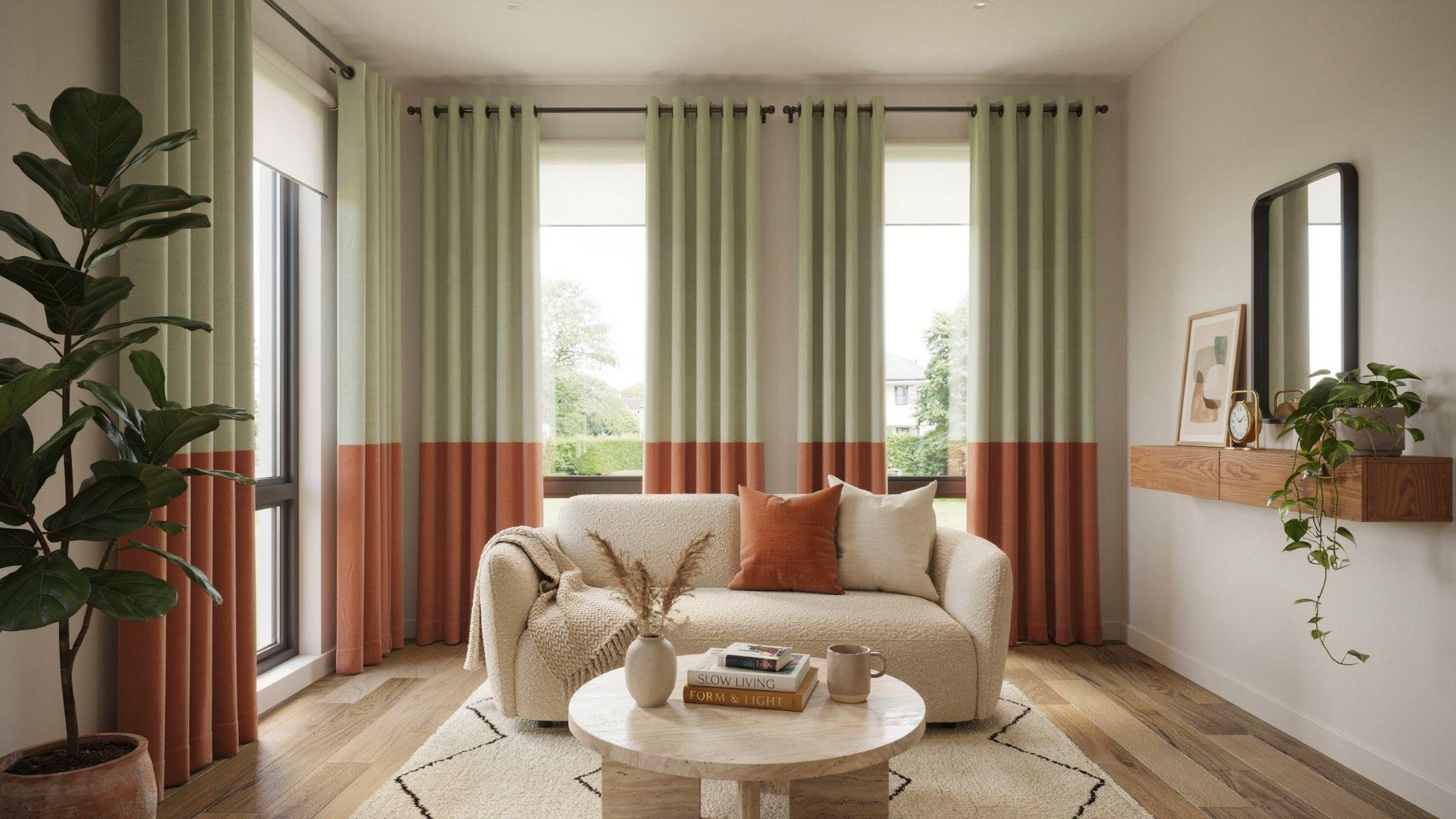
Two-tone curtains, like a color block design, add visual interest. Roller shades underneath keep the setup clean and easy to use.
This combo works well in living rooms, kids' rooms, and home offices with modern or eclectic styles. Pair contrasting colors like navy and white, or blush and cream, for a fresh look.
The downside is that two-tone designs can be harder to find ready-made, so you may need custom curtains.
16. Gold Accent Curtains Over Neutral Blinds
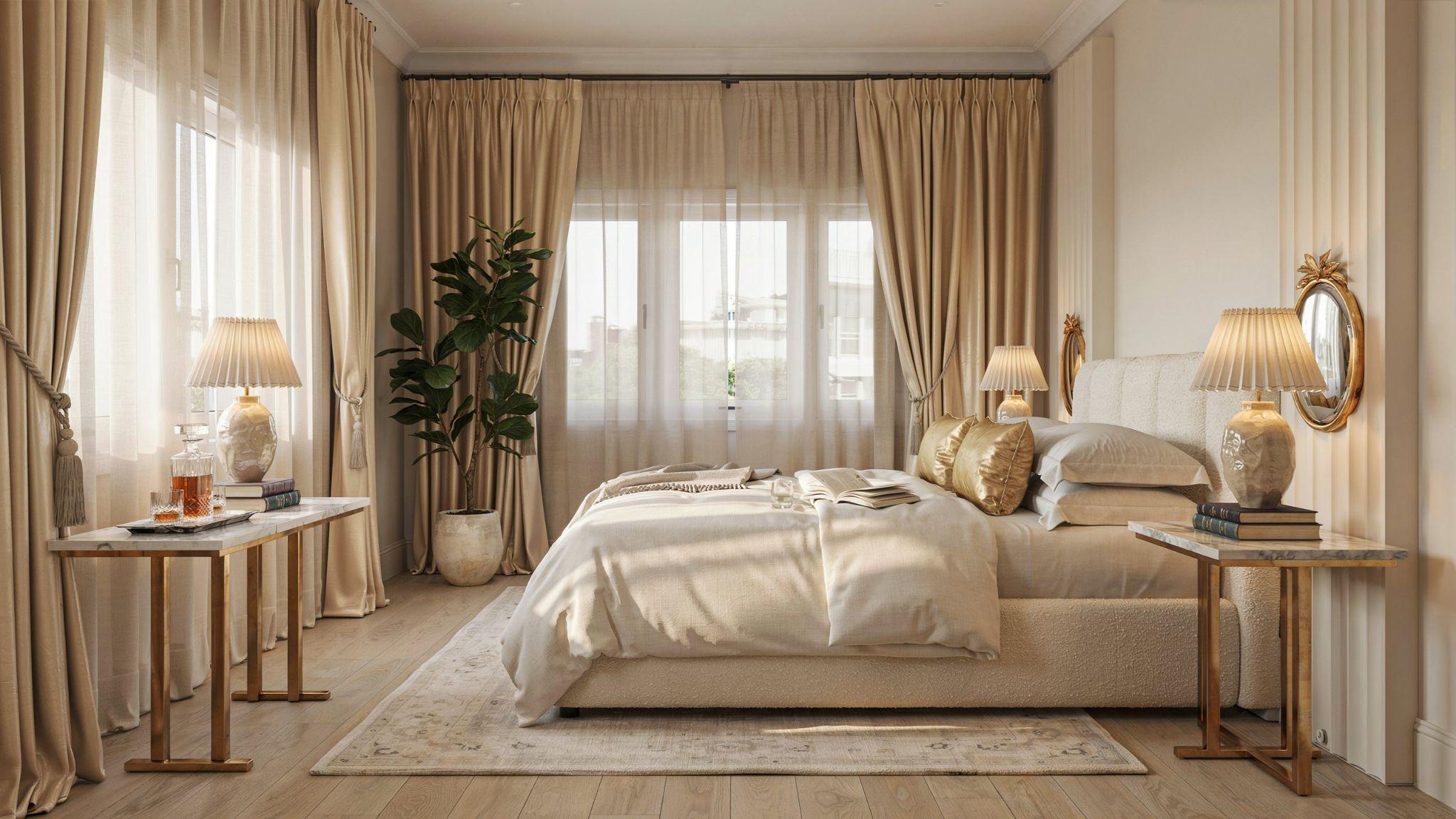
A little gold trim or gold-toned fabric can dress up a plain window fast. Neutral blinds let the gold details stand out.
This works well in living rooms, dining rooms, and bedrooms with modern glam or traditional styles. Pair with white, cream, or light gray blinds for the best contrast.
One downside is that gold accents can look too flashy in very casual or minimalist rooms, so use them sparingly.
17. Light Filtering Curtains Over Venetian Blinds
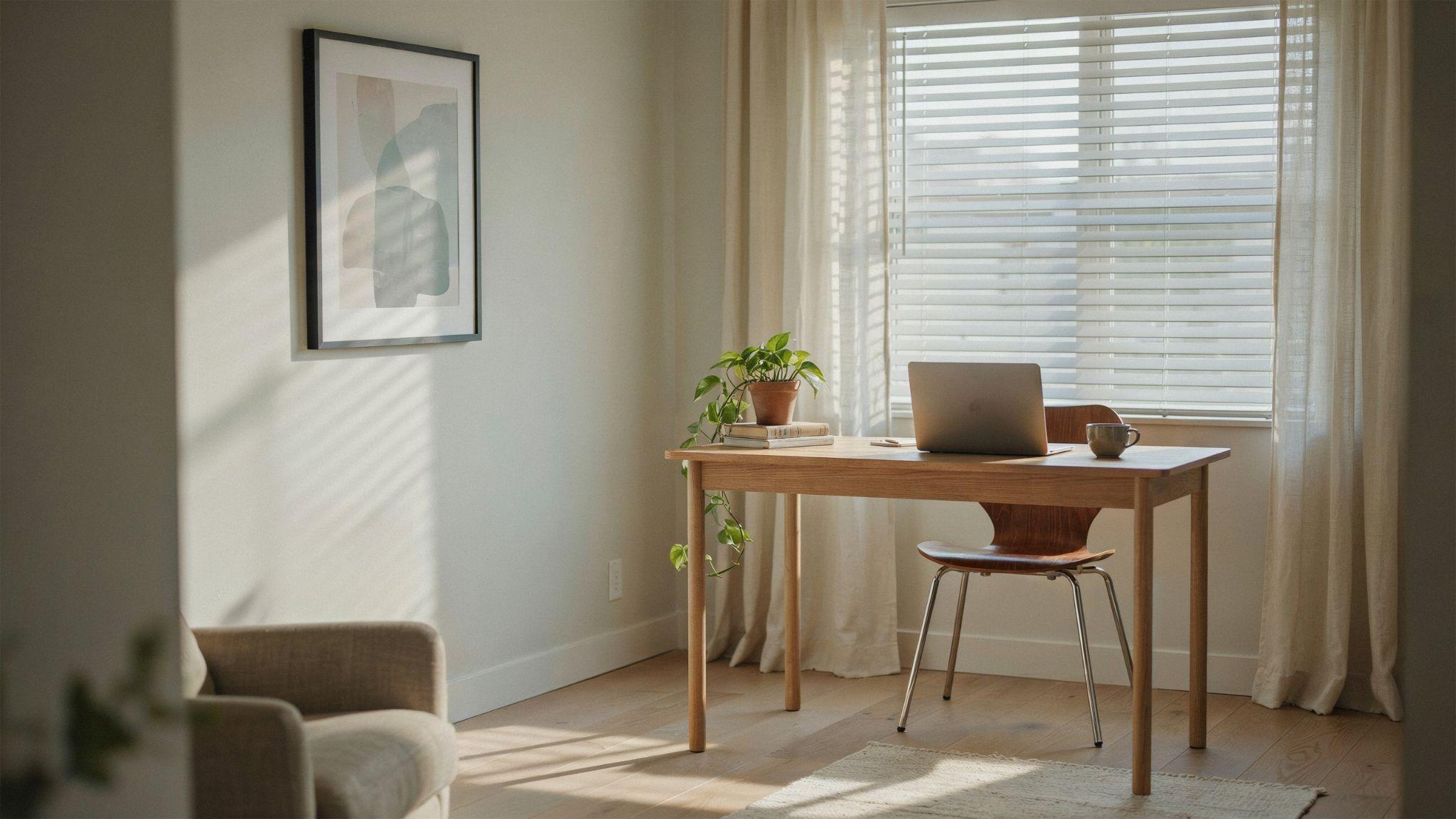
These curtains let in soft light while still giving you privacy. Venetian blinds add an extra layer of light control when you need it.
This combo works well in home offices, living rooms, and kitchens with modern or transitional styles. Stick to light colors like white, cream, or pale yellow to keep the room bright.
Lighting advice:this pairing is great for rooms that get a lot of morning sun, since it softens the glare without blocking it completely.
18. Minimalist Neutral Curtains Over Hidden Blinds
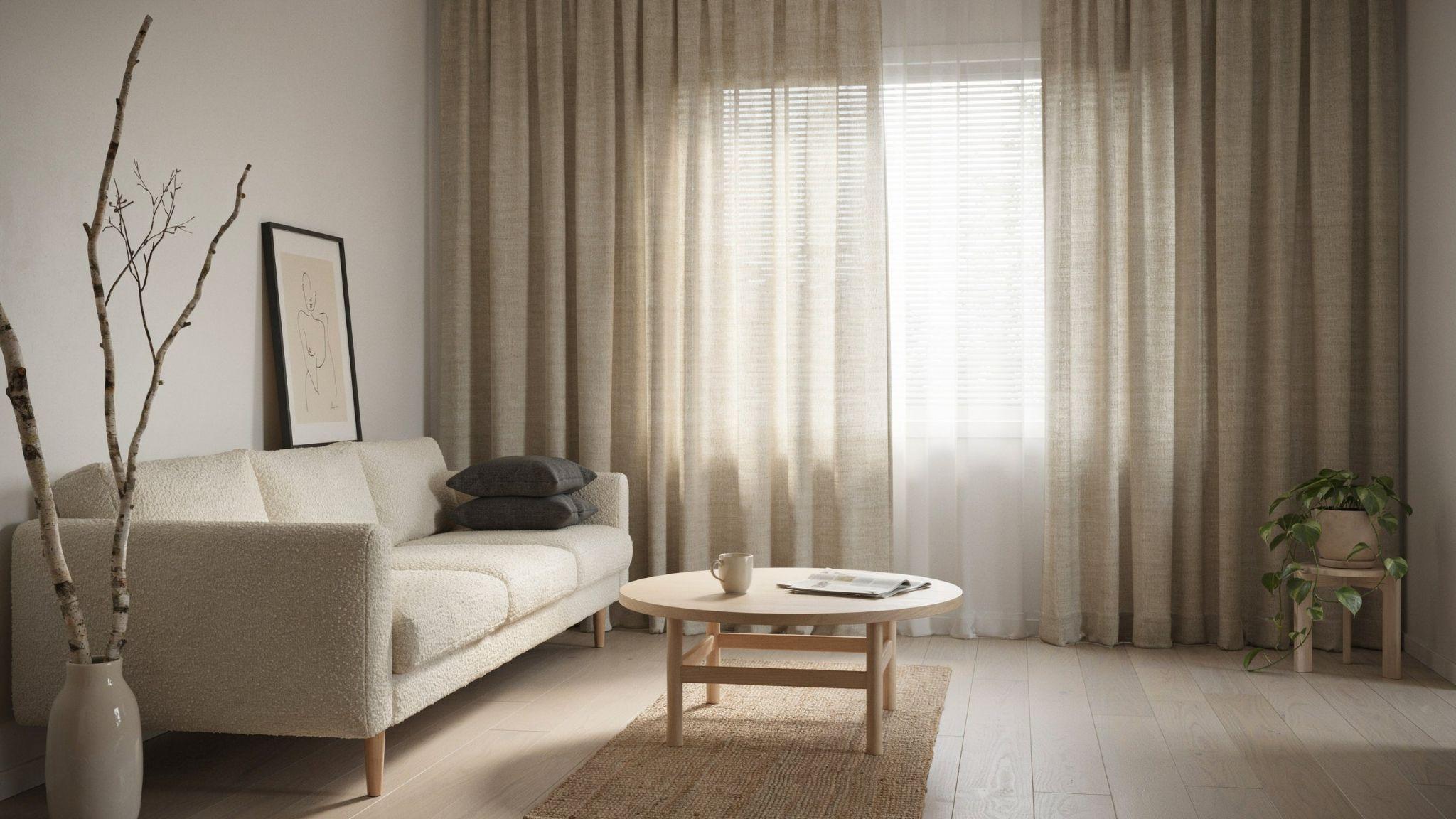
For a clean, simple look, choose curtains that blend into the wall color. Blinds stay tucked behind, ready when you need them.
This works well in any room and fits modern, Scandinavian, or minimalist styles. Match curtain color closely to your wall paint for the most seamless look.
The downside is that this style can feel plain or uninteresting in rooms that already have simple decor, so add interest through texture instead of color.
19. Dark Curtains Framing Bright White Blinds
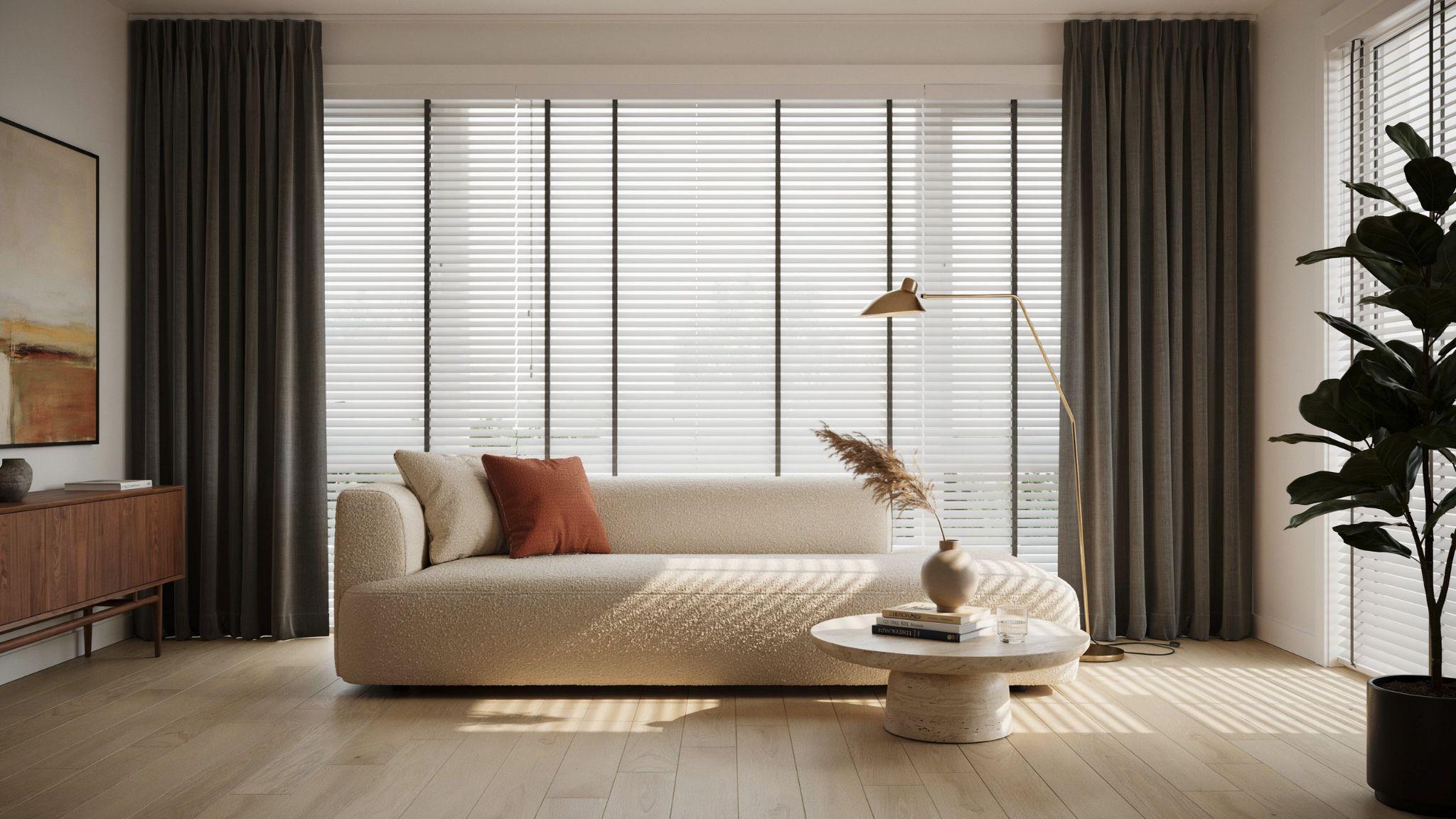
Dark curtains, like charcoal or black, create a bold frame around bright white blinds. This works well in modern and contemporary spaces, especially living rooms and home offices.
Pair with white walls and white blinds for maximum contrast.
The downside is that dark curtains can make a room feel smaller or more closed in, so they work best in rooms with high ceilings or large windows.
20. Textured Curtains Over Bamboo Blinds
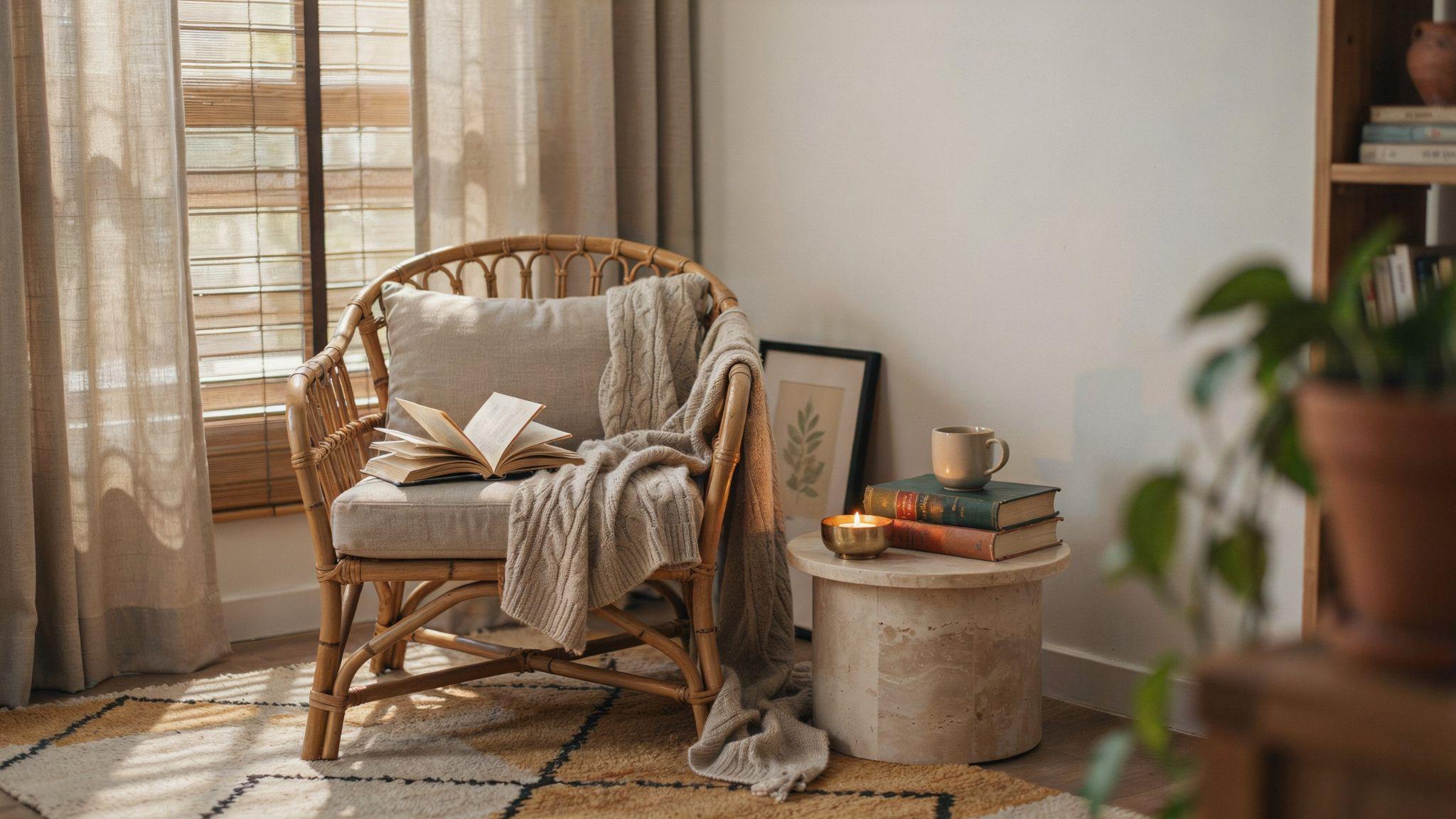
Textured fabric, like a woven or nubby weave, pairs nicely with bamboo blinds. Both add natural texture to a room.
This combo works well in living rooms, sunrooms, and bedrooms with boho, coastal, or Scandinavian styles. Stick to natural tones like cream, tan, or soft green to keep the look cohesive.
Personal observation:I added this combo to a small reading nook, and the texture mix made the corner feel cozy instead of cramped.
21. Custom Layered Curtains Over Motorized Blinds
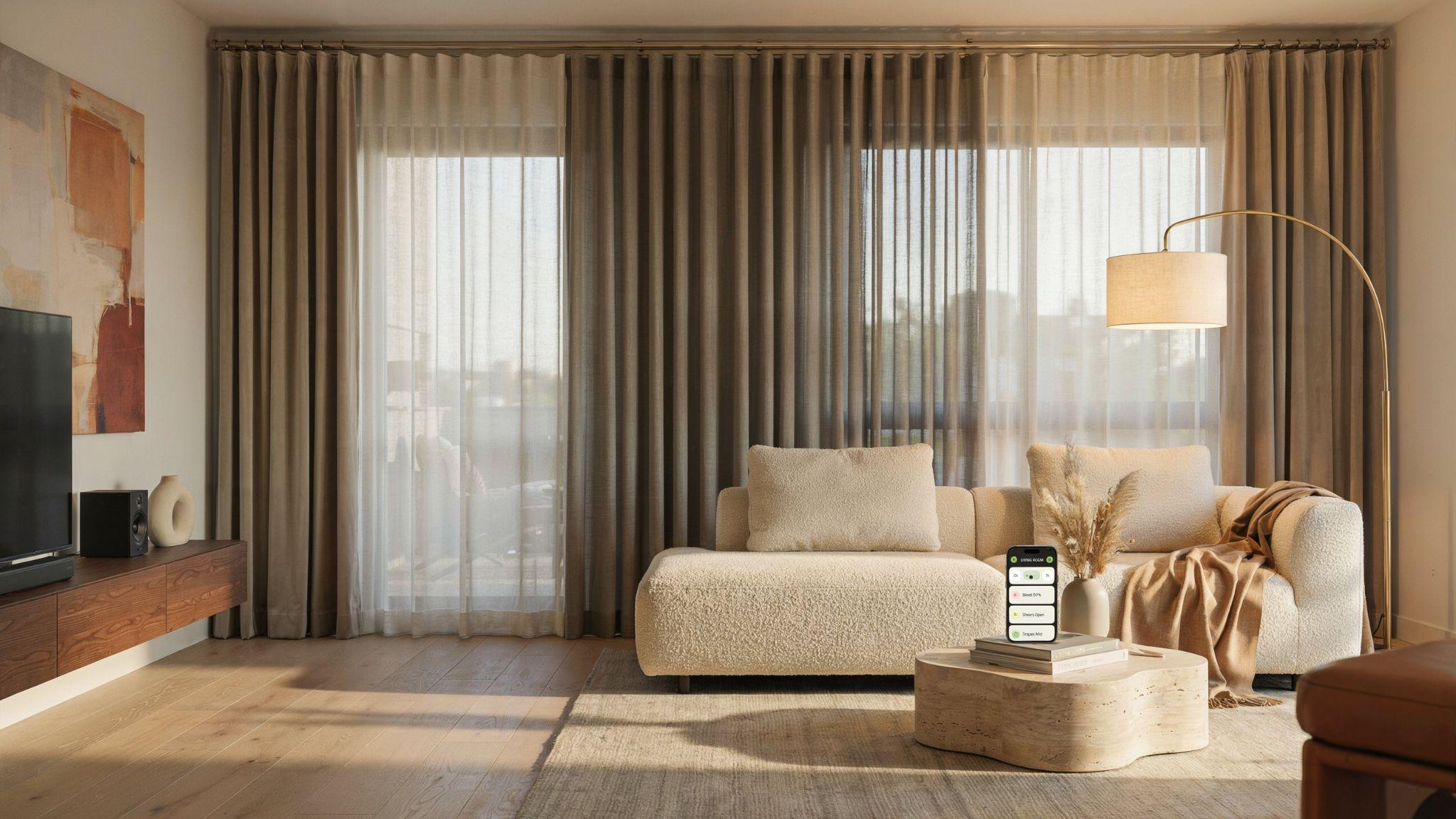
If you have motorized blinds, custom curtains on a separate track let you control both independently. This setup feels high-end without being fussy.
It works well in living rooms, bedrooms, and home offices with modern or luxury styles. Pair with simple, solid color curtains so the motorized blinds remain the functional focus.
Budget note:this is one of the pricier options on this list, since custom tracks and motorized blinds both add to your total cost, so plan for it as a bigger upgrade.
Best Curtains to Pair With Different Types of Blinds
Different blinds call for different curtains and here's a quick guide:
For wood or faux wood blinds, go with linen, cotton, or light velvet. These fabrics complement the natural look of wood.
For mini blinds, almost any curtain works. Mini blinds are simple, so they don't compete with patterns or bold colors.
For roller shades, pick curtains that add softness, like sheers or light cotton. Roller shades are flat, so curtains bring in texture.
For cellular shades, go with heavier curtains if you want better insulation and light control. Blackout curtains work great here.
For bamboo or woven wood blinds, textured curtains in neutral tones keep the natural theme going without clashing.
Mistakes to Avoid When Hanging Curtains Over Blinds
A few common mistakes can make even nice curtains look off.
Hanging curtains too close to the blinds is one of the biggest issues. If there's not enough space, the curtains can block the blinds from opening and closing properly.
Choosing the wrong curtain length is another common problem. Curtains that stop short of the floor or puddle too much can throw off the whole look.
Mounting the rod too low is a mistake I made early on. It made my window look smaller instead of bigger. Mounting higher and wider almost always looks better.
Using too much fabric in a small room can make the space feel cluttered. Stick to one or two panels per window unless you're going for a layered look on purpose.
Color clashes happen when curtain color fights with the blinds or the room's existing palette.
When in doubt, choose neutral curtains and let one element, like a rug or accent wall, bring in color.
Room-by-Room Curtains Over Blinds Inspiration
In the living room, go for longer curtains that touch the floor. This adds height and makes the space feel more put together.
In bedrooms, blackout curtains over any blind type help with sleep. Add a sheer layer if you want more flexibility during the day.
In kitchens, shorter curtains or cafe curtains over blinds work well. They keep things practical while adding a touch of style.
In home offices, light filtering curtains over blinds help reduce glare on screens while keeping the room bright.
In bathrooms, go with moisture-resistant curtains over your blinds if you have a window near the shower or tub.
Color Combinations That Always Work
White curtains with white or light wood blinds. This combo is timeless and works in almost any room.
Gray curtains with white blinds. This pairing feels modern and calm.
Navy or dark blue curtains with white or cream blinds. This adds contrast without feeling too bold.
Beige or cream curtains with wood blinds. This combo feels warm and cohesive.
Black or charcoal curtains with white blinds. This creates a sharp, modern contrast.
Budget-Friendly Ways to Upgrade Blinds With Curtains
You don't need to spend a lot to get a better look. Here are some budget tips I've used myself.
Shop sales and clearance sections. Curtains often go on sale during seasonal changes.
Buy curtain clips instead of paying for custom hems. Clips let you adjust length without sewing.
Use tension rods for a quick, no-drill curtain setup. These work great for renters.
Mix and match. Pair an affordable curtain panel with a slightly pricier one for a layered look without doubling your cost.
Check thrift stores. I've found great curtain panels for a few dollars that just needed a quick wash.
Expert Styling Tips for a Designer Look
Hang your curtains high and wide. This simple trick makes windows look bigger and rooms feel taller.
Many interior designers recommend mounting rods at least four to six inches above the window frame for this reason.
Use curtain rings or clips for an easy, polished hang. They also make opening and closing curtains smoother.
Iron or steam your curtains before hanging. Wrinkled fabric can make even nice curtains look messy.
Layer textures. Mix a sheer curtain with a heavier panel for depth and function. This layered window treatment approach also adds a bit of extra insulation to your room.
Match your curtain hardware to other metal finishes in the room, like door handles or light fixtures, for a pulled-together feel.
Conclusion
Curtains over blinds ideas can completely change how a room feels.
In my own home, swapping plain blinds for layered curtains made a real difference, and I think it can do the same for your space.
From sheer layers to bold colors, there's a combo here for every style and budget. Start with one room. Pick a combo that matches your blinds, your design style, and your taste.
Avoid the common mistakes, like mounting your rod too low or choosing the wrong length. You don't need to redo your whole house at once. Even one window can set the tone for a room.
So, which combo are you most excited to try first?
Frequently Asked Questions
Can I put curtains over any type of blinds?
Yes, you can layer curtains over almost any blind type. Just make sure your curtain rod has enough clearance so the blinds can still move freely.
Do curtains over blinds block more light?
Yes, especially if you choose blackout or heavy curtains. They add an extra layer that helps block light beyond what blinds alone can do.
What curtain length works best over blinds?
Floor-length curtains usually look best and make rooms feel bigger. Just measure your window first to get the right size.
Can I use curtains to hide old or damaged blinds?
Yes, curtains can cover up worn or outdated blinds. Choose a curtain style that draws the eye and adds color or texture to the window.
How do I hang curtains without drilling holes?
Tension rods are a great option for renters. They fit inside the window frame and don't need any wall damage to install.