

Many people struggle to make their windows look polished and functional. Curtains over blinds solve this problem by combining privacy, light control, and decorative style in one layered setup.
This guide covers seven practical curtains over blinds ideas for modern homes, from sheer panels over white blinds to blackout curtains over Roman blinds.
You will also learn how to choose the right colors, fabrics, and lengths for your space.
Plus, you will find common mistakes to avoid and simple styling tips for creating a balanced, finished look.
These ideas work well for both renters and homeowners, whether you want better light control, more privacy, or a more polished window design.
What to Know About Curtains Over Blinds
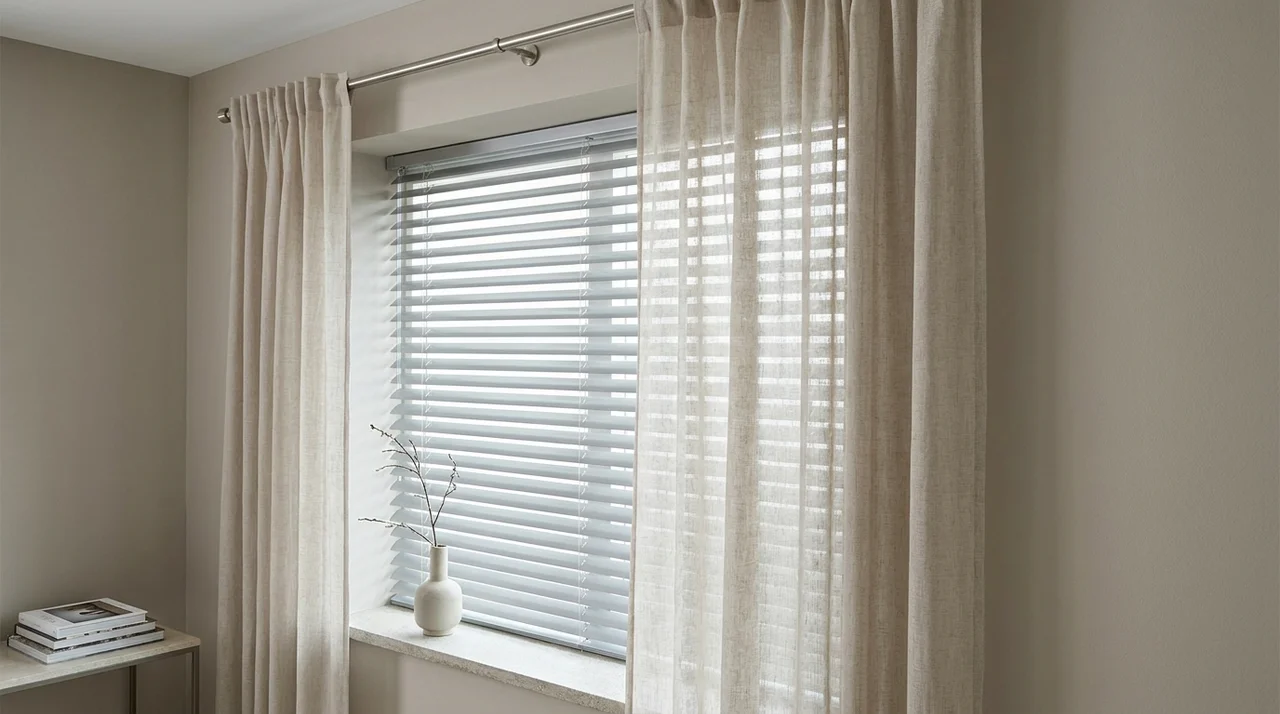
Curtains over blinds work by layering two window treatments together, giving you independent control over light, privacy, and room appearance.
Blinds sit closest to the glass and handle light blocking. Curtains hang in front on a separate rod. You operate each one independently, so during the day you might use just the blinds, then close both at night for full privacy.
Layering also adds insulation, trapping air near the window to keep rooms warmer in winter and cooler in summer.
Layered window treatments can add another barrier near the window, which may help improve insulation.
The extra fabric layer also helps dampen outside noise, which is a bonus in busy or street-facing rooms.
Before you start, check that your wall has room for two rods. Also think about how much maintenance you are willing to do.
An inside-mounted blind paired with curtains that hang well beyond the frame gives the cleanest, tallest-looking result.
7 Curtains Over Blinds Ideas for Modern Decor
These seven ideas cover a range of styles and budgets. Each one works well in a modern home and solves a specific decorating or functional problem.
1. Sheer Curtains Over White Blinds
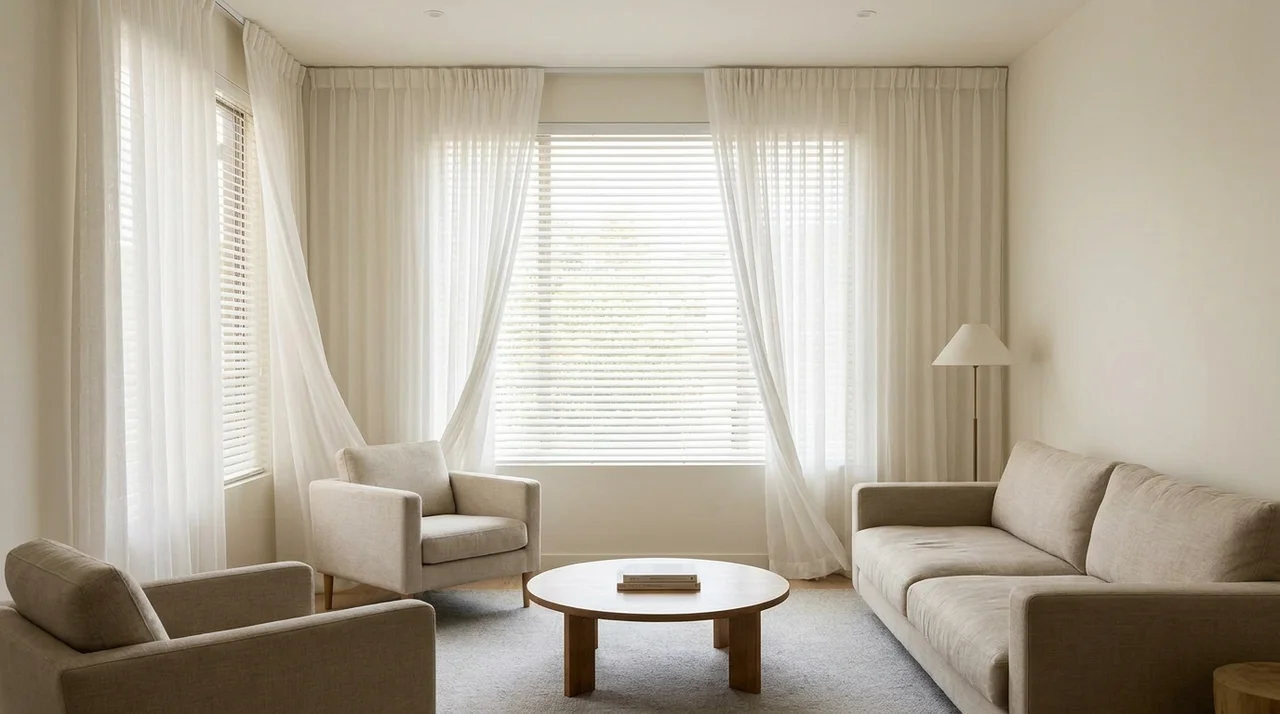
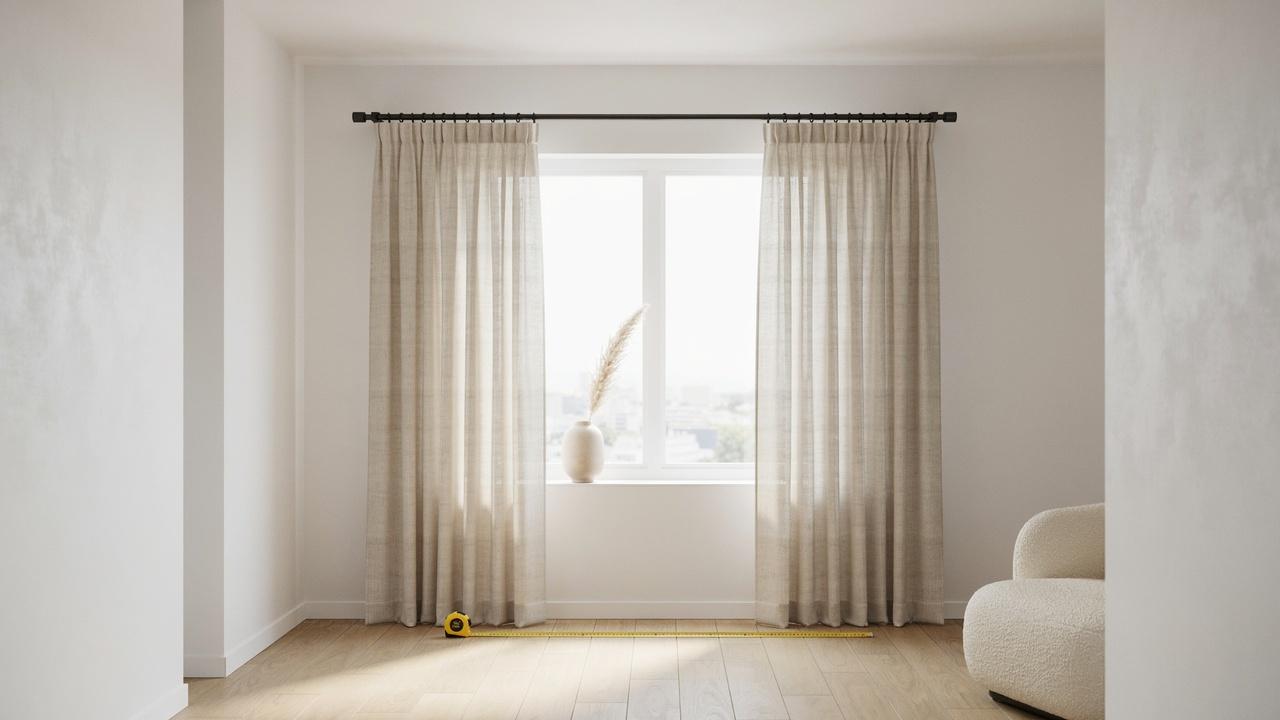
Sheer curtains over white blinds create a light, open feel without sacrificing privacy. The blinds handle direct light and give you privacy when needed.
The sheer panels soften the look and let diffused light pass through during the day.
This combination works especially well in living rooms and dining spaces where you want natural light but not harsh glare.
Stick to white or cream sheers for a clean, modern result. Each panel should be at least 1.5 to 2 times the window width so the sheers look full and gathered rather than flat.
If your room has neutral walls, this pairing keeps things calm and cohesive.
2. Floor-Length Curtains With Venetian Blinds

Floor-length curtains paired with Venetian blinds are a classic combination that works in almost any room. The Venetian blinds give you precise control over light direction and angle.
The long curtains frame the window and add a sense of height to the room. This works especially well in rooms with low ceilings because vertical lines draw the eye upward.
Choose curtains that just graze the floor for a neat look, or let them pool slightly if you want something more relaxed. Linen or cotton fabrics work well here.
Grommet curtains are a good choice for this pairing since the metal rings slide smoothly on the rod and open and close with even, modern folds.
3. Neutral Curtains Over Roller Blinds
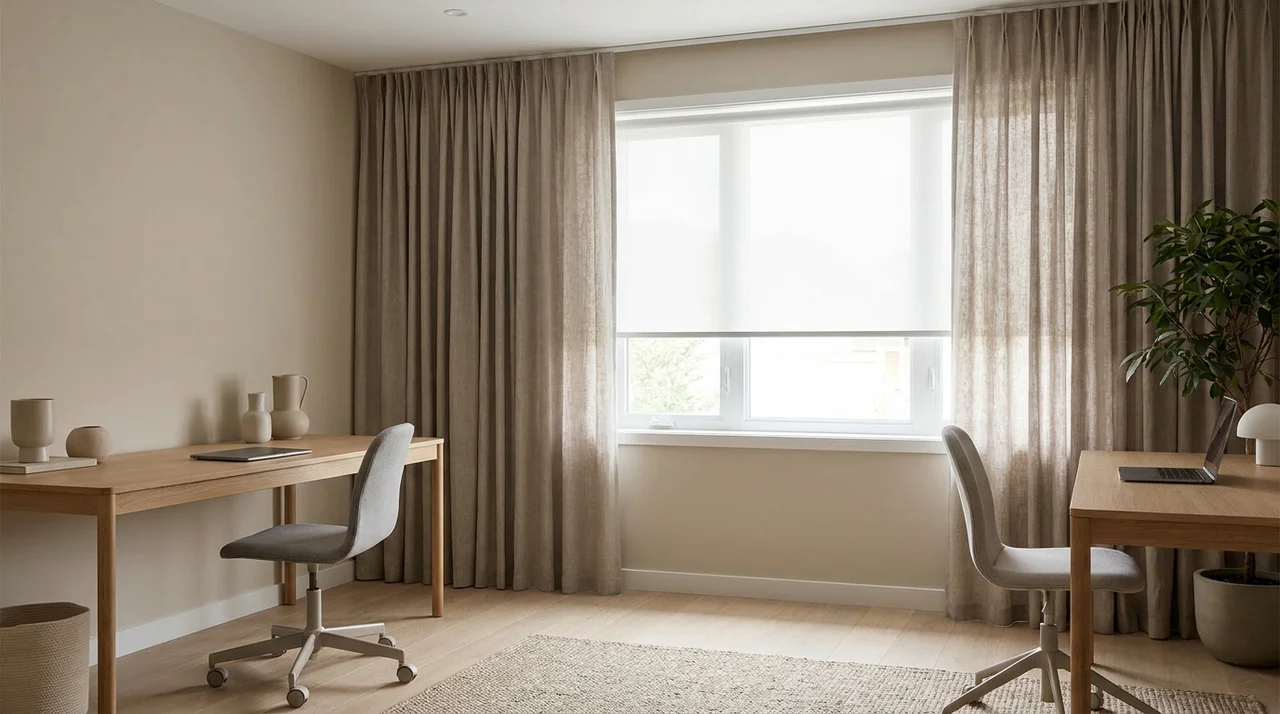
Roller blinds are sleek and minimal. Pairing them with neutral curtains keeps that clean look while adding warmth and texture. Colors like beige, grey, warm white, or soft taupe work best.
This combination suits home offices, modern kitchens, and open-plan spaces where you want things to look tidy without feeling sterile.
The roller blind handles glare and privacy. The curtain adds softness without making the space feel heavy. Avoid bold patterns here since the goal is a calm, put-together finish.
4. Blackout Curtains Over Roman Blinds
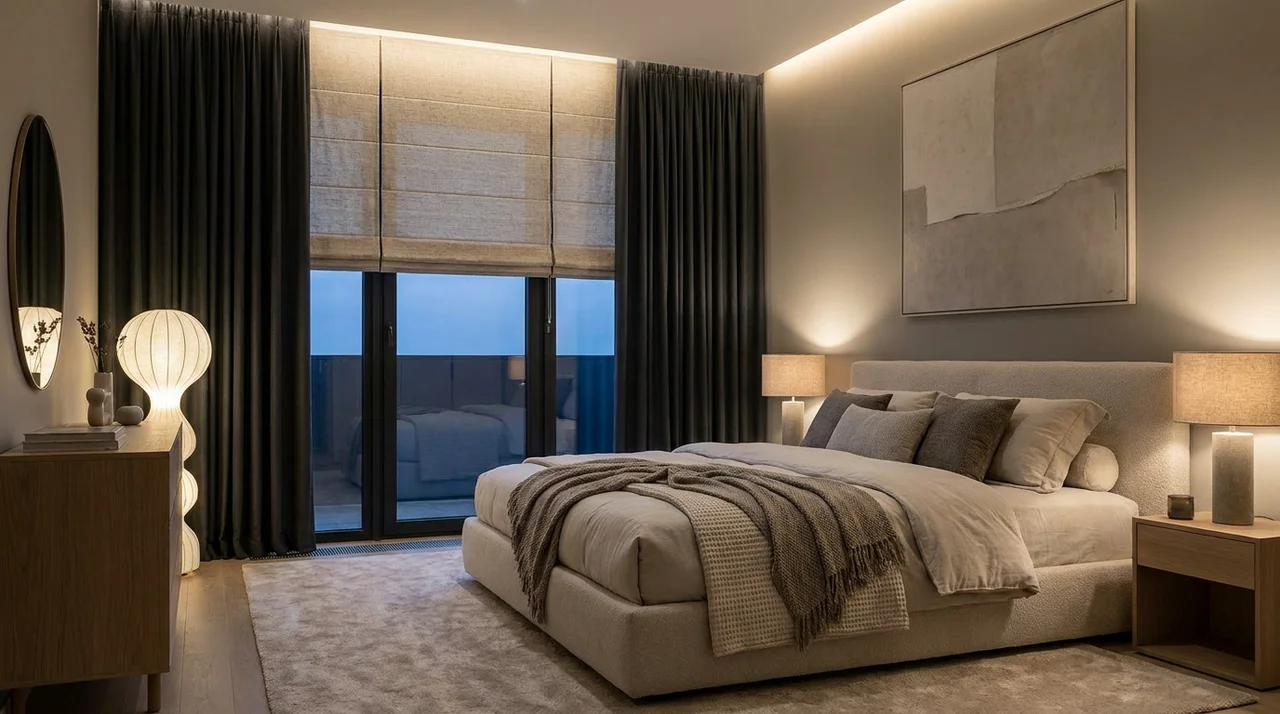
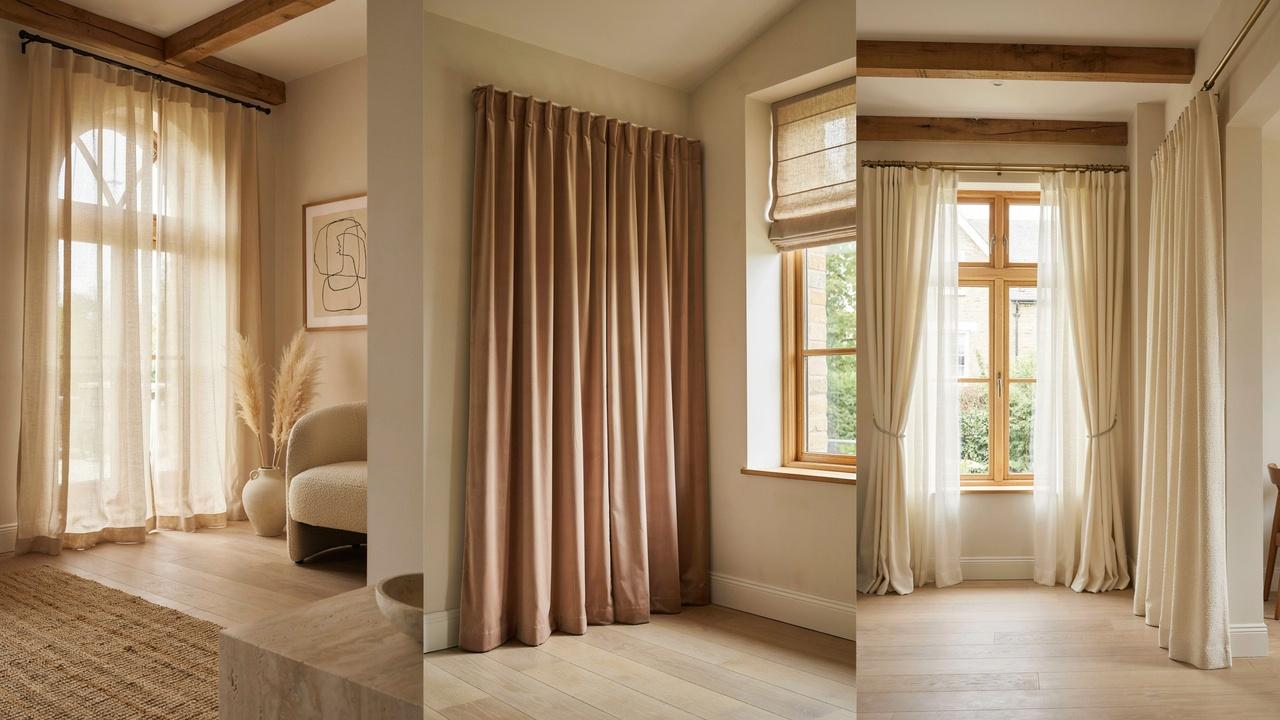
This is the go-to combination for bedrooms. Roman blinds have a neat, structured fold that looks sharp when raised. They offer some light filtering on their own.
Adding blackout curtains in front means you get complete darkness when you need it. This is ideal for shift workers, young children, or anyone who needs deep, uninterrupted sleep.
If you want an extra level of light control, look for Roman blinds with a blackout lining so both layers work together from the start.
Choose Roman blinds in a fabric that complements the curtain color. A tonal look where both pieces are in the same color family tends to feel the most pulled together.
5. Patterned Curtains Over Simple Blinds

If your room feels a little flat, patterned curtains can fix that. Pairing a bold or textured curtain with a simple, solid-colored blind keeps the look balanced.
The blind stays understated while the curtain does the decorating. Geometric prints, subtle botanicals, or classic stripes all work well in modern interiors.
The key is to keep the blind neutral so it does not compete with the curtain pattern. White, grey, or natural linen roller blinds are the best base for patterned curtains.
Wood or bamboo blinds are another strong option here since their natural texture adds warmth without clashing with almost any print.
6. Ceiling-Mounted Curtains With Window Blinds
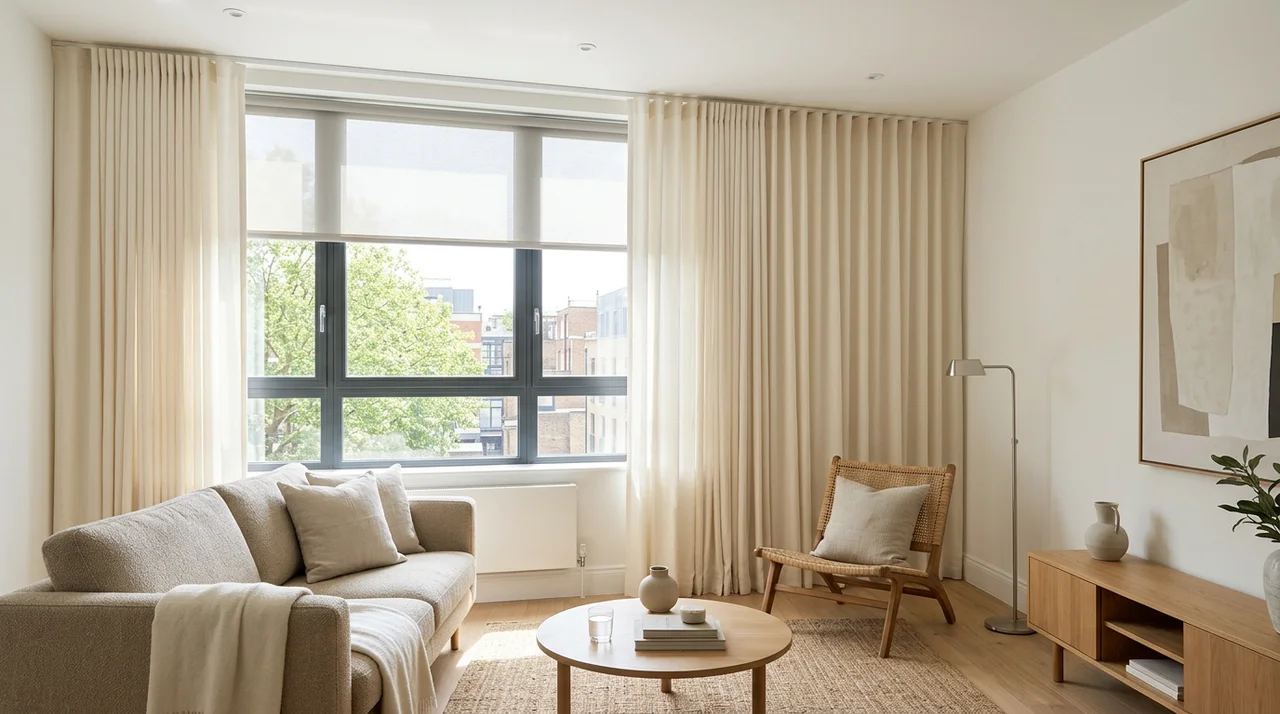
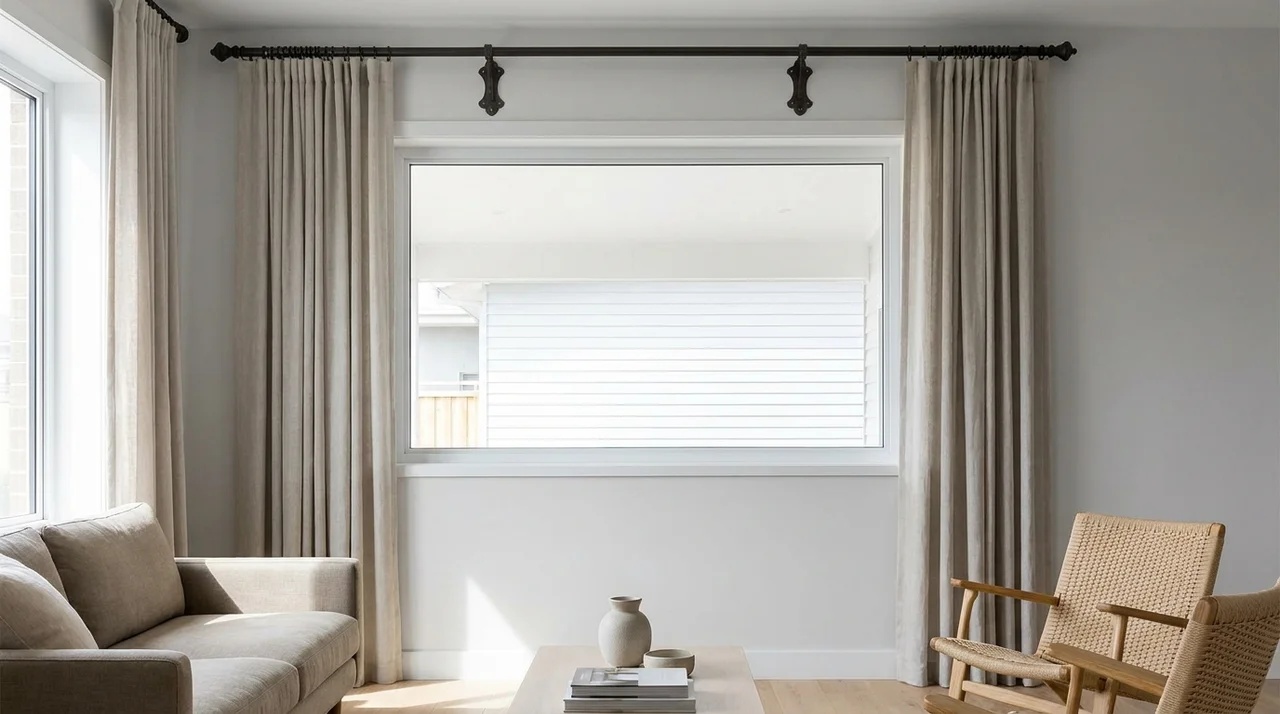
Mounting your curtain rod at ceiling height is one of the easiest ways to make a room feel taller and more spacious. The blinds stay mounted at the window frame as usual.
The curtains hang from ceiling to floor, framing the entire wall rather than just the window. This approach works in any room but has the biggest impact in small or medium-sized spaces.
It makes the window look much larger than it actually is. Extend the curtain rod beyond the blind so the curtains can clear the window when open.
Use a simple, solid fabric curtain so the focus stays on the proportions rather than the print.
7. Wide Curtains Framing Blinds

Instead of curtains that cover the window, use wide curtains that sit on either side of it. They stay open as a permanent frame while the blinds handle all the light and privacy control.
This works well for picture windows or large windows where you do not need to draw the curtains closed. It adds color and softness to the window without blocking any light.
Choose curtains that are slightly wider than the window on each side so they look intentional and generous rather than skimpy.
Use fabric tiebacks to keep them neatly stacked to either side and stop them from drifting in front of the blind.
Curtains vs. Blinds vs. Both: Which Is Best?

There is no single right answer here. It depends on your room, your needs, and how much you want to invest in your windows.
| Option | Best For | Main Benefits | When to Choose |
| Blinds Alone | Kitchens, bathrooms, laundry rooms | Easy to clean, moisture-resistant, practical, space-saving | Choose blinds when function matters more than decoration or the window is small or awkwardly placed. |
| Curtains Alone | Bedrooms, living rooms, privacy-protected windows | Easy to change, decorative, softens the room, can provide blackout coverage | Choose curtains when you want a simple look and do not need precise light control or added privacy. |
| Curtains + Blinds | Bedrooms, living rooms, home offices | Flexible light control, added privacy, layered style, more visual impact | Choose both when you want multiple levels of light control or a more complete, finished window look. |
How to Choose Curtains for Your Blinds

Match your curtain color to your blind's tone, choose fabric based on the room's function, and always go floor-length for the most polished result.
Choosing the right curtains involves more than picking a color you like since the fabric, length, width, and color all affect how the finished window looks and functions.
Start by looking at your blind color because white and off-white blinds work with almost any curtain, while grey blinds suit cooler tones like blue or soft white, and wood or bamboo blinds pair well with warm shades like terracotta or cream.
Keep both treatments in the same temperature range since mixing warm and cool tones often makes the window look off.
For fabric, linen and cotton work well in light rooms, velvet suits, bedrooms, and sheers are best where privacy is less of a concern.
Cellular or honeycomb blinds are a smart pairing with heavier fabrics since they are slim enough not to add bulk behind the curtain.
For the most polished look, floor-length curtains are usually the better choice. Each panel should be at least one to one and a half times the window width so the curtains look full rather than flat.
Common Mistakes With Curtains Over Blinds
Knowing what to avoid saves you from a result that looks off or does not function the way you expected.
Choosing Curtains That Are Too Short
Short curtains are the most common mistake people make. They draw attention to the gap between the curtain hem and the floor, which almost always looks unfinished.
Even if your window is small, floor-length curtains will serve it better. If you cannot find the right length off the shelf, basic hemming is inexpensive and worth doing.
Blocking Blind Controls With Curtains
Some people hang curtains so close to the blind that they cover the cord, chain, or control mechanism. This makes the blind very hard to operate without pulling the curtain aside every time.
Make sure your curtain rod is positioned so the curtain fabric falls in front of but does not wrap around the blind controls.
This is especially important for motorized blinds where the remote receiver or button sits on the side of the blind.
Making Small Windows Look Too Heavy
A small window with thick, dark curtains and a heavy blind can feel suffocating. If your window is on the smaller side, choose lighter fabrics and softer colors.
Mount the rod wider than the window and higher than the frame to give the illusion of a larger window without adding visual weight.
Using Clashing Colors or Patterns
Mixing two patterned window treatments rarely works well. If your curtain has a pattern, the blind should be solid. If the blind has texture or a woven pattern, keep the curtain simple.
Colors do not have to match exactly, but they need to be in the same family or deliberately contrasted in a way that feels intentional rather than accidental.
Tips for Styling Curtains Over Blinds
A few small habits make a big difference in how the finished window looks.
- Always hang your curtain rod four to six inches above the frame and four to six inches beyond each side. This makes the window look bigger without spending extra money.
- Use curtain rings or hooks that allow the curtain to slide smoothly. Curtains that bunch up or stick look messy even if the fabric is beautiful. Grommet headers and ring-clip hooks both give you a clean, even slide.
- If you want to layer a sheer and a heavier panel on the same window, use a double curtain rod. It keeps both layers separate and lets you control each one independently throughout the day.
- Keep both treatments clean. Dusty blinds under fresh curtains still look neglected. Wipe blinds weekly with a microfiber duster and wash curtains every three to six months.
- Tie back your curtains when the blinds are doing the work. Curtains left half-open and bunched in the middle look unfinished. Either open them fully or close them fully.
- Always test fabric swatches against your blind in natural light before buying, as colors look very different in your actual room.
Conclusion
Curtains over blinds is a simple way to get more from your windows. You get better light control, more privacy, and a finished look that one treatment alone usually cannot deliver.
Start with one window in your home and try a combination from this list. See how the layered look changes the feel of the room.
Small changes to your windows can shift the whole atmosphere of a space.
If this article helped you, share it with someone who is decorating their home or drop a comment with the combination you are trying. Check out our other window styling guides for more ideas.
Frequently Asked Questions
Can you put curtains over blinds without drilling?
Yes. Use tension rods, adhesive hooks, or curtain tracks designed for no-drill mounting. Check the hardware’s weight rating and surface requirements before installation.
Do curtains over blinds work in rental apartments?
Yes. No-drill rods and adhesive mounts make it easy to layer window treatments without leaving damage in rental spaces.
How far should curtain rods extend past the blinds?
Extend the rod four to six inches beyond each side of the blind so curtains clear the window fully when open.
Can you layer curtains over cordless blinds?
Yes. Cordless blinds work well under curtains since there are no cords to get tangled or hidden behind the fabric panels.
Do curtains over blinds make a room darker?
They can. Choosing blackout curtains with any blind style will significantly reduce light. Sheers over blinds keep rooms bright while still adding privacy.