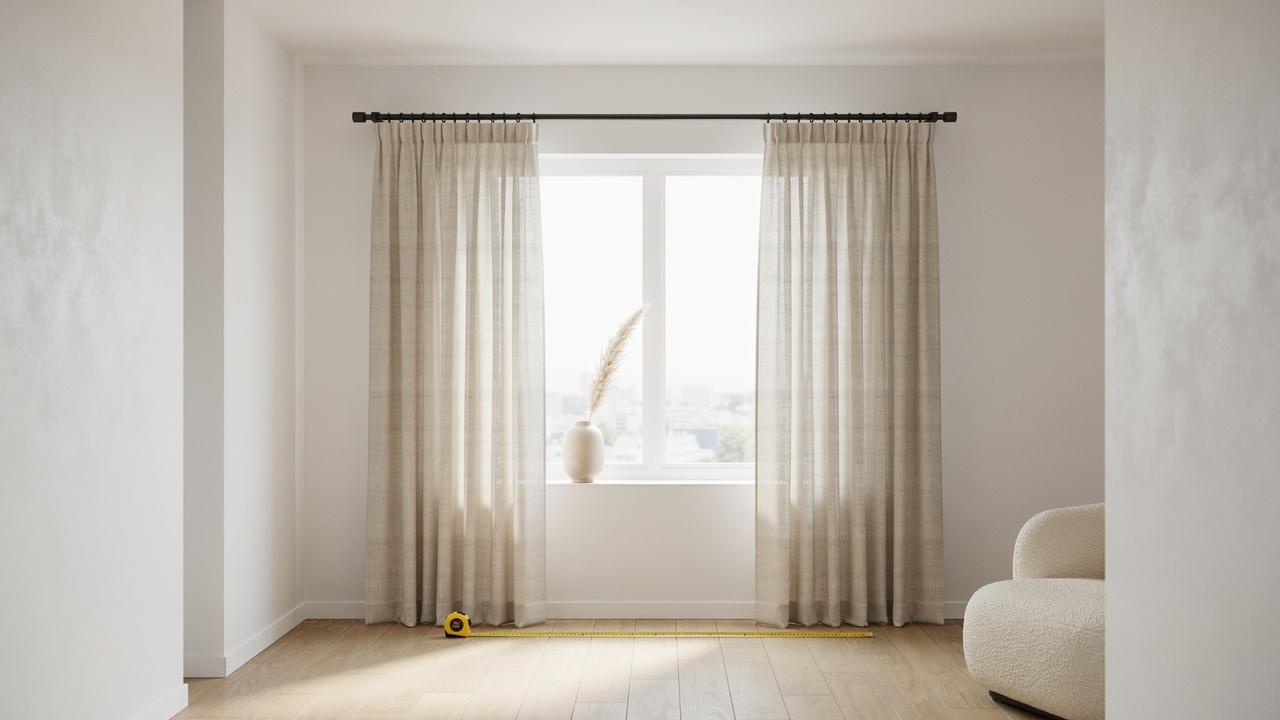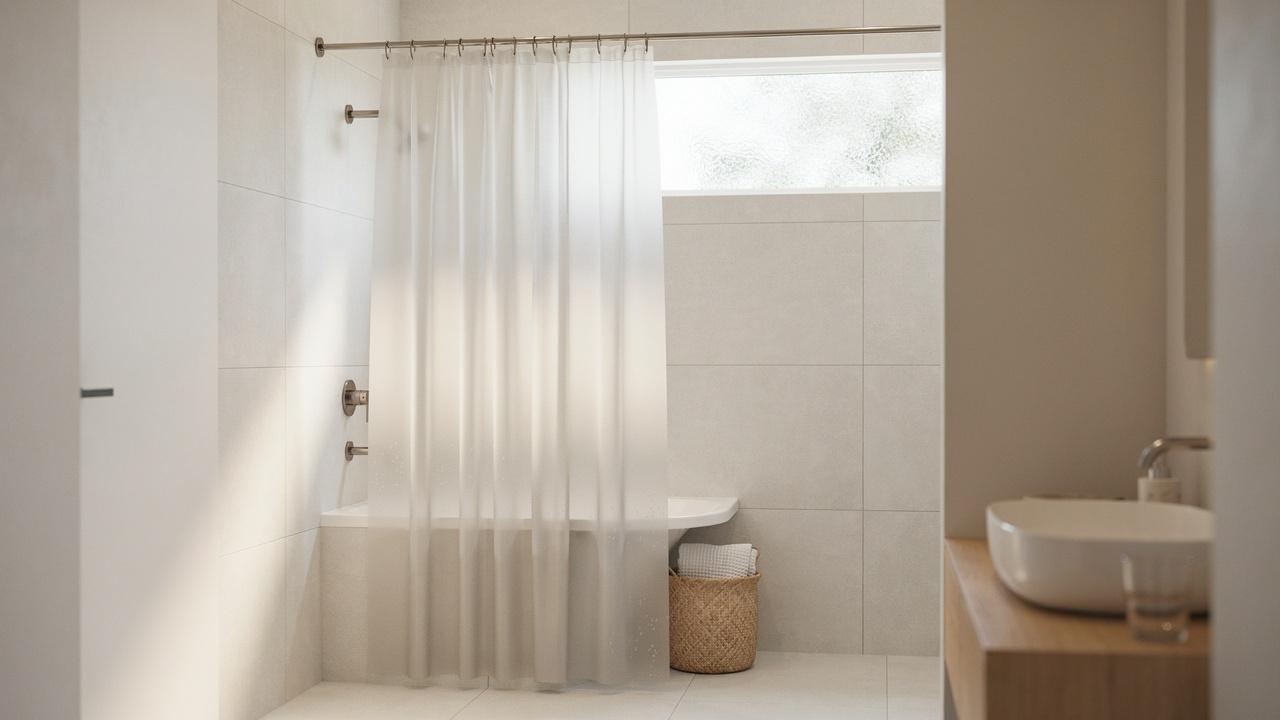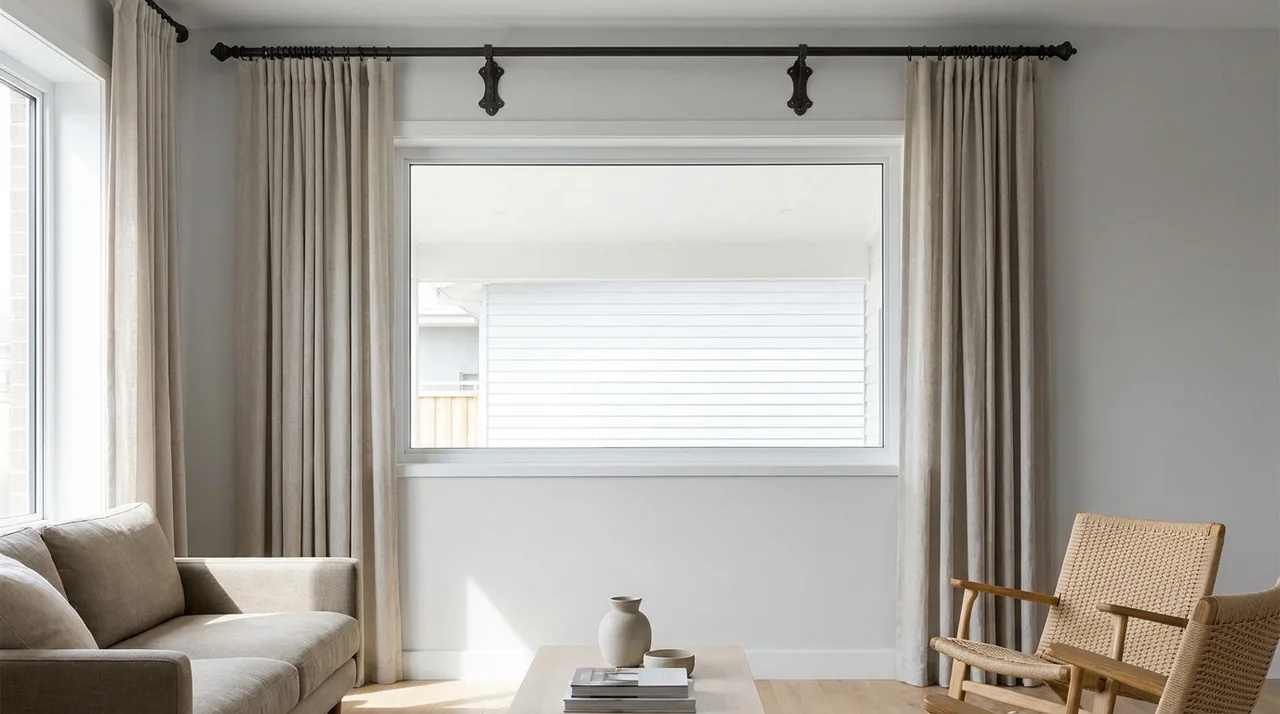

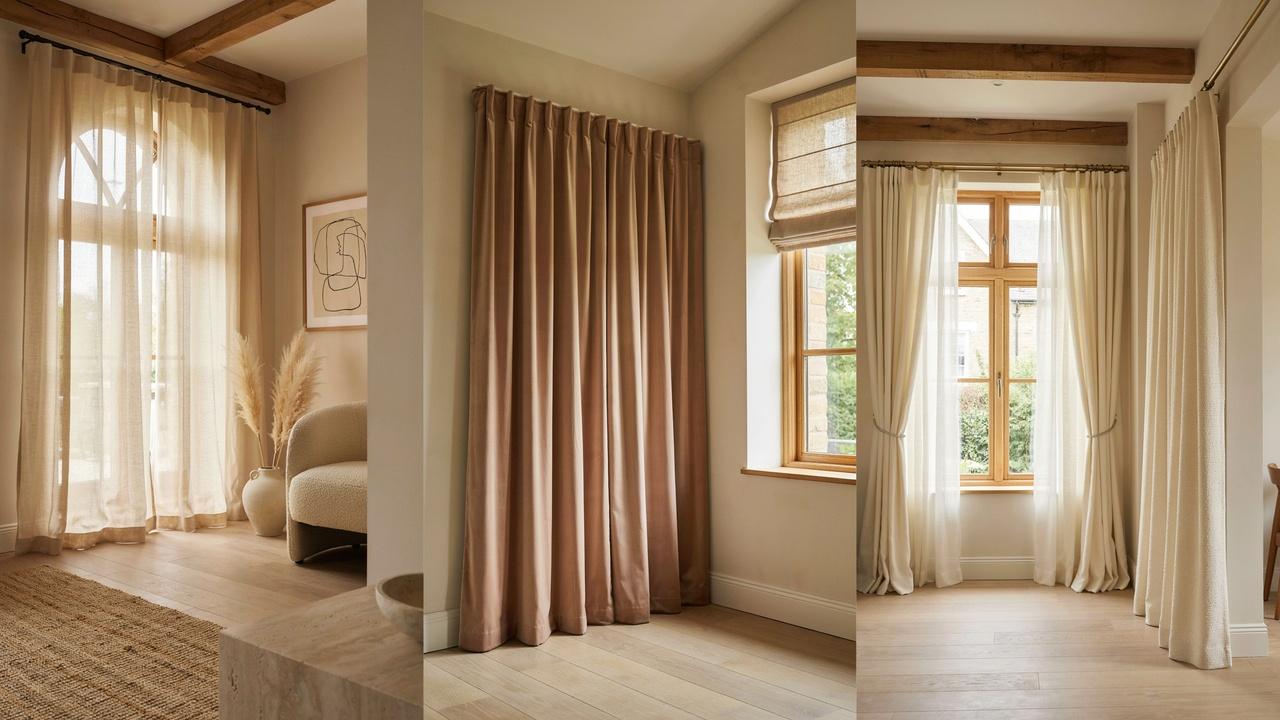
Choosing the right curtains can feel overwhelming with so many styles, fabrics, and heading types on the market.
I have helped friends and family pick curtains for years, and the same question always comes up:where do I even start?
This guide on the 23 different types of curtains breaks everything down clearly, from rod pocket to velvet, blackout to sheer.
You will learn which styles suit which rooms, which fabrics hold up best, and how to match curtains to your actual needs.
You will also get practical tips on sizing, care, and choosing by function. By the end, picking the right curtains will feel straightforward.
What Are the 23 Different Types of Curtains?
Curtains do more than cover windows. They control light, add privacy, and shape the feel of a room, so knowing your options makes all the difference.
1. Rod Pocket Curtains
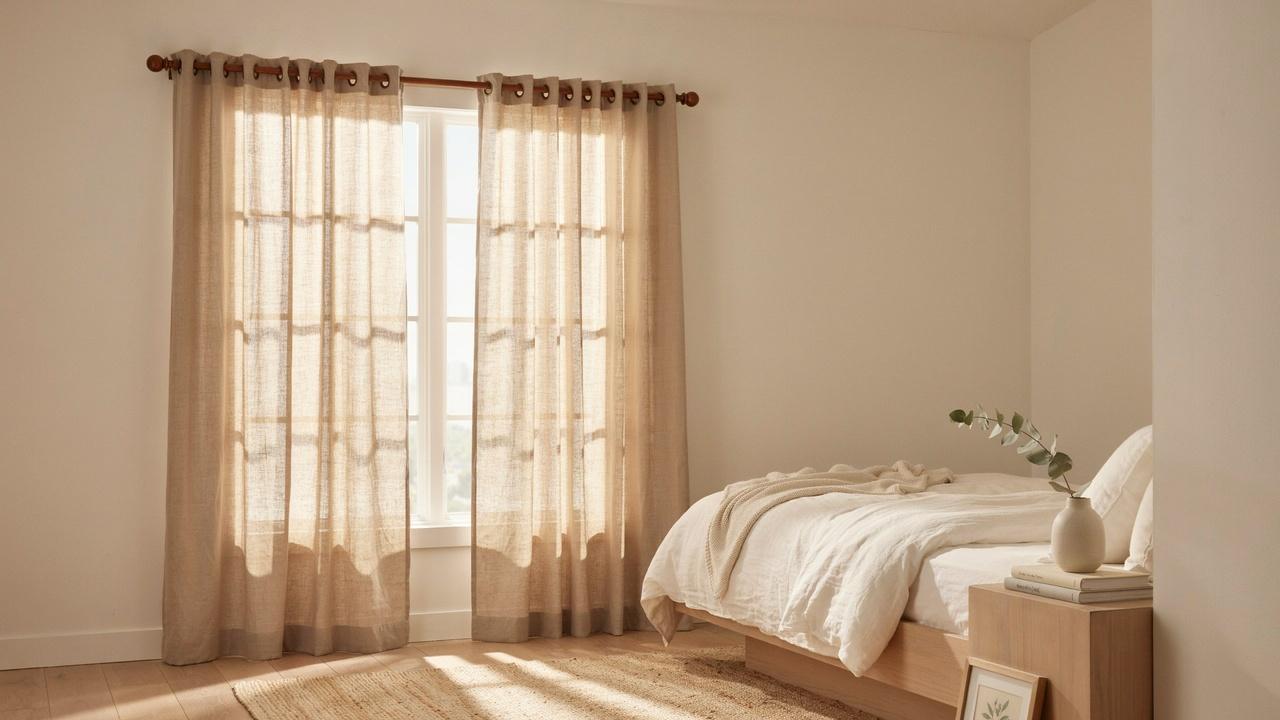
Rod pocket curtains have a sewn channel at the top through which the curtain rod slides directly.
This style is also called a pole pocket curtain in some markets. This creates a gathered, casual look that works well in bedrooms and living rooms.
They are easy to hang and affordable. The downside is that sliding them open and closed frequently can wear out the fabric faster.
They are best for windows where you do not move the curtains much.
2. Grommet Curtains

Grommet curtains have metal rings punched into the top of the fabric. The rod slides through these rings, creating uniform, clean folds.
In Australia and the UK, these are commonly called eyelet curtains, but they are the same style. They slide easily and look modern and neat.
These are a solid choice for living rooms and home offices. They pair well with heavier fabrics and work best with standard or slightly decorative rods.
3. Tab Top Curtains

Tab top curtains have fabric loops sewn along the top that hang directly over the rod. They have a relaxed, informal look.
They are easy to make and hang but do not slide as smoothly as grommet styles. These suit casual spaces like kitchens, sunrooms, or reading nooks.
They work best with lighter fabrics and suit rustic or farmhouse interior styles well.
4. Back Tab Curtains
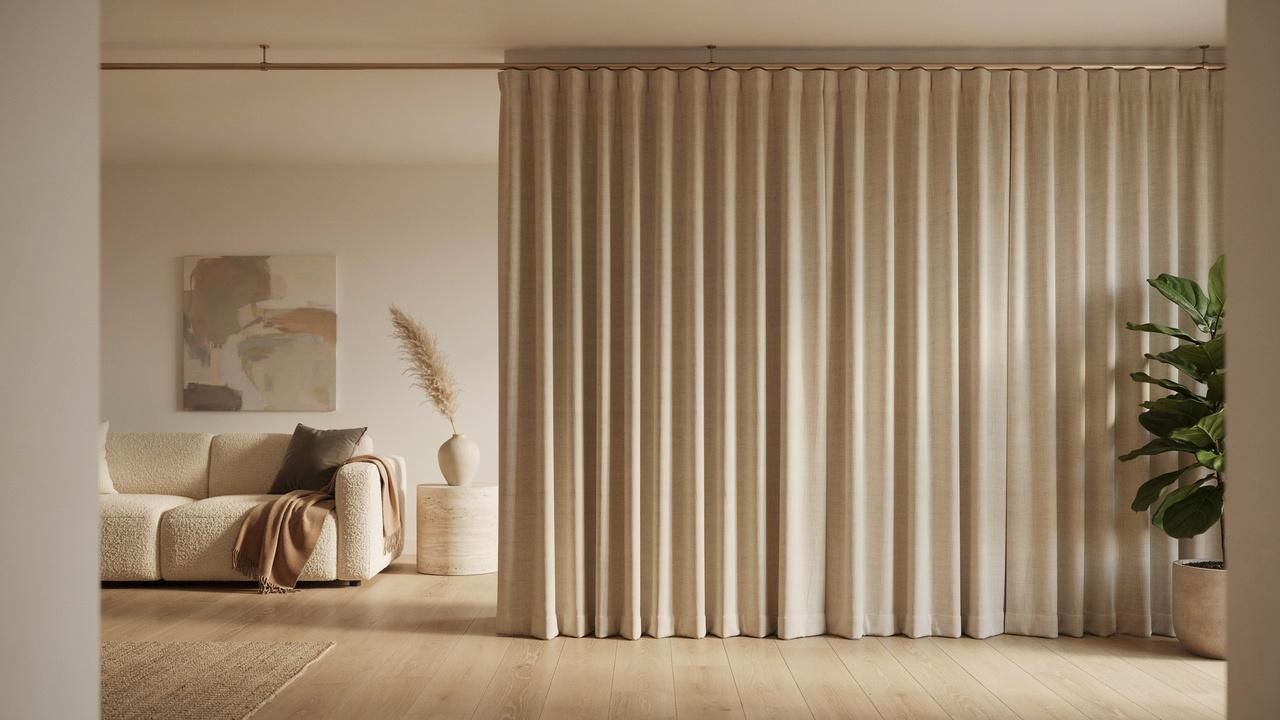
Back tab curtains look similar to flat panel curtains from the front. Hidden fabric loops are sewn at the back, which gives the front a smooth, clean finish.
This style is popular in modern and minimalist interiors. They are slightly harder to slide than grommet curtains but offer a very polished look.
5. Pinch Pleat Curtains
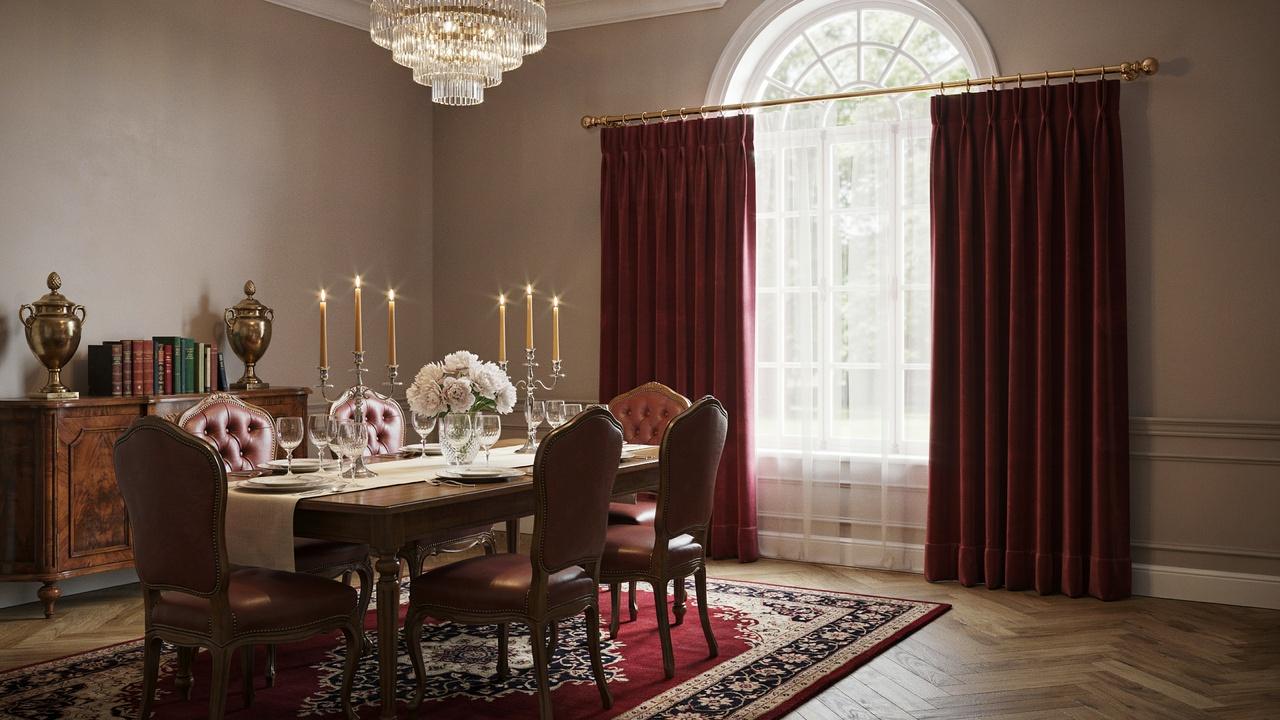
Pinch pleat curtains have fabric that is pinched together at regular intervals and sewn at the base to form structured pleats.
They are also called tailored pleat curtains in some regions. This is a classic, formal style that has been used in traditional homes for decades.
They work well in dining rooms, formal living rooms, and anywhere you want a more dressed-up look.
These curtains need hooks and a compatible rod or track to hang properly.
6. Pencil Pleat Curtains
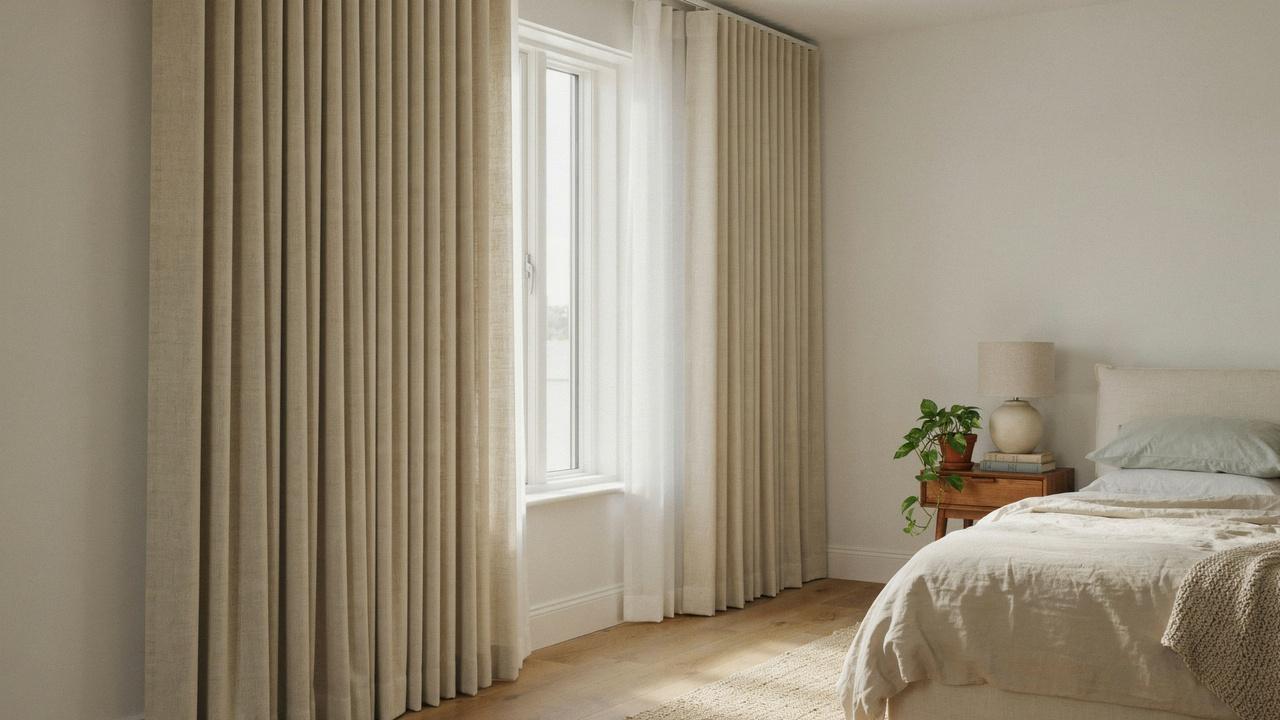
Pencil pleat curtains feature many small, tight folds across the top, resembling a row of pencils standing side by side.
They can be hung using hooks or with a rod through a hidden pocket. This style is very versatile and works in both casual and formal rooms.
They need a fair amount of fabric fullness to look their best. Semi-opaque fabric works particularly well with this heading style since it keeps the folds soft and the light warm.
7. Box Pleat Curtains
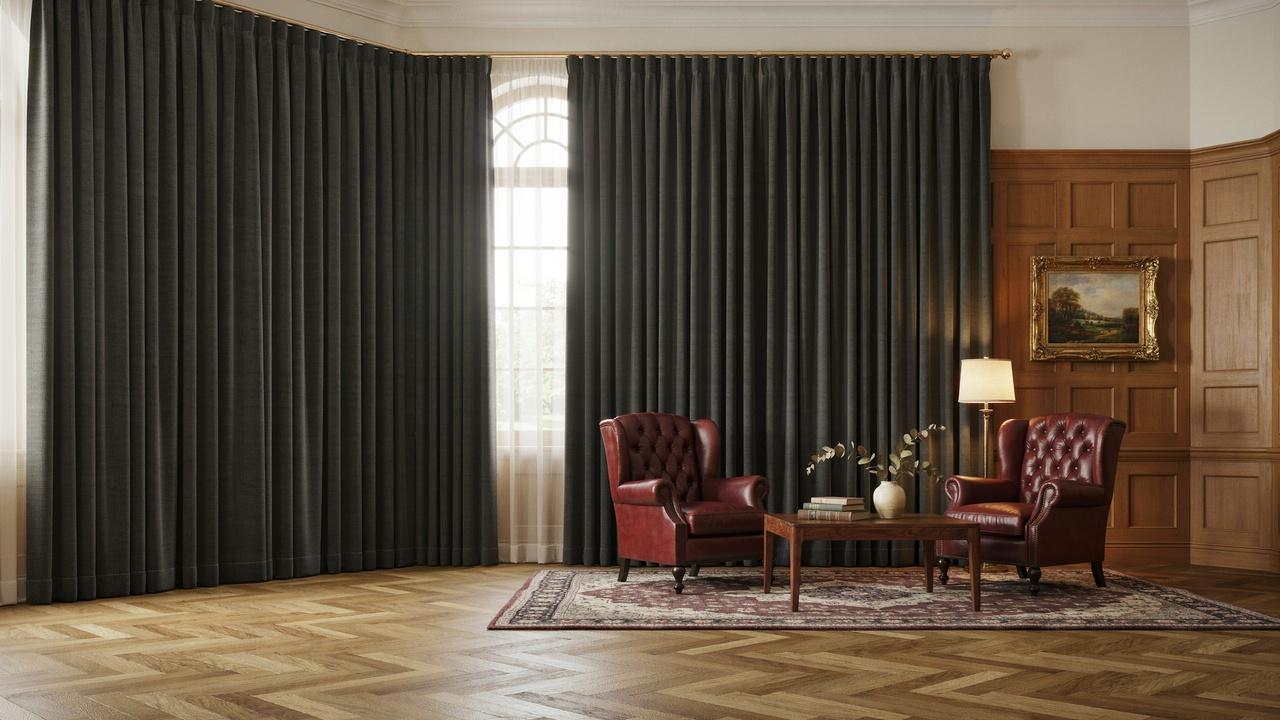
Box pleat curtains have evenly spaced, flat, structured pleats that fold inward at each side. This gives the curtain a very neat, precise appearance.
They hang straight and have a crisp look that suits bedrooms and formal sitting rooms. They require more fabric than some other styles, which can make them slightly pricier.
8. Goblet Pleat Curtains
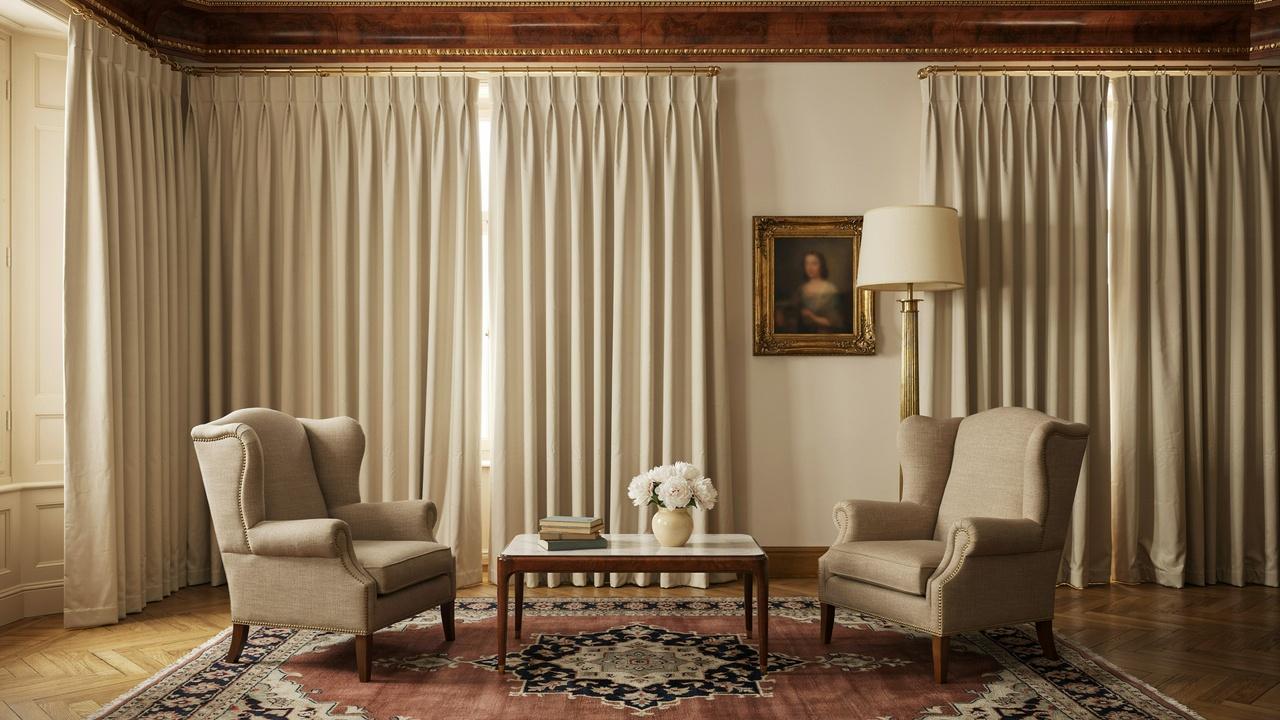
Goblet pleat curtains have pleats shaped like the top of a wine glass. Each pleat is rounded and full at the top and pinched at the bottom.
The top is usually padded with interfacing or lining material to hold the goblet shape.
This style has a very decorative, formal look and is often seen in luxury interiors. These curtains are best for rooms where they will rarely be moved.
9. Ripple Fold Curtains
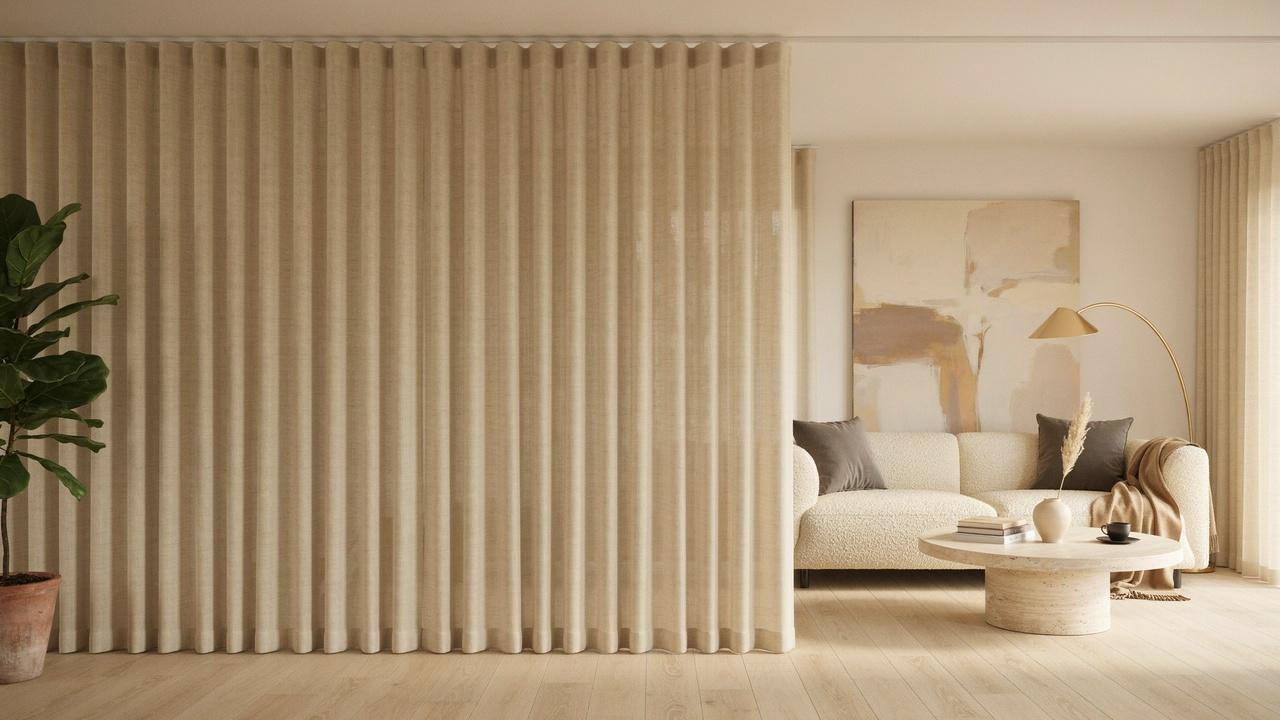
Ripple fold curtains, also known as wave fold or S-fold curtains, hang on a track system and fold in consistent, evenly spaced waves.
They look very clean and modern. The ripple effect stays uniform whether the curtains are open or closed.
These are often found in contemporary homes and commercial spaces. They require a specific track and carrier system to work correctly and cannot be hung on a standard rod.
10. Tie-Top Curtains
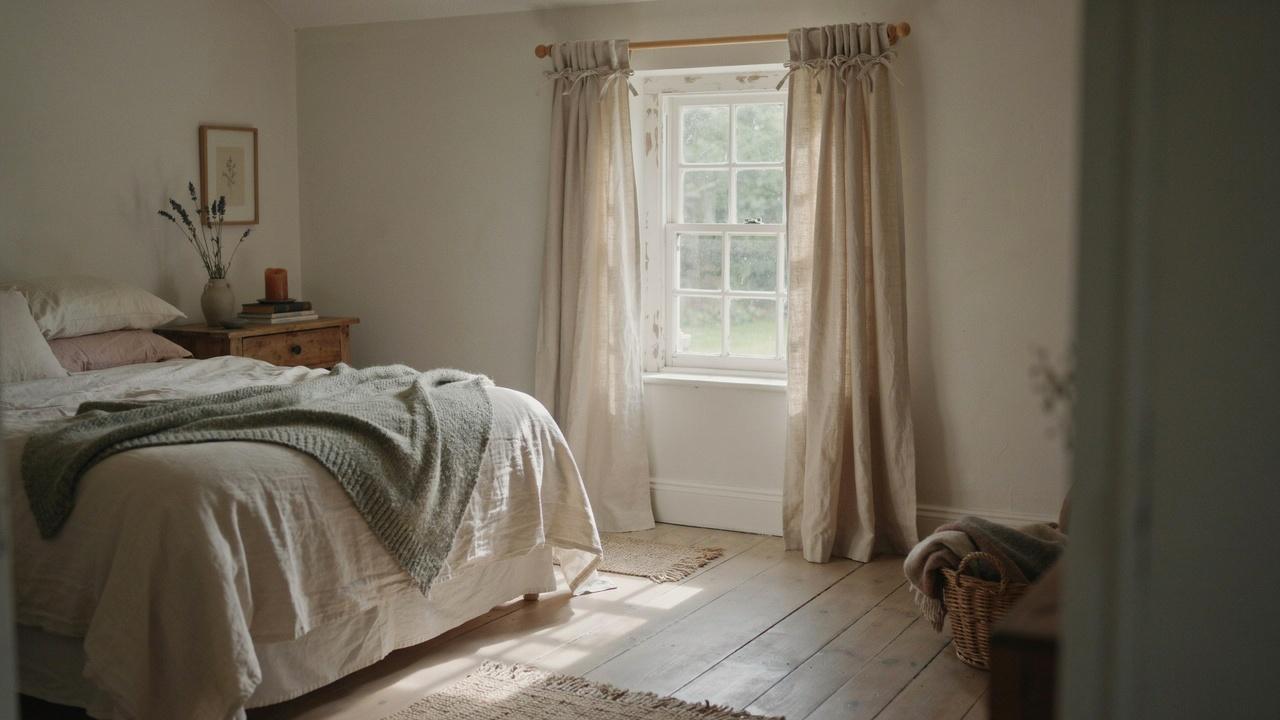
Tie-top curtains have fabric ties at the top that wrap around the curtain rod and are tied in bows or knots.
They have a very relaxed, cottage-style look. They work well in casual bedrooms, bathrooms, and kitchens.
These are not ideal for windows that need frequent opening and closing since the ties can loosen over time.
11. Single Panel Curtains
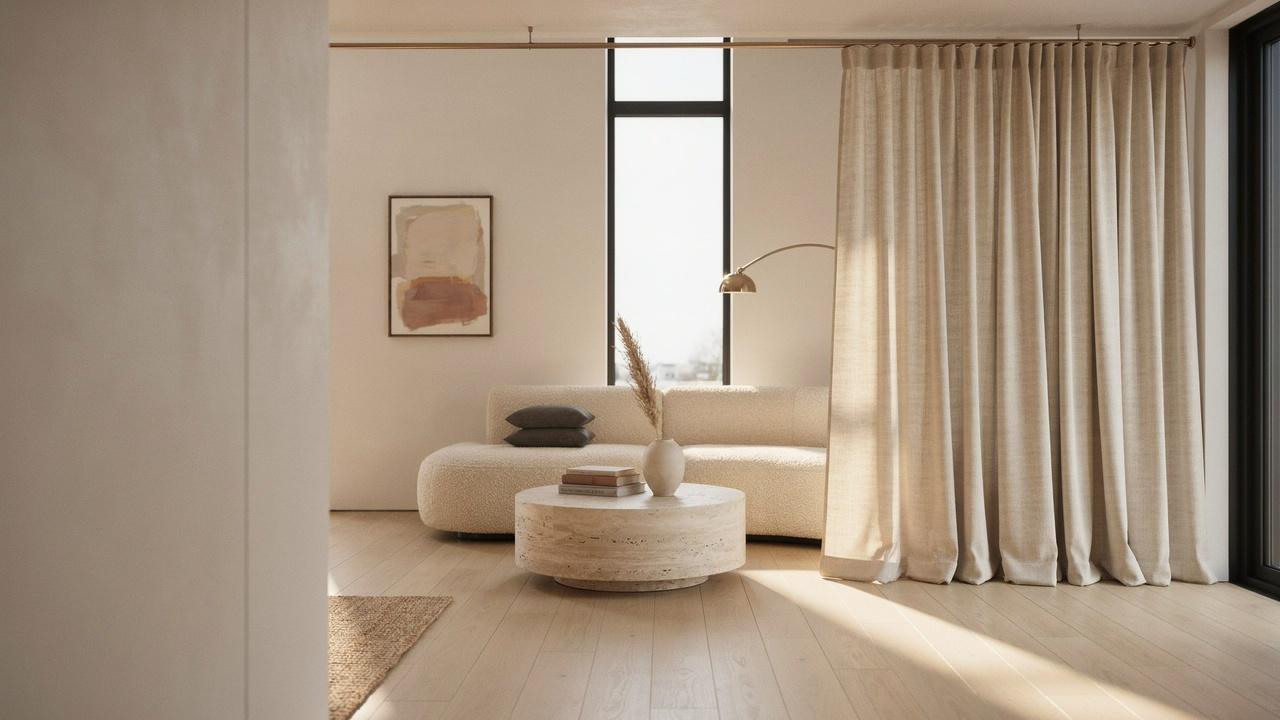
A single panel curtain is one large piece of fabric that covers the full window or is used to cover one side of it as a design statement.
They are simple and work well as room dividers or in smaller windows. They can also create an asymmetrical look when used deliberately on one side.
12. Double Panel Curtains
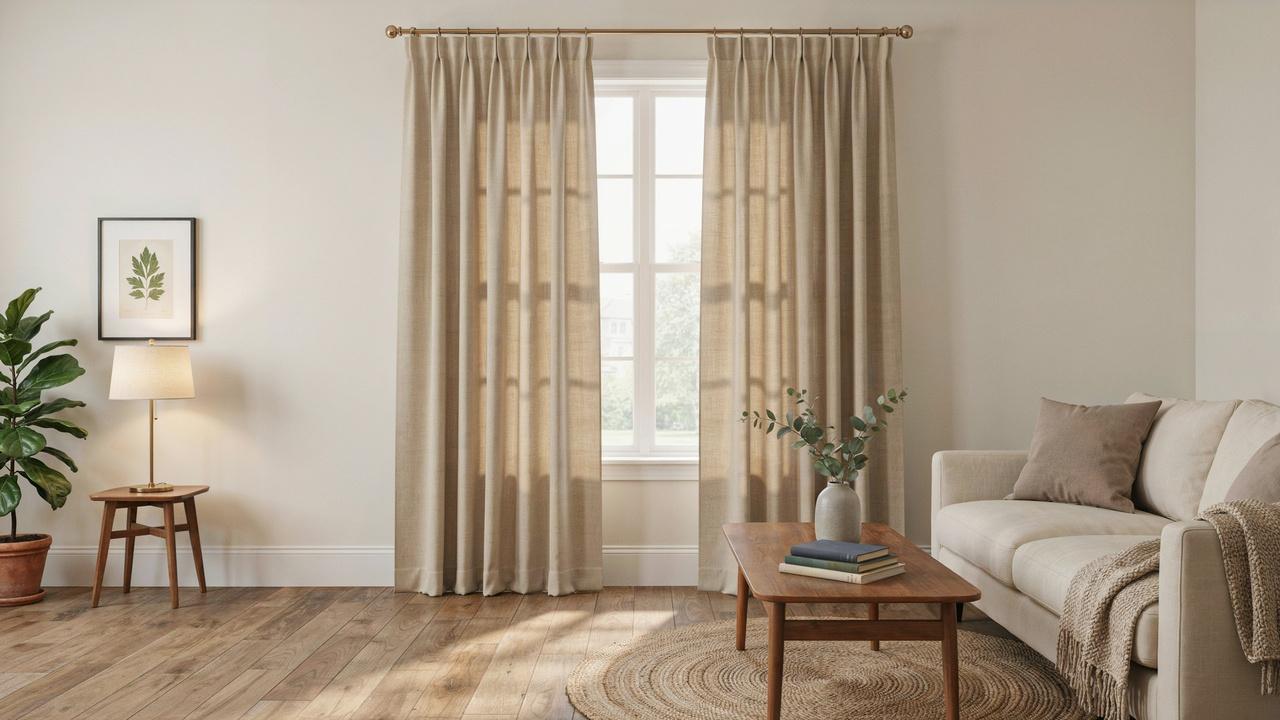
Double panel curtains are the most common setup. Two panels hang on either side of the window and meet in the middle when closed.
They offer full coverage and a balanced, symmetrical look. Most ready-made curtain sets are sold as double panels, making them easy to find in almost any style or fabric.
13. Sheer Curtains

Sheer curtains are made from lightweight, semi-transparent fabrics like voile or chiffon.
They allow a lot of natural light to pass through while still providing a small amount of privacy during the day.
They are often layered with heavier curtains for more control over light and privacy. They are popular in living rooms and dining areas where a light, airy feel is desired.
For a middle-ground option between sheer and blockout, a semi-opaque curtain filters light while still softening the look of a window.
14. Blackout Curtains
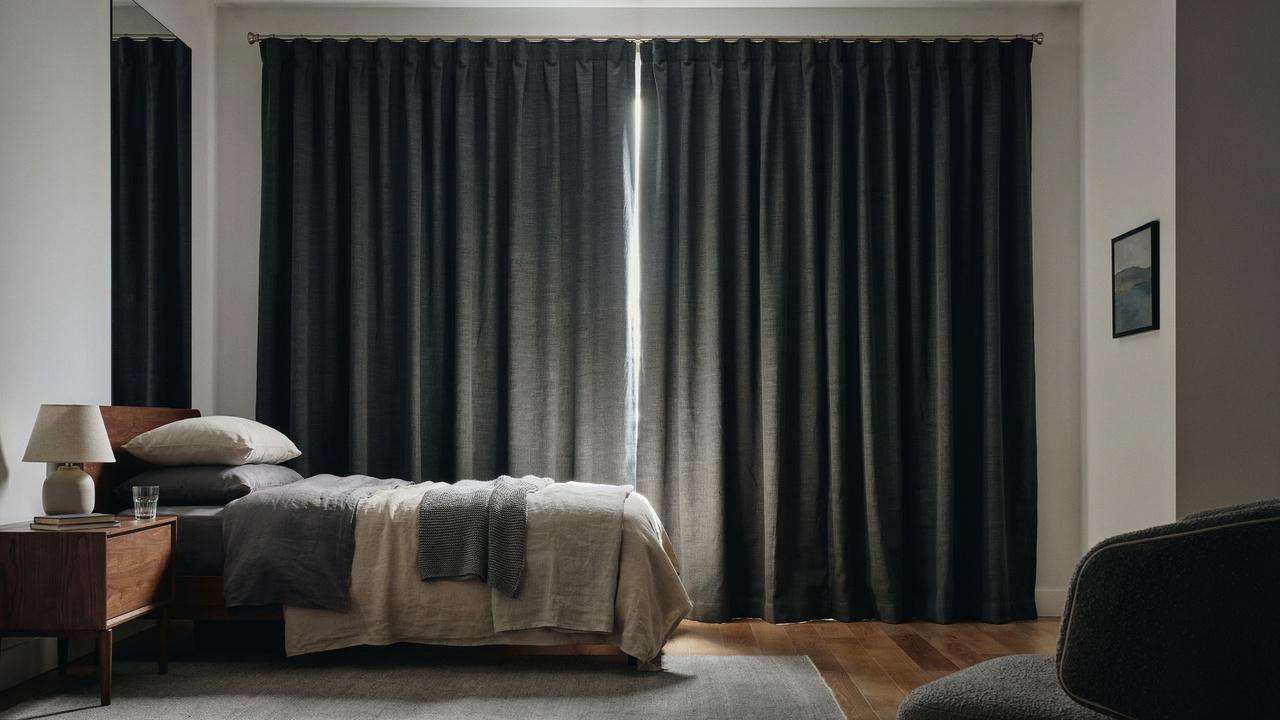
Blackout curtains are made from tightly woven or coated fabrics that block nearly all incoming light.
Many feature a foam-backed or triple-woven lining to achieve maximum darkness. They are commonly used in bedrooms, nurseries, and home theaters.
Beyond light blocking, they also reduce outside noise and help with temperature control.
They are very practical for people who work night shifts or need complete darkness to sleep.
15. Thermal Curtains
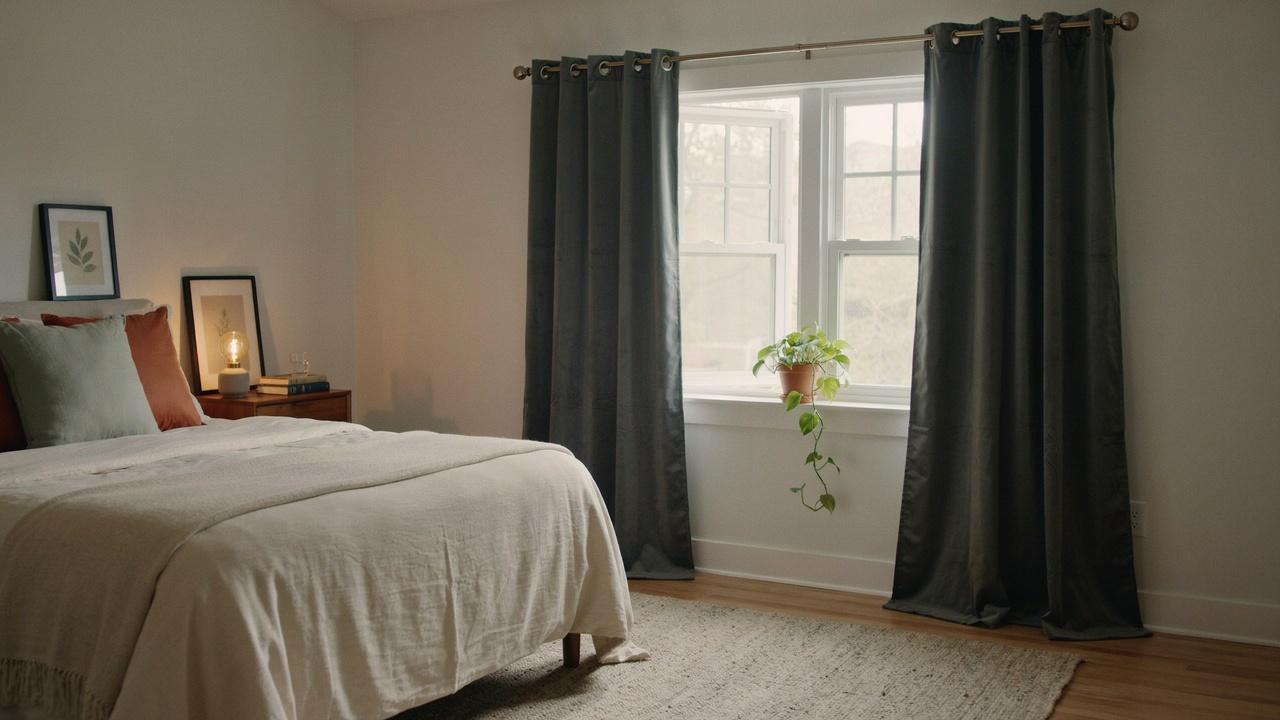
Thermal curtains have an insulating lining that helps keep heat in during winter and block heat from entering in summer.
They can reduce energy costs by making rooms easier to heat or cool. They are thicker and heavier than standard curtains.
These are a smart choice for rooms with large windows or in homes with older, less insulated windows.
16. Cafe Curtains
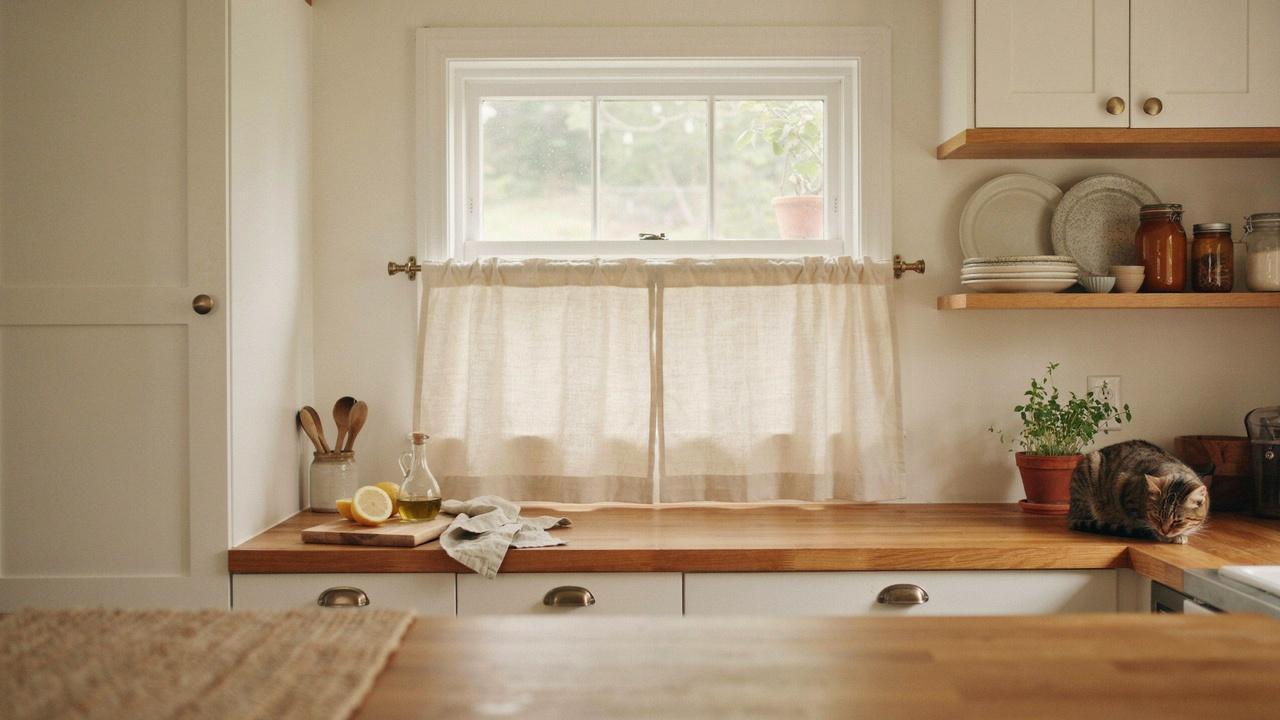
Cafe curtains cover only the lower half of a window, leaving the upper portion open to allow light in while maintaining privacy at eye level.
They are very common in kitchens and breakfast areas. The style was popularized by cafes and diners, which is where the name comes from.
They can be hung using a small rod placed in the middle of the window frame.
17. Tier Curtains
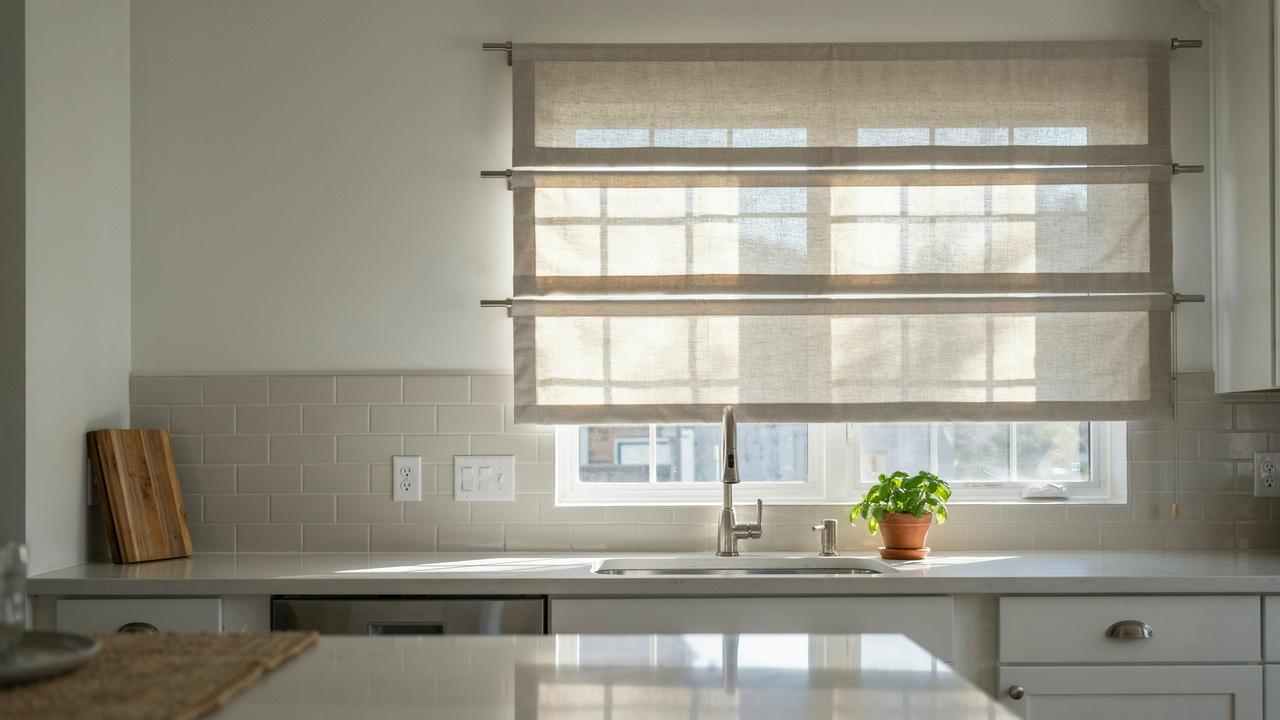
Tier curtains are similar to cafe curtains but often come in two or three separate horizontal panels stacked on top of each other.
Each tier hangs on its own rod. This allows you to mix and match fabric opacity or patterns at different heights.
They are popular in kitchens and bathrooms where partial light control at specific levels is useful.
18. Valance Curtains
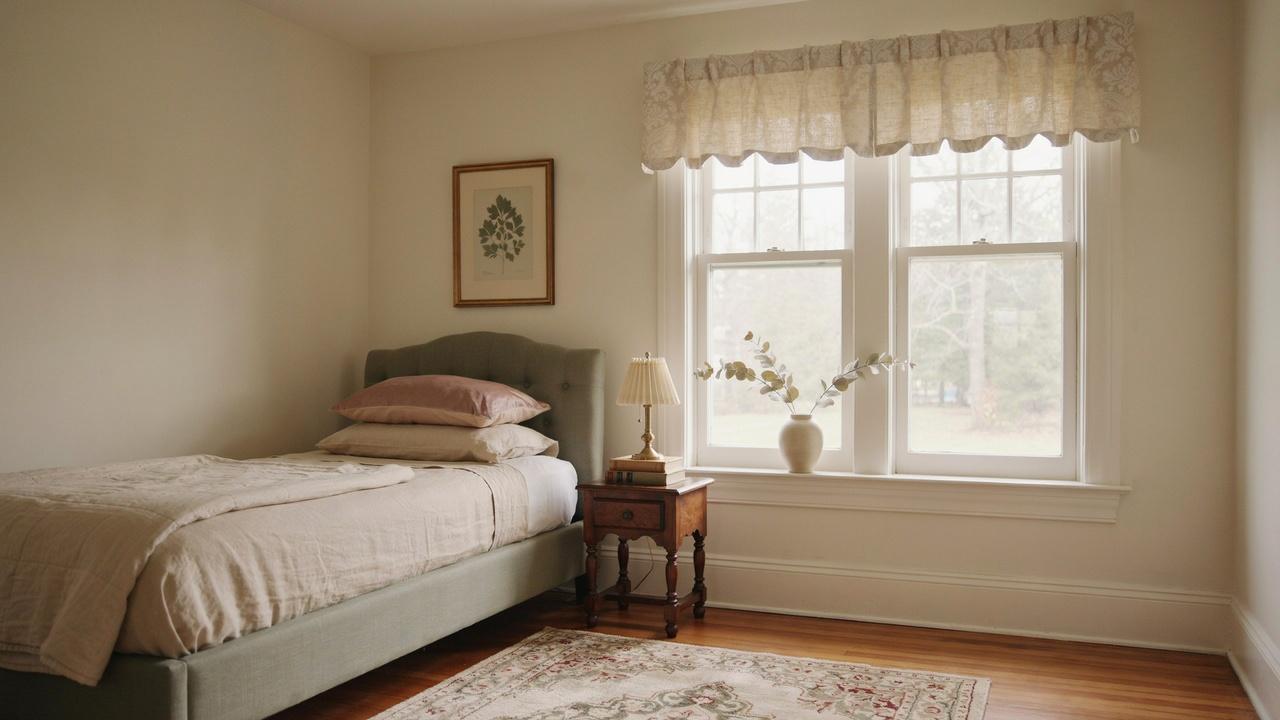
A valance is a short curtain that covers only the very top of the window, often just the curtain rod or the upper frame. It is used more for decoration than light control.
Valances are often paired with blinds, shades, or longer curtains underneath. They come in many styles including rod pocket, box pleat, and scalloped edges.
19. Layered Curtains
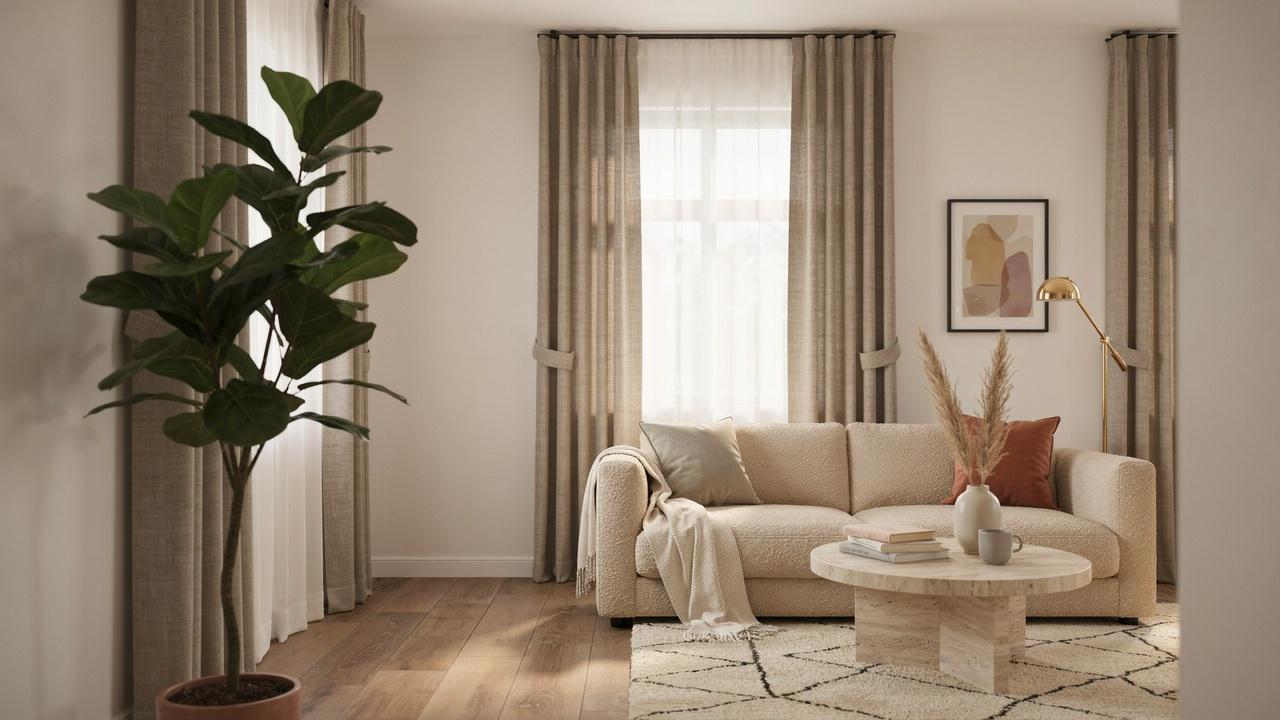
Layered curtains combine two or more curtain types on the same window, most commonly sheer panels behind heavier drapes.
This setup gives you full control over light and privacy throughout the day. You can keep the sheers closed during the day for soft light and close the outer drapes at night for full privacy.
Tiebacks or holdbacks are often used with layered setups to keep the outer panels neatly gathered to the side during the day.
This is a practical and flexible solution for living rooms and bedrooms.
20. Lace Curtains

Lace curtains are made from openwork fabric with decorative patterns. They let in light while adding a decorative, textural look to a window.
They are associated with traditional and vintage interiors. Lace curtains are usually sheer or semi-sheer and are often used as inner layers or as standalone panels in rooms where light filtering is enough.
21. Linen Curtains
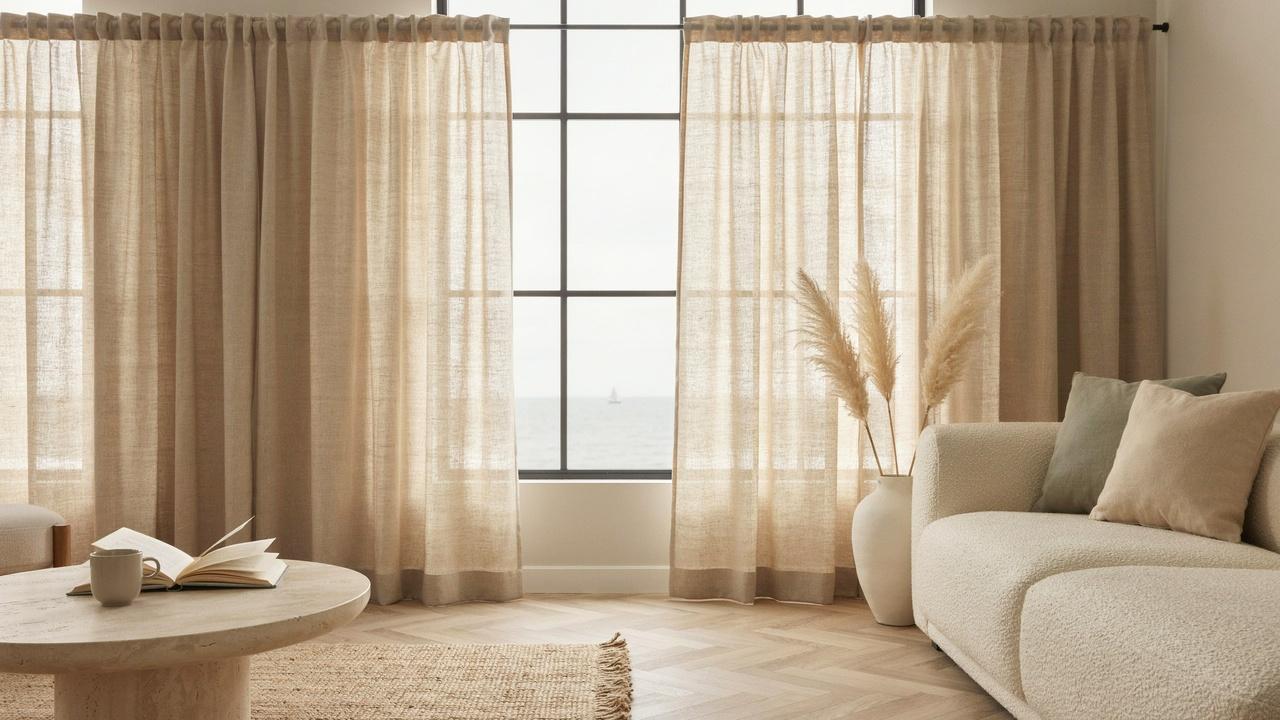
Linen curtains are made from natural linen fiber, which gives them a textured, slightly relaxed look.
They are breathable, durable, and get softer with each wash. Linen handles light well, filtering it without fully blocking it.
These curtains work in almost any room and suit natural, Scandinavian, and coastal interior styles.
They wrinkle easily, so keep that in mind if you prefer a crisp finish.
For added warmth and body, some linen curtains come with an interlining sewn between the face fabric and the backing, which gives them a fuller, heavier drape.
22. Velvet Curtains

Velvet curtains are made from thick, plush fabric that adds warmth and a rich look to any space.
They naturally block a good amount of light and insulate a room well. They work best in bedrooms, living rooms, and home theaters.
Velvet is heavy and requires proper rod support. They need careful maintenance since velvet can crush if handled incorrectly.
23. Cotton Curtains
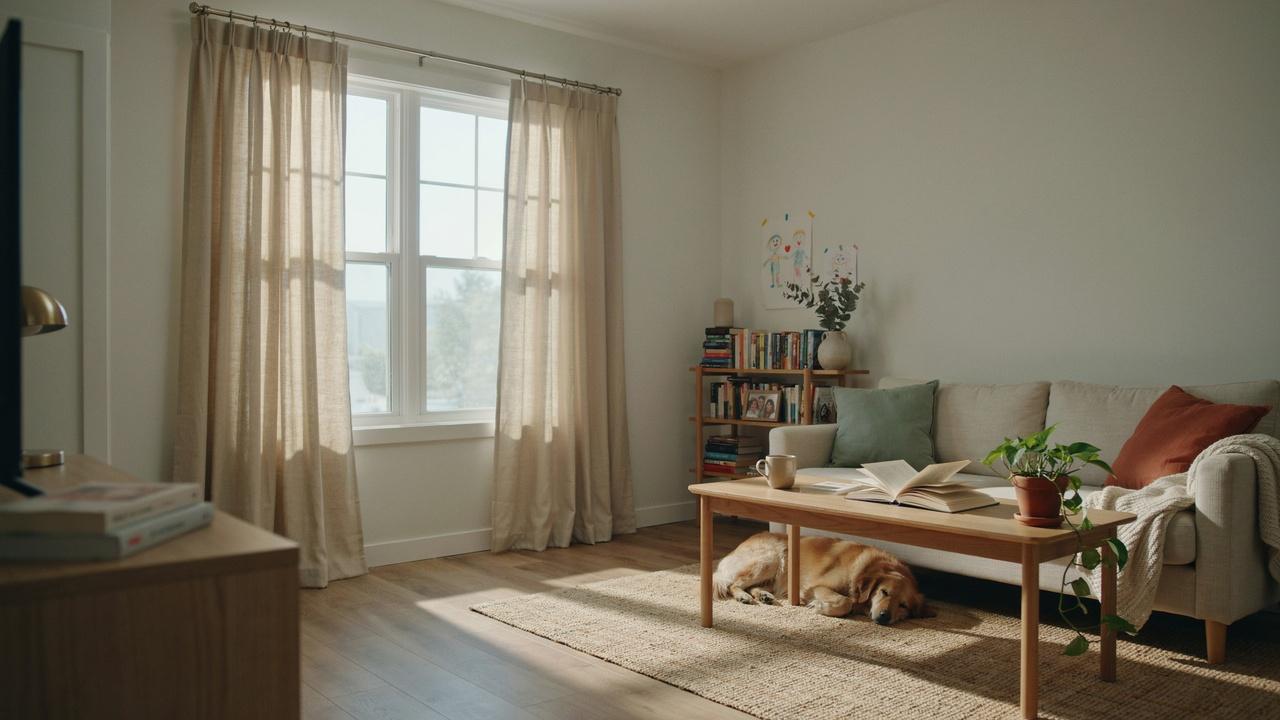
Cotton curtains are one of the most common and practical choices available. Cotton is breathable, easy to wash, and holds dye well, so it comes in a wide range of colors and prints.
It is not as good at blocking light as velvet or blackout fabrics, but it works well for everyday use in most rooms. Cotton wrinkles more than synthetic fabrics but is generally easy to iron.
Which Curtain Types Are Best for Different Needs?
Not every curtain works well in every situation. Matching the right curtain to the right purpose saves you money and frustration.
Best Curtains for Privacy
For maximum privacy, blackout curtains are your best option. They fully cover the window and prevent people from seeing in.
Velvet and lined linen curtains also offer strong privacy. If you want privacy without losing too much light during the day, layered curtains with sheers inside and heavier panels outside work very well.
Best Curtains for Blocking Sunlight
Blackout curtains are the clear winner here. Look for options with a blackout lining or coating. Some blackout curtains are rated to block up to 99 percent of light.
For partial light blocking, thermal curtains with a thick lining also help reduce glare and brightness without fully darkening the room.
Best Curtains for Letting in Natural Light
Sheer curtains allow the most natural light into a room. Voile, chiffon, and lightweight cotton sheers are ideal.
Lace curtains are another good option for rooms where you want a lot of daylight with a decorative touch. Avoid heavy linings or blackout coatings if your goal is a bright, well-lit space.
Best Curtains for Insulation and Heat Control
Thermal curtains are made specifically for this purpose. They have a special lining that traps air and reduces heat transfer.
Velvet curtains also insulate naturally due to their thickness and density.
For extra insulation, look for curtains with multiple layers or an interlining, or those sold specifically as energy-saving options.
Best Curtains for Noise Reduction
Heavy fabrics absorb sound better than light ones. Velvet, blackout, and thermal curtains are the best at reducing outside noise.
Acoustic curtains, which are made from dense, tightly woven materials, take this further and are worth considering for rooms on busy streets or for home studios.
While curtains alone will not fully soundproof a room, thick and densely woven fabrics do make a noticeable difference.
Best Curtains for Frequent Opening and Closing
Grommet curtains glide the most smoothly along a rod, making them the best option when you open and close curtains often.
Ripple fold curtains on a track system also work very well for this. Avoid tab top and tie-top curtains for high-use windows since they wear out faster with repeated movement.
Best Curtains for Easy Maintenance
Cotton and synthetic blend curtains are the easiest to maintain. Many can go directly into the washing machine.
Linen is also relatively easy to clean, though it wrinkles more. Avoid velvet and lace for windows that need frequent washing since these fabrics require more careful handling.
How Do You Choose the Right Curtain Length and Width?
Getting the length and width right is just as important as choosing the style. Poorly fitted curtains can look off no matter how good the fabric or color is.
Sill-Length Curtains
Sill-length curtains end at the window sill. They are practical and casual in look. They work well in kitchens, bathrooms, and children's rooms where longer curtains might get in the way or collect dirt easily.
Apron-Length Curtains
Apron-length curtains hang about four to six inches below the window sill. This is a slightly more finished look than sill-length without the drama of floor-length panels.
They suit informal living spaces and bedrooms.
Floor-Length Curtains
Floor-length curtains end just at or about half an inch above the floor. This is the most common and versatile length.
They work in almost every room and give a clean, finished look without excess fabric pooling on the floor.
Puddle-Length Curtains
Puddle-length curtains are intentionally cut several inches longer than the floor, so the fabric puddles or pools at the base.
This is a formal, dramatic style often seen in traditional dining rooms or formal living rooms. They require more fabric and need to be styled frequently to keep the puddle looking intentional.
How Much Curtain Fullness Do You Need?
Curtain fullness refers to the width of the curtain panels compared to the width of the window.
A general rule is to use fabric that is one and a half to two and a half times the width of the window for a full, gathered look.
For flat panel or ripple fold curtains, closer to one and a half times is usually enough.
For pinch pleat or pencil pleat styles, two to two and a half times the width is often recommended for a properly gathered appearance.
The type of curtain rod you use also affects the look. A double rod lets you layer sheers and heavier panels on the same window without the rods clashing.
A ceiling-mounted rod makes windows appear taller and works well with floor-length styles.
Tips for getting curtain sizing right:
- Always measure the window width and add at least eight to twelve inches on each side to account for the curtain rod extending past the frame
- Hang the rod four to six inches above the window frame to make the window appear taller
- For heavy fabrics like velvet, use a sturdy double or bracket-supported rod to prevent sagging
- Buy curtains slightly longer than your measured length and hem them after hanging to get a precise fit
How Should You Care for Different Types of Curtains?
Curtains collect dust, allergens, and odors over time. Knowing how to care for them properly keeps them looking good and lasting longer.
How Often Should Curtains Be Cleaned?
Most curtains should be vacuumed or shaken out every one to three months to remove surface dust.
A deeper clean, either machine washing or dry cleaning, is recommended once or twice a year.
Curtains in kitchens or bathrooms may need cleaning more frequently due to moisture and grease exposure.
Which Curtain Fabrics Are Machine Washable?
Cotton, polyester, and most cotton-polyester blends are generally machine washable. Linen can usually be machine washed on a gentle cycle with cold water.
Always check the care label first. Curtains with an interlining or specialist lining should be dry cleaned unless the label says otherwise.
Velvet, silk, and lace are usually better suited to hand washing or dry cleaning to avoid damage.
How to Prevent Curtains From Fading
Sunlight is the main cause of curtain fading. Using a curtain lining adds a protective layer between the sun and the face fabric.
You can also use UV-blocking window film on the glass. For rooms with very intense sunlight, rotating or swapping curtains seasonally can help spread the wear more evenly.
How to Prevent Shrinkage and Fabric Damage
Always wash curtains in cold water on a gentle cycle. High heat in the dryer is the most common cause of fabric shrinkage.
Remove curtains from the dryer while they are still slightly damp and hang them immediately to reduce wrinkling and shrinkage.
For fabrics that shrink easily, pre-wash them before hemming if you are making your own curtains.
Tips for longer-lasting curtains:
- Keep curtains away from heating vents and radiators to prevent drying and weakening of fabric fibers
- Avoid over-washing curtains since frequent washing causes color to fade faster than sun exposure alone
- Spot clean small stains as soon as they happen instead of waiting for a full wash cycle
- Store seasonal curtains in a breathable fabric bag, not a plastic bag, to prevent mildew and yellowing
Conclusion
The 23 different types of curtains cover a wide range of styles, fabrics, and functions, and finding the right fit for your space does not have to be complicated.
Start with your main need, whether that is light control, privacy, insulation, or just a fresh look, and then narrow down by style and fabric.
Match the curtain length and width properly and you will notice the difference right away.
If this guide helped you, share it with someone who is redoing a room, leave a comment below telling us which curtain type you picked, or check out our related guides on window treatments and home decor for more practical tips.
Frequently Asked Questions
Can I mix different curtain styles in the same room?
Yes, mixing styles like sheers with heavier drapes works well. Just keep colors or textures coordinated so the window feels intentional rather than mismatched.
What is the difference between drapes and curtains?
Drapes are usually lined, floor-length panels used in formal rooms. Curtains are lighter, often unlined, and used in casual or everyday spaces across the home.
Do curtains need to touch the floor to look good?
Not always. Sill-length curtains look fine in kitchens and bathrooms. The right length depends on the room, the window size, and the look you want.
How do I stop curtains from blowing in the wind with the window open?
Use heavier fabrics or add curtain weights to the hem. Magnetic curtain holdbacks also help keep panels in place when windows are open.
Are eyelet and grommet curtains the same thing?
Yes, they are the same style. Grommet is the common American term, while eyelet is more commonly used in the United Kingdom and Australia.