
Picking the right curtain rod width can feel confusing. Too narrow, and your curtains block the window. Too wide, and the room looks off balance.
This guide answers the question many homeowners ask:how wide should curtain rods be? You will learn the standard sizing rules, how to measure your window correctly, and how to pick the best fit for different window styles.
We will also cover common mistakes people make when choosing a rod.
After helping many readers plan their window treatments, we know that small measuring errors are the most common cause of a poor curtain look. By the end, you will know exactly what size rod to buy.
How Wide Should Curtain Rods Be?
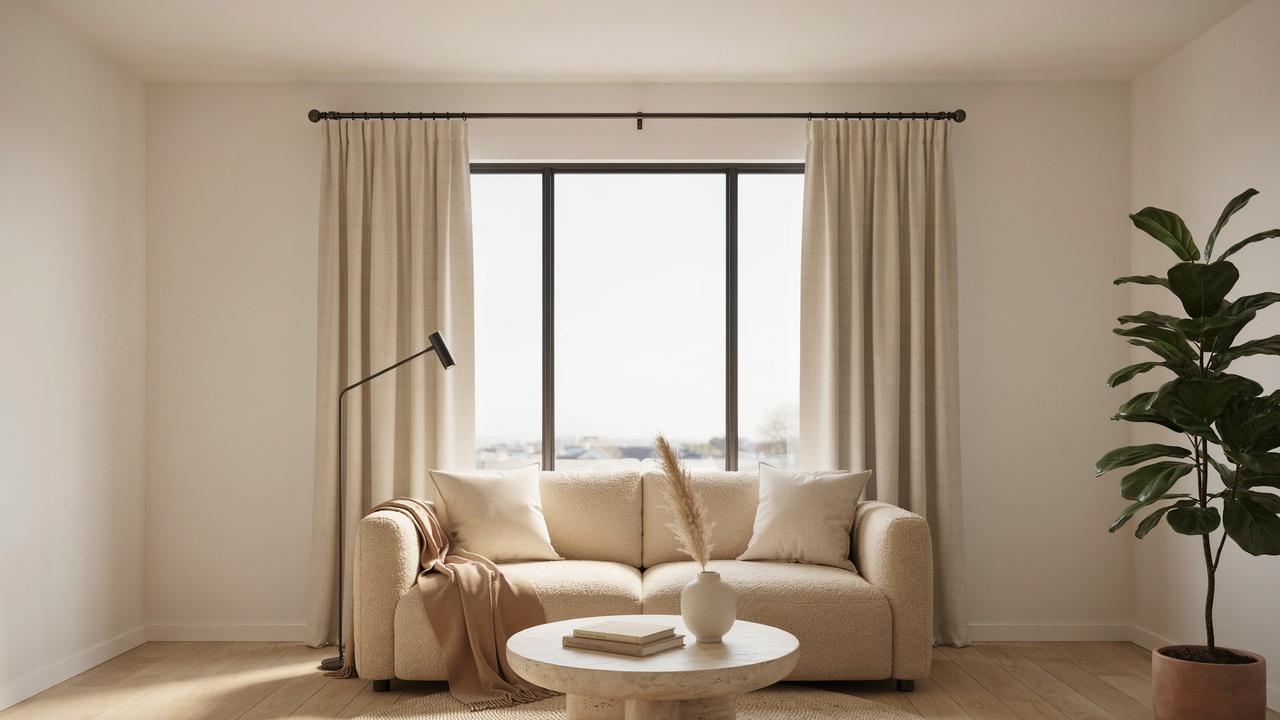
Getting the width right is the first step to curtains that look good and work well.
A rod that is sized correctly lets curtains open fully without blocking light, and it frames your window nicely when closed.
The Standard Curtain Rod Width Rule
Most experts suggest adding 6 to 12 inches on each side of your window frame. This means your total rod width should be your window's width plus 12 to 24 inches combined.
This rule works for most standard windows and gives curtains room to stack neatly when open, a space designers often call the stack-back zone.
How Much Should Curtain Rods Extend Past The Window?
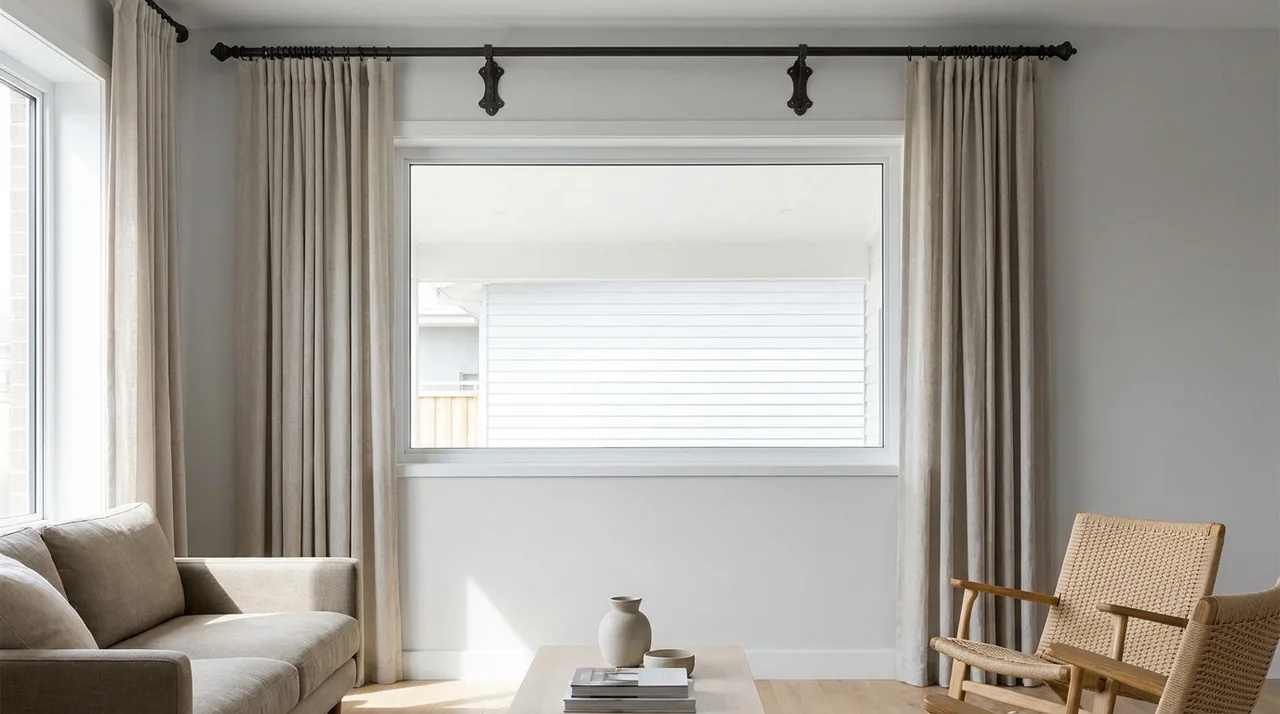
The extension on each side depends on your goals. If you want more natural light, extend the rod further so curtains can fully clear the glass.
A 4 to 6 inch extension is the minimum for most rooms, while 8 to 12 inches gives a fuller, more open feel.
As a general target, most guides land on 4 to 10 inches of overhang per side as the sweet spot for letting curtains sit off the glass.
Minimum vs Ideal Rod Extension
The minimum extension is about 3 inches per side, just enough to keep curtains from covering the window when open.
The ideal extension is 6 to 10 inches per side. This range lets curtains pull back fully, letting in more light and making the window look bigger.
How to Measure Curtain Rod Width Correctly
Correct measuring saves you from buying the wrong size rod. Follow these steps to get accurate numbers before you shop.
Measure The Window Frame and Trim
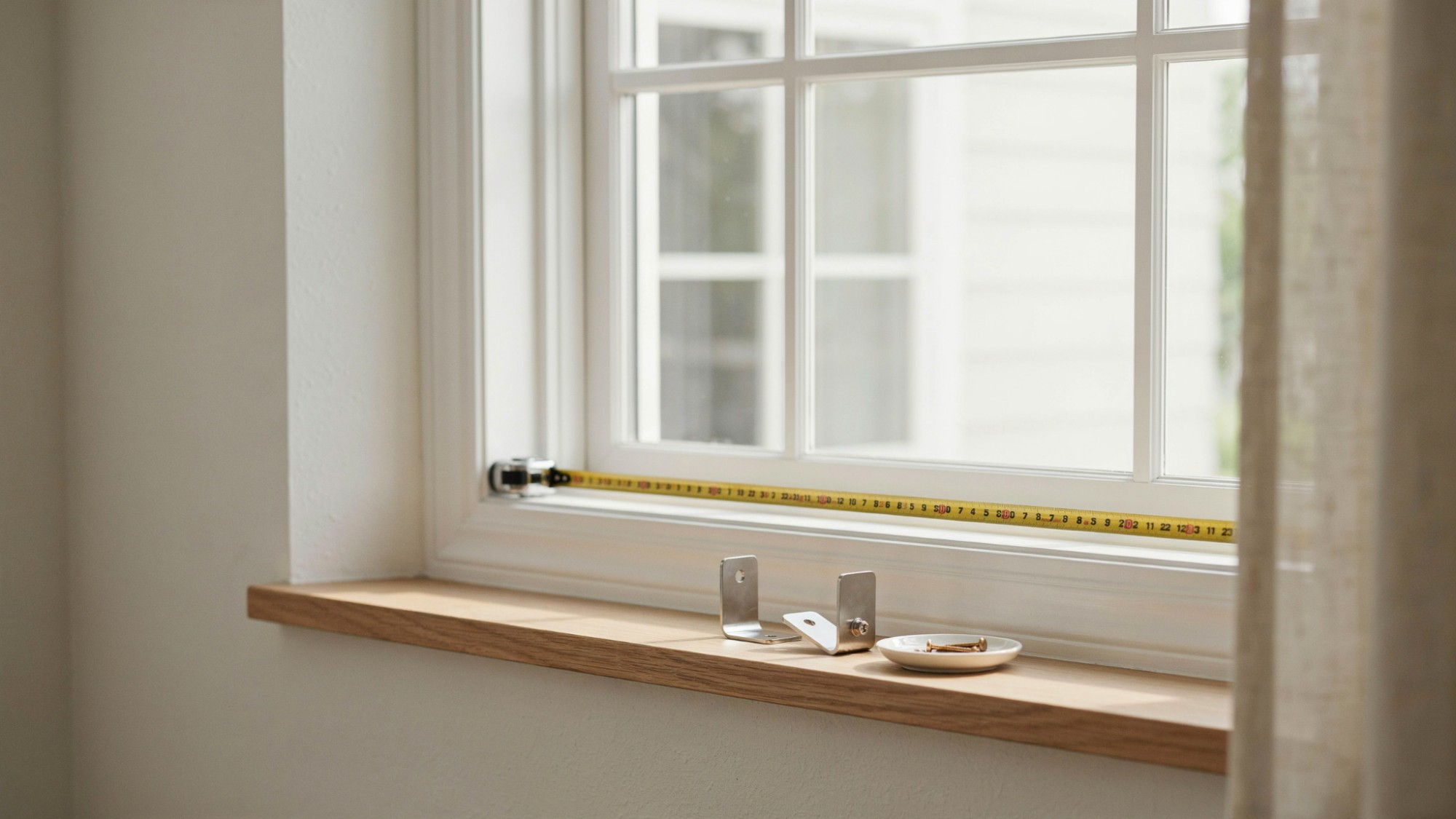
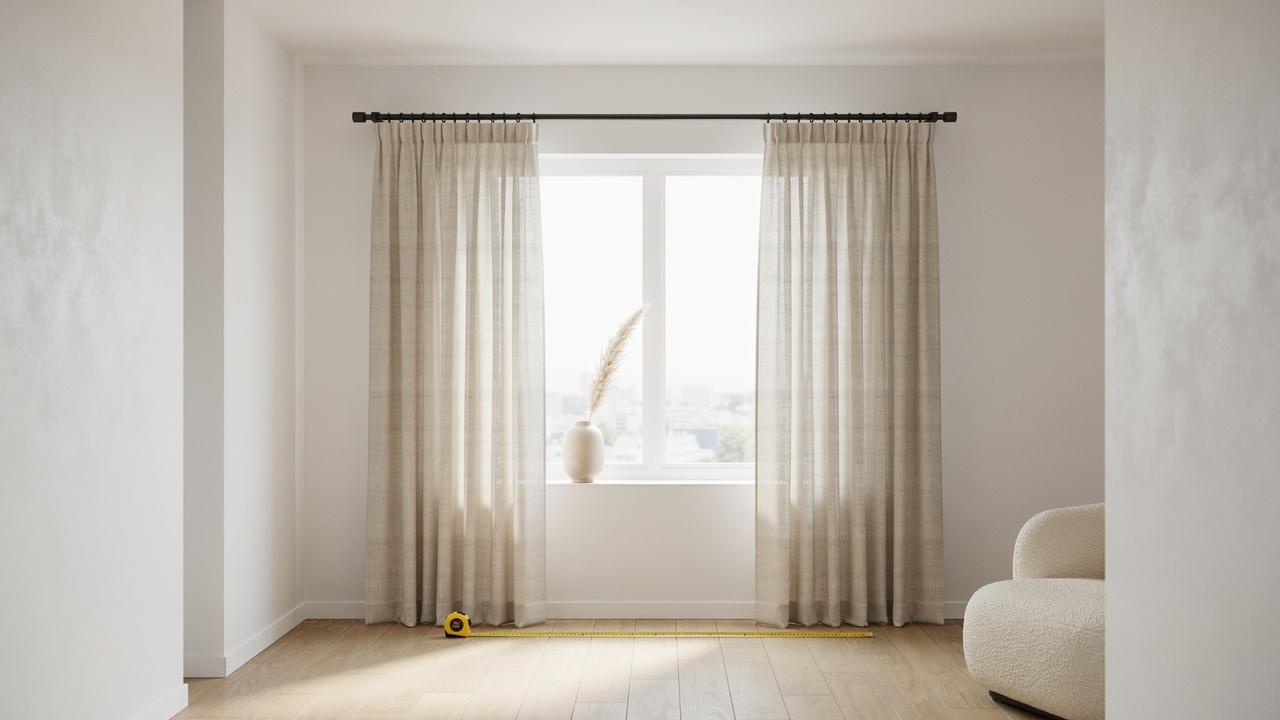
Start by measuring the outer edge of your window frame, from left to right. Include the trim in this measurement, since brackets often sit outside it.
Use a metal tape measure for accuracy, as fabric tapes can stretch and give wrong readings.
Decide The Rod Overhang On Each Side
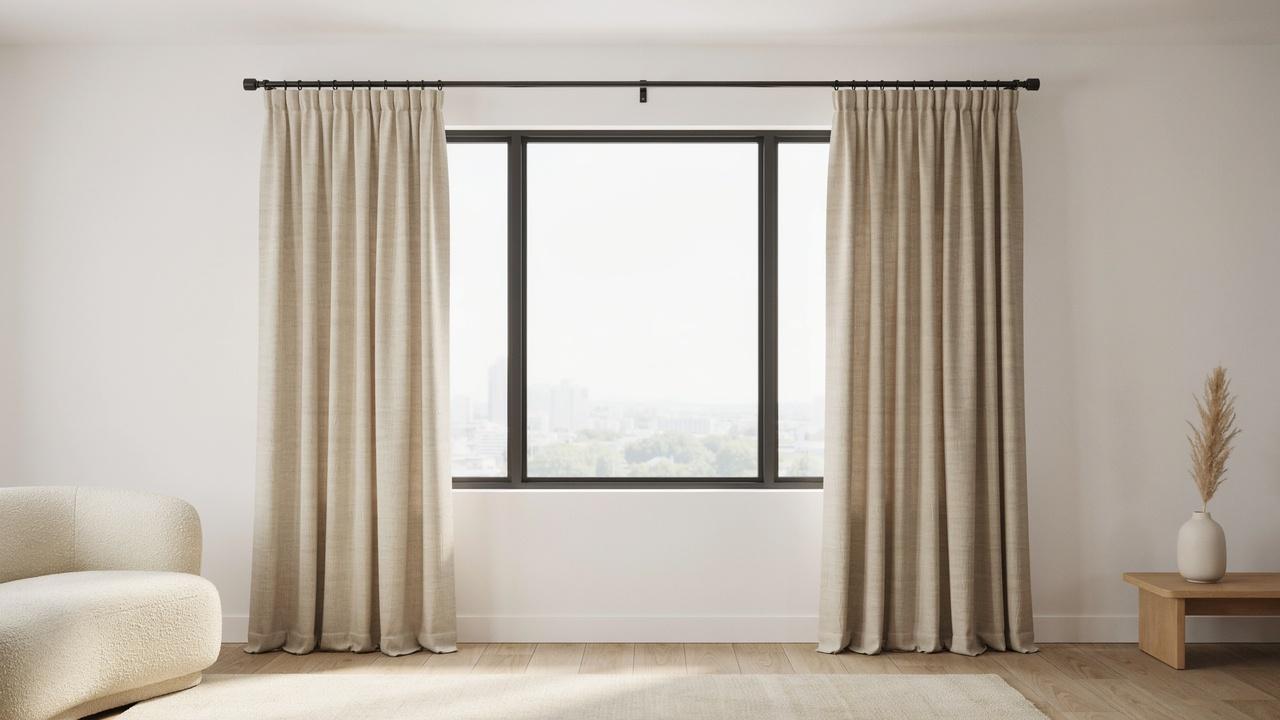
Once you have the frame width, decide how far you want the rod to extend on each side. For a simple, clean look, 4 to 6 inches works well.
For a room that feels more open, go with 8 to 10 inches on each side.
Calculate The Total Curtain Rod Width

Add your frame width to the total overhang on both sides. For example, a 36 inch window with 6 inch overhang on each side needs a 48 inch rod.
Always round up slightly, since most rods come in fixed sizes, not exact custom lengths.
Remember that finials can add another 2 to 9 inches per end, so check the product listing before you order.
Curtain Rod Width Chart by Window Size
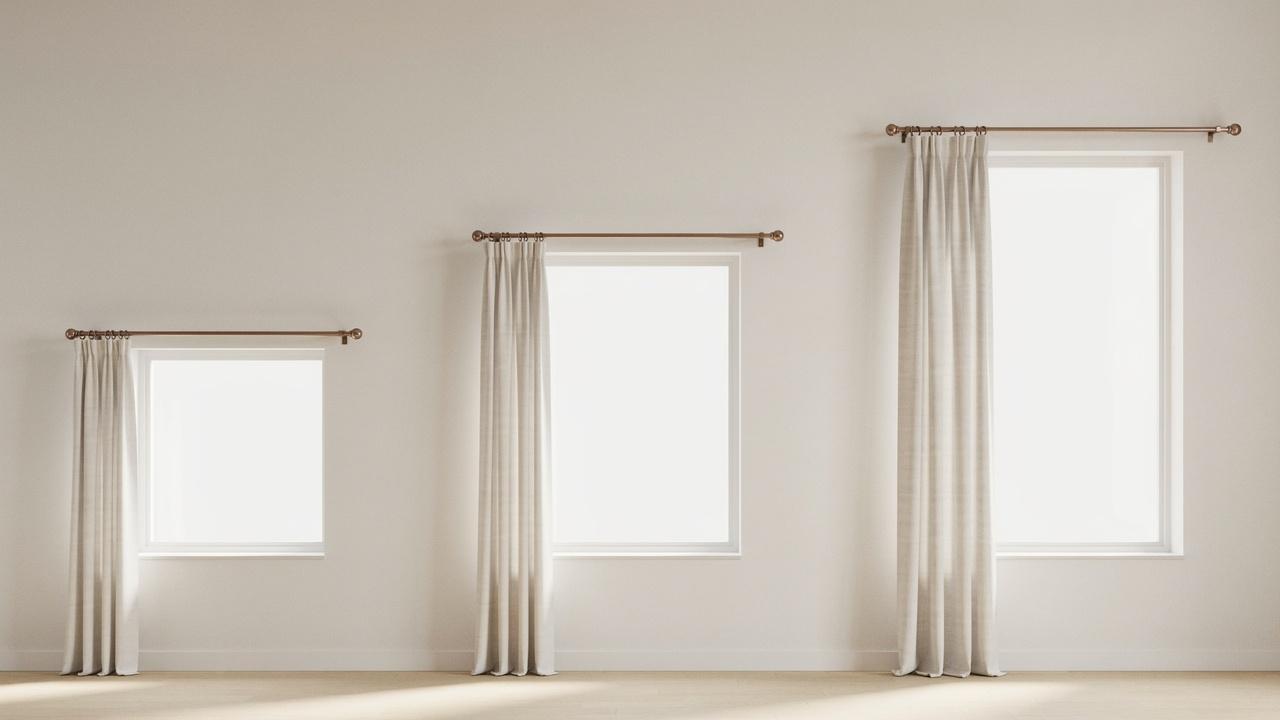
Use this general chart as a starting point, since actual sizes may vary based on your room and curtain style.
| Window Width | Recommended Rod Size | Notes |
| Under 30 inches | 40–48 inches | Gives enough extension without overwhelming a small wall space |
| 30–50 inches | 48–72 inches | Works well for most bedrooms and living rooms |
| Over 50 inches (including patio doors) | 72–120 inches or longer | Adjustable rods work best here since exact sizes can vary a lot |
Choosing the Right Width for Different Window Styles
Not every window is the same shape, so the rod width rules change slightly depending on the style you have.
Single windows: For a single window, follow the standard rule of adding 6 to 12 inches total width beyond the frame. This keeps the look simple and balanced.
Double windows: If two windows sit close together, you can often use one long rod to cover both instead of two separate rods.
Measure the total width of both windows plus the space between them, then add your usual overhang on each outer side.
Bay and corner windows: Bay and corner windows need custom or bendable rods that follow the angle of the wall.
Measure each section separately, then choose a rod system built for angled installs, since a straight rod will not fit properly.
Hinged corner connectors let you join separate straight rods at the exact angle of the bay, which is often easier than sourcing one custom-bent piece.
Sliding glass doors and patio doors: For sliding doors, mount the rod high and wide enough that curtains can fully clear the door when open.
This usually means extending the rod 10 to 12 inches past the door frame on the side where curtains will stack.
How Wide Should Curtains Be Compared to the Rod?

Rod width is only half the equation. Curtain width matters just as much for a good final look.
Sheer curtains look best with more fabric fullness, so aim for panels that are 2.5 to 3 times the width of your rod, giving a soft, gathered look that lets light pass through nicely.
Heavier curtains like blackout panels need less fullness to look good, usually about 2 times the rod width, which keeps the fabric from feeling too heavy or bulky when closed.
For a single panel covering the whole rod, multiply the rod width by your fullness ratio, and for two panels, split that total width evenly between both panels so they match when hung.
Should Curtain Rods Be Wider Than Curtains?
This is a common question, and the answer depends on the look you want and how the curtains will be used.
A wider rod lets curtains stack fully to the sides, showing more of the window and letting in more light.
It also makes the window appear larger, which helps in smaller rooms. If you plan to keep curtains closed most of the time, or you are using them mainly for decoration, a rod that matches the window width closely works fine.
There is no need to add extra width if the curtains rarely open.
Adjustable vs Fixed Curtain Rods
Choosing between these two rod types depends on your window size and how much flexibility you need.
| Feature | Adjustable Rods | Fixed Rods |
| Sizing | Extends within a size range | Comes in one set length |
| Flexibility | Easy to change after installation | No room for adjustment |
| Best for | Windows with an unclear or uncertain width | Windows with an exact, known measurement |
| Look | Can look slightly less polished at joints | Often looks cleaner and more streamlined |
| Risk of error | Lower, since size can be tweaked | Higher, since it must match exactly |
When shopping for an adjustable rod, try to pick a range where your target width falls near the middle rather than at the very top. A rod stretched to its full limit is weaker and more likely to sag over time.
Common Curtain Rod Measuring Mistakes
Small errors during measuring can lead to curtains that never hang right. Here are the mistakes to watch for.
Choosing a rod that's too short: A rod that matches the window frame exactly leaves no room for curtains to stack aside. This blocks part of the glass even when curtains are fully open.
Ignoring brackets and finial space: Brackets and finials add extra length beyond the rod itself. Forgetting to account for this space often results in a rod that ends up too long or crowds the wall.
Hanging the rod at the wrong width: Even a correctly sized rod will look wrong if it is centered incorrectly on the wall. Always double check that the rod is centered over the window before drilling.
Expert Tips for a Perfect Curtain Rod Fit
A few small adjustments can make a big difference in how your finished window treatment looks.
- Create width illusion & plan proportions together: Extend the rod past the frame and hang it slightly higher than the window top to make it look bigger. Raise the rod and adjust the overhang together, not one after the other.
- Keep symmetry balanced: Keep overhang measurements equal on both sides of the window. Uneven spacing is one of the easiest mistakes to spot once curtains are hung.
- Match rod diameter to span: Longer rods need a thicker diameter to avoid sagging in the middle. For rods over 84 inches, use at least 1 inch diameter.
- Add support for long spans: Consider a center support bracket for rods over 84 inches. This adds extra strength and prevents the middle from drooping over time.
- Test the full look before finalizing: Hang curtains temporarily and step back to check both height and symmetry. Small adjustments now save you from redoing bracket holes later.
Conclusion
Getting curtain rod width right comes down to careful measuring and knowing your window style.
Add the right overhang, check your curtain fullness, and pick a rod that matches both your window size and your daily needs.
A little planning now saves you from a mismatched or awkward look later. Try measuring your own window today using the steps above, and see how much better your curtains hang.
If this guide helped you, share it with a friend planning their own window update, or leave a comment with your questions below.
Frequently Asked Questions
How high above the window should a curtain rod be mounted?
Mount the rod 4 to 6 inches above the window frame for a standard look. For a taller appearance, hang it closer to the ceiling, about 8 to 10 inches up.
Can I use the same curtain rod for different curtain weights?
Yes, but check the rod's weight limit first. Thin rods may sag under heavy fabrics like velvet or blackout material, so choose a sturdier rod for heavier curtains.
Do curtain rod width rules change for short or cafe curtains?
Yes, cafe curtains usually cover only part of the window, so their rods can match the window width closely without much extra overhang on either side.
What size curtain rod works for a bay window with three sections?
Measure each section separately, then use a three-piece bay window rod kit. Total width should match the sum of all three sections plus small connector allowances.
How do I know if my curtain rod is too heavy for my wall?
If the wall feels soft or hollow when tapped, use anchors or find a stud. Heavy rods on drywall alone often loosen or fall over time.