

I have spent years testing patio setups for my own home, and outdoor curtains always come up as one of the trickiest additions to get right.
Curtains that look great on day one often sag, slide off, or blow loose within weeks.
In this guide, I will show you how to hang outdoor curtains the right way, using methods that actually hold up outdoors.
Outdoor curtains add comfort, privacy, and shade to any open space. They block sun, keep neighbors from peeking in, and cool down a hot patio, while softening harsh lighting and giving the space a finished look.
Most curtains fail from weak hardware or skipped anchors, and picking the right hanging method matters more than the fabric itself, since even nice fabric fails on a poor setup.
This comes from real trial and error, not guesswork.
How to Hang Outdoor Curtains
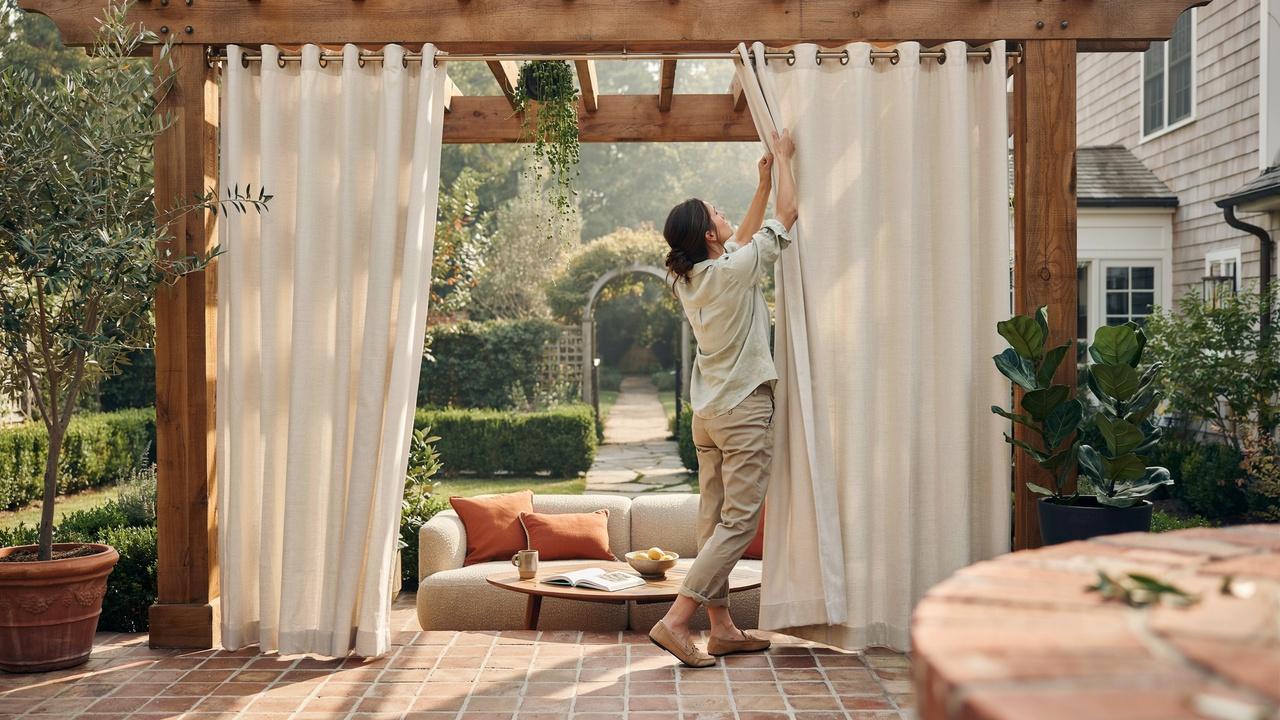
A simple five step process to pick, mount, and secure outdoor curtains for any patio or balcony.
Start by picking the right curtain type for your space, grommet for smooth sliding, tab top for easy renter setups, rod pocket for light decorative use, or top and bottom grommet for windy areas.
Next, choose a hanging method that matches your walls, tension rods, curtain rods, ceiling mounts, wire cables, clamp brackets, or freestanding frames.
Install the hardware correctly by anchoring, tightening, or weighting the base as needed. Hang curtains evenly for smooth sliding and add support points to stop sagging.
Finally, secure the bottom with weights, tiebacks, or a rope system to keep curtains steady through wind and rough weather.
Steps to Hang Outdoor Curtains the Right Way
Follow these five steps to pick the right curtains, mount them securely, and keep them steady in any weather.
Step: 1. Pick the Right Curtain Type for Your Space
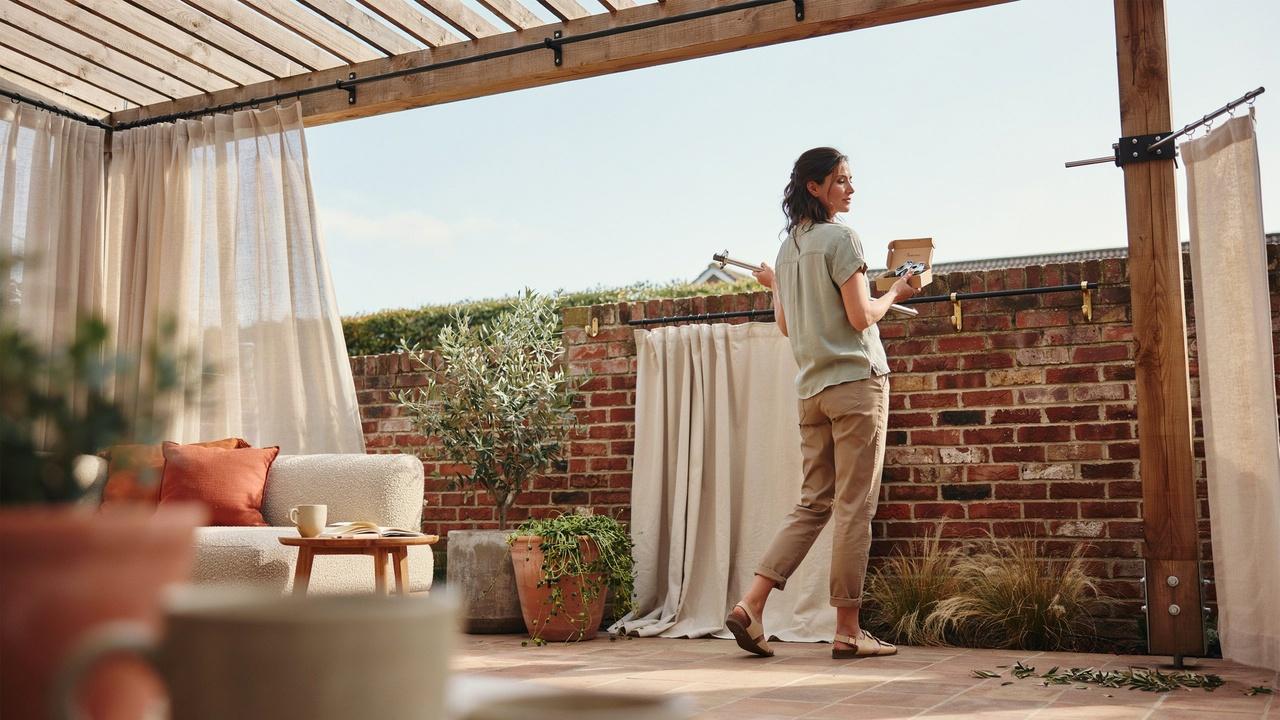
Choose grommet curtains for smooth sliding along the rod. Tab top curtains work well for renter friendly setups since they need no extra tools.
Rod pocket styles suit light decorative use in calm spots. Top and bottom grommet curtains hold up best in windy areas.
Step: 2. Select a Hanging Method Based on Your Walls
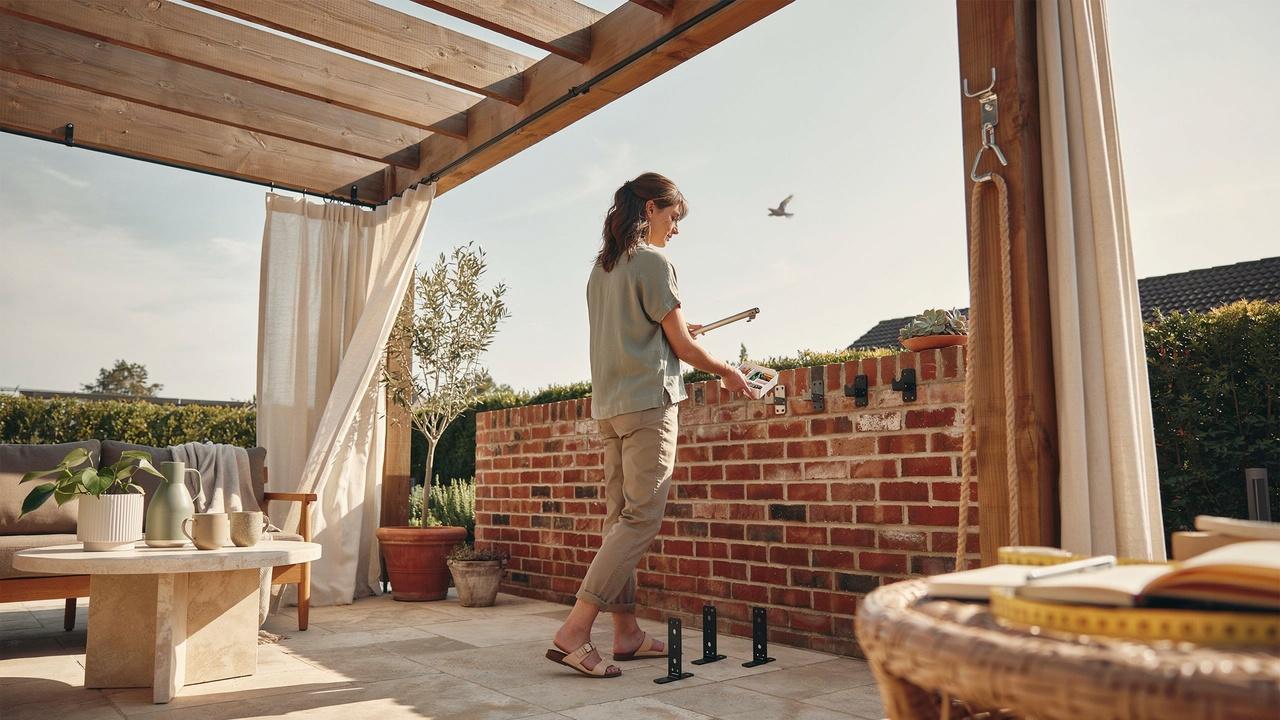
Tension rods work well for solid balcony walls without any drilling. Curtain rods fit wood posts and pergola beams where drilling is safe.
Ceiling mounts give strong support on brick or stone patios. Wire cables or freestanding frames suit wide spans and open areas.
Step: 3. Install the Hardware Correctly
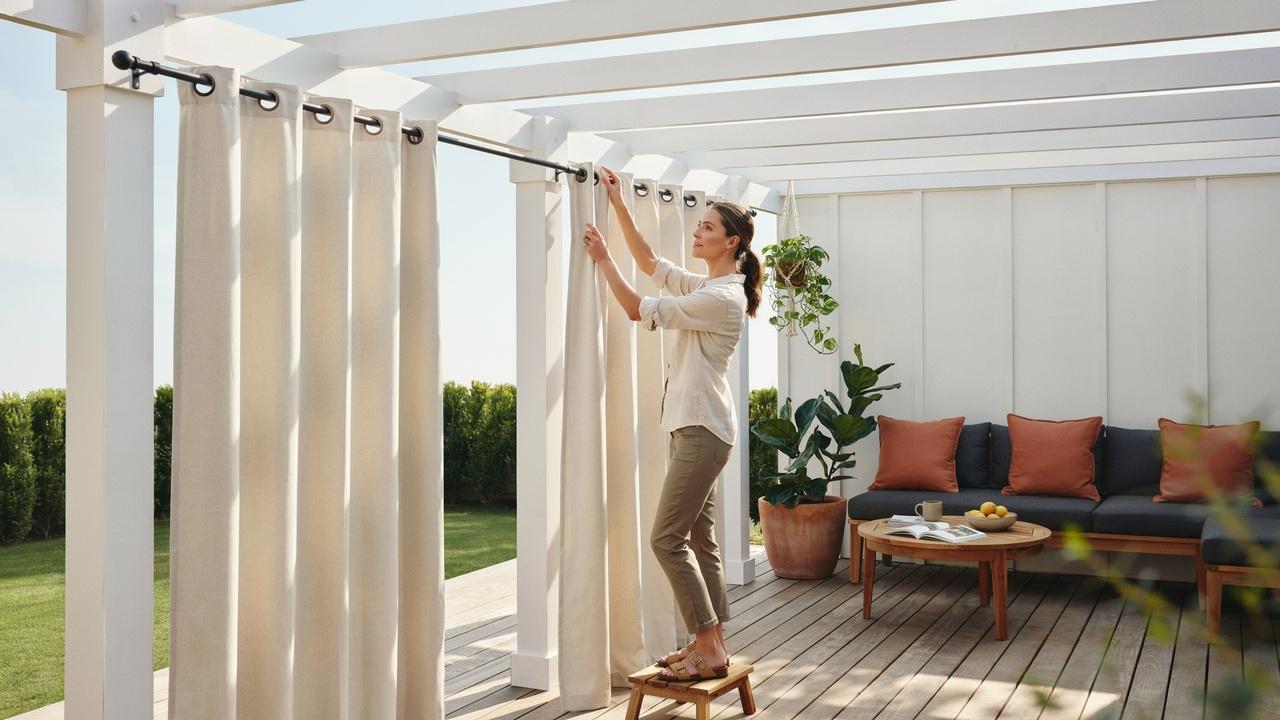
Twist tension rods until they sit snug between the walls. Anchor curtain rods properly before adding any weight.
Attach wire systems using eye hooks and tighten with a turnbuckle. Clamp brackets firmly and fill freestanding bases with sand or water.
Step: 4. Hang the Curtains for a Smooth, Secure Fit
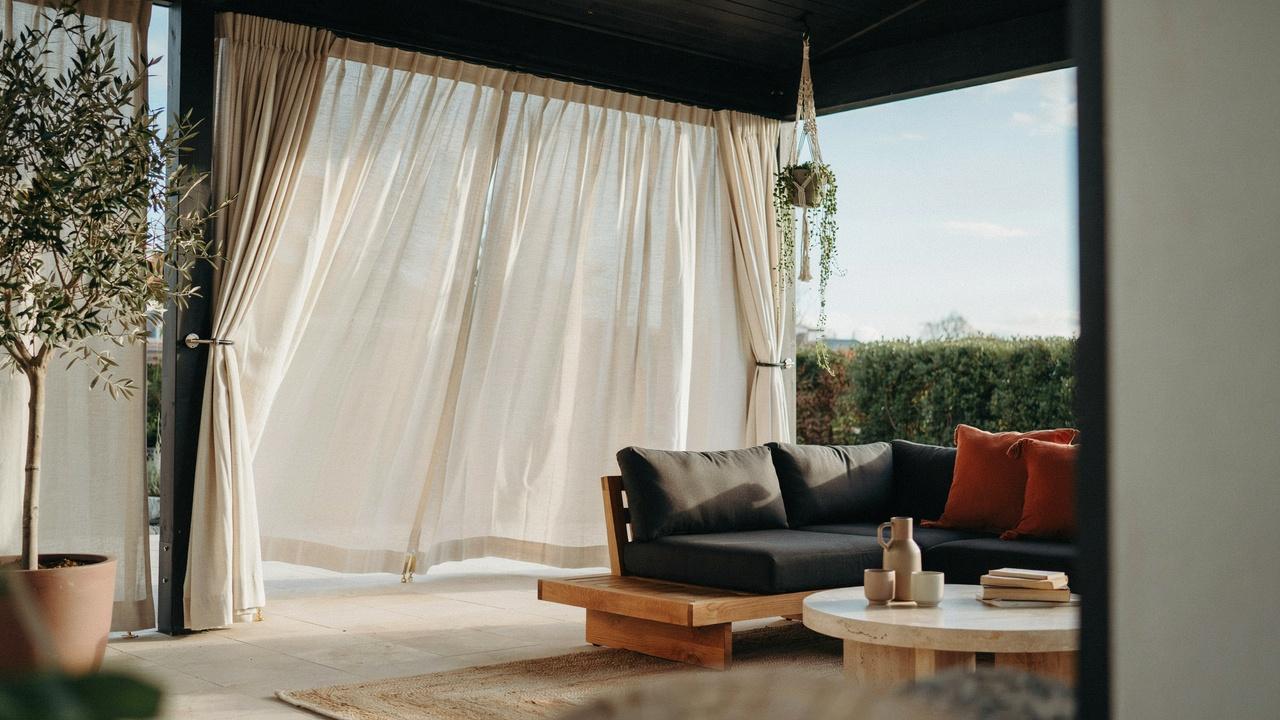
Thread curtains in the same direction so folds stay even. Leave a bit of space between grommets so they slide freely.
Use corner connectors to keep the curtain flow continuous around posts. Add a center support point on long spans to stop sagging.
Step: 5. Keep Curtains From Falling or Blowing in Wind

Add weighted hems or chains along the bottom edge. Use tiebacks to hold curtains open and steady in the breeze.
Install a bottom rope through the grommets for extra hold. Check the setup after storms to catch any loose points early.
Best Outdoor Curtain Setup for Every Space (Balcony, Patio and Pergola)

The right setup depends on your layout and what your walls can support.
Balcony Setups Using Tension Rods or Railing Systems
Balconies often have tight spaces with limited drilling options. Tension rods fit snugly between two solid walls without tools.
Railing clips offer another simple, damage free option. Both choices work well for renters and small balcony layouts.
Patio Setups Using Rods, Wires, or Freestanding Frames
Patios usually offer more room and flexible mounting options. Curtain rods work well when posts or walls allow drilling.
Wire systems suit wider patios needing long, even coverage. Freestanding frames help when no fixed structure is nearby.
Pergola Setups Using Clamp On or Ceiling Mounted Hardware
Pergolas come with sturdy beams that support most hanging methods. Clamp on brackets attach directly to beams without drilling.
Ceiling mounts work well when beams allow secure anchor points. Both options hold curtains steady through regular outdoor use.
Open Spaces Using DIY or Weighted Frame Systems
Open yards often lack walls, posts, or beams to use. Freestanding frames become the most practical choice here.
Weighted bases keep the frame steady during windy days. This setup gives full flexibility to place curtains anywhere needed.
Common Mistakes to Avoid When Hanging Outdoor Curtains
These small errors are the biggest reason outdoor curtains fail early.
- Using indoor rods that rust or bend outside
- Clamping onto hollow or weak surfaces
- Ignoring wind load when picking fabric or hardware
- Skipping bottom anchoring on windy days
- Measuring incorrectly, leading to a poor fit
Caring for Outdoor Curtains After Installation
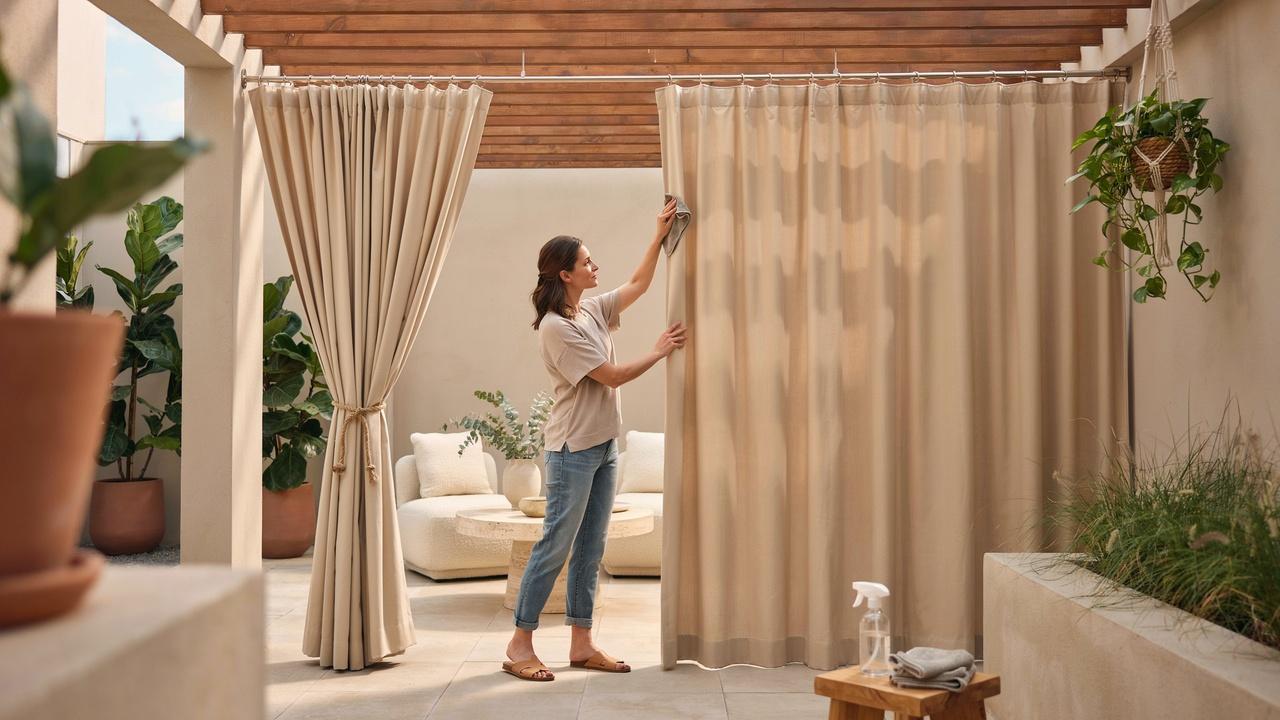
A little upkeep keeps your curtains looking good and holding strong for seasons to come.
Cleaning and Maintaining Outdoor Fabric
Wash curtains with mild soap and water every few months. Let them air dry fully before rehanging to avoid mildew. Check the hardware for rust or loose screws during cleaning.
Seasonal Care for Long-Term Durability
Take curtains down before heavy storms or harsh winters. Store them in a dry place when not in use. Inspect rods and brackets each season for wear or damage.
Quick Tips Before You Hang Outdoor Curtains (Read This First)
A few checks before you start can save time and frustration later.
- Check wind exposure in your space before picking a hanging method
- Measure width, height, and clearance accurately before buying hardware
- Choose rust resistant, outdoor rated brackets and rods only
- Plan how the curtains will open, close, and stay in place
- Avoid mounting into hollow or non structural surfaces
Conclusion
By now,you have everything you need to hang outdoor curtains that actually stay put.
I still remember my first attempt falling apart after one windy evening, and switching to the right hardware fixed it completely.
Pick the method that fits your space, secure the base well, and your curtains will hold up through the seasons. Give it a try this weekend.
Drop a comment below with your setup, share this guide with a friend who needs it, and check out more of our patio tips while you are at it.
Frequently Asked Questions
What Is the Easiest Way to Hang Outdoor Curtains Without Drilling?
Tension rods or clamps on brackets work well without drilling. They fit tight spaces and pergola beams easily.
Do Outdoor Curtains Need Special Rods?
Yes, outdoor rods are rust resistant and built to handle moisture and sun exposure better than indoor rods.
How Do I Stop Outdoor Curtains From Blowing Around?
Add weighted hems, tiebacks, or a bottom rope system. These keep fabric steady during windy days.
Can I Use Outdoor Curtains on a Small Balcony?
Yes, tension rods work great for small balconies since they fit between two solid walls without extra tools.
How High Should Outdoor Curtains Be Hung?
Hang curtains a few inches above the door or window frame for the best coverage and airflow.