

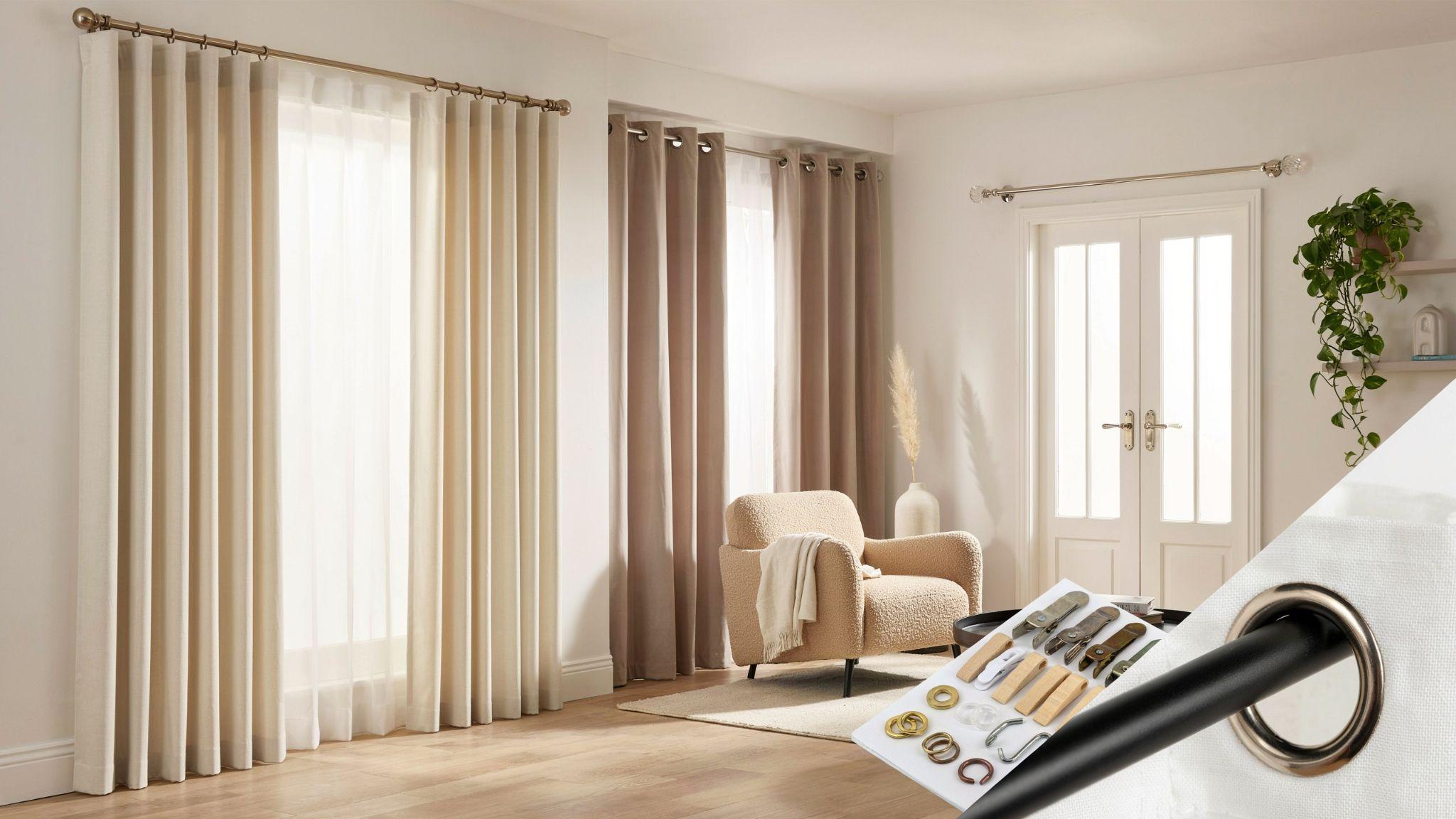
If you have ever stood in a store holding a pack of curtain hooks with no idea what they are for, you are not alone. I have been there too.
Curtain hooks seem small and simple, but picking the wrong one can mess up how your curtains hang and move.
In this post, I will walk you through 21 types of curtain hooks. I will explain what each one does, where it works best, and how to pick the right fit for your curtains, tracks, and rods.
I have hung curtains in more rooms than I can count, and I have made my fair share of mistakes along the way.
By the end, you will know exactly which curtain hook type suits your windows.
What Are Curtain Hooks?

Curtain hooks are small pieces of metal or plastic that connect your curtain to the track or rod. They sit at the top of the curtain and help it glide back and forth.
Without the right hook, your curtain can sag, bunch up, or even fall off the track.
I learned this the hard way when my living room curtains kept slipping every time I opened them.
Curtain Hook Basics Before You Buy
Before you grab any hook off the shelf, think about three things.
- First, what type of curtain header do you have.
- Second, what kind of curtain hooks for tracks or rods will fit your setup.
- Third, how heavy is your fabric.
These three details decide which hooks will actually work for you. Skip this step, and you might end up with hooks that don't fit your setup at all.
Understanding Curtain Header Types
The header is the top part of your curtain. It can be pleated, flat, or have built in loops.
Pinch pleats need different hooks than pencil pleats. Flat panel curtains often use clips instead of hooks.
If you are not sure what header your curtains have, flip them over and look at the top. The shape and stitching will tell you a lot.
Choosing Hooks Based on Curtain Tracks and Rods
Tracks and rods are not the same thing, and your hook choice depends on which one you have.
Curtain hooks for tracks often need a specific shape to slide through the channel. Curtain hooks for rods usually work with rings or hooks that loop over the bar.
I always check this first. Using the wrong hook on a track can jam the whole system, and trust me, that is not fun to fix.
Which Curtain Hook Works With Which Curtain Style?
Before going through the full list, here's a quick way to match your curtain style to the right hook.
| Curtain Style | Hook Type |
| Pencil Pleat | Prong Hook |
| Pinch Pleat | Pin Hook |
| Wave Curtain | Wave Hook |
| Traverse Curtain | Traverse Hook |
| Flemish Pleat | Flemish Pleat Hook |
| Shower Curtain | Shower Curtain Hook |
| Eyelet Curtain | Ring Hook |
21 Types of Curtain Hooks You Should Know
Here are the different types of curtain hooks grouped by how they work, so you can find the right match faster.
Pleated Curtain Hooks
These hooks work with curtains that have pleats sewn into the header. They sit inside the pleat or pocket to hold the shape.
1. Pin Hooks

Pin hooks have a sharp pin end that pushes into the back of pleated curtains. They hold the pleat shape in place.
- Best For:Pinch pleat curtains and formal drapery.
- Pros:They keep pleats neat and look clean from the front.
- Cons:The pin can poke through thin fabric if you are not careful.
2. Pleater Hooks

Pleater hooks work with pleater tape, which has pockets sewn into the curtain. You insert the hook into the pocket to create the pleat shape you want.
- Best For:Custom pleated curtains and adjustable curtain heights.
- Pros:They let you control how deep or wide your pleats look.
- Cons: Getting the spacing even across the whole curtain takes some practice.
3. Prong Hooks
Photo of four-prong curtain hooks supporting heavy pencil pleat curtains, close-up hardware detail, realistic home interior lighting.

Prong hooks have multiple small prongs that grip the curtain header tape. They are common on ready-made curtains.
- Best For:Pencil pleat curtains and ready-made curtains.
- Pros:They slide into tape pockets easily and let you adjust the gathers.
- Cons: Thin tape can wear out faster from repeated prong insertion.
4. Four-Prong Hooks

Four-prong hooks are a sturdier version of the standard prong hook, with an extra prong added for grip. They spread the weight of the curtain across more points on the header tape.
- Best For:Heavier pencil pleat curtains and curtains that get pulled often.
- Pros: They hold heavier fabric without slipping out of the tape.
- Cons: They cost a bit more than basic three-prong hooks.
5. Flemish Pleat Hooks

Flemish pleat hooks are designed for the tall, fan-shaped pleats you see in formal European-style drapery. They sit deep inside the pleat to support its height.
- Best For:Flemish pleat curtains and formal living rooms.
- Pros:They support tall pleats and keep the fan shape from collapsing.
- Cons:Placement needs to be precise, so they take more time to install.
Track Curtain Hooks
These hooks are made to move smoothly along curtain tracks, whether you open your curtains by hand or by cord.
6. Traverse Hooks

Traverse hooks are made for traverse rods, the kind you open and close using a cord.
- Best For:Traverse rods and cord-operated curtains.
- Pros: They connect smoothly to the carrier so the cord can pull the curtain evenly.
- Cons: They only work with traverse rod systems, not plain rods.
7. Roller Track Hooks

Roller track hooks have small wheels built in. They roll along the track instead of just sliding.
- Best For:Curtain tracks and commercial spaces.
- Pros:They handle wide curtains and frequent use without dragging.
- Cons: The wheels can wear out over years of heavy use.
8. Carrier Hooks
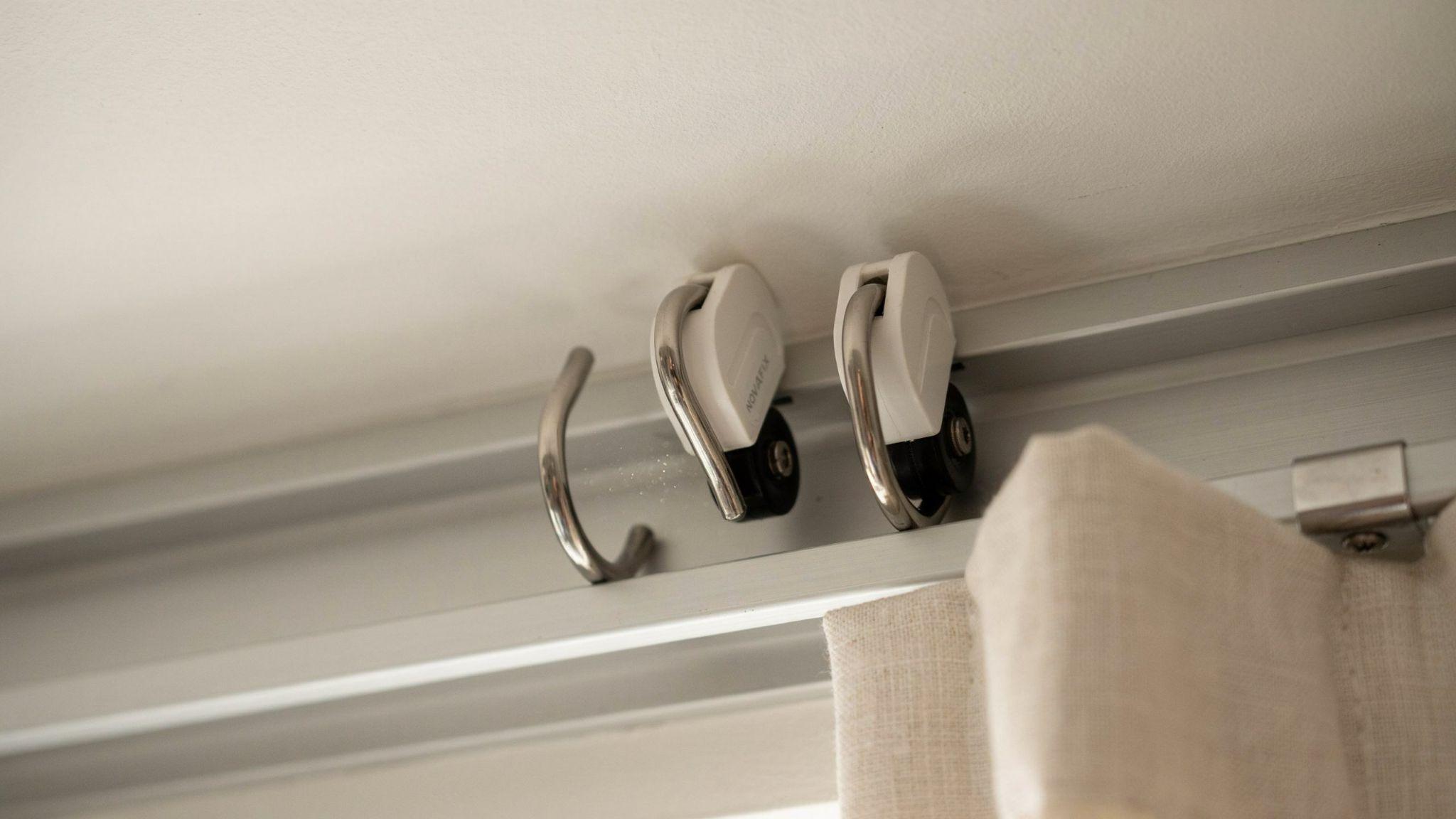
Carrier hooks attach to a small wheeled or sliding carrier that runs inside the track. The hook end holds the curtain while the carrier handles the movement.
- Best For: Track systems where curtains need to slide back and forth often.
- Pros:They keep curtains moving smoothly without dragging on the track.
- Cons:They are not interchangeable across all track brands.
9. Glider Hooks

Glider hooks are designed for ceiling-mounted tracks. They glide smoothly even with large, heavy panels.
- Best For: Ceiling-mounted tracks and large window treatments.
- Pros:They support big, heavy panels without sagging in the middle.
- Cons: Installation usually needs a ceiling track already in place.
10. Swivel Hooks

Swivel hooks rotate, which lets your curtains move smoothly along the track without twisting.
- Best For:Frequently opened curtains and smooth movement systems.
- Pros:They stop the curtain fabric from twisting as it slides.
- Cons: The swivel joint can loosen slightly after years of use.
11. C-Shaped Curtain Hooks

C-shaped hooks have a curved, almost closed loop that wraps most of the way around the track or rod, holding the curtain securely while still allowing smooth sliding.
- Best For:Standard curtain tracks and medium-weight curtains.
- Pros:The closed shape keeps the hook from popping off the track when tugged.
- Cons:They can be harder to thread onto the track than open hooks.
Hook Styles for Specific Curtain Types
These hooks are built for particular curtain styles or fabric setups, rather than general use.
12. S-Hooks

S-hooks are shaped like the letter S. One end holds the curtain, the other end hooks onto the track or ring.
- Best For: Lightweight curtains and industrial or modern décor.
- Pros:They are quick to attach and remove for easy curtain changes.
- Cons:They can come loose if the curtain fabric is too heavy.
13. Wave Curtain Hooks

Wave hooks create smooth, even folds along the top of the curtain, giving a soft wave effect.
- Best For:Modern wave curtains and contemporary homes.
- Pros:They produce even, consistent waves across the whole curtain.
- Cons:They only work with curtains that have wave tape sewn in.
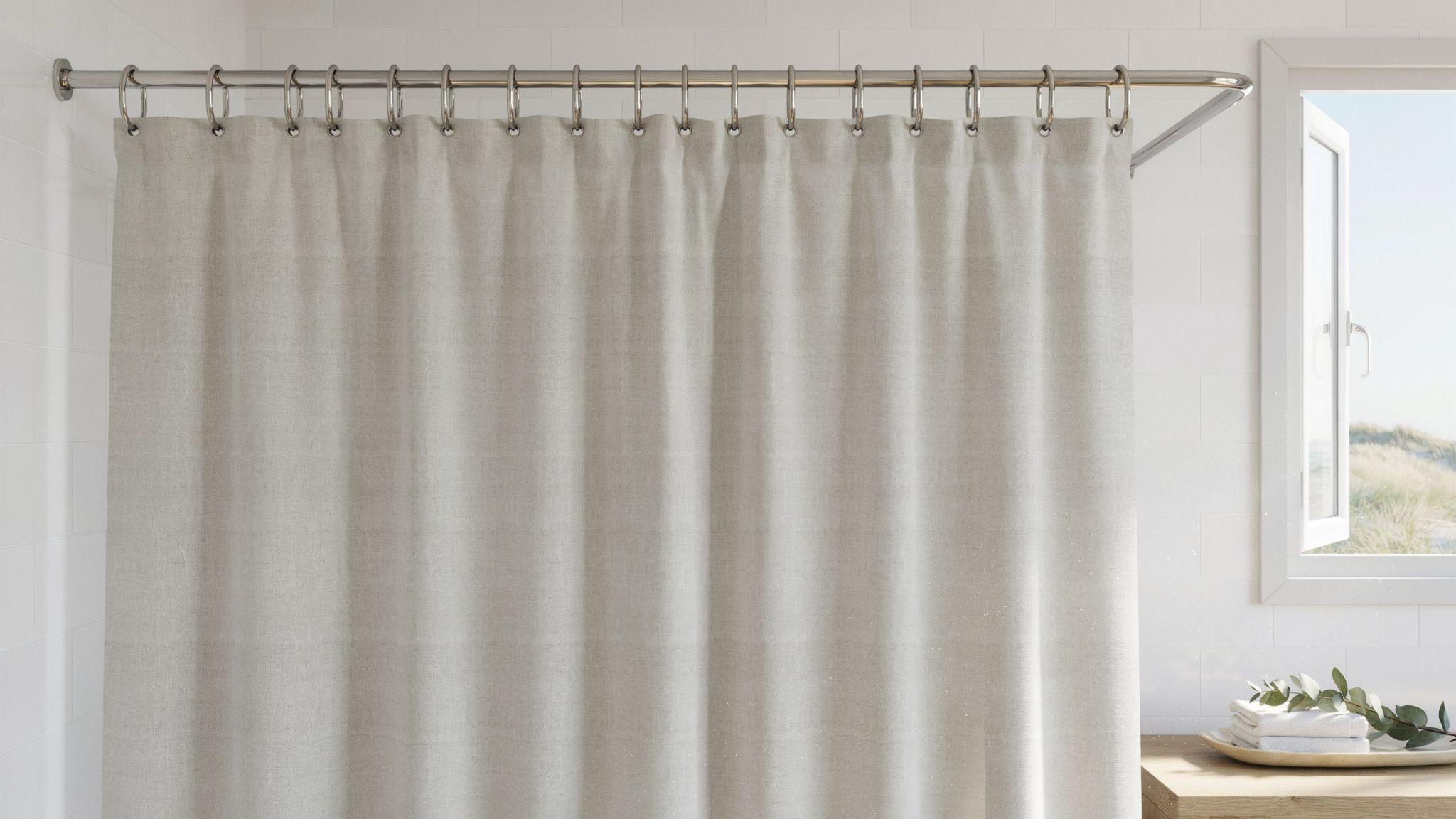
14. Shower Curtain Hooks

Shower curtain hooks are made to handle moisture without rusting. They usually have a simple loop or clip design.
- Best For:Bathrooms and moisture-prone environments.
- Pros:They resist rust and hold up well in steamy rooms.
- Cons: Cheaper versions can still rust faster than expected.
15. Buckram Hooks

Buckram hooks are designed for curtains with buckram, a stiff fabric strip sewn into the header to hold pleats firm. The hook anchors into the buckram layer for extra support.
- Best For:Heavy formal drapery with stiffened headers.
- Pros: They hold their shape well over time on stiff headers.
- Cons:They are not useful on curtains without a buckram strip.
Hooks Based on Fabric Weight and Strength
These hooks are chosen based on how much weight they need to hold, not the curtain style itself.
16. Metal Curtain Hooks

Metal hooks are stronger and last longer than plastic ones. They handle heavier fabrics without bending or snapping.
- Best For:Heavy drapes and long-term durability.
- Pros:They handle thick or lined curtains without bending.
- Cons:Basic metal can rust if used in damp rooms.
17. Stainless Steel Curtain Hooks
Stainless steel hooks resist rust and corrosion better than regular metal. They hold up well over time, even in damp rooms.
- Best For:Humid climates and long-term durability.
- Pros:They resist rust and hold heavy fabric without bending.
- Cons: They cost more than plastic or basic metal hooks.
18. Wire Curtain Hooks

Wire hooks are thin, bendable, and simple. You can shape them slightly to fit your needs.
- Best For:Lightweight fabrics and DIY curtain projects.
- Pros: They are cheap and easy to bend into shape for custom projects.
- Cons:They are not strong enough for heavy or lined curtains.
Ring and Ceiling Track Hooks
These hooks connect curtains to rings or ceiling-mounted systems, often staying out of sight once the curtain is hung.
19. Ring Hooks

Ring hooks attach to curtain rings that circle the rod. The hook end holds the curtain header while the ring slides along the rod.
- Best For:Eyelet curtains, grommet curtains, and rod-mounted setups.
- Pros:They slide on and off quickly, which makes washing curtains easier.
- Cons:Rings can squeak on metal rods over time.
20. Decorative Curtain Hooks

These hooks come in fancy shapes and finishes, like brass, crystal, or carved designs. They are meant to be seen.
- Best For:Luxury interiors and statement window treatments.
- Pros:They add a nice visual touch to curtains hung on display rings.
- Cons: They usually cost more than plain functional hooks.
21. Ceiling Track Carriers

Ceiling track carriers run inside a ceiling-mounted track and hold the hook end of the curtain from above. The carrier itself stays hidden inside the track channel.
- Best For:Minimalist interiors and curtains that need to hang from the ceiling without visible rods.
- Pros:The track stays hidden, giving curtains a clean, floating look.
- Cons:Installing the ceiling track itself takes more effort than a simple rod.
Curtain Hook Comparison Chart
This chart breaks down each hook by what it works with, how much weight it can hold, and whether it suits beginners.
| Hook Type | Best Curtain Style | Weight Capacity | Visible or Hidden | Track or Rod | Beginner Friendly |
| Pin Hooks | Pinch pleats | Medium | Hidden | Both | Yes |
| Pleater Hooks | Custom pleats | Medium | Hidden | Both | No |
| Prong Hooks | Pencil pleats | Medium | Hidden | Both | Yes |
| Four-Prong Hooks | Heavy pencil pleats | Heavy | Hidden | Both | Yes |
| Flemish Pleat Hooks | Flemish pleats | Heavy | Hidden | Rod | No |
| Traverse Hooks | Traverse curtains | Medium | Hidden | Rod | No |
| Roller Track Hooks | Wide track curtains | Heavy | Hidden | Track | No |
| Carrier Hooks | Sliding track curtains | Medium | Hidden | Track | No |
| Glider Hooks | Ceiling tracks | Heavy | Hidden | Track | No |
| Swivel Hooks | Frequent-use curtains | Medium | Hidden | Track | Yes |
| C-Shaped Hooks | Standard tracks | Medium | Hidden | Track | Yes |
| S-Hooks | Lightweight curtains | Light | Visible | Both | Yes |
| Wave Hooks | Wave curtains | Medium | Hidden | Track | No |
| Shower Curtain Hooks | Shower curtains | Light | Visible | Rod | Yes |
| Buckram Hooks | Stiffened headers | Heavy | Hidden | Rod | No |
| Metal Hooks | Heavy drapes | Heavy | Hidden | Both | Yes |
| Stainless Steel Hooks | Humid rooms, heavy drapes | Heavy | Hidden | Both | Yes |
| Wire Hooks | DIY curtains | Light | Visible | Rod | Yes |
| Ring Hooks | Eyelet, grommet curtains | Medium | Visible | Rod | Yes |
| Decorative Hooks | Display rings | Medium | Visible | Rod | Yes |
| Ceiling Track Carriers | Ceiling-mounted curtains | Medium | Hidden | Track | No |
How to Choose the Right Curtain Hook
Start with your curtain header. That alone rules out most of the wrong options. Then look at your track or rod, since some hooks only fit certain systems.
Next, think about fabric weight. Heavy curtains need stronger hooks, plain and simple.
Last, think about how often you open and close the curtains. If it's daily, smooth-gliding hooks save you a lot of hassle.
Curtain Hook Materials Explained
Plastic hooks are light and cheap, but they can crack over time, especially in cold rooms. Metal hooks are stronger and handle weight better, though basic metal can rust in damp spaces.
Stainless steel sits at the top for durability and rust resistance, so it works well in bathrooms or humid climates.
Brass and other decorative finishes are mostly for looks, so they work best where the hook is visible.
Common Curtain Hook Problems and Solutions
If your curtain keeps falling off the hook, the hook size probably doesn't match your header tape. Try a different size or style.
If your curtains stick when you pull them, the hooks might be too rough for your track. Switch to swivel or carrier hooks for smoother movement.
If hooks are bending under heavy fabric, swap them for stainless steel or four-prong versions. Plastic just won't hold up under that kind of weight.
Mistakes to Avoid When Buying Curtain Hooks
Don't buy hooks before checking your curtain header type. This is the most common mistake, and I have made it myself more than once.
Don't assume all different types of curtain hooks fit all tracks. Many tracks need a specific hook shape.
Also, don't go cheap on hooks for heavy curtains. A few extra dollars on sturdy hooks can save you from a curtain crashing down later.
Curtain Hooks vs Curtain Rings vs Curtain Clips
Hooks attach directly to the curtain header and connect to a track or ring.
Rings circle the rod and usually have a hook attached to hold the curtain. Clips grip the fabric directly without needing pleats or pockets.
If you want a simple setup with a visible rod, rings work well. If your curtain has loops or grommets, you might not need separate hooks at all.
Clips are great for flat curtains without any header tape.
Conclusion
Picking the right curtain hook type doesn't have to feel confusing. Once you know your curtain header, track or rod, and fabric weight, the choice gets much easier.
I have tried several types of curtain hooks in my own home, and the difference in how curtains hang and move is real.
Whether you need something simple like a ring hook or something stronger like a stainless steel one, there's an option that fits your space.
Take a little time to match the hook to your curtains, and you'll avoid sagging, sticking, or hooks that snap too soon.
So, which type of curtain hook do you think will work best for your windows?
Frequently Asked Questions
Can I mix different types of curtain hooks on one curtain?
Yes, but it's best to keep them consistent for even hanging. Mixing types can cause uneven gaps or movement.
How do I know what size curtain hooks I need?
Check your curtain header tape and measure the pocket size. Most hook packaging lists compatible sizes.
Are plastic or metal curtain hooks better?
Metal hooks are stronger and last longer, especially for heavy curtains. Plastic works fine for light, everyday curtains.
Can curtain hooks be reused on new curtains?
Yes, as long as the new curtains have a similar header type. Just check that the hook size still fits.
Why do my curtain hooks keep coming undone?
This usually happens when the hook size doesn't match the header tape. Try a slightly larger or more secure hook style.