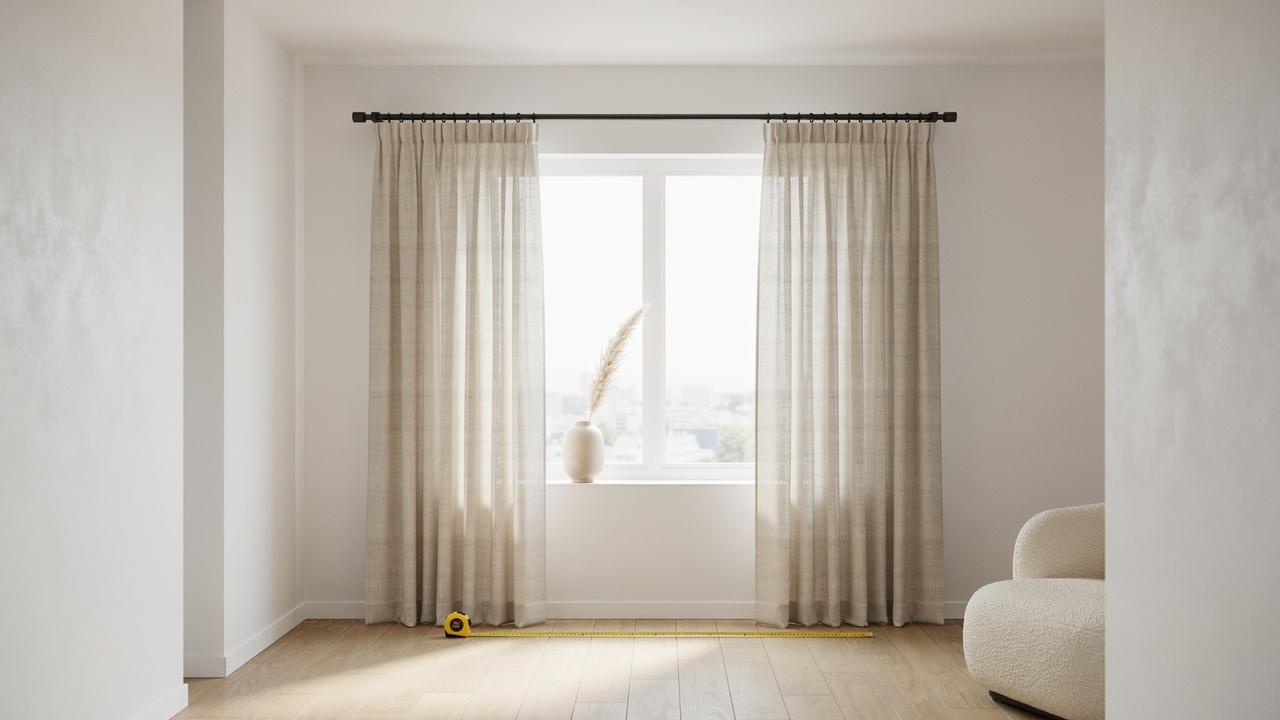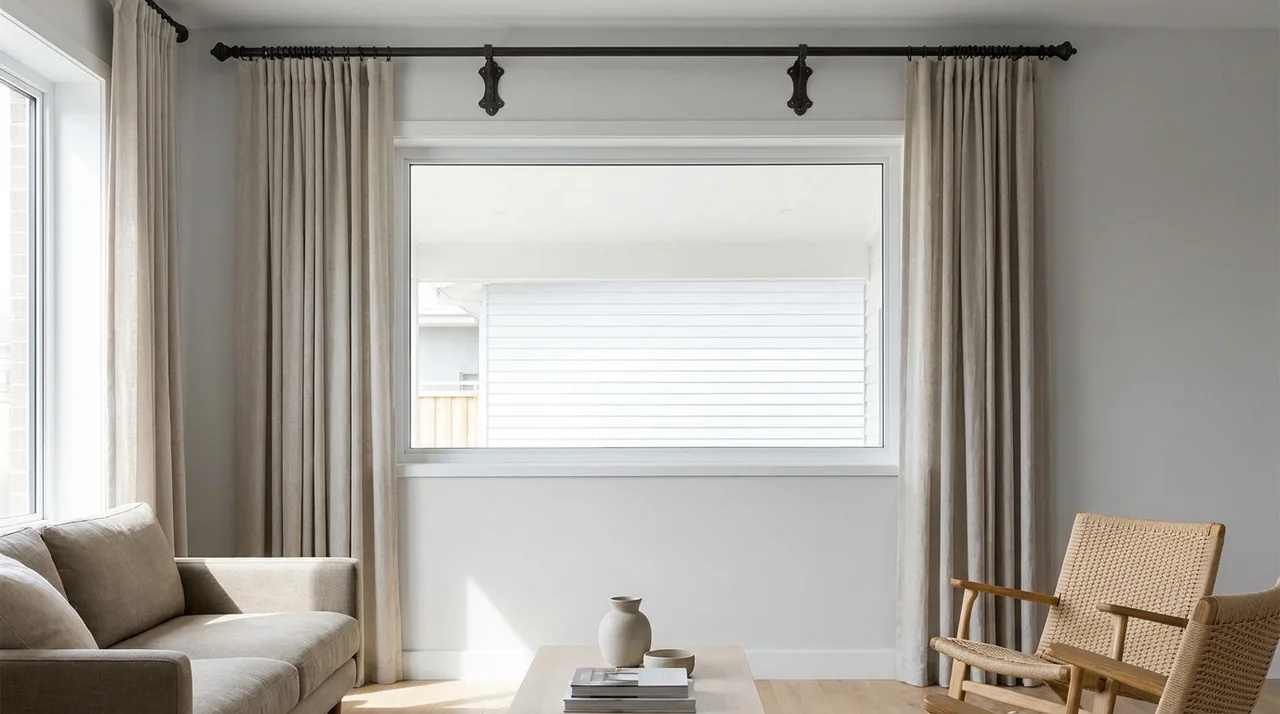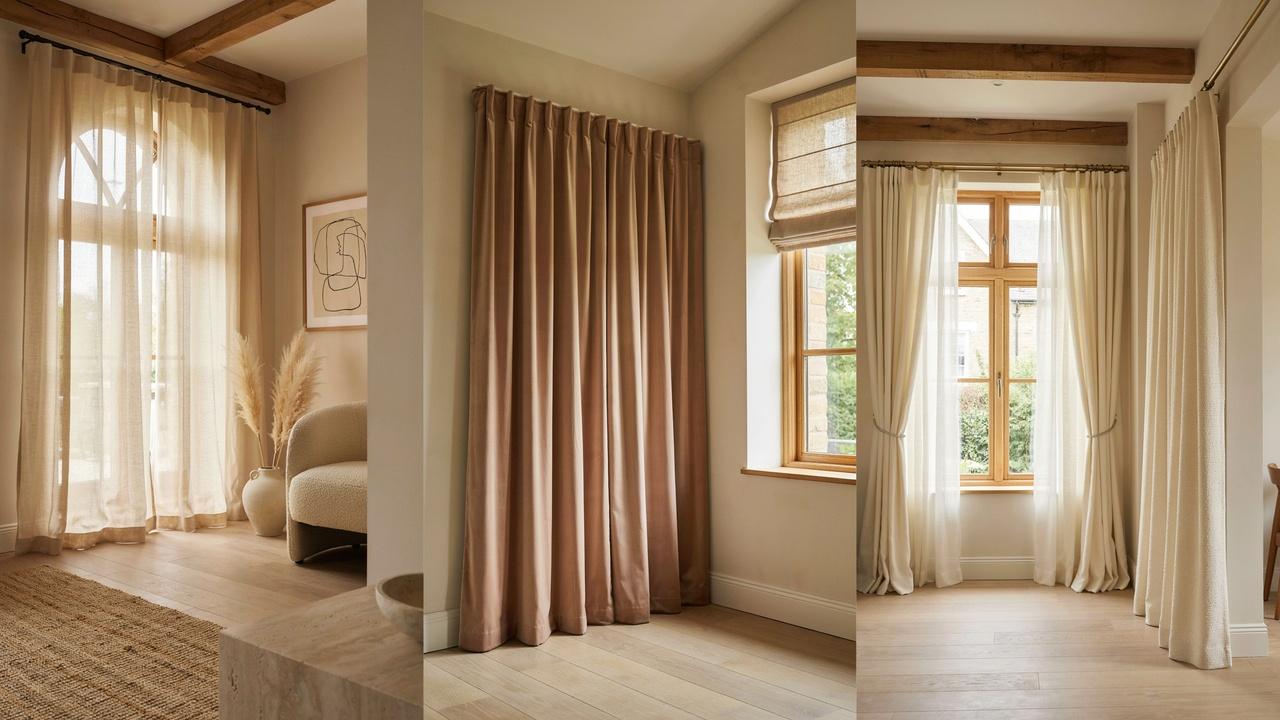

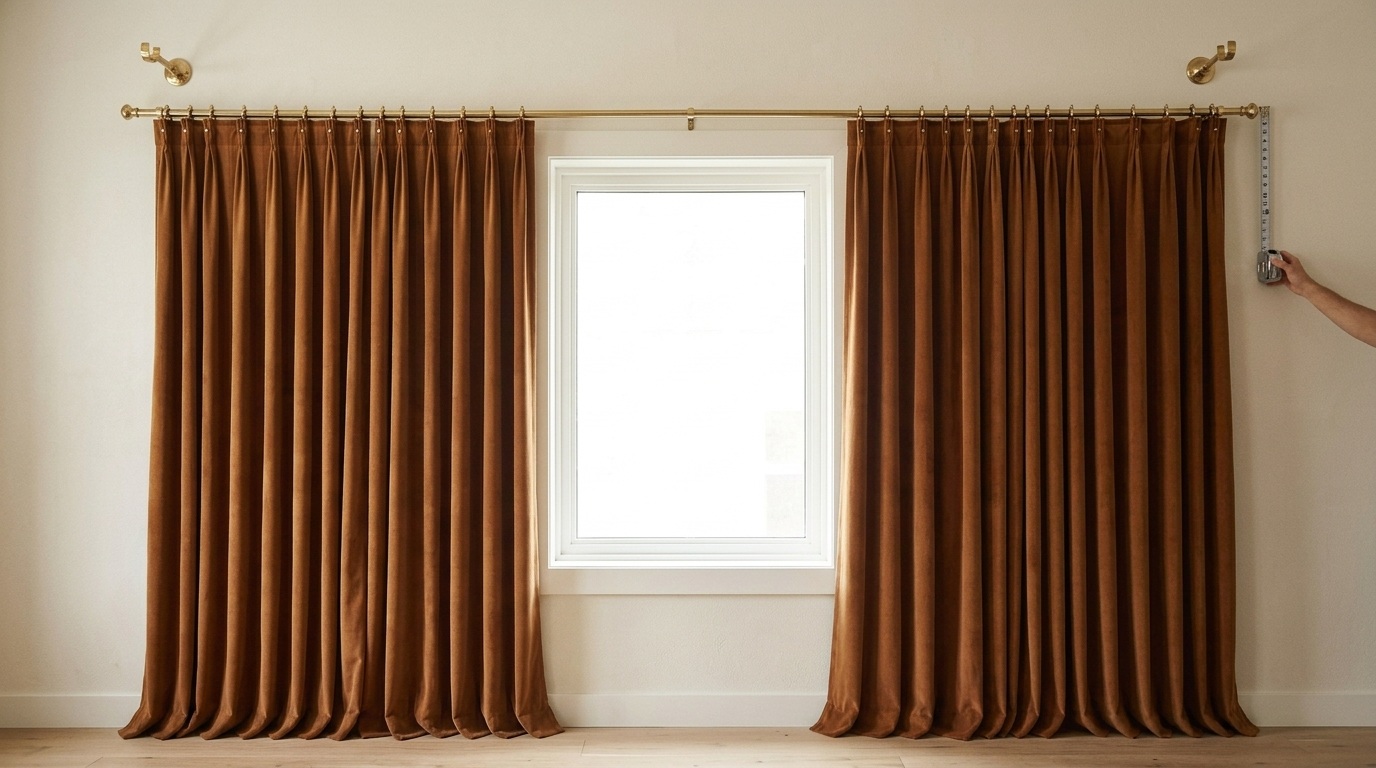
You have the curtains, rod, and brackets ready, but one question can stop the whole project: where should the brackets go?
Place them too close to the window, and the curtains may crowd the glass. Place them too high or too far out, and the rod may look out of proportion or feel unstable.
This guide explains Where to Place Curtain Rod Brackets based on window size, curtain length, wall space, and rod support needs.
You’ll learn how high and how far apart to position the brackets, where to place the center support, and what to check before drilling.
These placement checks reflect common curtain installation practices and can help you avoid unnecessary holes and adjustments.
Where Should Curtain Rod Brackets Go?

Curtain rod brackets should be mounted at an even height above the window and far enough outside the frame to let the curtains open without covering the glass.
For most outside-mounted curtains, place the brackets about 4 to 6 inches above the window frame and extend the rod beyond both sides of the window.
The exact position depends on your curtain length, rod design, wall space, and the weight of the curtains.
Before drilling, measure the window, check the available wall space, and plan where the curtains will stack when open. Longer or heavier curtain rods may also need a center support bracket to prevent sagging.
How Do You Measure for Curtain Rod Bracket Placement?
Accurate measurements help you position the brackets correctly and avoid unnecessary holes in the wall. Measure the window, rod, curtains, and available wall space before marking the mounting points.
Measure the Window and Wall Space
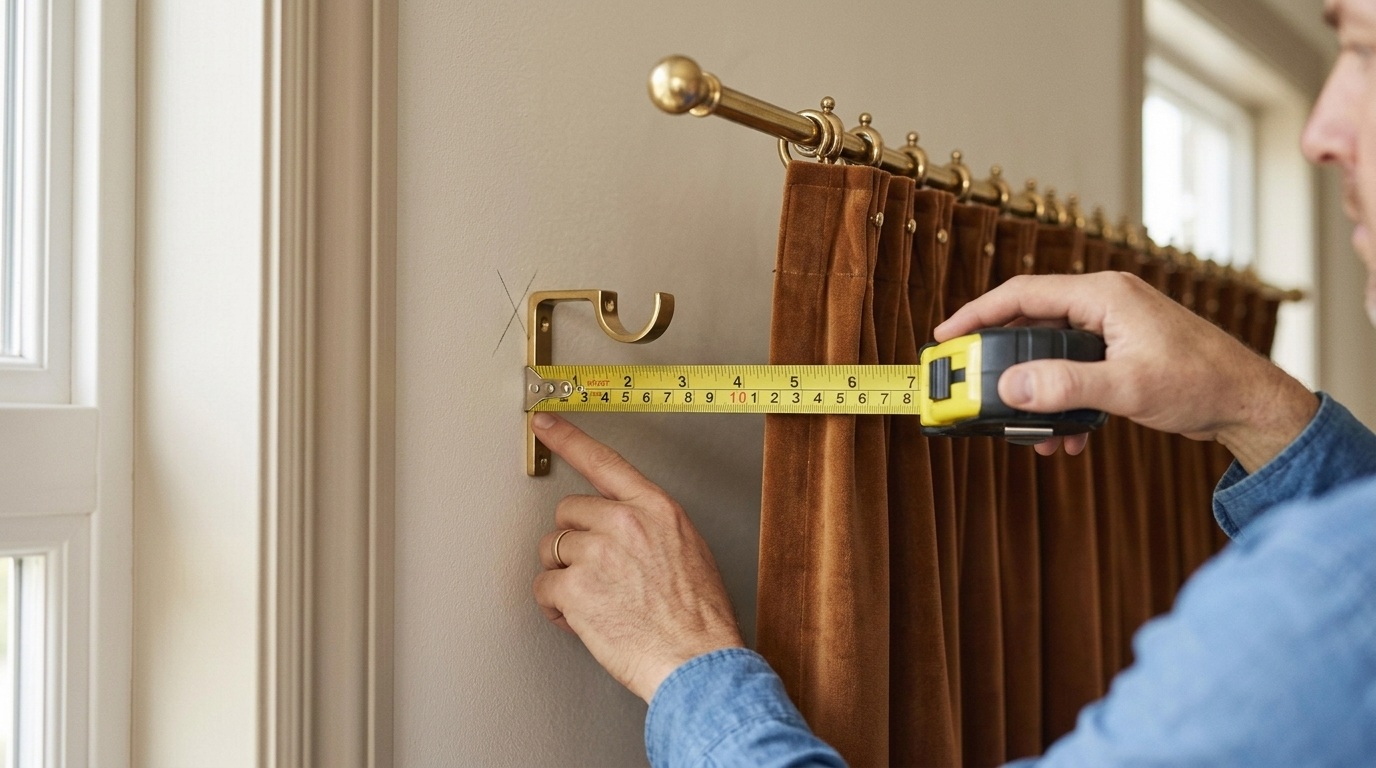
Measure the window from one outer edge of the frame to the other. For an outside mount, plan enough extra rod length on both sides so the curtains can move past the window when open.
A common starting point is 3 to 6 inches of extra space per side, but the amount may need to change based on the curtain fullness, rod length, and available wall space.
Also check the area above and beside the window. Make sure the brackets will sit on a suitable surface and will not interfere with trim, molding, doors, or nearby fixtures.
Mark and Level the Bracket Positions
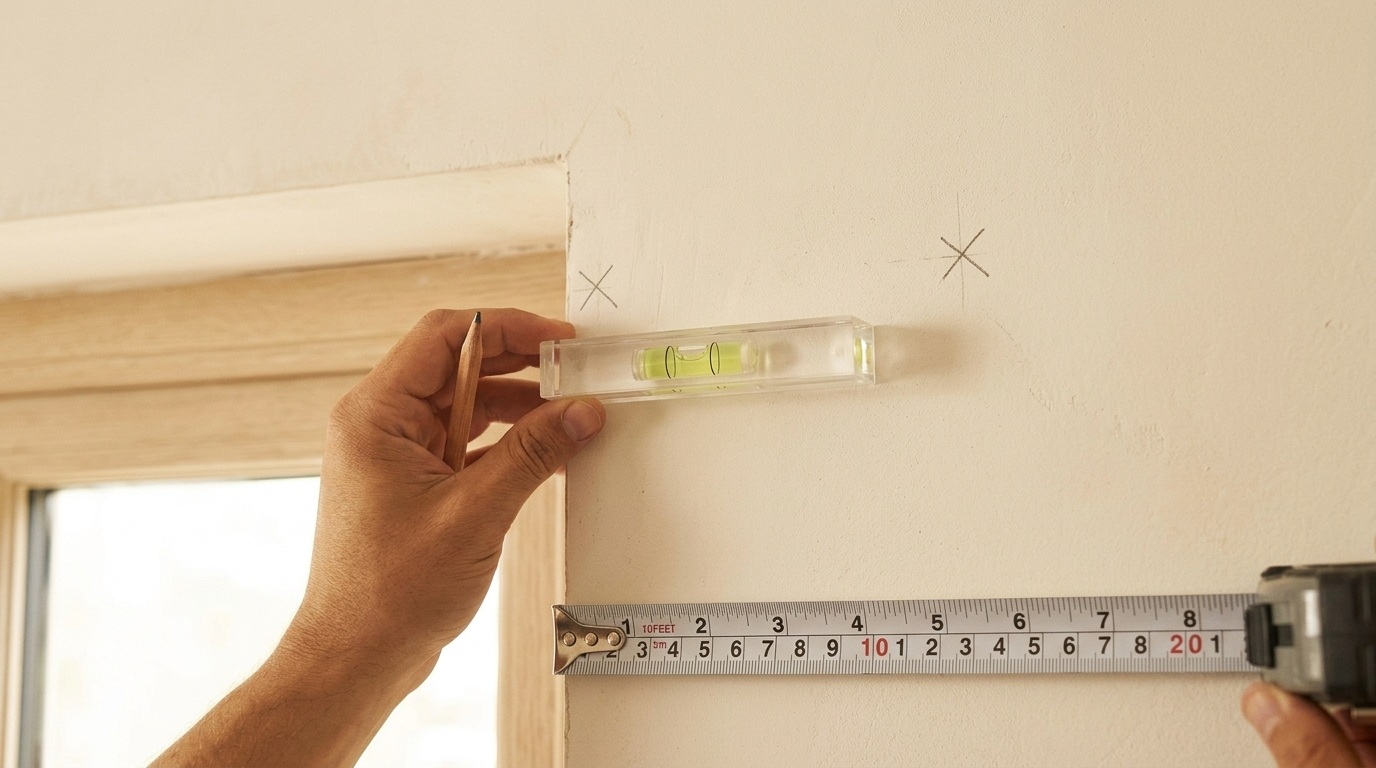
Mark the planned locations for the two end brackets with a pencil. Measure from the same reference point on both sides so the brackets are positioned at matching heights.
Place a level across the marks before drilling. A small difference in height can become obvious once the rod and curtains are installed, especially across a wide window.
Check the Curtain and Rod Length
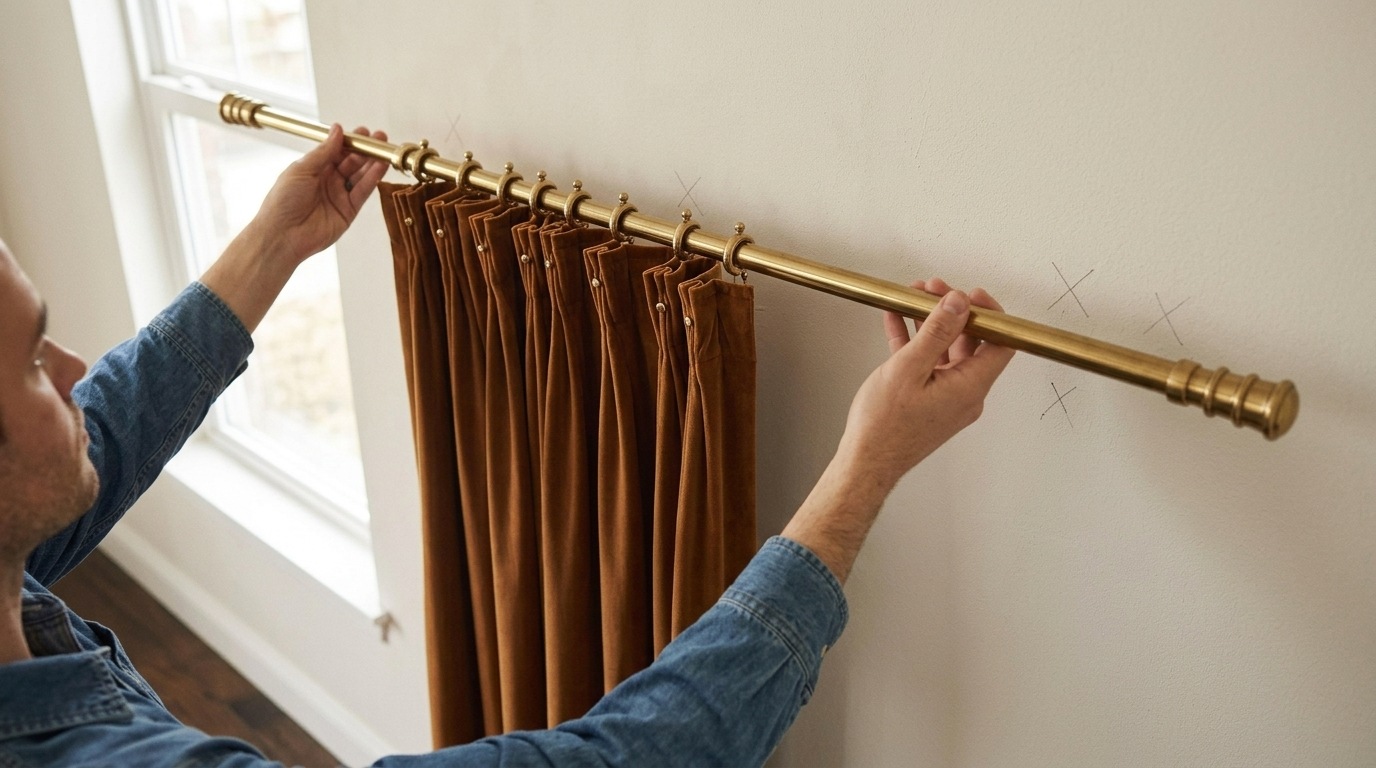
Before finalizing the bracket height, check the actual curtain length and rod dimensions. Floor-length curtains need enough height to reach the floor without leaving an unwanted gap or creating excessive pooling.
If possible, place one curtain panel on the rod temporarily. This lets you see how the fabric falls before you make permanent holes in the wall.
How High Should Curtain Rod Brackets Be?
For most outside-mounted curtains, 4 to 6 inches above the top of the window frame is a practical starting point. However, the best height depends on the ceiling, curtain length, window trim, and the look you want.
Standard Curtain Rod Height
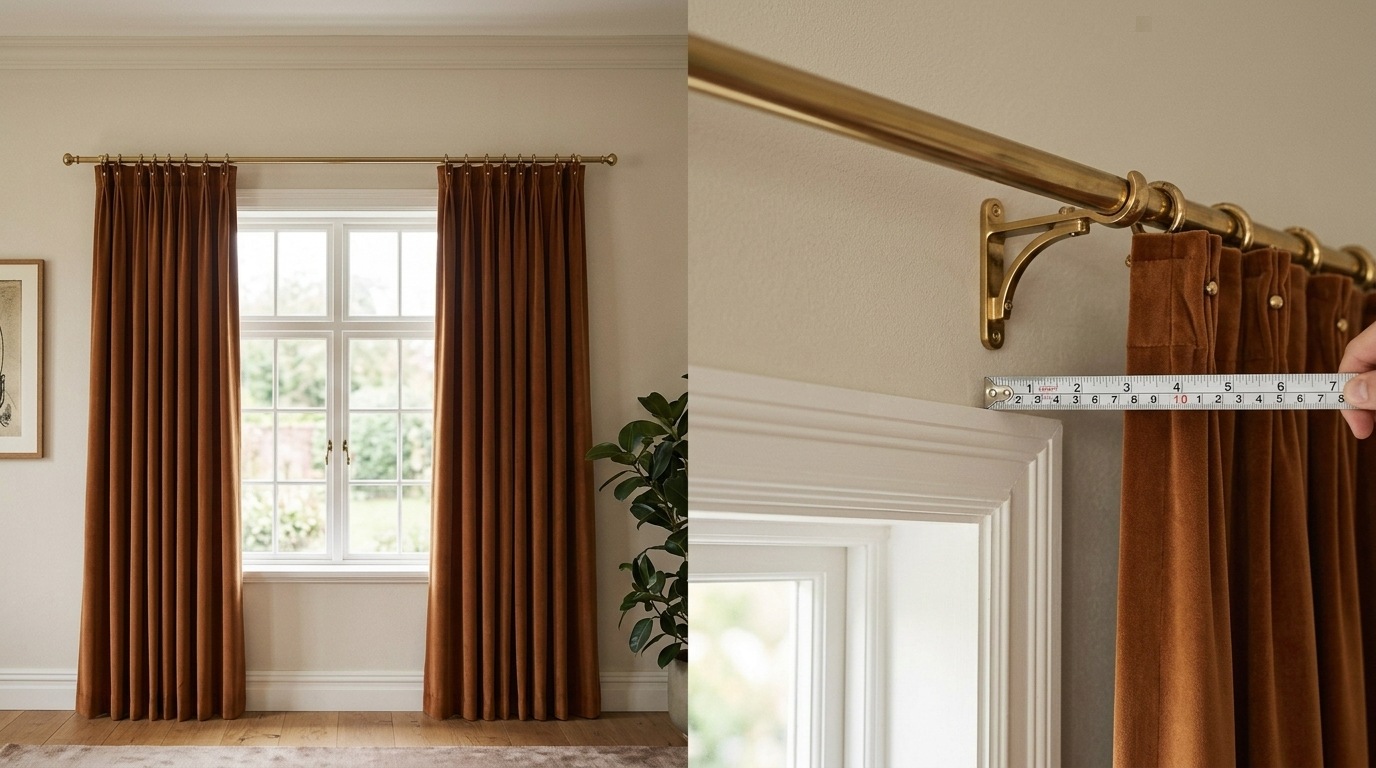
Mounting the brackets several inches above the window frame creates space between the frame and rod while allowing the curtains to cover the window properly.
It can also make the window appear taller than it would with the rod mounted directly against the frame.
The bracket should still leave enough clearance for the curtain to hang freely without rubbing against the window trim or hardware.
Ceiling-Height Curtain Rod Placement

For a taller appearance, you can position the rod closer to the ceiling rather than directly above the window. This approach works particularly well when the curtains are long enough to reach the floor from the higher position.
Do not raise the rod simply for appearance if your curtains are too short. Check the curtain length first so the finished installation does not leave an unwanted gap.
How Curtain Length Affects Rod Height
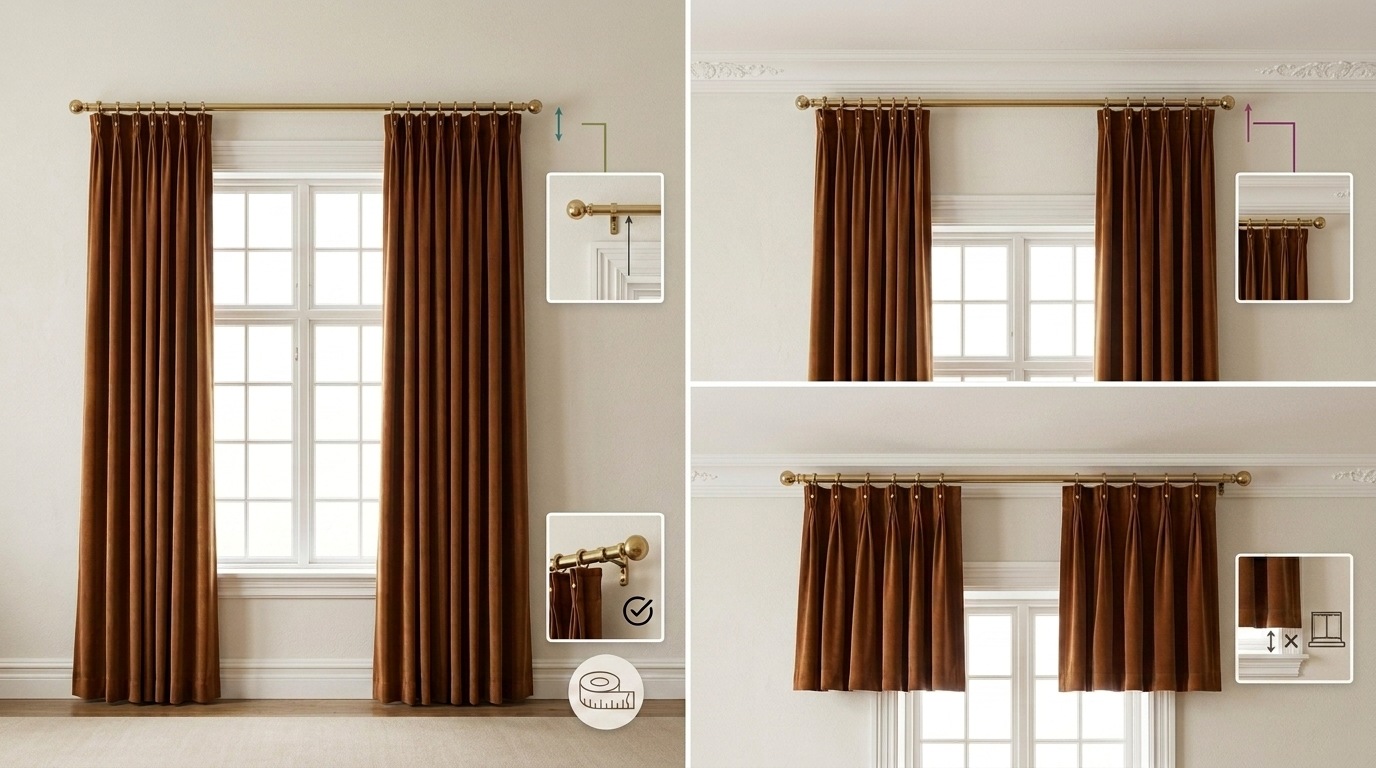
Curtain length should be one of the final checks before you drill. A floor-length panel may require a higher rod position than a shorter curtain, while a shorter panel may look better with a lower placement.
Hold or temporarily hang a panel at the proposed height to confirm where the bottom edge will fall. This simple check can prevent you from having to move the brackets later.
How Far Apart Should Curtain Rod Brackets Be?
- Bracket spacing depends on the rod length, curtain weight, rod material, and the manufacturer’s support requirements.
- Place the end brackets far enough apart to support the rod while leaving enough room for the curtains to move freely.
- For an outside-mounted curtain rod, position the end brackets near the planned rod ends rather than directly against the window frame.
- A common starting point is about 2 to 4 inches inward from each rod end, but the exact position depends on the bracket design and usable rod length.
- Heavy curtains, blackout panels, and layered treatments require stronger support than lightweight curtains.
- Use brackets and wall fasteners rated for the expected load and follow the recommended spacing.
Where Should Brackets Go on Different Windows?
Bracket placement depends on the window’s shape, width, and available wall space. Measure the window and surrounding area first to ensure the brackets support the rod while allowing the curtains to open and close smoothly.
Standard Window
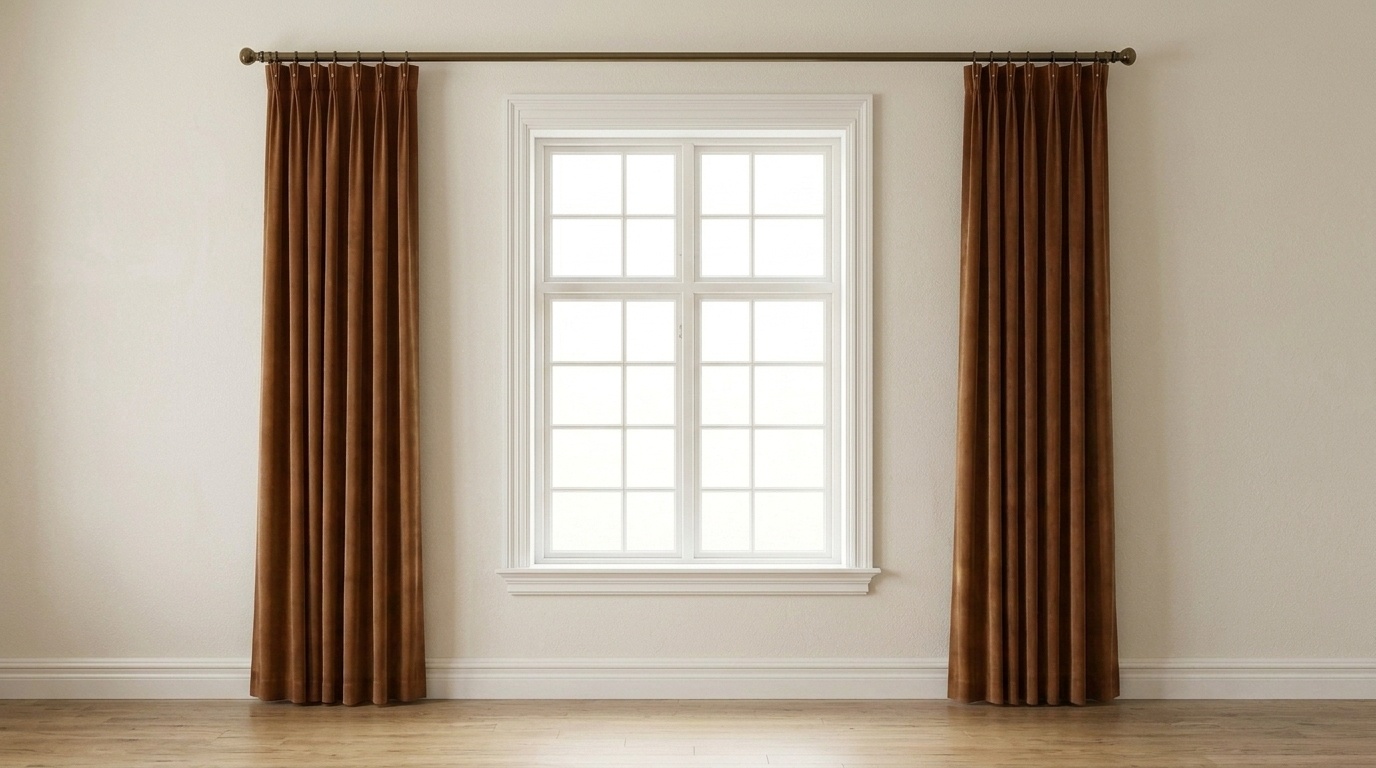
Use two end brackets positioned near the planned ends of the rod. Keep enough space between the brackets to support the rod without restricting curtain movement.
Add a center support if the rod is long or the curtains are heavy. Check the rod manufacturer's instructions for recommended support spacing. Make sure the brackets are attached securely to the wall or suitable support.
Wide Window
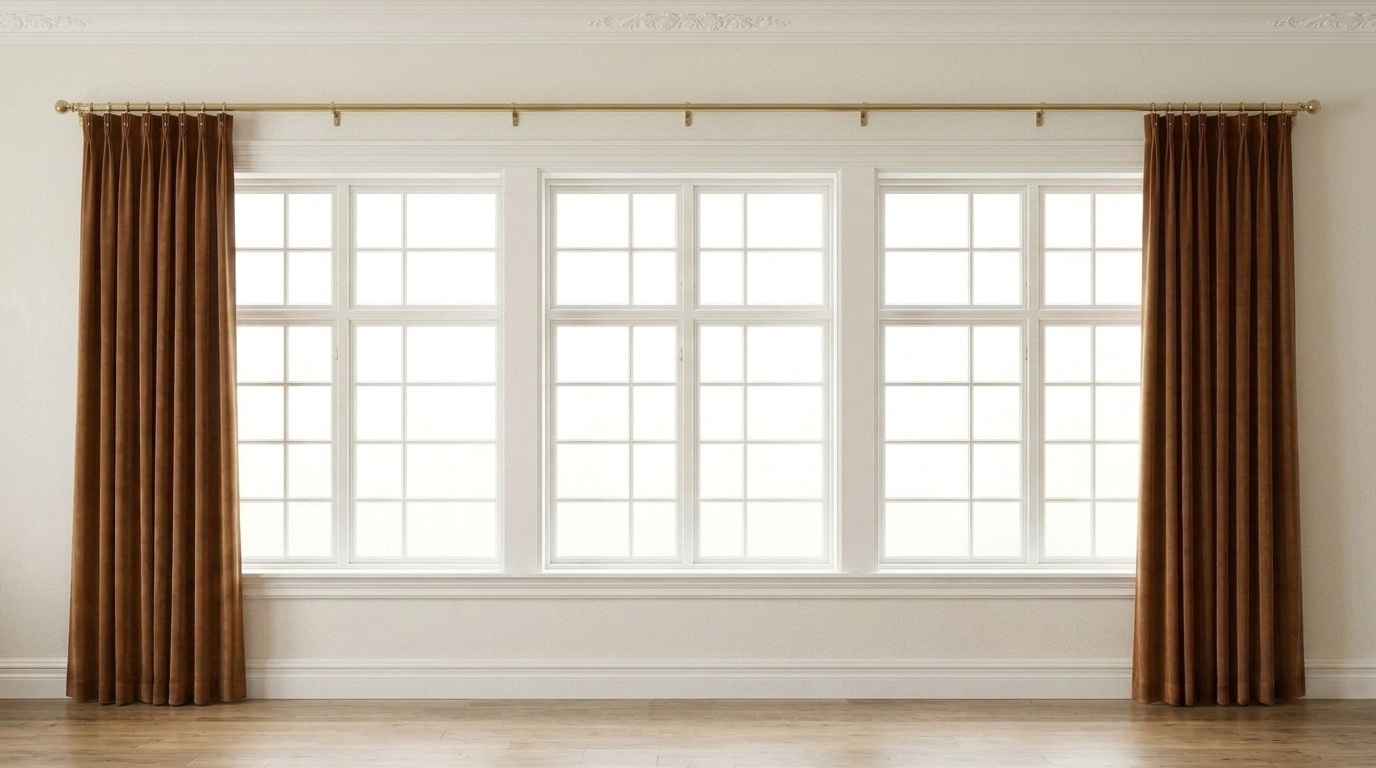
Wide windows usually need additional support to prevent the rod from sagging. The number and position of brackets depend on the rod length, material, diameter, and curtain weight.
Place the end brackets near the rod ends while keeping the curtains clear of the window.Add center or additional support brackets when recommended by the manufacturer.Use suitable wall fasteners that can support the expected load.
Sliding Glass Door

Extend the rod beyond the door opening so the curtains can move fully to one or both sides.Position the brackets far enough from the opening to provide enough stackback space.
Check that the curtains will not interfere with the door handles or sliding path.A wider rod may require a center support to prevent sagging. Make sure the brackets and fasteners can handle the weight of the larger curtain panels.
Bay Window
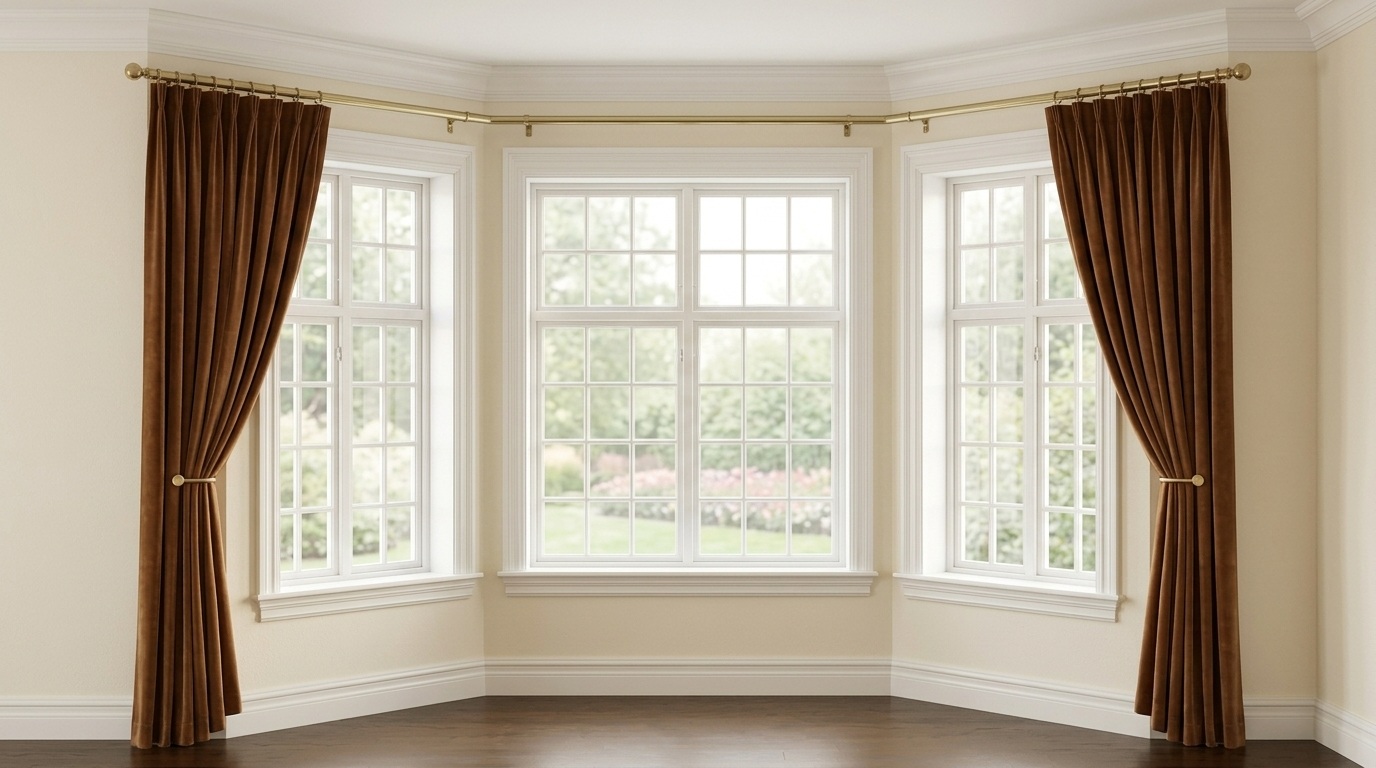
Measure each section of the bay window separately before deciding where the brackets should go. The rod may require multiple brackets because of the different angles and sections.Position each bracket to support the rod without blocking curtain movement.
Check the corners carefully so connected rods can turn without catching the fabric.Follow the hardware manufacturer's instructions for support points and corner connections.
Corner Window
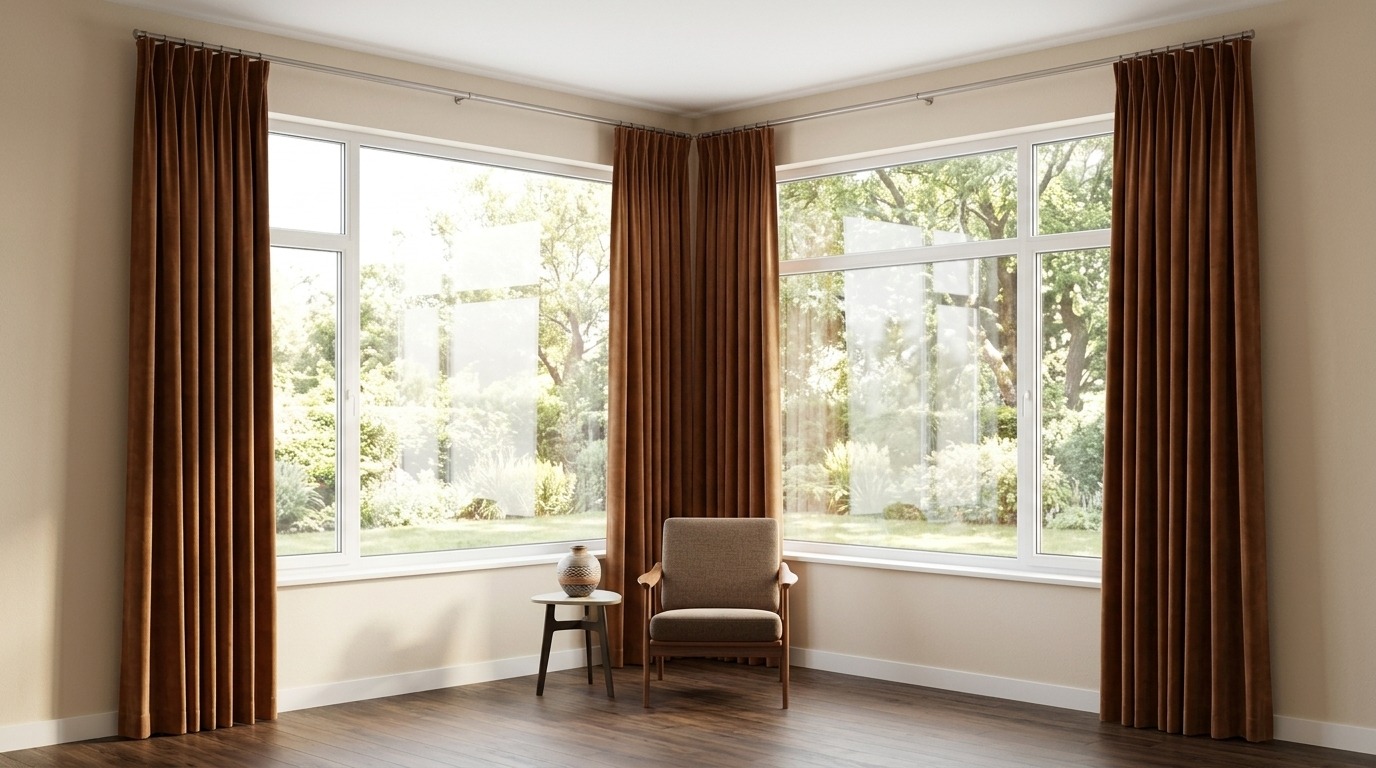
Leave enough clearance at the corner for the rod and curtains to move freely. Position the brackets so the rod can turn or connect without pressing against the wall.
Check nearby trim, molding, and other features that could limit curtain movement. Measure both window sections before marking the bracket locations. For heavier curtains, add support where needed to keep the connected rod stable.
Inside Mount vs. Outside Mount Curtain Rods
The mounting position affects both the appearance and function of the curtain treatment.
An outside mount places the rod on the wall around the window, while an inside mount positions the hardware within the window opening when the window and hardware design allow it.
| Feature | Inside Mount | Outside Mount |
| Bracket location | Within the window opening | On the wall around the window |
| Best suited for | Compatible recessed installations | Most standard curtain installations |
| Window coverage | Follows the opening | Can extend beyond the frame |
| Light control | Depends on curtain and opening | Can reduce side light gaps |
| Visual effect | Keeps the treatment within the opening | Can make the window appear taller or wider |
For a typical curtain rod, outside mounting is often the more practical option because it provides space for the curtains to stack beside the window. Always check the hardware instructions before choosing an inside installation.
What Are Common Curtain Rod Bracket Placement Mistakes?
Small placement errors can affect how curtains hang, how much light enters the room, and how securely the rod stays mounted. Check the bracket position, wall support, and curtain clearance before drilling.
Mounting too close to the window frame: Curtains may cover more of the glass when open and have less room to stack beside the window.
Skipping the level check: Even a slight difference between bracket heights can make the rod and curtains look uneven.
Using unsuitable anchors: Fasteners must match the wall material and support the expected weight of the rod and curtains.
Adding too little support: Long or heavily loaded rods may sag when they lack adequate support.
Placing brackets too low: A low rod position can reduce the amount of wall space above the window and may not work with the planned curtain length.
How Do You Fix Incorrect Curtain Rod Bracket Placement?
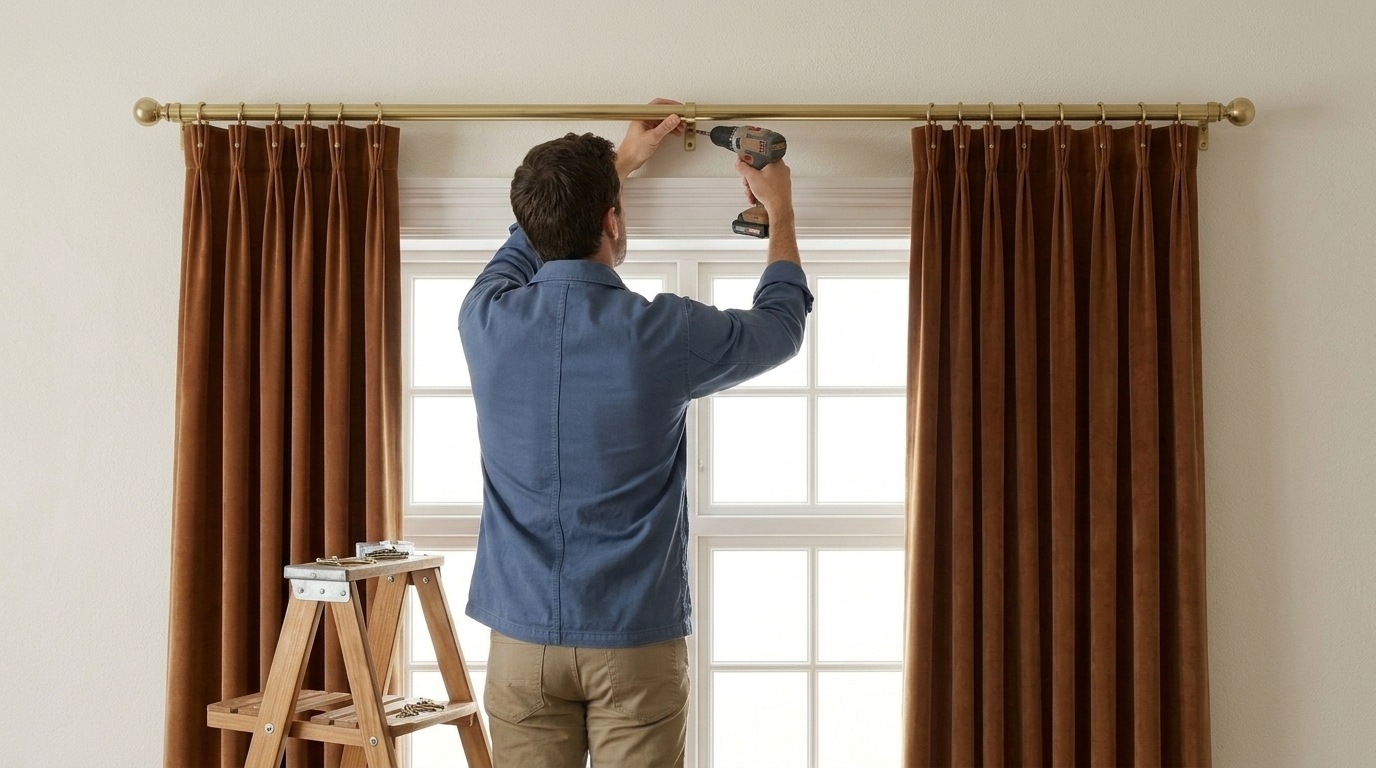
If the brackets are already installed in the wrong positions, remove the rod and curtains before making changes. Determine whether the problem is the height, spacing, level, wall support, or curtain clearance.
Remove the brackets and repair damaged wall holes with a suitable patching material for the wall surface. Allow the repair to dry, then smooth the area before marking the new positions.
Avoid placing new fasteners too close to damaged holes because the surrounding material may not provide enough holding strength.
Remeasure the window and curtain dimensions, then mark the new bracket locations with a level. If possible, move the brackets to sound wall material or a stud rather than relying on a weakened mounting point.
What Tips Make Curtain Rod Bracket Placement Easier?
A few simple checks can make installation easier and help prevent problems after the curtains are hung.
- Test one curtain panel first to check its length, clearance, and appearance before drilling every bracket.
- Use a level to keep the bracket marks and installed rod straight.
- Match the fasteners to the wall material and expected curtain load.
- Plan enough space beside the window for the curtains to stack when open.
- Follow the manufacturer’s instructions for bracket locations, load limits, and support requirements.
- Check that the brackets will not interfere with trim, molding, doors, handles, or nearby fixtures.
Conclusion
Correct curtain rod bracket placement starts with measuring the window, choosing the right height, allowing enough side clearance, and providing adequate support for the rod and curtains.
Use the manufacturer's instructions when they differ from general placement guidelines, especially for long rods or heavy curtain panels.
Before drilling, mark every bracket location, check the measurements with a level, and confirm that the wall fasteners suit the mounting surface.
Your next step is to measure the window and curtain length, then mark the bracket height and side clearance before installing the hardware.
Frequently Asked Questions
Can I use the same brackets for curtains and blinds?
Not usually. Curtain rods and blinds use different mounting hardware, so use brackets designed for the specific product you are installing.
Do curtain rod brackets work on plaster walls?
They can, but the fasteners must be suitable for plaster and the underlying wall structure. Follow the anchor manufacturer's instructions and drill carefully to reduce the risk of cracking.
How much weight can a curtain rod bracket hold?
The capacity varies by bracket design, mounting method, wall material, and fastener. Check the manufacturer's stated load rating and make sure the complete installation can support the rod and curtains.
Should curtain rod brackets match the rod finish?
Matching finishes can create a consistent appearance, but they are not required for proper installation. The bracket's size, compatibility, and load capacity matter more than its finish.
Can I install curtain rod brackets without drilling?
Some tension rods and adhesive-mounted products can be installed without drilling. Their load limits and surface requirements vary, so they are generally better suited to compatible lightweight curtains unless the product states otherwise.