
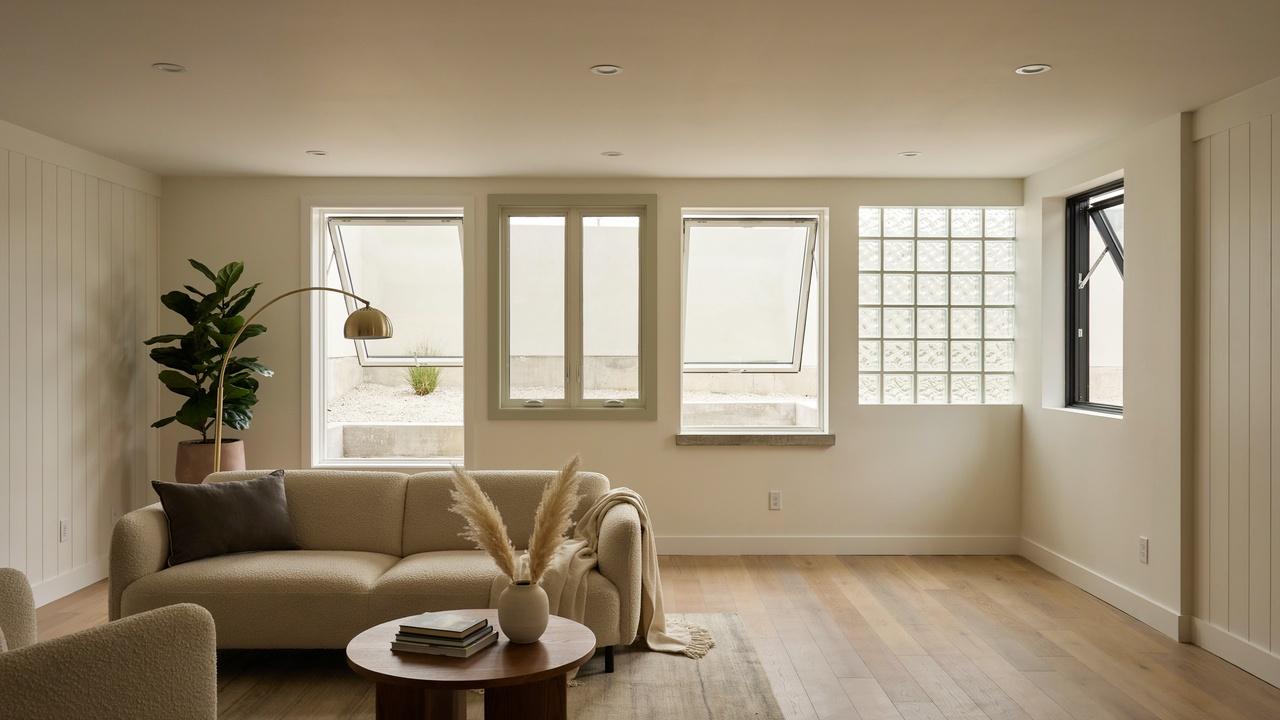
Picking the right basement window type is harder than it looks.
With so many styles, materials, and code requirements to sort through, most homeowners end up overwhelmed before they even start.
This guide covers everything you need to know about basement window types, from hopper and casement windows to glass block and egress options.
You will learn which styles work best for bedrooms, utility spaces, and finished basements, plus what materials last longest in damp conditions.
Having worked through dozens of basement renovation projects, I know firsthand how the wrong window choice can lead to leaks, poor airflow, and costly fixes down the road.
How Do You Choose the Right Basement Window?
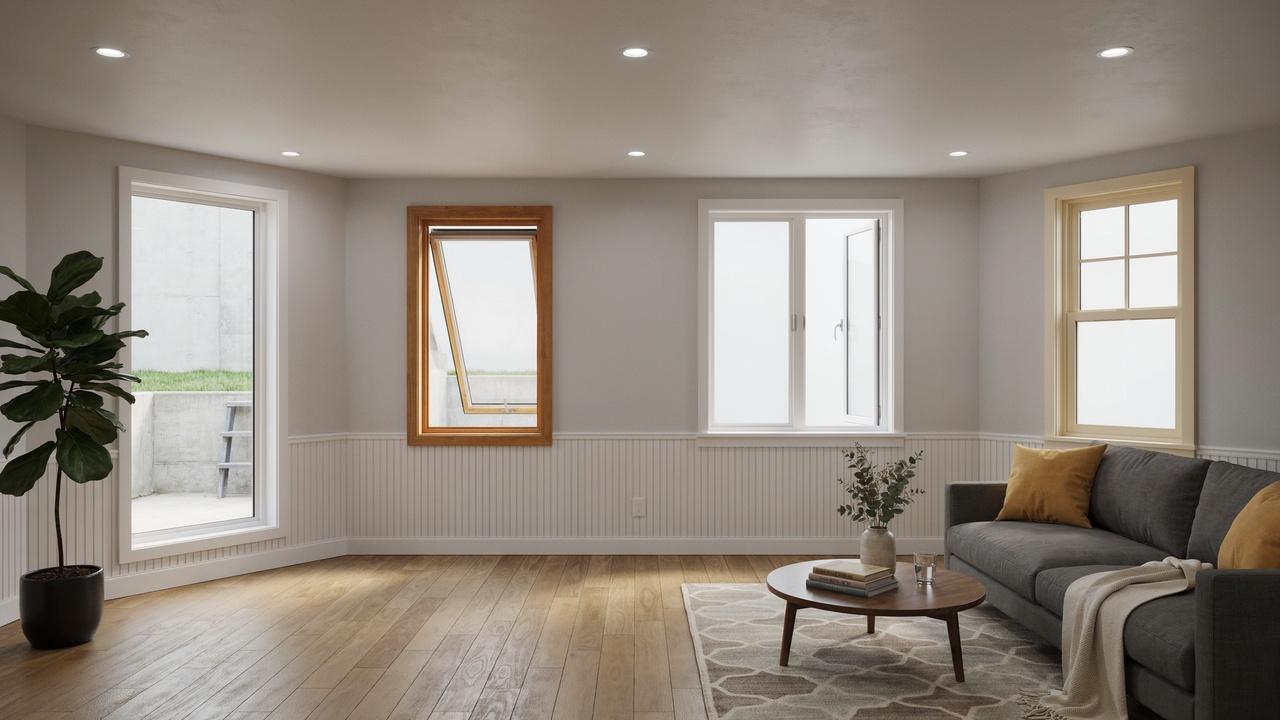
Choosing a basement window is not just about looks. It depends on how you use the space, what your local codes require, and what conditions your basement deals with year-round.
Start by asking a few basic questions. Is the basement finished or unfinished? Do you need ventilation, natural light, or both? Is this space being used as a bedroom, a home gym, or just storage? Each answer points you toward a different window type.
Egress requirements matter a lot here. If anyone sleeps in the basement, most building codes require a window large enough to serve as an emergency exit.
That rules out fixed and glass block windows entirely for those rooms.
You also need to think about your wall thickness, the size of your existing rough opening, and how much excavation you are willing to do outside.
Some window styles need a larger opening or a window well to function properly.
Budget is always part of the equation too. Costs vary widely depending on the style, material, and whether you are replacing an existing window or cutting a new opening entirely.
What Are the Different Types of Basement Windows?
Basement windows come in several styles, and each one works better in certain situations than others.
Hopper Windows
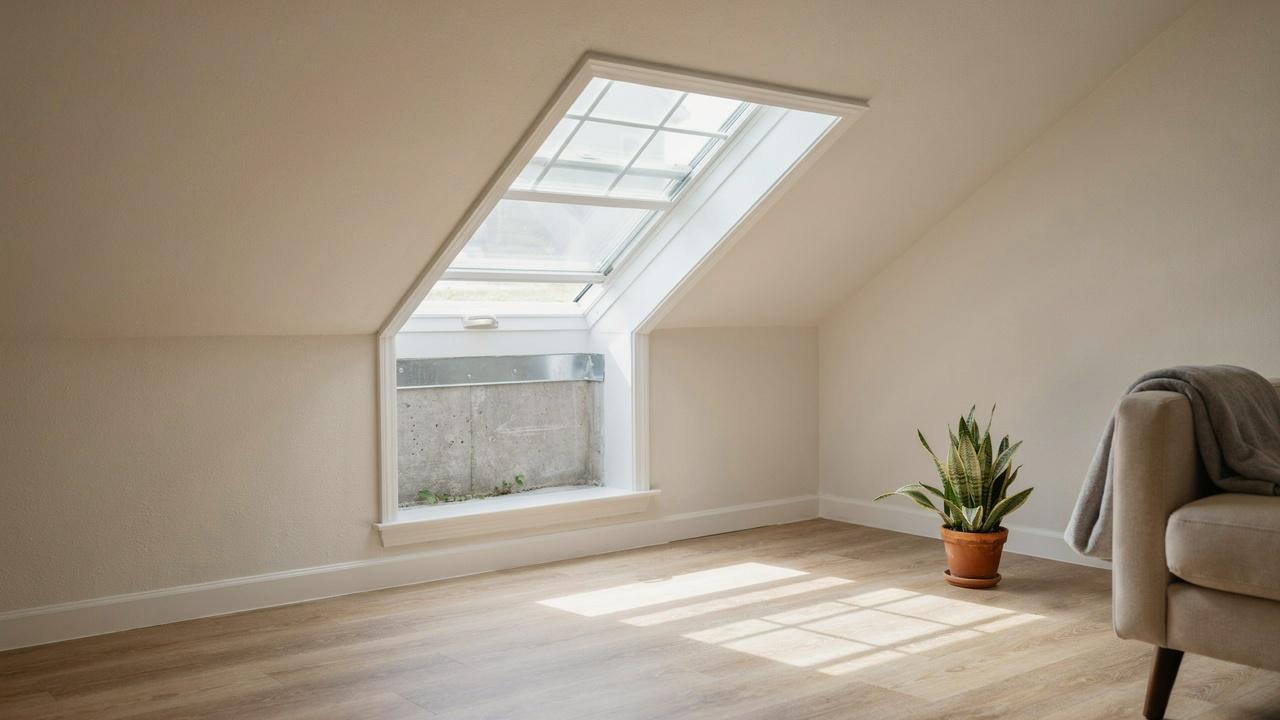
Hopper windows are the most common basement window type. They are hinged at the bottom and tilt inward from the top.
This design makes them a natural fit for narrow basement openings because they do not need much vertical space to operate.
They provide decent ventilation and can meet egress requirements when sized correctly.
The inward-opening design also helps redirect rainwater away from the opening, which is a practical advantage at ground level.
Sliding or Gliding Windows
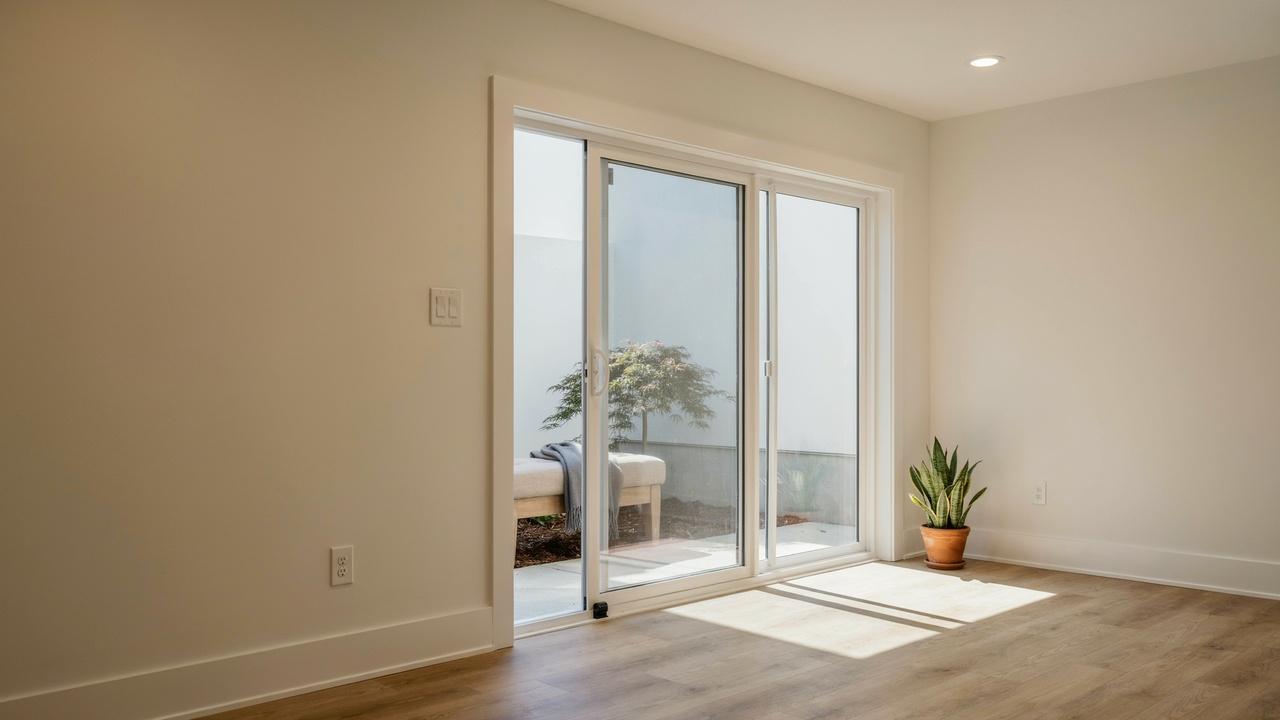
Sliding windows move horizontally along a track. They are simple to operate and work well in wider openings where you want more glass and better airflow without the complexity of a crank mechanism.
One drawback is that only half the window opens at a time, which limits airflow compared to a fully opening style.
However, they are durable, low-maintenance, and a good fit for semi-finished or utility basements.
Casement Windows
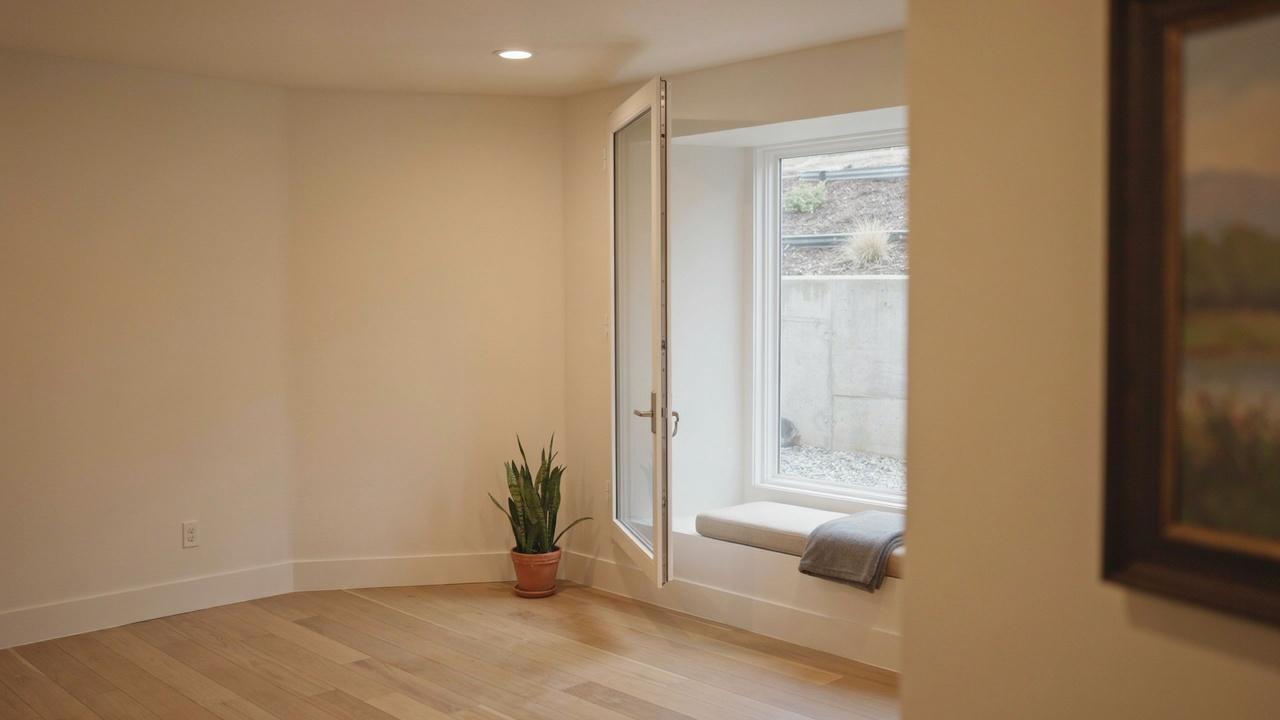
Casement windows are hinged on one side and swing outward with a crank handle.
They provide full ventilation across the entire opening, which makes them one of the best options for basement rooms that need reliable airflow.
They also seal tightly when closed, which improves energy efficiency.
Many casement windows can qualify as egress windows depending on their size, making them a popular choice for basement bedrooms.
Awning Windows

Awning windows are hinged at the top and open outward from the bottom.
They can remain open during light rain without letting water in, which makes them a practical option for basements in wetter climates.
They offer good ventilation and a tight seal when closed. The main limitation is that they usually require a window well if installed near grade level, since the outward swing needs clearance.
Single-Hung and Double-Hung Windows
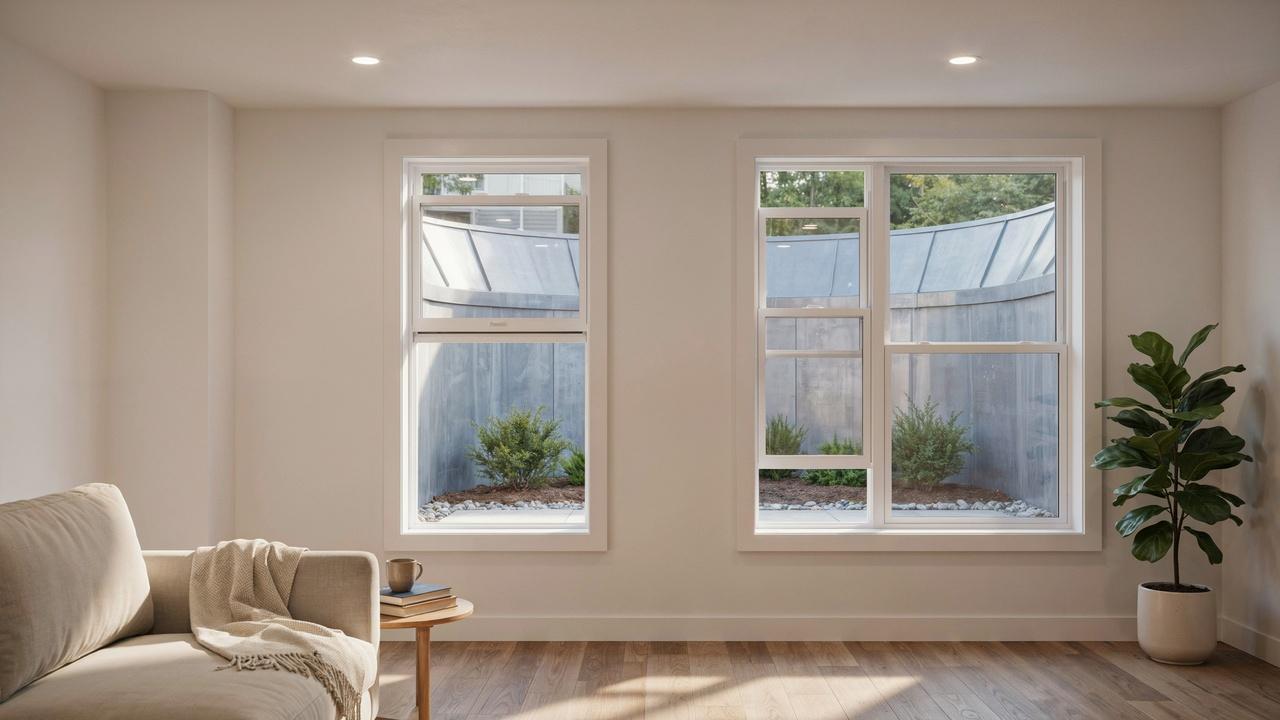
Single-hung windows have a fixed upper sash and a lower sash that slides up. Double-hung windows allow both sashes to move, which improves airflow and makes cleaning easier.
These styles are more commonly seen in above-grade applications, but they can work in basements with taller wall openings.
They tend to be a better fit for walk-out basements where the window sits higher on the wall.
Fixed or Picture Windows

Fixed windows do not open. They exist purely to bring in natural light. Since they have no moving parts, they are simple, affordable, and very energy-efficient.
The downside is obvious: no ventilation and no egress capability. Fixed windows work best in utility areas, laundry rooms, or any space where light matters but airflow and emergency exit do not.
Glass Block Windows
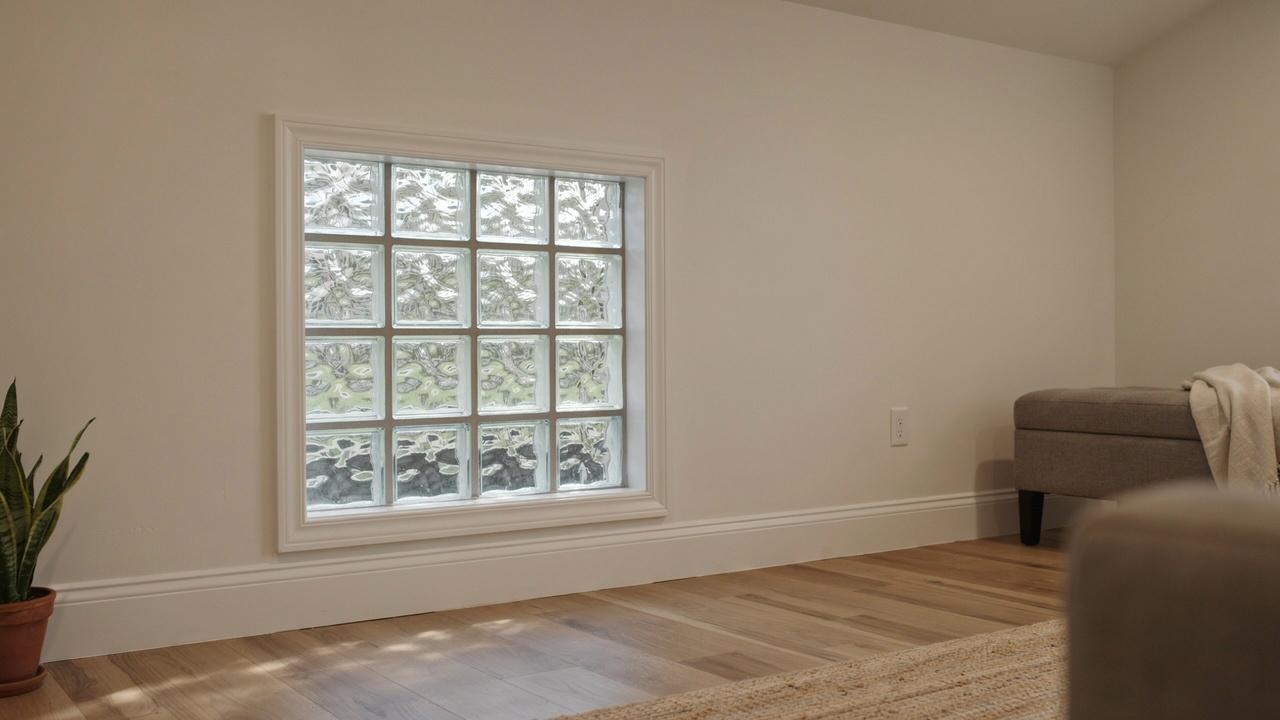
Glass block windows are built from individual glass blocks mortared together.
They are extremely durable, highly resistant to moisture and intrusion, and block outside views completely.
They let in diffused light but no airflow, and they cannot serve as egress exits.
These are most often used in unfinished basements, utility rooms, or anywhere security and moisture resistance are the top priorities.
Which Basement Window Type Is Best for Your Needs?
Not every window style suits every situation. Here is how to match the right type to what your basement actually needs.
Best for Basement Bedrooms and Egress
If someone is sleeping in the basement, egress compliance is not optional.
Casement windows are the top choice here because the full opening they create tends to meet minimum size requirements more easily.
Hopper windows can also qualify, but you need to check the specific dimensions against your local code.
The opening must typically be at least 5.7 square feet with a minimum height and width, and the sill must not be too high off the floor.
Best for Ventilation
Casement windows deliver the most airflow because the entire opening is unobstructed. Awning windows are a close second and have the added advantage of working in light rain.
Hopper windows also ventilate well for their size, which is why they remain so popular in standard basement openings.
Best for Natural Light
Fixed windows and glass block windows bring in the most consistent light since they cover the full opening without a sash or crank mechanism breaking up the glass area.
If you want light and ventilation together, casement or awning windows with large glass panels are your best bet.
Best for Small Basement Openings
Hopper windows are built for this. Their compact design fits standard basement rough openings without requiring any structural modification.
Sliding windows also work well in wider but shorter openings.
Best for Finished Basements
Casement, awning, and double-hung windows all work well in finished basement spaces because they look polished, operate smoothly, and tend to offer better insulation.
For basement bedrooms, egress compliance is still the first priority, but all three styles can be sized to meet those requirements.
Best for Unfinished or Utility Basements
Glass block windows and hopper windows are the practical choices here.
They are cost-effective, moisture-resistant, and built to handle the less controlled conditions of an unfinished space.
What Materials Are Best for Basement Windows?
The frame material you choose affects durability, maintenance, energy performance, and cost.
Vinyl is the most popular choice since it resists moisture, needs little upkeep, and stays affordable.
Fiberglass costs more but holds its shape better in extreme temperatures. Aluminum is strong and slim-framed but conducts cold quickly, which can cause condensation.
Wood is a poor fit for basements since it absorbs moisture and rots over time.
Composite frames offer wood-like strength with better moisture resistance, making them a solid pick for finished spaces.
How Do Basement Window Types Compare?
It helps to see how the different styles stack up across the performance areas that matter most in a basement setting.
Here is a comparison table for basement window types across key performance areas:
| Feature | Casement | Awning | Hopper | Sliding | Fixed | Glass Block |
| Ventilation | Best, full opening unobstructed | Good, works in light rain | Good for its size | Half opening only | None | None |
| Natural Light | Good with large panes | Good with large panes | Moderate | Moderate | Best per sq ft | Diffused, low clarity |
| Energy Efficiency | High, seals tightly | High, seals tightly | Moderate, seal can wear | Moderate, seal can wear | High, no moving parts | High, no moving parts |
| Moisture Resistance | Moderate, exposed to driving rain | Good, stays open in rain | Good, tilts rain away | Moderate, track can collect water | High | Highest by design |
| Maintenance | Moderate, crank needs care | Moderate, crank needs care | Low, occasional track clean | Low, occasional track clean | Very low | Lowest |
| Security | High, locks tightly | Moderate | Moderate with proper latch | Lower, can be lifted off track | High | Highest, nearly unbreakable |
What Features Should You Look for in Basement Windows?

Beyond the style and material, several specific features make a meaningful difference in how a basement window performs over time.
Double-Pane and Insulated Glass
Single-pane glass loses heat quickly and is prone to condensation in cold weather. Double-pane windows have two layers of glass with a sealed gas-filled space between them.
This reduces heat loss, cuts down on condensation, and makes the basement noticeably warmer in winter.
For basements in colder climates, triple-pane glass is worth considering in windows that face the most exposed directions.
Low-E Glass
Low-emissivity coatings are applied directly to the glass surface during manufacturing.
They reflect heat back into the room during winter and block solar heat gain during summer without significantly reducing the amount of light coming in.
Low-E glass is a cost-effective upgrade that improves year-round comfort in finished basements.
Weatherstripping and Tight Seals
The seal around an operable window is where most air leakage happens. Look for windows with compression seals rather than simple brush seals.
The frame-to-rough-opening seal is just as important: proper flashing and foam insulation during installation prevent drafts and moisture from working in around the edges of the frame.
Screens and Security Locks
Screens keep insects out when the window is open for ventilation.
For basement windows, screens with a fine mesh work better since they sit closer to ground level and are more likely to encounter small bugs, debris, and moisture.
Security locks add a layer of protection beyond the basic latch, which is worth considering for basement windows that face secluded or less visible areas of the property.
Easy-to-Operate Hardware
Hardware that is hard to use often means the window stays closed. In an egress situation, a window that sticks or requires significant effort to open can be dangerous.
Look for crank handles, latches, and tilt mechanisms that operate smoothly and do not require tools.
Test the hardware before purchasing, especially if the window will be used daily for ventilation.
How Much Do Basement Windows Cost?
Costs vary widely depending on what you are installing and where, but having a general range helps you plan without surprises.
| Category | Item | Cost / Detail |
| Cost by Type | Hopper | $100 to $300, most affordable option |
| Sliding | $100 to $300, similar range to hopper | |
| Casement | $200 to $600, varies by size and features | |
| Awning | $200 to $600, varies by size and features | |
| Fixed | $80 to $500+, depends heavily on glass size | |
| Egress-Sized (any style) | Higher than standard, larger opening adds to unit cost | |
| Cost by Material | Vinyl | $100 to $350, least expensive material |
| Aluminum | $150 to $400, slightly higher than vinyl | |
| Fiberglass | $300 to $800+, more for larger sizes | |
| Composite | $300 to $800+, worth it for finished basements | |
| Wood | Highest cost, rarely worth it for basements | |
| Installation Costs | Window Replacement (labor) | $200 to $500, existing opening swap |
| New Opening Through Concrete | $1,000 to $3,000+, depends on wall and rates | |
| Basic Steel Window Well (unit) | $50 to $200, galvanized steel unit only | |
| Full Egress Well With Excavation | $500 to $2,000+, includes labor and digging | |
| Factors Affecting Cost | Foundation Wall Type | Concrete and block cost more to cut than wood-framed walls |
| Local Labor Rates | Varies significantly by region | |
| Permit Requirements | Adds cost and timeline | |
| Rough Opening Complexity | Non-standard sizes increase labor | |
| Flashing and Drainage Work | Adds cost if existing setup needs redoing |
What Should You Know About Basement Window Installation?
Installing a basement window is not a straightforward DIY project for most homeowners.
The process varies depending on whether you are replacing an existing window or creating a new opening.
For a simple replacement in an existing frame, the process involves removing the old window, cleaning up the rough opening, checking for moisture damage, installing the new unit with proper flashing, sealing around the frame with foam and caulk, and reinstalling any trim.
A handy homeowner can manage this with basic tools.
Creating a new opening is a different level of work entirely. It involves cutting through the foundation wall, which usually requires a concrete saw or a core drill for round openings.
The structural integrity of the wall must be maintained throughout the process.
In most cases, this means installing a temporary support before cutting, then adding a proper lintel or header above the new opening.
Permits are typically required for new openings and sometimes for egress window installations. Always check with your local building department before starting work.
Installing an egress window without the required permit can create problems when you sell the home.
Waterproofing around the frame is critical. Even a small gap between the frame and the foundation wall can let in significant amounts of water over time.
Use a combination of expanding foam, flashing tape, and exterior caulk rated for below-grade use.
What Are the Most Common Basement Window Problems?
Knowing the most common problems makes it easier to spot them early and fix them before they become expensive.
- Water leaking around the frame usually points to a failed seal, cracked caulk, or poor window well drainage. Reseal the frame or improve drainage to fix it.
- Condensation on the glass is common with single-pane windows in humid basements. Upgrading to double-pane glass or running a dehumidifier helps in most cases.
- Drafts come from worn weatherstripping or a damaged frame-to-wall seal. Hold your hand near the edges on a cold day to find the source, then reseal.
- Rotting wood frames and cracked vinyl or aluminum frames cannot hold a proper seal. A structurally compromised frame needs full replacement, not a patch job.
- A window well that fills with water during rain signals a drainage issue. Clear the gravel bed of debris and add a drain connection if the problem is severe.
When Should You Repair or Replace a Basement Window?

Not every problem requires a full replacement. Knowing when to repair and when to replace saves both time and money.
Signs a Basement Window Needs Replacement
A window that is rotting, cracked, or structurally damaged beyond minor surface wear should be replaced.
The same applies to windows with fogged or broken insulated glass units, since the seal failure means the insulating gas has escaped and cannot be restored.
Windows that no longer meet egress requirements in sleeping areas also need to be replaced, regardless of their physical condition.
When Window Repairs Are Enough
Replacing weatherstripping, resealing around the frame, patching minor cracks in the surrounding masonry, and repairing or lubricating hardware are all legitimate repairs that can extend a window's life significantly.
If the frame and glass are in sound condition, a targeted repair is usually the better financial choice.
Benefits of Upgrading Old Basement Windows
Newer windows bring real, measurable improvements. Better insulation reduces heating and cooling costs.
Tighter seals cut down on drafts, moisture infiltration, and the condensation problems that often come with older single-pane units.
If you are finishing the basement or converting a space for regular use, upgrading the windows is one of the most cost-effective ways to make the space more comfortable and code-compliant.
Conclusion
Choosing the right basement window type makes a real difference in how comfortable, safe, and energy-efficient your basement becomes.
From hopper and casement windows to glass block and fixed styles, each option serves a different purpose.
Matching the right type and material to your basement's actual conditions is what separates a smart upgrade from a costly redo.
Take what you have learned here and apply it to your next project.
If this guide helped you, share it with someone planning a basement renovation, drop a comment below with your questions, or check out our related articles on basement finishing and waterproofing.
Frequently Asked Questions
Can I install a basement window myself?
Simple replacements in existing openings are manageable for a handy homeowner. New openings through concrete foundations typically require professional tools and skills.
Do basement windows need to be tempered glass?
Some codes require tempered or safety glass in basement windows, especially near doors or in egress applications. Check your local building code before purchasing.
How do I stop bugs from getting in through my basement window?
Install a tight-fitting screen with fine mesh. Seal any gaps around the frame with foam and exterior caulk to block entry points around the window opening.
Can a basement window help reduce radon?
A basement window alone does not reliably reduce radon. Proper radon mitigation requires a dedicated sub-slab depressurization system installed by a certified professional.
What is the standard rough opening size for a basement window?
Standard hopper windows often fit a rough opening of around 32 by 16 inches, but sizes vary. Always measure your existing opening before ordering a replacement window.