
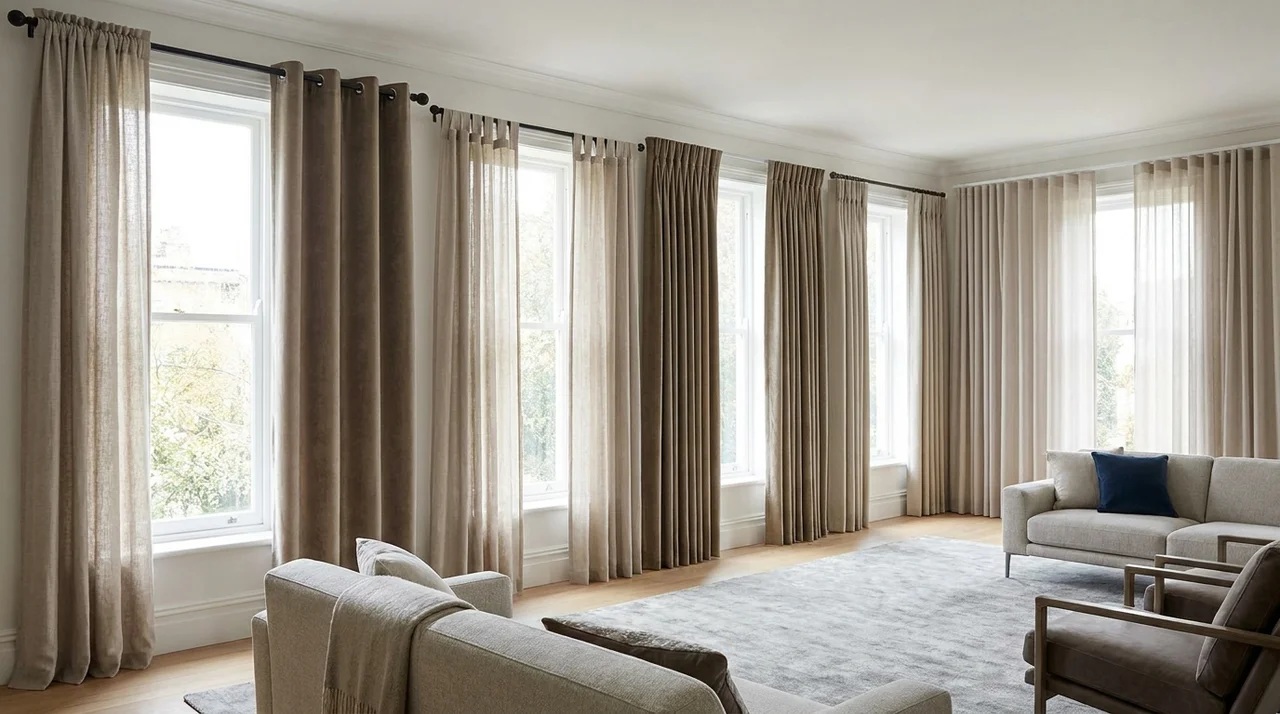
Choosing the right curtain top can feel confusing because so many styles suit different windows, rooms, and decorating needs.
The wrong choice can make curtains hang poorly, look uneven, or become frustrating to open and close every day.
This guide covers 9 types of curtain tops, explaining how each style works and where it fits best.
You will learn how rod pockets, grommets, pleats, tabs, and ripple folds differ in appearance, function, and hardware needs.
We also cover common mistakes, including choosing incompatible hardware, using the wrong fullness, and overlooking window size.
By the end, you will know what to consider before choosing a curtain top for your space.
What Are Curtain Tops and How Do They Differ?

The curtain top is the upper edge of a curtain panel that connects it to a rod, track, or hook system, and it controls how the whole curtain looks and moves.
You may also hear it called a curtain heading, drapery header, or curtain header. All of these terms refer to the same thing.
Most people focus on fabric color or length when buying curtains, but the header style quietly does most of the work.
It decides how the fabric gathers, how the curtain hangs, and whether opening and closing feels smooth or stiff. Walk into any room and the curtain top is shaping the first impression, even if you cannot name it.
Different tops create very different results. Some look casual and relaxed. Others look structured and formal.
The top also affects how much fabric you need, what hardware is required, and how much light gets blocked at the edges.
Curtain tops differ in three key ways:how they attach to the rod or track, how they fold or gather the fabric, and how they appear from the front.
9 Types of Curtain Tops Explained
There are nine distinct curtain top styles, and each one creates a different look, requires different hardware, and suits a different type of room.
1. Rod Pocket Tops for a Simple Casual Look

A rod pocket top has a sewn channel along the top of the curtain. The curtain rod slides directly through this channel. No rings or hooks are needed.
This style creates a gathered, slightly ruffled look at the top. It works well in bedrooms, kitchens, and casual living rooms.
It suits lightweight fabrics like cotton, linen, and voile. Some versions include a small header frill above the pocket, which gives a slightly more country or cottage look and is a popular choice for cafe curtains in kitchens.
The downside is that rod pocket curtains do not slide easily. Once they are on the rod, they tend to stay in place. This makes them a better fit for windows where you do not need to open and close the curtains often.
Tip: Choose a rod pocket size that matches your curtain rod diameter. A tight pocket makes installation harder and can damage the fabric.
2. Grommet Tops for Easy Opening and Closing
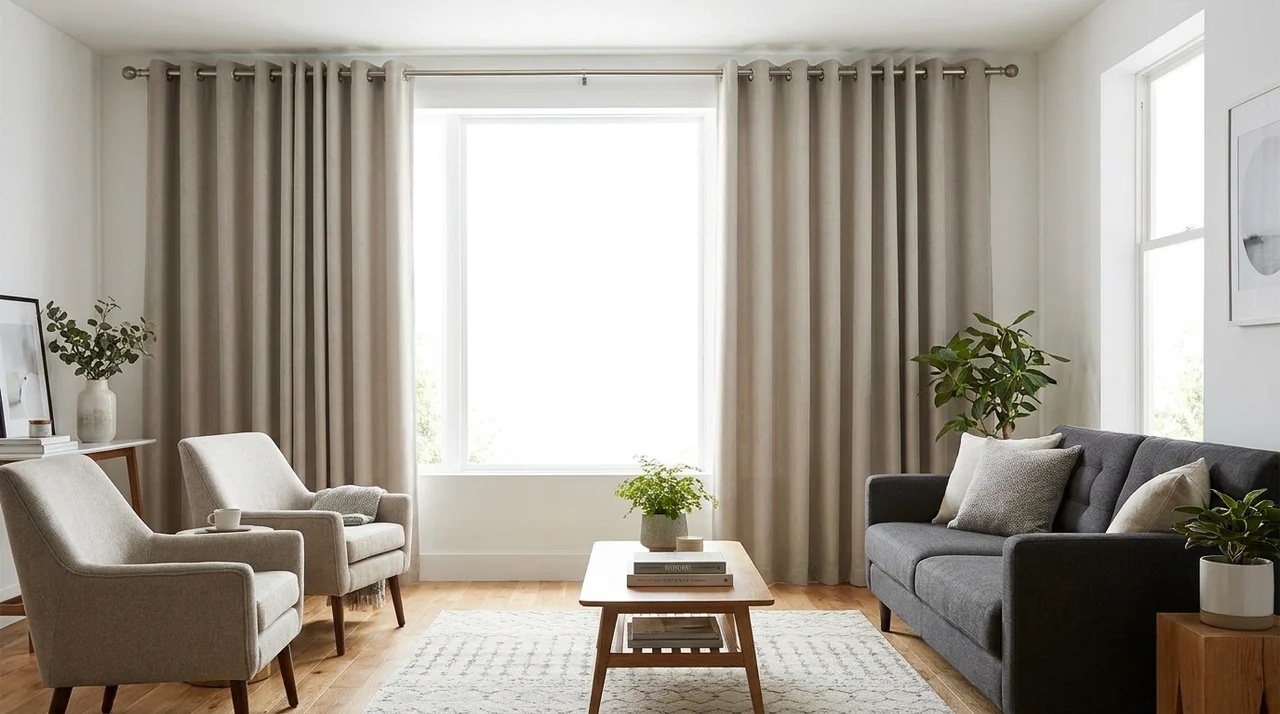
Grommet tops have metal rings punched directly into the fabric at the top of the curtain.
Also known as eyelet curtains in the UK and Australia, they are one of the most recognizable heading styles available.
The curtain rod passes through these rings. The fabric folds into soft, even pleats between each grommet.
This style is very practical. The curtains slide smoothly back and forth, which makes them great for living rooms and family rooms where you open and close them daily.
They also work well paired with a blackout lining for rooms that need full light control.
Grommet curtains have a modern, clean look. They work well with medium to heavy fabrics like polyester, velvet, and faux linen. Avoid very sheer fabrics, as the grommets can look out of place.
Tip: Make sure your curtain rod fits through the grommet holes. Check the grommet’s inner diameter before buying your curtains.
3. Tab Top Curtains for a Relaxed Decorative Look

Tab top curtains have fabric loops stitched to the top of the panel. The rod passes through these loops. The tabs are visible from the front, which adds a decorative element to the curtain.
This style has a laid-back, casual feel. It suits bohemian, rustic, and cottage-style rooms. Tab tops work well with natural fabrics like cotton and linen.
Tab top curtains do not slide as easily as grommet curtains. They are better for windows where the curtains are mostly left open or closed, rather than adjusted often.
Tab tops also cannot pass the pole support brackets, so they may not suit very wide windows.
Tip: Leave some extra space between the top of the curtain and the ceiling. Tab tops sit lower on the rod, which can make windows look shorter.
4. Back Tab Tops for a Clean Hidden-Rod Look

Back tab tops are similar to tab top curtains, but the loops are hidden at the back of the fabric. From the front, the curtain looks flat and smooth. You cannot see the rod at all.
This gives a neat, polished appearance. It works well in modern and minimalist rooms where you want clean lines without visible hardware.
Back tab curtains create soft, even folds when closed. They work best with medium-weight fabrics that hold their shape without being too stiff.
Tip: Back tab curtains need extra fabric width to create good folds. A fullness ratio of 2 to 2.5 times the window width gives the best result.
5. Pinch Pleat Tops for a Classic Tailored Finish

Pinch pleat tops have fabric pinched together at evenly spaced points along the top. A strip of stiff buckram is sewn into the header to hold the pleat shape firmly in place.
The pinched sections are sewn to hold their shape. This creates neat, structured pleats across the curtain drapery header.
There are several types of pinch pleats. Two-finger and three-finger pleats are the most common.
The three-finger version is also called a French pleat and creates the fullest, most formal look. Two-finger pleats are slightly lighter and work better in casual spaces.
Pinch pleat curtains need hooks or rings to hang. They are a great match for formal living rooms, dining rooms, and home offices. They work on both rods with rings and curtain track systems.
Tip: Pinch pleat curtains require a fullness of 2.5 to 3 times the window width. Skipping this makes the pleats look flat and uneven.
6. Pencil Pleat Tops for Flexible Everyday Styling
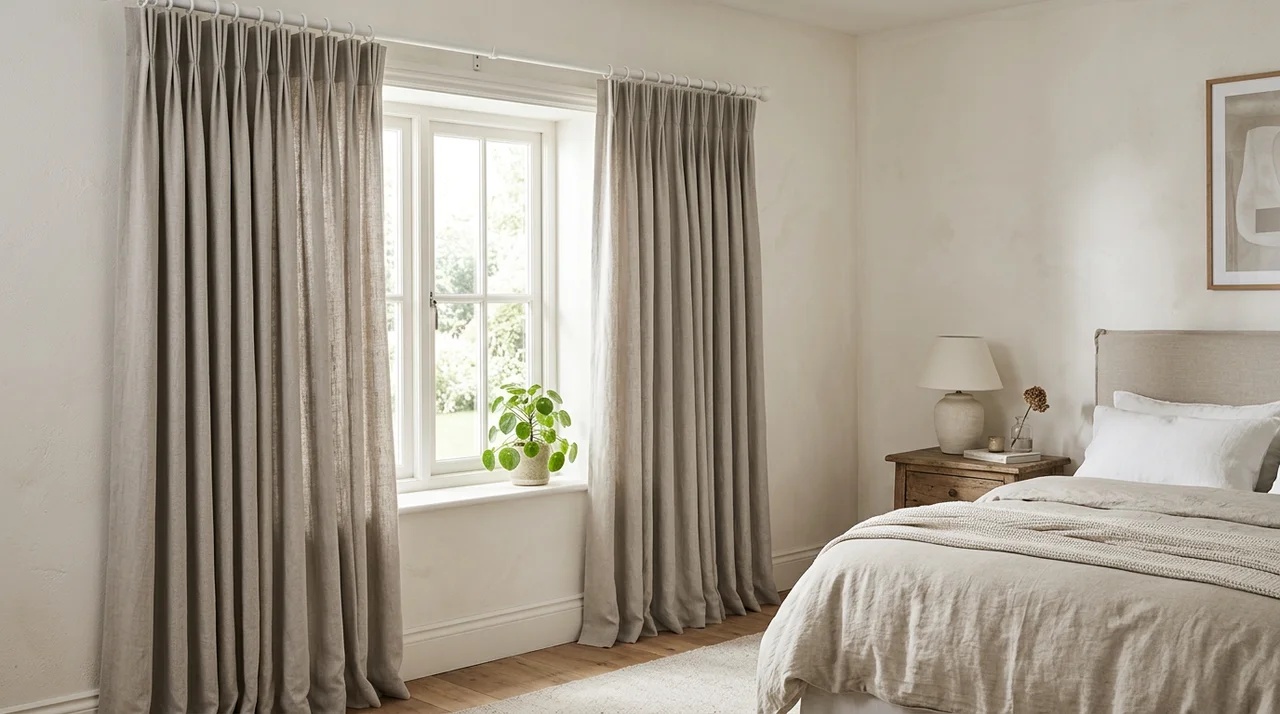
Pencil pleat curtains have tight, narrow gathers along the top that look like a row of pencils standing upright. The pleats are created by pulling a cord sewn into the header tape.
This style is very flexible. You can adjust the gather to suit different window widths.
Pencil pleat curtains can hang on rods with rings, hooks, or curtain tracks, which gives you more hardware options than most other styles.
They work in almost any room and suit most fabric weights. This makes pencil pleat tops one of the most practical choices for everyday use as a window treatment.
Tip: When storing or washing pencil pleat curtains, loosen the cords first. Washing them while gathered can cause the pleats to set unevenly.
7. Goblet Pleat Tops for Formal Decorative Windows

Goblet pleat tops have individual pleats shaped into hollow, cylindrical folds that look like upside-down wine glasses.
A strip of buckram is sewn into the header to give each goblet its shape, and each pleat is then stuffed with tissue, batting, or spare fabric to hold its form.
This is a formal, decorative style. It works best in dining rooms, grand living rooms, and formal spaces where the curtains are rarely moved. The goblet shape adds height and structure to the window.
Goblet pleat curtains need heavy or medium fabrics to hold the shape of each pleat. Velvet, brocade, and heavy linen are popular choices.
Tip:Goblet pleat curtains are often best left to professional workrooms. Getting the pleat spacing and stuffing right takes practice.
8. Box Pleat Tops for a Structured Modern Look

Box pleat curtains have flat, wide pleats folded in from both sides and pressed flat at the top. The result is a very structured, architectural look with no visible gathers.
This style works well in modern, contemporary, and Scandinavian-style rooms. It pairs nicely with solid-colored or subtly patterned fabrics.
One thing to keep in mind:box pleats need quite a bit of stack-back space on either side of the window when open, so they suit wider windows best.
Box pleats tend to flatten out toward the bottom, so the curtains hang with a clean, straight line.
Box pleat curtains are usually fixed in position. They are more decorative than functional, so they suit windows where light control is handled by a blind or sheer underneath.
Tip: Box pleats require precise stitching to look sharp. Even small errors in pleat depth or spacing will show up clearly on a flat, structured drapery header.
9. Ripple Fold Tops for Smooth Contemporary Draping

Ripple fold curtains use a special header tape with evenly spaced clips or carriers. The clips attach to a gliding curtain track system, and the fabric falls in smooth, consistent waves all the way down.
The waves are perfectly even from top to bottom. There are no bunched pleats or uneven gathers. This gives a very sleek, contemporary look that suits modern interiors, home cinemas, and open-plan living spaces.
Ripple fold curtains require a specific track system. They do not work on standard rods. The carrier spacing controls how tight or loose the waves appear.
Tip: Ripple fold curtains need a fullness ratio of 1.8 to 2.3 times the track length, depending on the carrier spacing. Check the manufacturer's recommendations before ordering fabric.
How to Choose a Curtain Top for Your Room
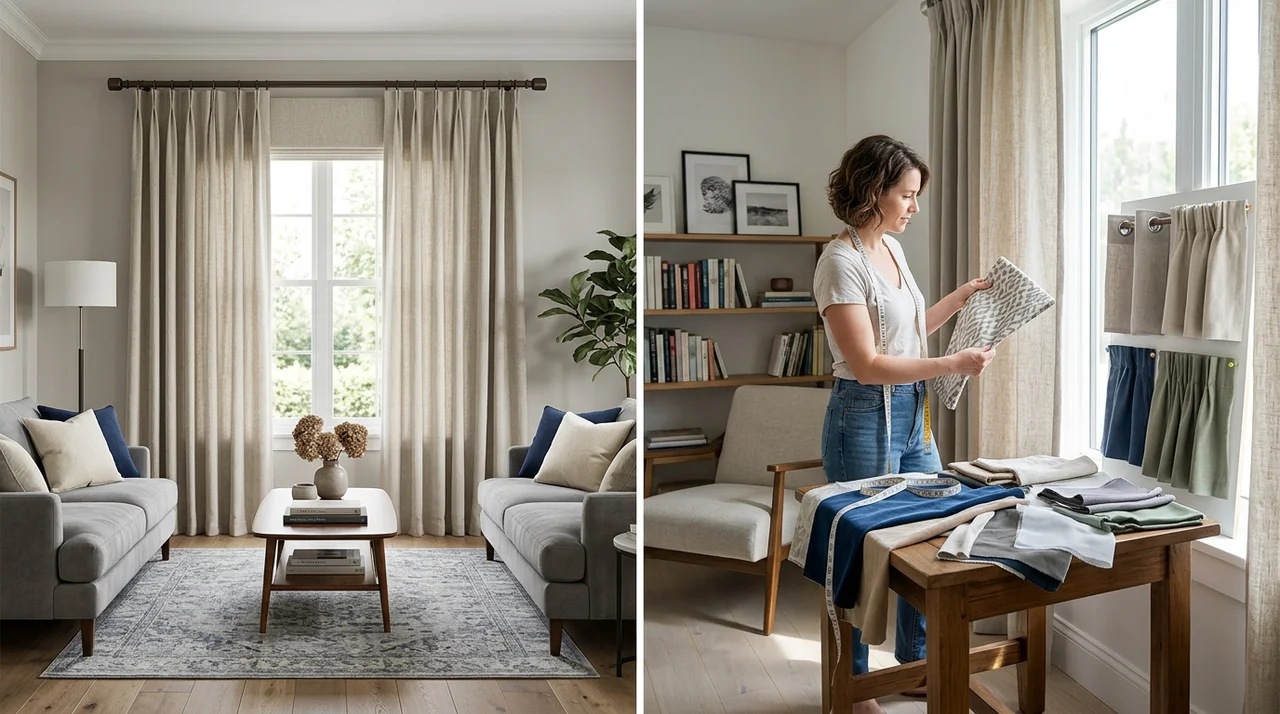
The right curtain top depends on your room's style, fabric type, light needs, hardware, and how often you use them.
Choose a Style Based on Your Room's Décor
Start by looking at the overall style of your room. Modern rooms suit grommet, back tab, and ripple fold tops. Traditional rooms look great with pinch pleat and goblet pleat tops.
Casual spaces work well with rod pocket, tab top, and pencil pleat tops. If you are unsure, pencil pleat and grommet tops are the most versatile options across different interior styles.
Match the Top to Your Curtain Fabric
Heavy fabrics like velvet and brocade suit structured tops like pinch pleat and box pleat. Lightweight fabrics like voile work better with rod pocket or pencil pleat tops.
Medium-weight fabrics are the most flexible and work with grommet, back tab, and ripple fold tops. Always check fabric and header compatibility before buying, as stiff fabrics with tab tops can look bulky.
Consider Light Control and Privacy Needs
Tab top and rod pocket curtains can leave gaps around the rod, which may reduce light control. For better blackout coverage, focus on the curtain lining, side gaps, overlap, and installation.
If full blackout coverage matters, combine your chosen top with a blackout lining or a roller blind underneath. For light filtering only, most curtain tops will do the job well.
Check Rod, Track, and Hardware Compatibility
Not all curtain tops work with all hardware types, and skipping this step leads to returns. Rod pocket tops need a rod that fits the pocket width.
Grommet tops need a rod diameter thin enough for the rings. Ripple fold tops require a gliding track system.
Tab top and grommet styles cannot pass pole support brackets, so they are not ideal for very wide windows. Always confirm compatibility before purchasing curtains or hardware.
Choose Based on Maintenance and Daily Use
If you open and close curtains multiple times a day, grommet and ripple fold tops slide the most easily. Decorative styles like box pleat and goblet pleat work best when curtains stay in one position.
Pencil pleat tapes should have their cords loosened before washing to avoid uneven gathering. Always read the care label before buying any curtain panel.
Common Mistakes When Choosing Curtain Tops
A few simple mistakes when choosing curtain tops can lead to poor fit, wrong hardware, and curtains that look or function badly.
Choosing Hardware That Does Not Fit the Top
Many people buy curtains first and then realize their existing hardware does not work with the header style. Always check compatibility before purchasing anything.
If you have a standard decorative rod, it works with rod pocket, grommet, tab top, and back tab tops. Track systems need hooks or ripple fold carriers instead.
Getting Curtain Width or Fullness Wrong
Every curtain top needs a specific fullness ratio to look right. Use 1.5 times the window width for rod pocket and tab tops, 2 to 2.5 times for grommet and back tab tops, and 2.5 to 3 times for pinch pleat and goblet pleat tops.
Getting this wrong makes pleats look flat or causes fabric to bunch awkwardly.
Ignoring Window Size and Ceiling Height
Curtain tops affect how tall or wide a window appears. Tab tops lower the perceived height, while pinch pleat and goblet pleat tops draw the eye upward.
For small windows or low ceilings, avoid tab tops and heavy box pleat styles. Hanging the back tab or pinch pleat curtains close to the ceiling adds a sense of height.
Choosing Style Over Practical Function
It is easy to pick a curtain top based on looks alone without thinking about daily use. Goblet pleat curtains look impressive but are hard to open and close.
Rod pocket curtains look soft but slide poorly along a rod. Always think about how you will actually use the curtains before making your final decision.
Tips for Choosing and Hanging Curtain Tops
These practical tips help you measure, plan, and hang your curtain tops correctly from the start to avoid costly mistakes.
- Always measure the rod or track width, not just the window frame, and extend the curtain at least 15 to 20 centimeters beyond each side of the frame.
- Use the correct fullness ratio for your chosen top style so curtains look full when closed and stack back neatly when open.
- Keep the same curtain top style across connected or open-plan rooms to avoid a visually inconsistent look.
- Plan where the curtains will stack when open, as pleated tops and goblet styles need more stack-back space at the sides than grommet or back tab tops.
- Decide on curtain length before buying, floor-length suits formal rooms while sill-length works better in casual or kitchen settings.
Conclusion
Choosing from the 9 types of curtain tops does not have to be overwhelming.
Each style has its own strengths, and the right choice depends on your room, your hardware, and how you use your curtains every day.
Match the top to your décor, check your hardware compatibility, and think about practical use before buying. Even small details like fullness ratio and fabric weight can make a big difference in the final result.
Now that you know what to look for, go ahead and pick the curtain top that works best for your windows. Have a question or tip? Leave a comment below or share this guide with someone decorating their home.
Frequently Asked Questions
Can I change the curtain top style without buying new curtains?
Not easily. The header style is sewn into the curtain. Changing it requires significant alterations, which is usually more work than buying new panels.
What curtain top works best for sliding glass doors?
Grommet and ripple fold tops work best. They slide smoothly and handle frequent daily movement without wearing out the fabric quickly.
Are curtain tops different from curtain tapes?
Yes. Curtain tape is the reinforcing strip sewn to the back of the header. The curtain top refers to the overall header style the tape helps create.
Do curtain tops affect how long curtains last?
Yes. Frequent movement can cause wear over time. Grommet and hook-based styles are generally better suited to curtains that are opened and closed often.
Can the same curtain top work on both a rod and a track?
Some can. Pencil pleat tops with hooks work on both rods with rings and curtain tracks. Most other styles are designed for one or the other.