
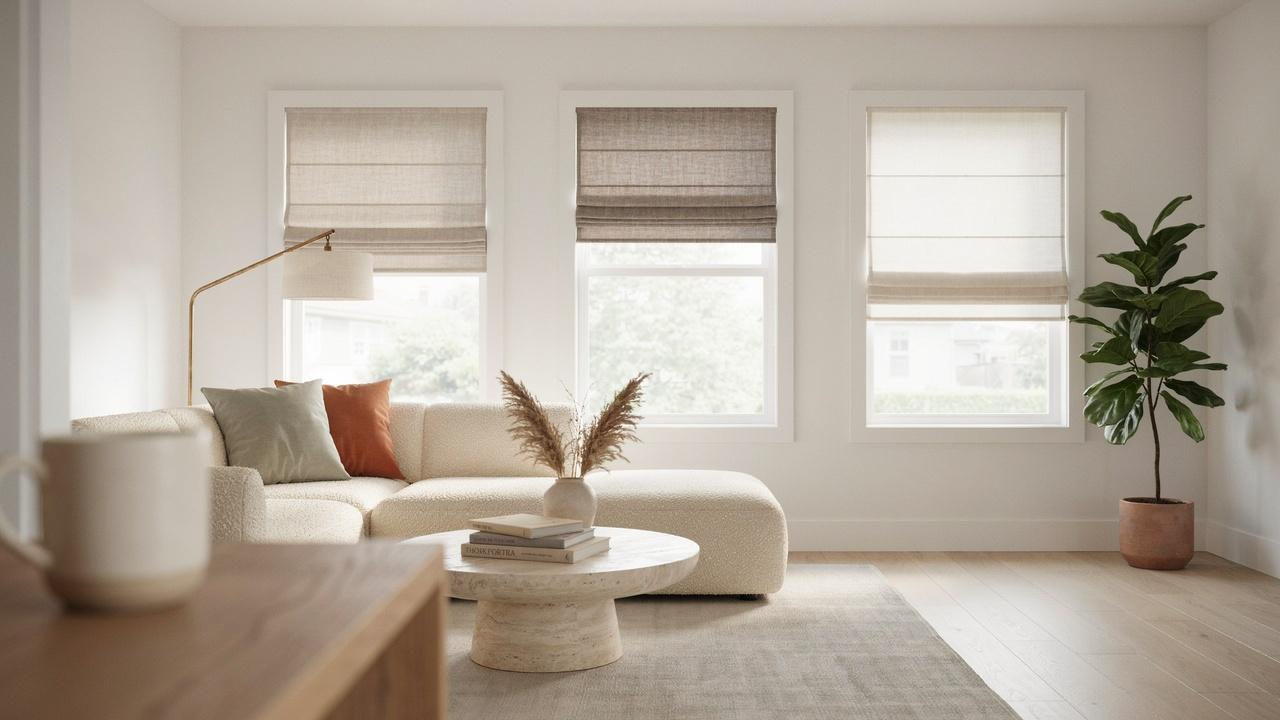
Shopping for window treatments can feel overwhelming fast. There are so many options, and most guides either go too shallow or drown you in jargon.
Roman shades sit in a sweet spot, they look polished, they work hard, and they fit almost any room.
I have helped people sort through fabric types, fold styles, and mounting options more times than I can count, and the same questions keep coming up.
This guide on what are Roman shades covers everything from how they work to how to buy them right, so you can make a confident choice without second-guessing yourself.
What Are Roman Shades?
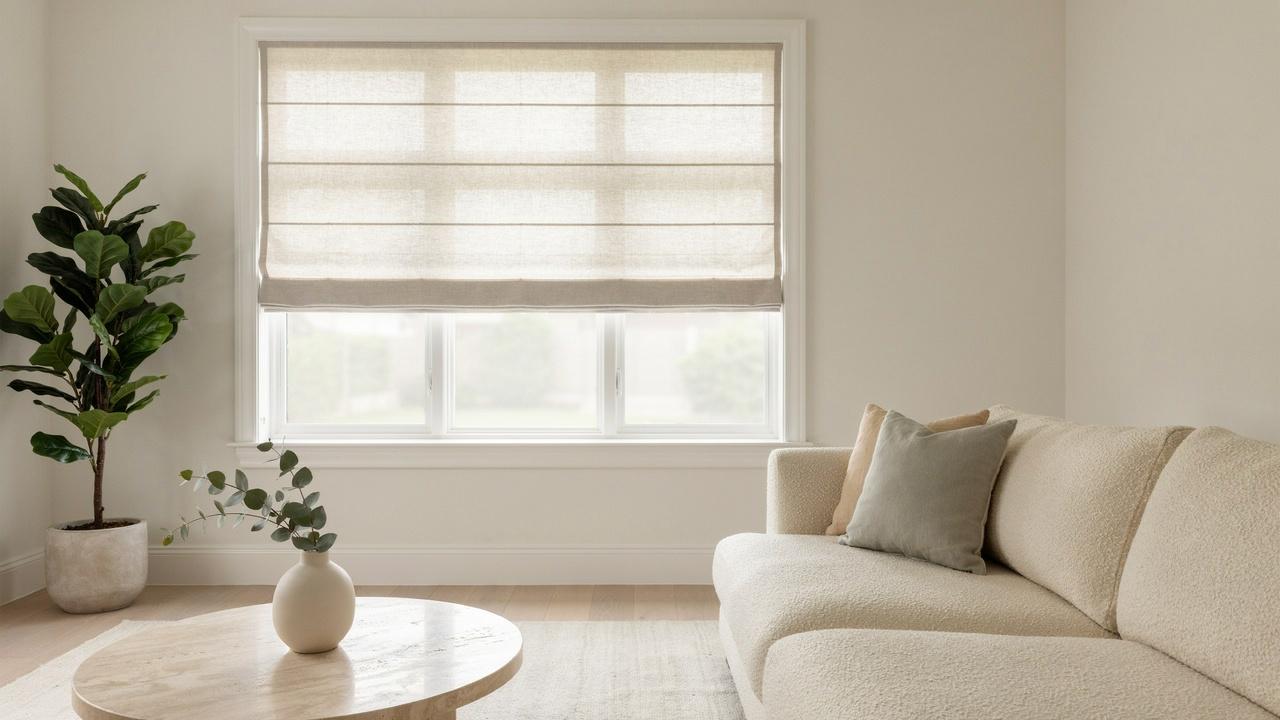
Roman shades are a classic window covering that sits flat against your window when lowered and folds up in horizontal layers when raised.
Roman shades are a type of fabric window treatment that stacks up in even folds when you pull them open.
Unlike blinds, which use slats, Roman shades are made from a single piece of fabric. That gives them a cleaner, softer look.
They work well in almost any room. You can find them in light fabrics that let in a warm glow, or in heavy blackout materials for rooms that need full darkness.
They can be simple and minimal or rich and layered depending on the style you choose.
Roman shades have been around for a long time. The name comes from ancient Rome, where people reportedly used wet cloth over windows to keep dust out.
The modern version has come a long way since then, but the core idea of a fabric panel that lifts into clean folds has stayed the same.
How Do Roman Shades Work?
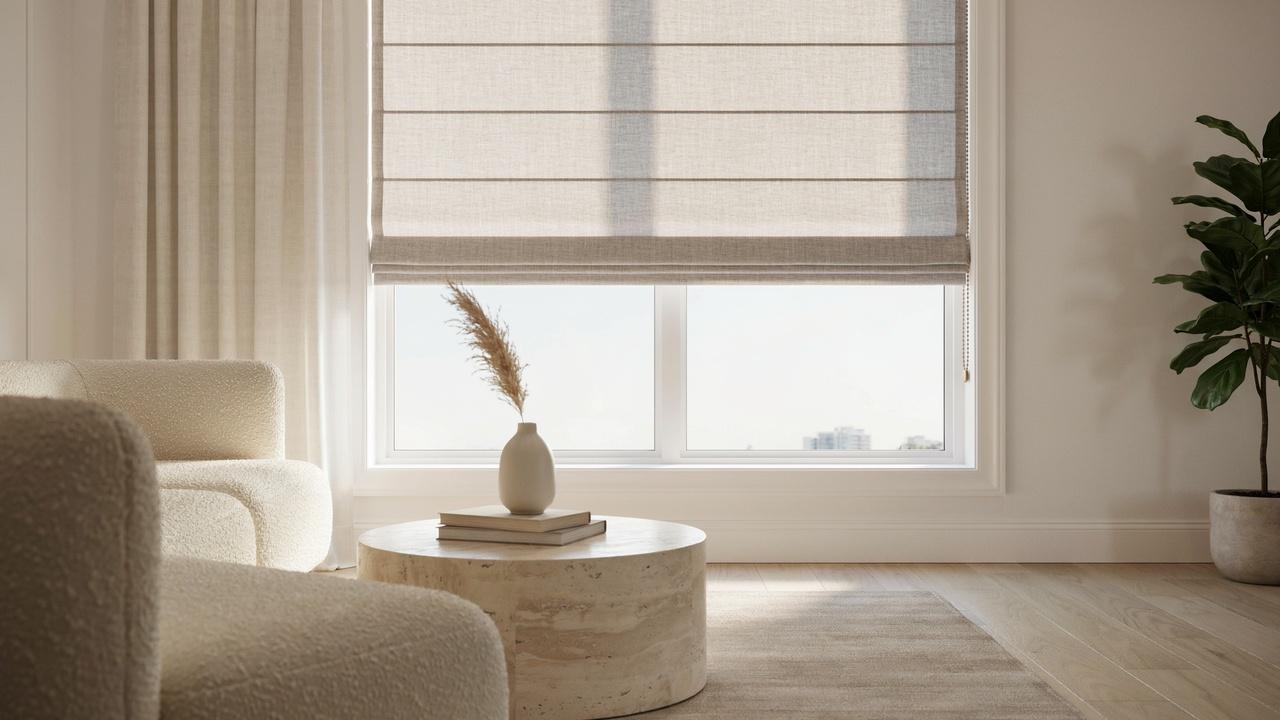
Roman shades use a cord or lift system to raise and lower the fabric in neat horizontal folds.
The back of a Roman shade has a series of horizontal rings or loops sewn into the fabric. A cord or rod runs through these rings and connects to a lift mechanism at the top of the shade.
When you pull the cord or push a button, the bottom of the shade lifts first, and the fabric gathers upward in even folds.
When fully lowered, the shade lies flat against your window. When raised, it stacks at the top in layered folds. The number of folds depends on the shade's height and fold style.
Most Roman shades mount to a headrail, which is a flat board or rail that attaches to your window frame or wall.
The headrail holds the lift system in place and keeps everything running smoothly.
What Are the Different Types of Roman Shades?
Roman shades come in several fold styles, and each one creates a different look and feel in your space.
Flat Fold Roman Shades
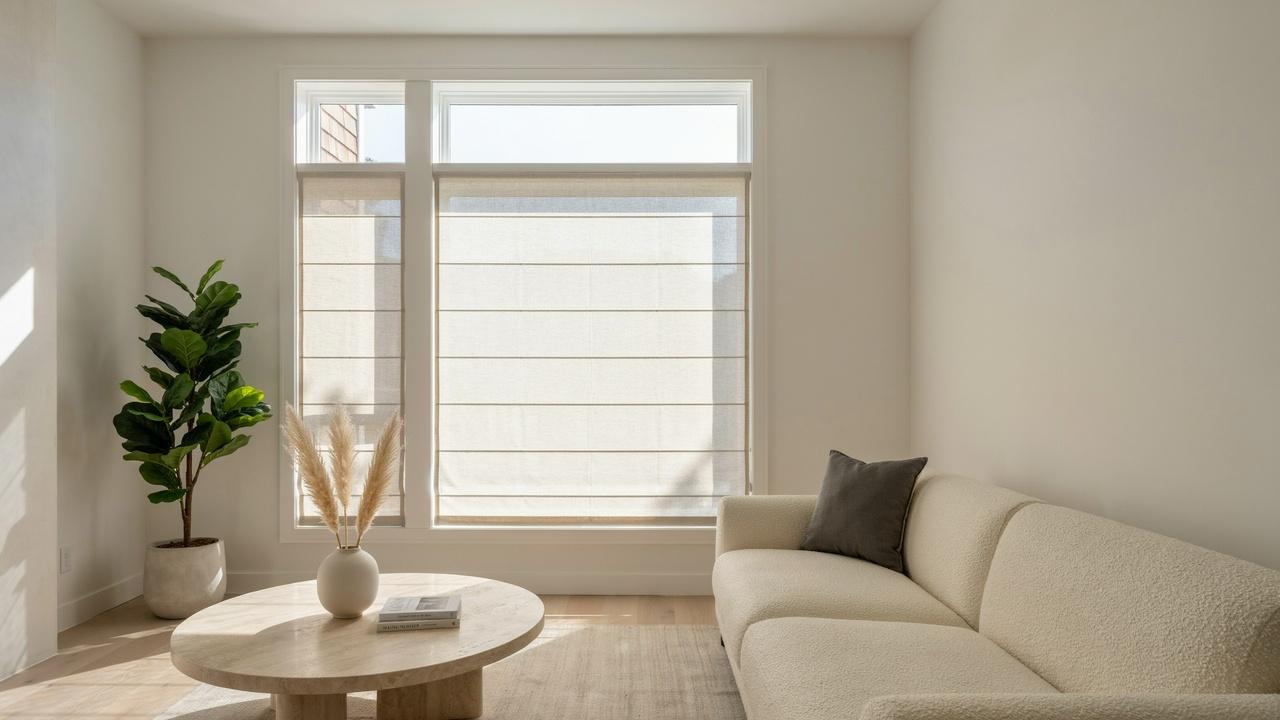
Flat fold Roman shades lie completely flat when lowered and fold into tight, even pleats when raised.
There are no folds visible when the shade is down. This style works well in modern and minimal spaces where clean lines matter.
It also works best with patterned fabrics because the print stays fully visible without any interruption.
Classic Roman Shades
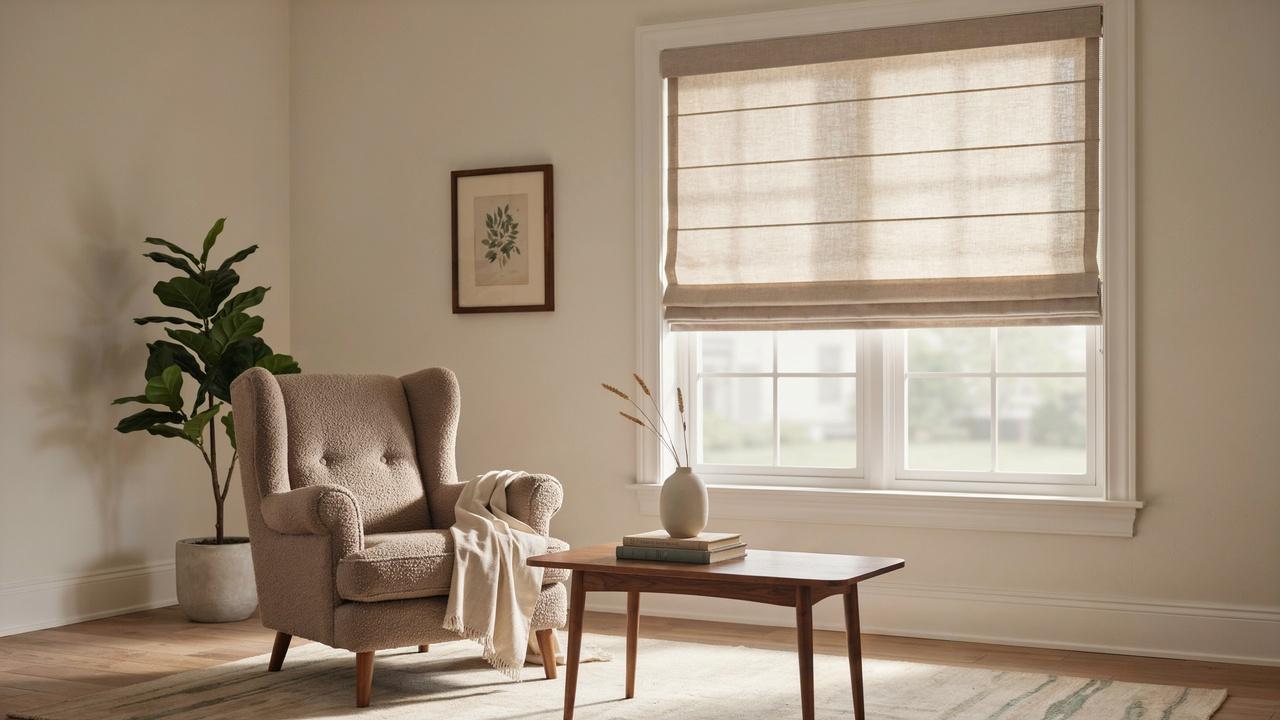
Classic Roman shades have horizontal fold lines built into the fabric. When lowered, you can see soft folds at evenly spaced intervals across the shade.
When raised, those folds stack cleanly at the top. This is one of the most widely used styles because it works in both casual and more formal rooms.
Relaxed Roman Shades
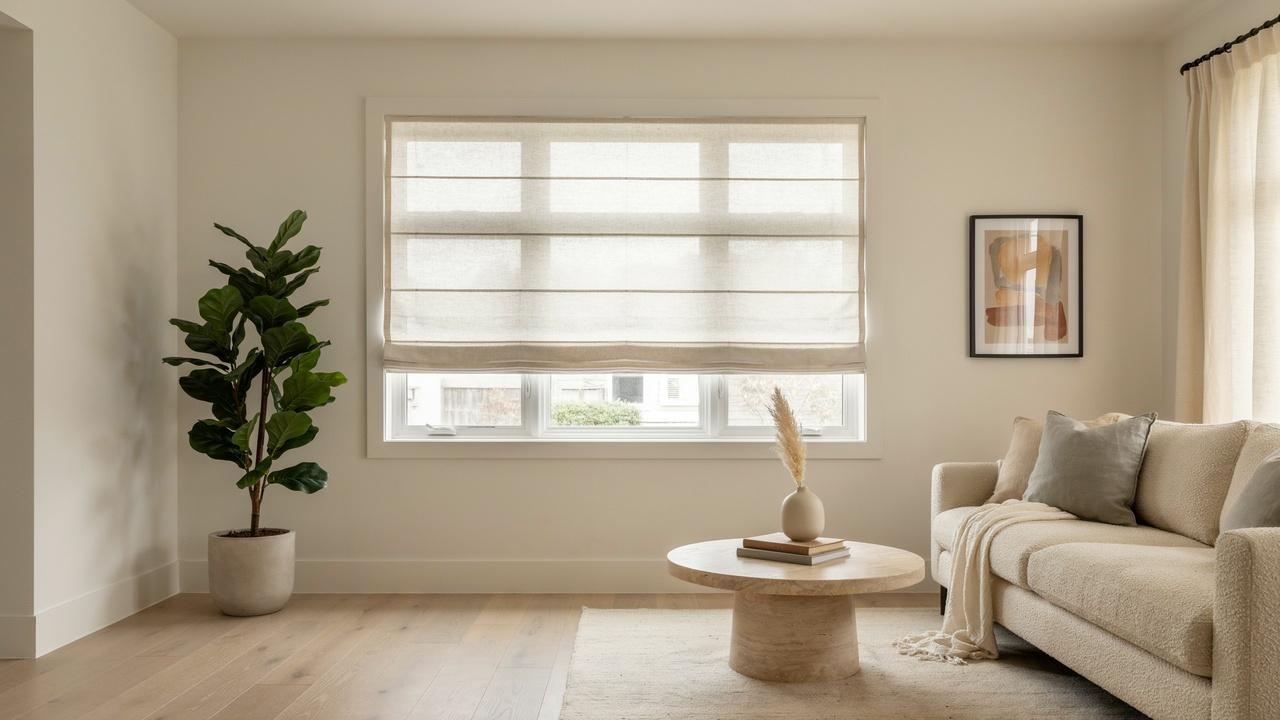
Relaxed Roman shades have a gentle curve at the bottom instead of a straight edge. The fabric swoops slightly in the middle, creating a soft, casual look.
This style works especially well in kitchens, bathrooms, and other informal spaces where you want something easy and inviting.
Hobbled Roman Shades
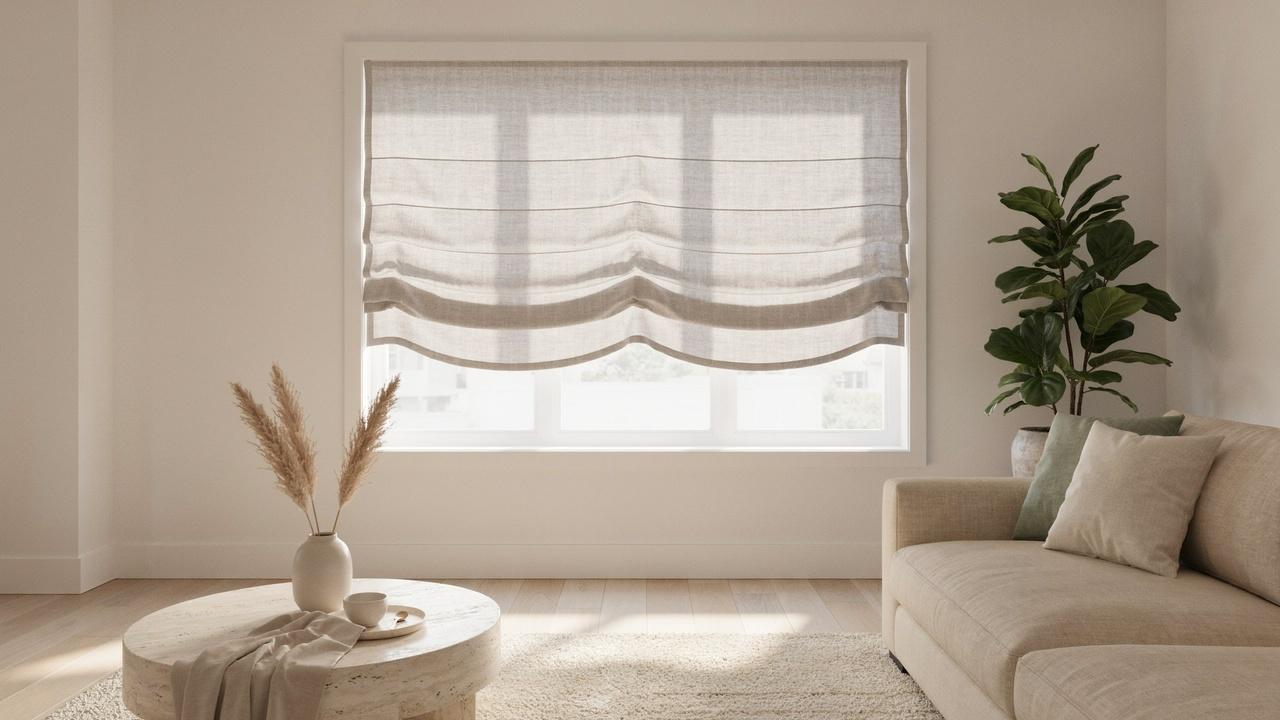
Hobbled Roman shades, sometimes called waterfall shades, have continuous folds that remain visible even when the shade is fully lowered.
The fabric loops from one fold to the next, creating a layered, cascading look. This style adds a lot of visual texture and works well in formal living rooms or dining areas.
European Roman Shades
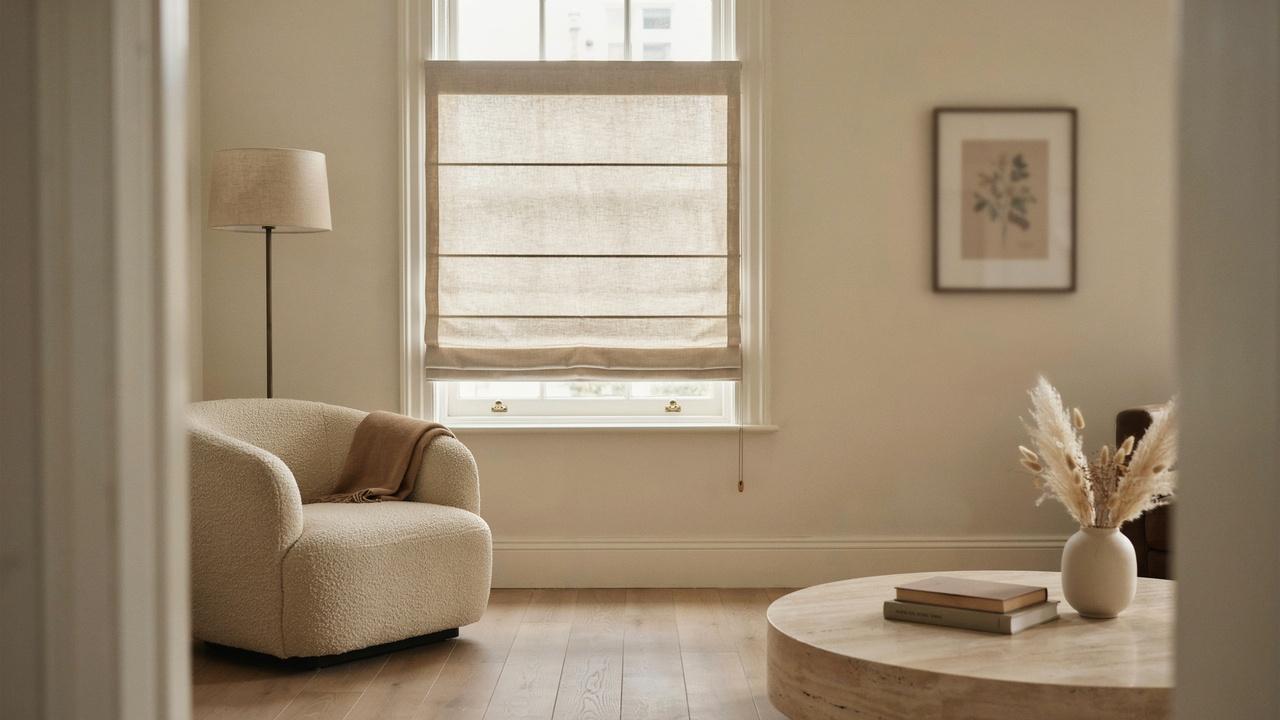
European Roman shades fold to the front rather than the back. When raised, the folds appear on the face of the shade instead of folding behind it.
This creates a slightly different visual profile and works well when you want a shade that makes a statement even when open.
Front-Slat Roman Shades
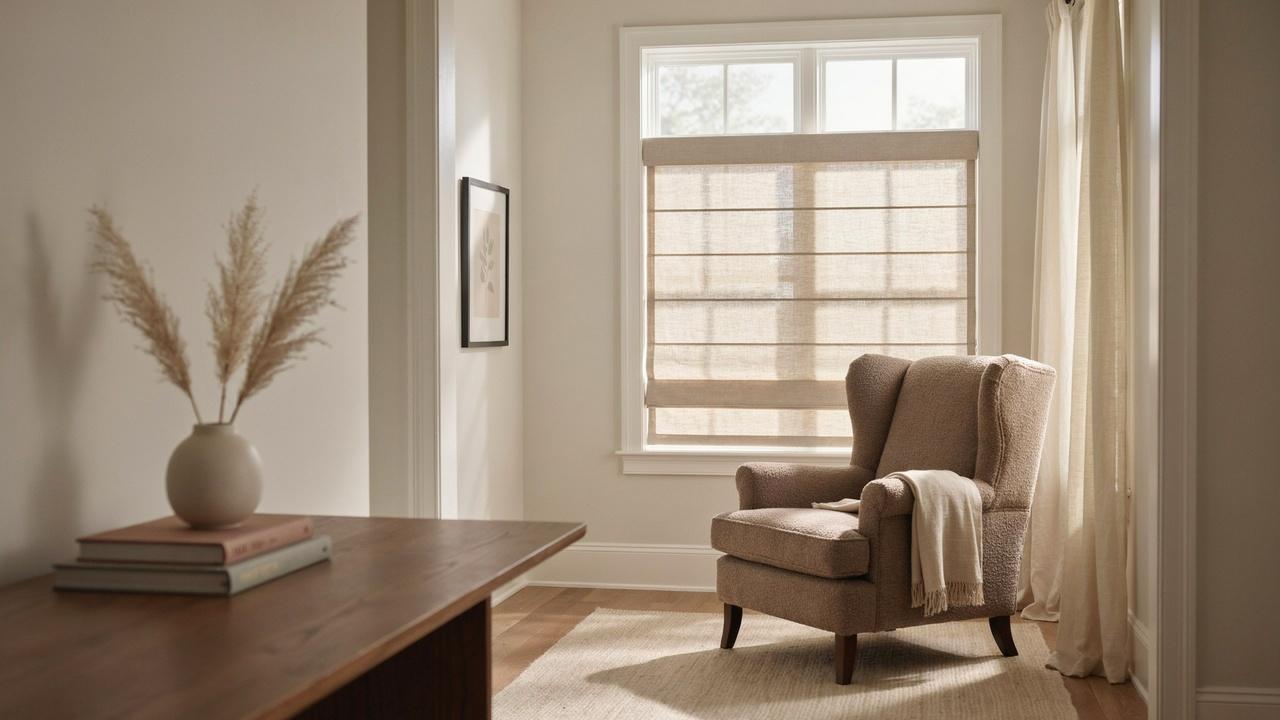
Front-slat Roman shades have thin horizontal rods sewn into the front of the fabric instead of the back.
This gives the shade a structured, modern look with visible lines running across the face.
The rods keep each fold crisp and even, making this style a good fit for contemporary spaces.
What Are Roman Shades Made Of?
The fabric you choose affects how your Roman shade looks, how it performs, and how long its Roman shades come in a wide range of materials.
Cotton is the most popular choice, offering easy care and a huge range of colors. Linen brings a natural, textured look but wrinkles more easily.
Polyester and blended fabrics resist moisture and fading, making them great for kitchens and bathrooms.
Bamboo and woven wood filter light while adding warmth.
Blackout fabrics block nearly all light and work best in bedrooms. Sheer fabrics let in plenty of light while still offering daytime privacy.
What Are the Benefits of Roman Shades?
Roman shades offer a practical mix of style, function, and space-saving design that makes them a solid choice for most homes.
They're space efficient. Because they fold upward rather than stacking to the side like curtains, they don't take up much room when open.
This makes them a good fit for smaller windows or rooms where you want to keep the space feeling open.
They work with a wide range of design styles. From modern to farmhouse to transitional, Roman shades can fit in almost anywhere depending on the fabric and fold style you choose.
They offer real light control. With the right fabric and liner, you can dial in exactly how much light you want in a room. Sheer fabrics let in soft light. Blackout options block it completely.
They are available in cordless and motorized options, which makes them safer around children and easier to operate in general.
They can be custom made to fit almost any window size, including unusually wide or tall windows that don't work well with standard blinds.
They also tend to hold their value visually. A well-chosen Roman shade can look just as good years later as it did when you first installed it.
Do Roman Shades Provide Privacy and Light Control?
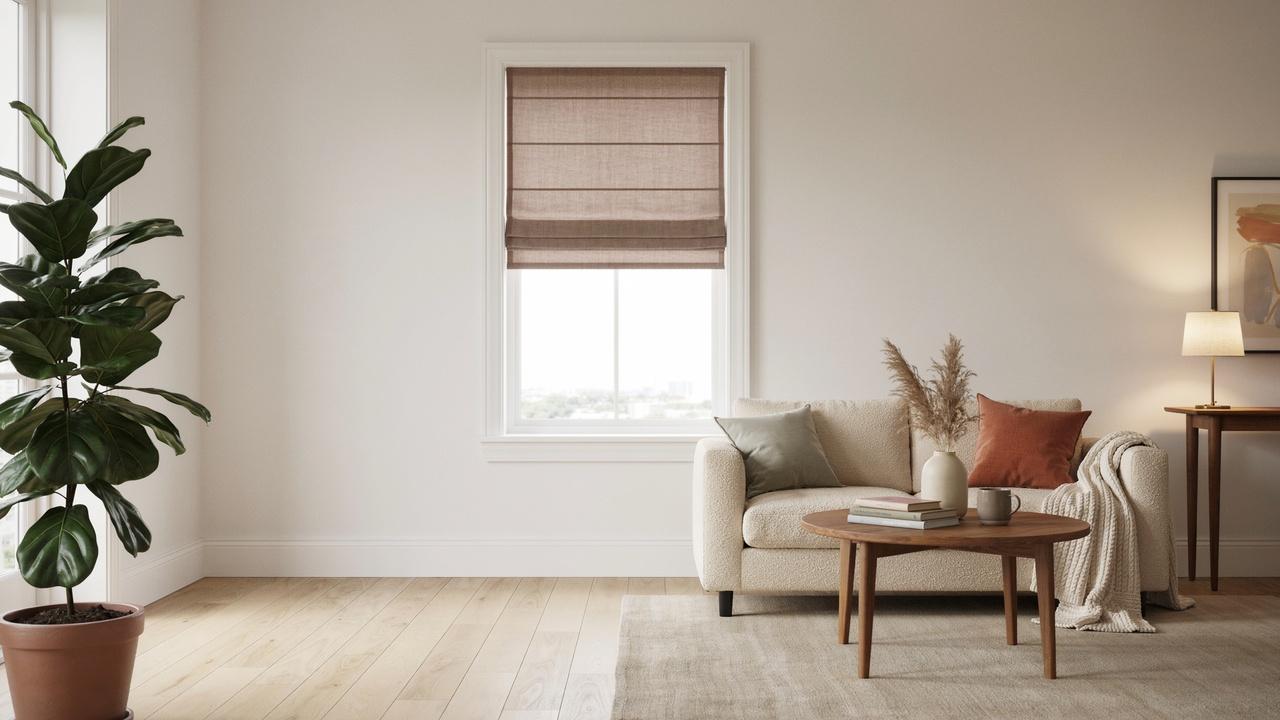
Yes, and the level of privacy and light control depends almost entirely on the fabric and opacity you choose.
A sheer or light-filtering Roman shade will let in plenty of natural light but offer limited privacy, especially at night when interior lights are on.
These work well for daytime use in living rooms or offices where you want brightness but not full exposure.
A room-darkening shade uses a tighter weave or a light-blocking liner to cut out most incoming light.
You can still see shadows and shapes from outside, but visibility into the room is significantly reduced.
A blackout Roman shade blocks nearly all light and offers the highest level of privacy. These are the go-to option for bedrooms, nurseries, and home theaters.
If you want both natural light during the day and full privacy at night, layering a sheer Roman shade with heavier side curtains is a practical solution many designers recommend.
Are Roman Shades Good for Insulation?
Roman shades can improve a window's insulation, but the impact depends on the fabric weight and whether you add a liner.
A single layer of fabric does not provide much thermal protection on its own. Most of the benefit comes from adding a liner.
A thermal liner creates a barrier between the fabric and the glass, which helps keep warm air inside during winter and hot air outside during summer.
Heavier fabrics like blackout materials also help because they reduce drafts and block radiant heat from sunlight.
In rooms that get a lot of direct sun, this can make a real difference in temperature.
Roman shades won't replace proper window insulation, but they are a meaningful addition when you want to reduce heat loss or cut down on energy costs at the window level.
How Do You Choose the Right Roman Shades?
Choosing the right Roman shades comes down to five key decisions that cover style, function, and fit.
- Start with the fold style since it sets the overall look. Flat folds suit modern spaces, classic folds work almost anywhere, relaxed folds fit informal rooms, and hobbled folds work in formal spaces.
- Choose fabric based on the room. Kitchens and bathrooms need moisture-resistant polyester. Bedrooms do better with blackout or heavier fabrics. Living rooms work well with cotton, linen, or sheer materials.
- Match opacity to your light needs. Sheer lets in the most light, light-filtering softens it, room-darkening blocks most of it, and blackout blocks nearly all of it.
- Add a liner if the room needs extra privacy or light control. A standard liner protects the fabric, a thermal liner adds insulation, and a blackout liner blocks almost all light.
- Pick a lift system that fits your lifestyle. Corded systems are affordable but less safe around children. Cordless lifts are safer and cleaner looking. Motorized systems work best for hard-to-reach windows.
What Are the Best Roman Shades for Each Room?
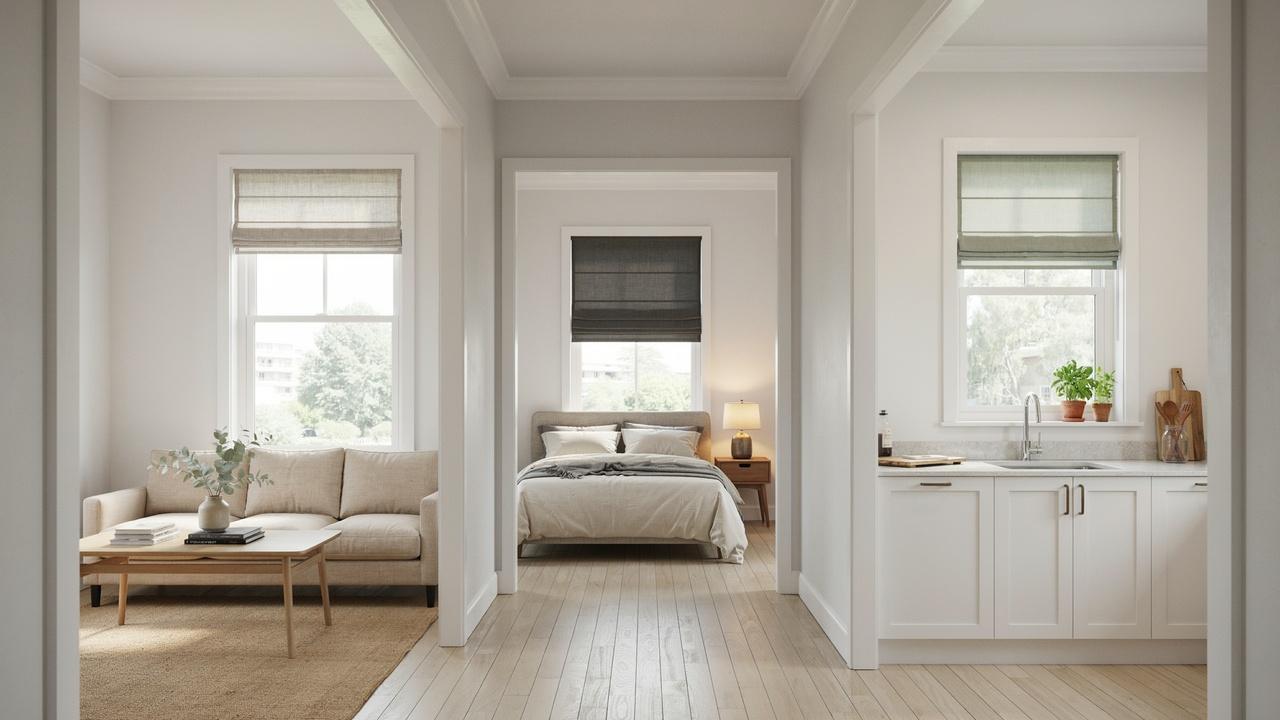
Different rooms have different needs, so the right Roman shade depends on how the room is used.
Roman Shades for Living Rooms
Living rooms usually need flexible light control. A light-filtering fabric in a classic or flat fold style works well here.
You want enough light for daytime activity but the ability to reduce glare in the afternoon. Neutral colors and natural fabrics tend to work well in living spaces.
Roman Shades for Bedrooms
Bedrooms need privacy and darkness for sleep. A blackout Roman shade with a cordless or motorized lift is the best fit.
Pair a blackout shade with side curtains if you want more design variety while keeping the room dark when needed.
Roman Shades for Kitchens
Kitchens need moisture-resistant, easy-to-clean fabrics. A relaxed fold style in polyester or a woven wood material works well here.
Avoid very long shades in kitchens because they can get in the way of counters and cooking.
A shorter shade that covers only the upper portion of the window is often the practical choice.
Roman Shades for Dining Rooms
Dining rooms often sit next to kitchens, but the style expectations are usually a bit more formal.
A hobbled or classic fold in a heavier fabric can work well here. Light filtering is typically a good choice since dining rooms are used at different times of day.
Roman Shades for Home Offices
Home offices need glare control more than anything else. A light-filtering or room-darkening shade with a flat or classic fold is a practical choice.
If you have a monitor near the window, a room-darkening shade can make a significant difference in eye comfort during the workday.
How Do You Measure for Roman Shades?
Measuring correctly before you order is one of the most important steps in the buying process.
How to Measure for an Inside Mount
An inside mount fits inside the window frame. Measure the width of the window opening at the top, middle, and bottom, then use the narrowest measurement.
Measure the height from the top of the opening to the sill. Most manufacturers will deduct a small amount for clearance, so order at the exact size unless the instructions say otherwise.
How to Measure for an Outside Mount
An outside mount attaches to the wall or the trim around the window.
Measure how wide you want the shade to be, adding at least 2 inches on each side to cover the window frame and reduce light gaps.
Measure the height from where the shade will mount down to where you want it to end, which is usually just below the sill.
Common Measuring Mistakes to Avoid
- Measuring only once instead of taking multiple readings across the window
- Forgetting to account for the mounting depth needed for an inside mount
- Using the outside dimensions of the trim instead of the inside of the frame for an inside mount
- Not accounting for the headrail height when measuring for outside mounts
- Assuming all windows in the same room are the same size
Are Custom Roman Shades Worth It?
For most people, custom Roman shades are worth the added cost, especially for windows that don't fit standard sizing.
Pre-made Roman shades come in limited sizes, fabrics, and colors.
If your window is an unusual size or you want a specific fabric or opacity level, you'll likely be disappointed with what off-the-shelf options offer.
Custom shades are made to your exact measurements. You choose the fabric, the fold style, the liner, and the lift system.
The result is a shade that fits correctly and looks intentional rather than like a compromise.
The price difference can be significant, but a poorly fitting Roman shade often looks worse than a simpler window treatment that fits correctly.
If the budget allows, going custom is usually the smarter long-term investment.
How Much Do Roman Shades Cost?
Roman shade prices vary widely depending on size, material, and whether they are pre-made or custom.
| Type | Price Range | Notes |
| Basic Pre-Made | $20 to $40 per shade | Good for standard windows with basic needs |
| Mid-Range Pre-Made | $60 to $150 per shade | Better fabric and fit options available |
| Custom Shades | $100 to $200+ per shade | Made to exact measurements and specifications |
| High-End or Motorized Custom | $500 to $1,000+ per shade | Specialty fabrics, premium brands, motorized systems |
| Professional Installation | $50 to $100 per shade | Varies by location and job complexity |
How Are Roman Shades Installed?
Installing Roman shades is manageable as a DIY project for most windows with standard framing.
First, decide whether you're doing an inside or outside mount. Inside mounts sit within the window frame. Outside mounts attach to the wall or trim above the window.
For an inside mount, hold the headrail inside the frame, mark your screw holes, drill pilot holes if needed, and secure the brackets. Snap or slide the headrail into the brackets.
For an outside mount, mark the bracket positions above the window and level them carefully before drilling. The shade should extend at least 2 inches past the frame on each side.
After mounting, attach the shade to the headrail according to the manufacturer's instructions, test the lift system, and adjust if needed.
Most Roman shades come with clear instructions and all required hardware.
How Do You Clean and Maintain Roman Shades?
Regular light cleaning keeps Roman shades looking good and extends their life significantly.
For routine maintenance, use a soft brush attachment on a vacuum to gently remove dust from the fabric.
Do this every few weeks, especially if the shade is in a room with a lot of airflow or foot traffic.
For spot cleaning, use a damp cloth with a small amount of mild soap. Blot the stain rather than rubbing it. Rubbing can spread the stain and damage the fabric.
Avoid soaking Roman shades with water. Most Roman shades are not fully machine washable because the internal hardware, cords, and rings can be damaged by full immersion.
Some Roman shades are dry clean only, especially those made from delicate fabrics or with specialty linings. Always check the care label before cleaning.
For woven wood or bamboo shades, a light dusting with a dry cloth or a soft brush is usually all that's needed.
What Should You Look for Before Buying Roman Shades?
Before placing an order, check these five things to avoid common buying mistakes.
- Check your window frame depth before choosing a mount type. Inside mounts need at least 1.5 to 2 inches of depth. If the frame is too shallow, go with an outside mount.
- Order a fabric sample before committing. Tightly woven materials hold up better over time, and colors can look very different on screen than they do in person.
- Match opacity and liner to your actual light and privacy needs before picking a color or fold style. Know what the room requires first.
- Choose cordless or motorized lifts if children or pets are in the home. They are safer, cleaner looking, and just as easy to use as corded systems.
- Check the return policy before ordering, especially for custom shades since most cannot be returned. Look for at least a one-year warranty on the lift mechanism and hardware.
Conclusion
Roman shades are one of the most flexible and practical window treatments available.
They work in almost any room, come in a wide range of fabrics and styles, and can be set up to give you exactly the light control and privacy you need.
The key is knowing what to look for before you buy. Take your time with the fabric, the fold style, and the measurements.
If this guide helped you feel more confident about your decision, leave a comment below or share it with someone who's currently shopping for window treatments.
The right Roman shades make a real difference in how a room looks and feels every day.